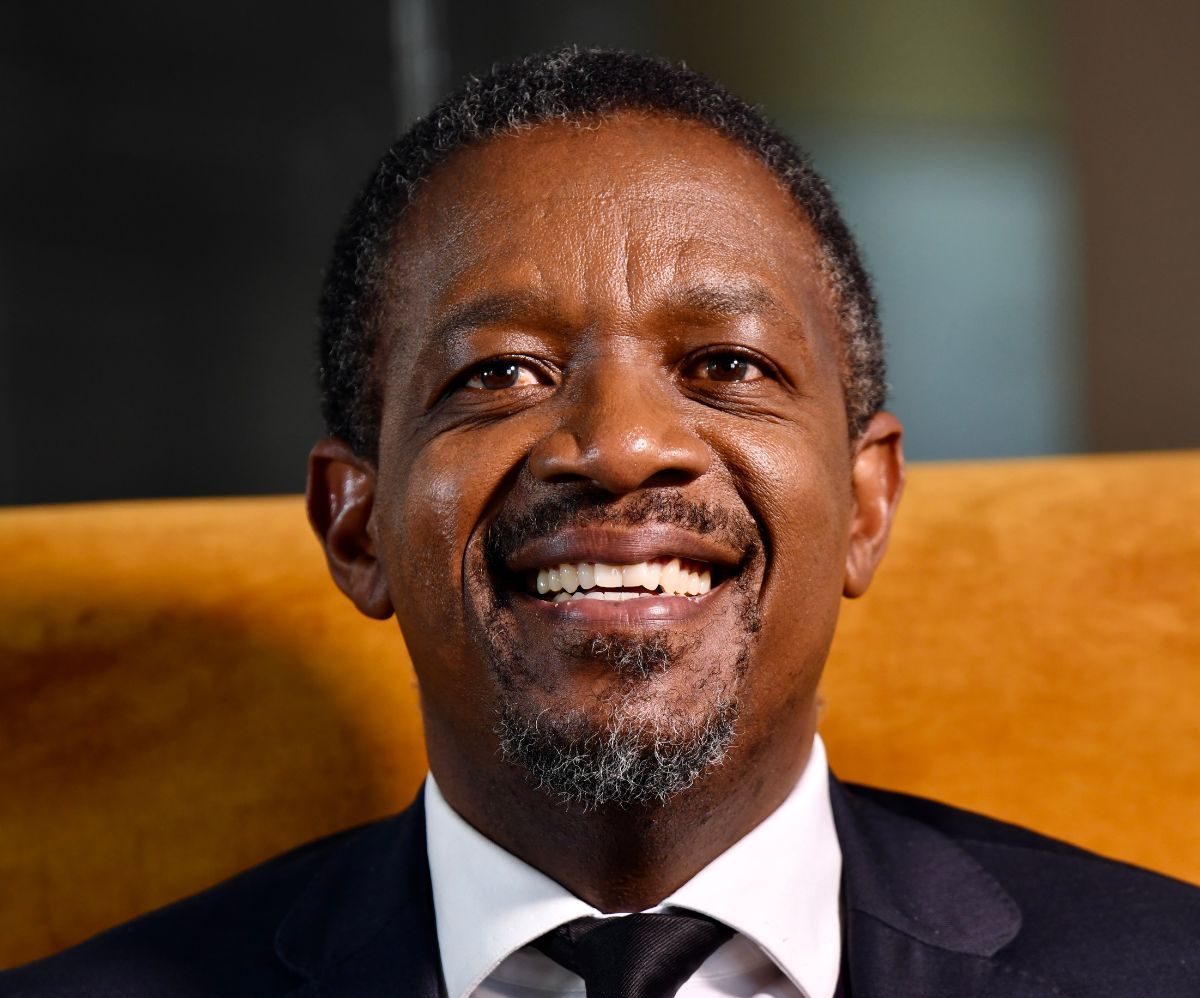
Marketing is often reduced to campaigns, channels, and clever messaging. But what if its real role is far deeper than that? In a recent interview on 702, Sechaba Motsieloa, Discipline Lead: Marketing Management at The DaVinci Institute, takes listeners beyond the surface to explore what marketing truly demands in today’s world.
With a career spanning organisations such as McDonald’s South Africa and Magna Carta, and now as Managing Executive at Empowaworx, Motsieloa brings a perspective shaped by experience, one that reframes marketing as a discipline grounded in purpose, connection, and meaningful impact.
Marketing as a Response to Real Needs
In the interview, Motsieloa emphasises that effective marketing begins with understanding real needs in the marketplace. Rather than creating artificial demand, he highlights the importance of identifying genuine gaps and aligning organisational capabilities to meet them.
He explains that the role of a marketer is to interpret these opportunities, assess market viability, and position organisations in ways that deliver meaningful value. This requires not only technical skill, but the ability to think strategically about people, systems, and long-term impact.
Beyond Transactions: The Shift to Meaningful Impact
A central theme in the conversation is the distinction between transactional marketing and transformational impact. While performance-driven campaigns remain important, Motsieloa argues that lasting brand value is built through meaningful engagement that resonates with both the minds and lives of people.
He notes that organisations must increasingly move beyond short-term sales metrics and invest in initiatives that contribute to broader societal change. In his work with Empowaworx, this includes creating platforms that connect young people to opportunities, industry leaders, and pathways for growth.
The Evolving Complexity of the Marketing Landscape
Motsieloa also reflects on how the marketing environment has expanded. While the fundamentals remain unchanged, the rise of digital platforms and multiple communication channels has introduced new layers of complexity.
Marketers today must navigate fragmented audiences, integrate diverse channels, and measure impact across a broader ecosystem. At the same time, they must balance specialisation with the ability to think holistically, ensuring that all elements of the marketing mix work together.
Leadership, Systems Thinking, and the Future of Marketing
At its core, the interview reinforces the idea that marketing is deeply interconnected with leadership. Motsieloa highlights the importance of systems thinking, understanding how decisions in one area influence outcomes across an organisation and beyond.
He also points to a growing need for marketers who can integrate strategy, technology, and human insight, particularly in a world shaped by rapid change, youth unemployment, and shifting economic realities.
Developing Marketing Leaders for a Changing World
At The DaVinci Institute, this perspective is embedded in how we develop future-ready professionals. The Advanced Certificate in Business Innovation Management equips learners with the skills to navigate complexity, identify opportunities, and apply innovation-driven thinking in real-world contexts.
With Marketing Management offered as an elective, the programme enables students to deepen their understanding of how to connect strategy with market needs, integrate multiple channels, and contribute to meaningful organisational impact. It is designed for individuals who want to move beyond theory and actively shape how businesses respond to change.
Listen to the Full Interview
Motsieloa’s insights offer a powerful reminder that marketing, at its best, is not about noise or visibility alone, but about relevance, connection, and impact.
South Africa’s retail sector is always changing. Customer needs are shifting. Technology is changing how businesses operate. Retail teams also face growing pressure to work faster and more effectively.
From store floors in Soweto to distribution centres in Durban, retail is no longer only about selling products. It is also about leading people, improving performance, and building strong teams that can respond to change.
Many experienced retail managers in Talent Management and People Operations already do this work every day. They lead teams, solve workplace problems, manage performance, and help shape company culture. However, many do not have a formal qualification that recognises these skills or helps them grow further.
As Nazim Cassim, founding member of the Retail Institute of South Africa, notes:
“Retail has always been treated as something you fall into, not something you grow in. That’s a dangerous illusion for a sector this important. The scale of this industry is extraordinary, but the scale without skills is fragile. We must build real ladders of professional progression, otherwise we will fall behind faster than we think,” according to BizCommunity.
This reality places Talent Management and People Operations leaders at the centre of transformation.
The Reality of Retail Leadership in South Africa
Retail managers are not removed from operations. They are embedded in them.
On any given day, a retail People Operations manager is expected to:
Manage workforce scheduling across multiple shifts
Handle employee relations and conflict resolution
Drive performance in high-pressure, customer-facing environments
Ensure compliance with labour regulations
Develop staff while maintaining operational efficiency
Adapt to technology-driven systems such as POS, inventory platforms, and workforce analytics
This is leadership in motion. Immediate, human, and often unpredictable.
But here lies the tension: while the responsibility is high, formal development pathways remain limited or inconsistent across the sector.
Skills Development Challenges in the Retail Sector
Retail organisations in South Africa face persistent challenges when it comes to skills development:
1. Experience Without Formal Recognition
Many leaders have grown through the ranks, from shop floor to management, gaining invaluable practical knowledge but lacking formal qualifications to support further progression.
The weakest link is clearly middle management, the very layer responsible for translating strategy into daily operations.
3. Pressure of Industry 4.0 and 5.0
Retail is rapidly integrating:
Data analytics
Automation
Omnichannel retail systems
Yet many managers are expected to lead this transformation without structured training in innovation or systems thinking.
4. Fragmented Leadership Development
Development initiatives often focus on isolated skills rather than building integrated leadership capability across all organisational levels.
What the Research Tells Us About Retail Leadership
The study titled Building transformational leaders: Assessing retail leadership maturity via an HR lens by Mariëtte Frazer provides critical insight into the sector.
Key Findings:
Leadership development maturity is uneven, particularly at middle management level, where capability gaps are most pronounced.
Retail-specific leadership requirements are unique, requiring a blend of operational, interpersonal, and strategic skills.
Core competencies identified include:
Self-leadership
Adaptability
Interpersonal and people management skills
These are not abstract capabilities. They are the daily tools of a retail People Operations leader.
The research further demonstrates that combining structured leadership development models with real workplace insights provides both theoretical and practical value.
In simple terms: retail leadership cannot be developed in isolation from the workplace. It must be embedded in it.
Why Talent Management and People Operations Matter More Than Ever
In retail, people are not just part of the business. They are the business.
From frontline staff to store managers, performance is directly linked to how effectively people are:
Recruited
Developed
Managed
Retained
This places Talent Management and People Operations leaders in a strategic role, not just an administrative one.
However, to truly operate at this level, retail leaders need:
Structured frameworks for decision-making
Tools for managing complexity
The ability to align people strategy with business outcomes
The Role of the Advanced Certificate in Business Innovation Management
The Advanced Certificate in Business Innovation Management (NQF Level 6) provides a powerful bridge between experience and formal capability.
For retail professionals, particularly those in Talent Management and People Operations, it offers:
Work-Based Learning
Your store, your team, your challenges become your classroom. Learning is not separate from your job. It is integrated into it.
Systems Thinking for Retail Environments
Understand how staffing, operations, customer experience, and technology connect and influence each other.
Talent Management and Leadership Development
Build structured approaches to:
Workforce planning
Leadership pipeline development
Employee engagement
Performance optimisation
Innovation in People Practices
Learn how to:
Introduce new workforce strategies
Improve team productivity
Adapt to digital transformation in HR and operations
Retail-Specific Career Pathways
This qualification is particularly relevant for professionals in roles such as:
Retail HR Manager
Talent Manager
People Operations Manager
Store Manager or Area Manager
Learning and Development Specialist
Workforce Planning Manager
Retail Operations Manager
These roles require more than experience. They require structured thinking, strategic capability, and innovation-driven leadership.
Building Real Career Progression in Retail
The message from industry and research is clear:
Retail can no longer rely on informal progression.
It needs:
Defined leadership pathways
Structured development programmes
Qualifications that recognise and enhance real-world experience
Without this, the sector risks falling behind in an increasingly competitive and technology-driven environment.
What Is The Future of Retail Leadership?
The research also points to important future directions:
Long-term studies on how leadership development impacts performance
Evaluation of interventions that improve leadership maturity
Greater inclusion of smaller retail businesses in development frameworks
But one conclusion stands firm:
Retail organisations that invest in leadership development maturity will be better positioned to adapt, compete, and grow.
Take the Next Step
If you are already leading people, solving problems, and managing complexity in retail, you are doing the work. Now it is time to formalise it. The Advanced Certificate in Business Innovation Management is not just a qualification.nIt is a structured pathway to becoming a recognised, capable, and future-ready retail leader.
A compelling new article by Zubair Shabodien, Partner: Business Growth at The DaVinci Institute, explores the growing leadership imperative within South Africa’s financial services sector. Writing at a time when digital transformation, regulatory pressure, and economic uncertainty are reshaping the industry, Shabodien argues that leadership, not technology, will ultimately determine which institutions succeed.
Leadership Beyond Technical Expertise
In his article, “Financial institutions need leaders who can adapt to change,” he highlights how traditional leadership models are no longer sufficient. Financial institutions are increasingly operating in complex, interconnected environments where decisions ripple across multiple functions. As a result, leaders must move beyond technical expertise and develop the ability to think systemically, balancing strategy, risk, technology, and people.
The Rise of Systems Thinking
A central theme in the article is the importance of systems thinking. Shabodien explains that leaders must understand how different parts of an organisation interact, and how decisions in one area can create unintended consequences elsewhere. This capability is becoming critical as institutions navigate digital transformation, fintech disruption, and evolving customer expectations.
Technology as a Leadership Responsibility
While technology continues to transform the financial sector, Shabodien emphasises that it is no longer confined to IT departments. Instead, it has become a strategic leadership issue. Leaders are expected to engage meaningfully with technological change, ensuring that investments in digital platforms, data, and artificial intelligence align with long-term organisational goals.
Strengthening Leadership for South Africa’s Context
The article also reflects on the unique challenges facing South Africa’s financial institutions. Leaders must respond to local economic pressures, infrastructure constraints, and the need for financial inclusion, while remaining competitive in a global market. This places greater emphasis on leadership capability as a driver of both institutional performance and broader societal impact.
Building Leadership Capability for the Future
Ultimately, Shabodien highlights the importance of investing in leadership development. Programmes that combine academic insight with practical application, such as the Master of Business Leadership, are enabling professionals to navigate complexity and drive meaningful change within their organisations.
His article reinforces a critical message: in a rapidly evolving financial landscape, the future will belong to institutions that develop leaders who can think holistically, act strategically, and adapt continuously.
The retail and fast-moving consumer goods (FMCG) industry is one of the most dynamic sectors of the modern economy. From supermarket chains and online retailers to distribution networks and brand manufacturers, the sector operates within fast-paced environments where consumer behaviour, technology, supply chains, and competition are constantly evolving.
Retail and FMCG organisations must respond quickly to shifting customer expectations, digital transformation, global supply chain pressures, and increasingly data-driven decision-making. In this environment, strong leadership capability is essential.
Professionals working in retail and FMCG are often required to manage large operational teams, oversee complex supply chains, and deliver consistent customer experiences across multiple channels. However, many professionals rise into leadership roles through operational experience rather than formal leadership education.
The Postgraduate Diploma in Business Leadership (NQF Level 8 | SAQA ID 111899 | 120 Credits) at The DaVinci Institute is designed to help professionals strengthen their strategic leadership capability while continuing to contribute within their organisations.
With fees starting from R64 800 per year, the programme can typically be completed in one year, with a maximum completion period of two years.
What Is a Postgraduate Diploma in Business Leadership?
A Postgraduate Diploma in Business Leadership (PGDip) is an advanced qualification that deepens a professional’s understanding of leadership theory, strategic decision-making, financial management, and organisational innovation.
Positioned at NQF Level 8, the qualification prepares professionals to:
Lead teams and departments effectively
Understand organisational strategy
Analyse complex business environments
Apply research to real organisational challenges
Drive innovation and transformation within organisations
For professionals in the retail and FMCG sector, these capabilities are critical in managing complex operations such as store networks, product distribution systems, digital commerce platforms, and customer engagement strategies.
Is a PGDip Equivalent to an Honours Degree?
Yes. In South Africa, a Postgraduate Diploma is positioned at the same NQF Level (Level 8) as an Honours Degree.
Both qualifications represent postgraduate study following a Bachelor’s degree or Advanced Diploma. However, while honours programmes often focus on academic specialisation, postgraduate diplomas are typically designed to strengthen professional and applied knowledge.
The Postgraduate Diploma in Business Leadership focuses specifically on developing leadership capability within real organisational environments, making it particularly relevant for professionals already working in industries such as retail and FMCG.
Can a PGDip Lead to a Master’s Degree?
Yes. One of the important benefits of completing a Postgraduate Diploma in Business Leadership is that it may provide access to related Master’s degree programmes.
Graduates may be eligible to apply for postgraduate programmes such as:
Master of Business Leadership (MBL)
Master of Management in Technology and Innovation (MMTI)
Other related leadership and management qualifications
This progression pathway allows professionals to continue building their leadership expertise and research capability.
Who Should Study Business Leadership in Retail and FMCG?
The Postgraduate Diploma in Business Leadership is designed for professionals who want to strengthen their leadership capability within complex organisations.
In the retail and FMCG sector, this may include:
Store managers responsible for multiple retail locations
Entrepreneurs operating retail or distribution businesses
Many professionals in these roles develop deep operational experience but want to strengthen their strategic leadership capability, financial decision-making skills, and ability to drive organisational innovation.
Where Can I Study a PGDip in Business Leadership Online?
The Postgraduate Diploma in Business Leadership can be studied through The DaVinci Institute, a private higher education institution in South Africa specialising in leadership, innovation, and technology management.
The programme is delivered through online distance education, allowing students to study while continuing their professional careers.
This flexible approach is particularly suited to professionals in the retail and FMCG sector, where operational responsibilities and irregular working hours often make traditional full-time study difficult.
Is The DaVinci Institute Accredited?
Yes. The DaVinci Institute for Technology Management is a registered private higher education institution.
The Postgraduate Diploma in Business Leadership is:
Students can verify accreditation through official sources such as the SAQA website or institutional documentation provided by The DaVinci Institute.
Can I Study with DaVinci If I Live Outside South Africa?
Yes. Because the programme is delivered through online distance learning, professionals can study with The DaVinci Institute from anywhere in the world.
International students across Africa and globally can participate in the programme while continuing to work within their organisations.
Do I Have to Come to Campus?
No. The programme is designed to be completed fully online, meaning students are not required to attend a physical campus.
Students benefit from:
Online learning platforms
Academic engagement with lecturers
Structured academic support
Flexible study schedules
This model allows professionals to balance study with career responsibilities.
Programme Structure
The Postgraduate Diploma in Business Leadership consists of 120 credits, combining core leadership modules with a specialised elective.
Compulsory Modules (100 Credits)
Students complete the following modules:
Business Leadership – 20 credits
Business Research – 20 credits
Financial Management – 20 credits
Strategic Management – 20 credits
Technology and Innovation Management – 20 credits
These modules help professionals develop the strategic and analytical capabilities required to lead organisations within complex industries such as retail and FMCG.
Elective Modules (20 Credits)
Students select one elective module:
Business Innovation Management
Dynamic Cyber Attack Management
Marketing Management
Operations Management
Project Management
Retail Management
Risk-based Integrated Management
Supply Chain Management
Strategic Digital Transformation Management
This allows professionals to deepen their expertise in areas relevant to their career paths.
How Long Does a PGDip Take?
The Postgraduate Diploma in Business Leadership typically takes:
Minimum duration: 1 year
Maximum duration: 2 years
This flexible structure allows professionals to complete their studies while continuing to work.
Minimum Admission Requirements
Applicants must have:
A Bachelor’s Degree at NQF Level 7, or
An Advanced Diploma at NQF Level 7
Applicants who do not meet these requirements may still be considered through Recognition of Prior Learning (RPL), which evaluates relevant professional experience.
What Jobs Can You Get with a PGDip in Business Leadership?
Graduates of the programme strengthen their ability to move into leadership roles across industries.
Within the retail and FMCG sector, potential roles include:
Retail Operations Manager
Regional Store Manager
Supply Chain Manager
Category Manager
Brand Manager
Marketing Manager
Distribution Manager
Strategy Manager
Business Consultant
Entrepreneur
The qualification strengthens leadership capability across multiple functions, enabling professionals to contribute to organisational growth and innovation.
Developing Leaders for the Future of Retail
Retail and FMCG organisations face constant pressure to innovate, optimise supply chains, improve customer experiences, and adapt to digital transformation.
Leaders within these organisations must be able to think strategically, analyse complex systems, and guide teams through change.
The Postgraduate Diploma in Business Leadership equips professionals with the knowledge, research capability, and leadership skills required to succeed in this evolving environment.
DaVinci Alumni Leading in the Retail and FMCG Industry
One of the strengths of studying at The DaVinci Institute is the network of graduates who are actively shaping organisations across industries. An example within the retail and FMCG sector is Dr Mundondo, founder of Enzon Enterprises.
Through Enzon Enterprises, Dr Mundondo has built a business operating within the retail and consumer goods environment, demonstrating the kind of entrepreneurial leadership and strategic thinking that the Postgraduate Diploma in Business Leadership aims to develop.
Alumni such as Dr Mundondo illustrate how leadership education can translate into real organisational impact, from building new enterprises to driving growth within established industries.
For professionals considering the programme, these examples show how the knowledge gained through leadership studies can be applied directly to the retail and FMCG sector, whether through entrepreneurship, strategic management, or operational leadership.
Enrol Today
If you are working in the retail or FMCG sector and want to strengthen your leadership capability, the Postgraduate Diploma in Business Leadership offers a practical pathway to professional growth. Explore admission requirements, programme details, and upcoming intakes with The DaVinci Institute and begin advancing your leadership journey today. Please enrol here.
A thought-provoking new op-ed by colleagues of The DaVinci Institute explores how affordability is emerging as a critical strategic factor shaping South Africa’s economic landscape. Writing against the backdrop of rising cost-of-living pressures, high unemployment, and persistent inequality, the authors argue that affordability is no longer just a social concern, but a structural driver of market dynamics and economic growth.
From Cost Pressure to Strategic Lever
In their article, “Affordability as strategy: why cost-of-living pressures matter for economic landscape,” the authors examine how constrained household income and changing consumption patterns are influencing demand across sectors. Rather than viewing affordability purely as a challenge, they position it as an opportunity for organisations to rethink how value is created, delivered, and accessed.
Rethinking Business Models for Inclusion and Growth
The article highlights how businesses can respond through innovation across pricing, packaging, supply chains, and financing models. Examples such as low-cost banking models and flexible retail concepts demonstrate how affordability-driven strategies can expand customer access while unlocking new growth opportunities. These approaches reflect a broader shift towards designing systems that are responsive to real economic conditions on the ground.
A Systems Approach to Economic Participation
Importantly, the authors emphasise that affordability cannot be addressed in isolation. It requires coordination across business, government, and society. By adopting a systems-thinking approach, organisations can better align their capabilities to support both economic viability and social sustainability, particularly in constrained environments.
Shaping South Africa’s Economic Future
Ultimately, the op-ed underscores that affordability will continue to influence consumer behaviour, competitive dynamics, and long-term growth. As South Africa navigates complex economic challenges, integrating affordability into strategy may prove essential in expanding access, stimulating demand, and enabling more inclusive participation in the economy.
The logistics and supply chain industry sits at the centre of the modern economy. From global freight networks to last-mile delivery operations, logistics organisations are responsible for ensuring that goods move efficiently, safely, and reliably across complex systems.
Yet the industry is evolving rapidly. Digital technologies, automation, real-time data, global trade pressures, and changing customer expectations are reshaping how logistics organisations operate.
Positioned atNQF Level 5, the qualification enables working professionals to develop structured management knowledge while continuing to perform in their current roles.
Why Management Development Matters in the Logistics Sector
Logistics organisations operate within highly interconnected systems. A delay in a warehouse, an inefficiency in transport planning, or a breakdown in communication can ripple across the entire supply chain.
As logistics networks become more sophisticated, employees are increasingly expected to:
Understand the systems that connect operations, technology, and customer service
Improve operational processes and efficiency
Apply problem-solving techniques to operational challenges
Use technology and innovation to optimise logistics operations
Communicate effectively across departments and supply chain partners
Many logistics professionals gain deep operational experience over time but may not have had the opportunity to obtain formal management qualifications.
What Is the Higher Certificate in Management of Technology and Innovation?
The Higher Certificate in Management of Technology and Innovation is a foundational management qualification designed to help professionals better understand their role within organisational systems and contribute more effectively to operational performance.
For professionals in the logistics sector, this means gaining the knowledge needed to manage complex operations, understand technology-driven supply chains, and support innovation within logistics networks.
Key Programme Details
Qualification:Higher Certificate in Management of Technology and Innovation NQF Level: 5 Total Credits: 120 Study Mode: Online Distance Education with structured online engagements Duration: Minimum 1 year, Maximum 2 years Intakes: March, June, and October
The programme allows working professionals to strengthen their management capabilities without interrupting their careers.
Key Skills Developed for Logistics Professionals
The qualification equips logistics professionals with practical capabilities that support operational performance and career growth.
Systems Thinking in Supply Chains
Modern supply chains operate as interconnected systems involving suppliers, transport networks, warehouses, technology platforms, and customer service teams.
Through systems thinking, professionals learn how to:
Understand supply chain interdependencies
Identify root causes of operational problems
Design improvements that strengthen overall logistics performance
This capability is essential for managing complex logistics environments.
Technology and Innovation in Logistics
Technology continues to transform the logistics industry through tools such as:
Warehouse management systems
Transport management platforms
Data analytics and tracking systems
Automation and digital logistics solutions
The programme helps learners understand how technology and innovation can improve operational efficiency and competitiveness.
Leadership and Team Coordination
Logistics operations rely heavily on teamwork and coordination across departments.
Participants develop leadership capabilities that enable them to:
Support operational teams
improve collaboration between departments
guide operational improvements
strengthen organisational performance
These leadership skills are particularly valuable for professionals moving into supervisory or management roles.
Programme Structure
The Higher Certificate consists of 120 credits, divided between compulsory modules and elective modules.
Compulsory Modules (60 Credits)
All students complete the following core modules:
Managerial and Leadership Development – 20 credits
Systemic Thinking and Problem Solving – 20 credits
Management Fundamentals: Technology, People, and Innovation Management – 20 credits
These modules provide the management foundations required for professionals working in operational environments such as logistics.
Elective Modules (60 Credits)
Students select five electives totalling 60 credits, allowing them to tailor their studies to their professional environment.
Supply Chain Management: Logistics and Transport – 12 credits
These modules are particularly relevant for logistics professionals responsible for operational quality, risk management, and supply chain efficiency.
Innovation and People Electives
Business Improvement Specialist – 12 credits
Principles of Leadership – 12 credits
Entrepreneurship – 12 credits
Sales Process and Management Environment – 12 credits
These electives strengthen leadership, innovation, and operational improvement capabilities within logistics organisations.
Career Opportunities in Logistics
The qualification prepares professionals for a wide range of roles within the logistics and supply chain sector.
Graduates often strengthen or transition into positions such as:
Logistics Coordinator
Distribution Manager
Operations Supervisor
Supply Chain Administrator
Customer Service Manager
Warehouse Operations Manager
Sales Area Supervisor
Stock Logistics Team Leader
Commercial Assistant
Operations Controller
Risk Officer
Project Manager within logistics environments
By strengthening management knowledge and systems thinking capability, the qualification supports career progression within logistics organisations.
Minimum Admission Requirements
Applicants must meet one of the following criteria:
National Senior Certificate (NSC/SC(a)) with a minimum of 30% in English, or
Senior Certificate (SC) with 33.3% in English, or
National Certificate Vocational (NCV) Level 4 with 40% in English, or
National Nated Certificate 4 (N4)
Applicants who do not meet these criteria may still be considered through Recognition of Prior Learning (RPL), assessed on a case-by-case basis.
Flexible Learning for Logistics Professionals
Logistics professionals often work in demanding operational environments with irregular schedules. The programme’s online distance education model allows learners to balance study with professional responsibilities.
Students benefit from:
Flexible online learning
access to subject matter experts
structured academic support
practical learning connected to workplace environments
This flexibility makes the programme particularly suitable for professionals already working within logistics operations.
A Pathway to Further Study
Another major advantage of the Higher Certificate is that it provides a foundation for further academic progression.
Graduates can use the qualification as a pathway into Bachelor’s Degree programmes, enabling them to expand their leadership and management capabilities even further.
Supporting the Future of Logistics Leadership
As global supply chains become more sophisticated, logistics organisations require professionals who can think strategically, understand technology, and manage complex systems.
Developing these capabilities early in a career creates a strong foundation for future leadership roles within logistics and supply chain management.
The Higher Certificate in Management of Technology and Innovation equips professionals with the knowledge, systems thinking capability, and management skills required to contribute to operational excellence and organisational growth within the logistics sector.
Explore enrolment options, admission requirements, and upcoming intake dates with The DaVinci Institute and begin building the management skills needed for the future of logistics. Enrol here.
Organisations today are navigating a landscape shaped by technological disruption, economic uncertainty, regulatory pressure, and rapidly evolving stakeholder expectations. In this environment, leadership is no longer limited to operational oversight or managerial experience. It requires the ability to integrate strategy, systems thinking, innovation, technology, and people leadership in order to guide institutions through complexity.
Senior leaders are increasingly expected to look beyond short-term performance and build organisations that remain resilient, competitive, and socially responsible over time. Boards and executive teams are therefore placing greater emphasis on leadership capability that combines strategic insight with the ability to translate ideas into practical organisational outcomes.
This is where advanced leadership education becomes essential.
The Master of Business Leadership (MBL) at The DaVinci Institute is designed to develop experienced professionals, senior managers, and entrepreneurs into strategic leaders capable of addressing complex organisational and socio-economic challenges through advanced scholarship, applied research, and systems thinking.
Rather than focusing purely on theory, the programme integrates academic insight with real-world application, enabling leaders to translate knowledge into meaningful organisational impact.
Why Leadership Development Matters More Than Ever?
Modern organisations operate within highly interconnected systems. Decisions taken in one part of the organisation often ripple across operations, technology infrastructure, financial performance, and stakeholder relationships.
As a result, leadership today requires far more than operational management.
Leaders are expected to:
Navigate organisational complexity
Align strategy with technology and innovation
Manage people and culture in rapidly evolving workplaces
Make evidence-based decisions grounded in economic and financial insight
Design solutions that contribute to both organisational performance and broader socio-economic development
Traditional leadership development approaches often separate academic learning from organisational reality. The Master of Business Leadership bridges this gap by combining advanced theoretical engagement with practical application in real professional contexts.
What Is the Master of Business Leadership?
The Master of Business Leadership (MBL) is a postgraduate qualification positioned at NQF Level 9 and registered under SAQA ID 112553, comprising 184 credits.
The programme develops leaders who can apply integrated thinking across strategy, technology, people management, and organisational systems to solve complex business challenges.
Key Programme Details
Qualification: Master of Business Leadership
NQF Level: 9
Credits: 184
Duration: Minimum 2 years, Maximum 4 years
Fees: From R100 267.55 per year
The qualification prepares professionals to contribute to organisational knowledge through advanced research, critical reflection, and strategic problem-solving.
Leadership Capability the Programme Develops
Participants develop advanced competencies that are essential for senior leadership roles.
Strategic and Systems Thinking
Leaders learn how to analyse organisations as interconnected systems. This enables more effective strategic decision-making and sustainable organisational interventions.
Technology and Innovation Leadership
Modern leaders must understand how technology and innovation shape competitiveness. The programme equips participants to integrate these dimensions into organisational strategy.
People and Organisational Leadership
Managing people remains central to organisational performance. The qualification strengthens leaders’ ability to guide teams, shape organisational culture, and lead transformation initiatives.
Financial and Economic Insight
Senior leadership requires strong financial literacy and economic awareness. The programme develops the analytical capability needed to make informed decisions in complex business environments.
Applied Research and Evidence-Based Decision-Making
Participants conduct rigorous research on real organisational issues, producing insights that contribute both to academic knowledge and organisational improvement.
Programme Structure
The Master of Business Leadership combines core modules, elective specialisations, and a research mini-dissertation.
Core Modules
The compulsory modules focus on the foundational capabilities required for advanced leadership:
Business Leadership for the Management of People (20 credits)
Business Leadership for the Management of Technology and Innovation (12 credits)
Corporate Governance and Ethics (12 credits)
Economics for Business Leaders (12 credits)
Financial Management for Business Leaders (12 credits)
Strategic Systems Thinking (20 credits)
Mini-dissertation (60 credits)
Together, these modules provide a strong platform in leadership theory, strategic management, governance, and organisational systems.
Elective Modules
Participants select elective modules totalling 36 credits, allowing them to tailor the qualification to their professional context.
Elective options include:
Business Intelligence and Data Analysis
Customer Relationship Management
Contemporary Workplace Context
Integrated Supply Chain Management
Project Leadership
Social Entrepreneurship and Innovation
Strategic Marketing for the Contemporary Business Context
Strategy in a Global Context
Labour law electives are also available for those specialising in workplace governance and labour relations.
This flexibility enables leaders to align their studies with industry priorities and organisational challenges.
Research and the Mini-Dissertation
A central feature of the programme is the 60-credit mini-dissertation, which requires participants to investigate a real business leadership problem.
Through this research process, students:
Formulate and refine a research question
Apply appropriate research methodologies
Analyse organisational challenges critically
Develop practical, implementable solutions
Reflect on outcomes within an ethical framework
The result is research that contributes to organisational learning, leadership practice, and socio-economic development.
Who Should Study the Master of Business Leadership?
The qualification is designed for experienced professionals seeking to deepen their leadership capability and strategic impact.
Typical participants include:
Senior managers and executives
Business leaders and organisational decision-makers
Entrepreneurs and founders
Transformation and strategy leaders
Professionals moving into executive leadership roles
It is particularly valuable for leaders who want to combine academic depth with practical organisational impact.
Admission Requirements
Applicants must meet the following criteria:
Minimum Requirements
A four-year Bachelor’s Degree in Business Management or a related field (NQF Level 8) with three years of relevant work experience, or
An Honours Degree or Postgraduate Diploma in Business Management or related field (NQF Level 8) with three years of relevant work experience
Additional Requirements
A research idea approved by the Research Office
Alternative access may be granted through Recognition of Prior Learning (RPL) at the discretion of the Senate.
Career and Leadership Outcomes
Graduates of the Master of Business Leadership often strengthen or transition into roles such as:
Executive or Senior Manager
Strategy and Transformation Leader
Business Development Executive
Innovation and Technology Leader
Organisational Consultant
Entrepreneur or Business Founder
Beyond job titles, the programme develops leaders who can design strategic interventions, guide organisational change, and contribute to sustainable economic development.
Why Study Business Leadership at The DaVinci Institute?
The DaVinci Institute has developed a distinctive approach to leadership development grounded in systems thinking, innovation, and applied learning.
Key advantages include:
A Systems Thinking Approach
Participants learn to understand organisations as interconnected systems rather than isolated functions.
Applied Learning
Theory is continuously connected to real organisational contexts and challenges.
Flexible Learning
The programme accommodates working professionals, enabling them to balance study with leadership responsibilities.
Leadership for Socio-Economic Transformation
The qualification emphasises the role of leadership in addressing broader societal challenges and promoting sustainable development.
Leadership for a Changing World
Business environments are becoming more complex, not less.
Technology is transforming industries. Global competition is intensifying. Organisations are expected to create economic value while contributing to social progress and sustainability.
In this environment, leadership must evolve.
The Master of Business Leadership at The DaVinci Institute equips leaders with the knowledge, research capability, and systems thinking required to guide organisations through complexity and change.
Next Steps
If you are ready to deepen your leadership capability and contribute to organisational transformation, the Master of Business Leadership offers a pathway to advanced strategic development.
Today, organisational performance is increasingly determined by how effectively leaders integrate technology, innovation, and strategy, not by how well these functions operate in isolation. Boards are no longer asking whether digital transformation is happening. They are asking whether leadership capability is sufficient to execute it.
Across industries, organisations face a growing leadership constraint. Experienced managers are delivering operational results, yet many have not formally developed the strategic, systems, and innovation capability required to lead in environments shaped by artificial intelligence, automation, data ecosystems, and continuous transformation. The gap is not effort or ambition. It is the ability to lead complexity.
Why Is Leadership Development Shifting?
This is why leadership development is shifting. Organisations are no longer investing only in management education. They are investing in qualifications that build organisational capability while leaders remain inside the business, working on real strategic challenges.
The Master of Management in Technology and Innovation at The DaVinci Institute is designed for this reality. It develops leaders who can align technology, systems, and strategy, lead innovation deliberately, and make evidence-based decisions that strengthen organisational performance.
Rather than removing leaders from the workplace, the programme uses the workplace itself as the learning environment, ensuring that development delivers measurable organisational value alongside academic achievement.
In this article, we outline what the programme delivers, who it is designed for, the capabilities it builds, and why organisations use DaVinci as a partner in leadership and innovation development.
The Leadership Capability Challenge Organisations Face
The rules of leadership have changed.
A decade ago, strong operational management was often sufficient. Today, leaders are expected to understand and integrate digital systems, data, innovation cycles, automation, and organisational complexity. Strategy is no longer separate from technology. Innovation is no longer optional. It sits at the centre of competitiveness, resilience, and growth.
At the same time, organisations are raising the bar for senior and executive roles. Postgraduate qualifications are increasingly becoming a baseline requirement for:
Executive and senior management roles
Strategic and transformation leadership positions
Specialist leadership roles in technology, innovation, and systems
Succession and leadership pipeline development
Many organisations already have experienced managers who are delivering results, leading teams, and driving change. The gap is not experience. The gap is formal, advanced strategic and systems capability that aligns leadership practice with the complexity of modern organisations.
What Is the Master of Management in Technology and Innovation?
A postgraduate qualification that develops leaders who can work across strategy, technology, innovation, and organisational systems to drive sustainable performance and transformation.
What does it develop?
It builds leaders who can:
Navigate organisational complexity
Lead innovation and transformation
Align technology, systems, and strategy
Make evidence-based strategic decisions
Design sustainable organisational solutions
What is it not?
It is not a technical IT degree.
It is not a traditional MBA focused only on general management.
Where does it sit?
It sits at the intersection of:
Strategy and leadership
Technology and systems
Innovation and organisational change
Applied research and evidence-based decision-making
What makes it distinct at The DaVinci Institute?
At DaVinci, the programme is grounded in Mode 2 learning and the TIPS™ (Technological, Institutional, Personal, and Social) framework. This means learning is context-driven, practice-based, and focused on real organisational value.
How does it work in practice?
Your organisation becomes the learning environment
Your strategic and operational challenges become the case studies
Assignments and research are applied directly to real organisational issues
Learning delivers measurable organisational value, not only academic outcomes
Why does this matter for employers?
The qualification does not only develop individuals. It builds organisational capability while leaders remain in their roles, ensuring immediate relevance and return on investment.
Why Organisations Choose The DaVinci Institute
Accredited and Recognised The Master of Management in Technology and Innovation is fully accredited and registered with the relevant South African higher education authorities, ensuring organisational and professional credibility.
Designed for Working Leaders The programme is built for employed professionals in leadership and management roles. There is no need to remove people from the business to develop them.
Work-Based Learning Model Learning is embedded in real organisational priorities, projects, and strategic challenges. Participants apply theory directly to their own context, ensuring immediate and measurable return on development investment.
Applied Research and Practice-Based Methodology The qualification follows a practice-oriented, applied research methodology. Participants investigate real organisational challenges using a combination of case-based inquiry, qualitative and quantitative methods, and systems thinking. The emphasis is on solving complex, real-world management and innovation problems, not abstract theory. Research outputs are designed to generate practical, implementable solutions that create value for both the organisation and the individual leader.
Flexible Online Delivery Leaders can study from anywhere without disrupting operational responsibilities.
Personalised Academic Supervision Participants receive structured academic guidance and supervision throughout their research and project work, ensuring academic rigour, relevance, and meaningful organisational impact.
Systems and Innovation Lens DaVinci develops leaders who can understand whole systems, manage complexity, and design sustainable strategic interventions, rather than relying on narrow, siloed solutions.
Who Should Study a Technology and Innovation Leadership Degree?
This qualification is designed for organisations that want to develop:
Senior managers and high-potential leaders
Technology, operations, innovation, and strategy leaders
Transformation and change leaders
Future executives and succession candidates
Specialists moving into broader strategic leadership roles
It is particularly valuable where organisations want to:
Build internal leadership pipelines
Strengthen innovation and transformation capability
Improve strategic and systems thinking at senior levels
Formalise leadership development with a recognised Master’s qualification
Align leadership development with real organisational priorities
In short, this programme is for organisations that want leadership development to deliver business impact, not just certificates.
Core Capabilities Leaders Develop
Participants develop advanced capability in:
Strategic and Systems Thinking
Leaders learn to see the organisation as an integrated system, enabling smarter, more sustainable strategic decisions.
Innovation Leadership
They gain the tools to lead innovation deliberately, aligning new ideas, processes, and technologies with organisational strategy.
Technology and Systems Management
They develop the ability to align technology investment and systems decisions with performance and long-term organisational goals.
Change and Transformation Leadership
They acquire practical frameworks for leading people, processes, and culture through complex change.
Applied Research and Evidence-Based Decision-Making
They learn how to investigate real organisational problems and design solutions grounded in data, theory, and practice.
Executive-Level Decision-Making
They move beyond operational problem-solving into strategic, long-term leadership thinking.
Organisational Impact and Career Outcomes
Graduates typically strengthen or move into roles such as:
Head of Innovation or Innovation Manager
Digital Transformation or Technology Strategy Lead
Operations or Systems Executive
Strategy or Transformation Leader
General or Executive Manager
Internal or External Strategy and Transformation Consultant
For organisations, the value is not only in the title. It is in increased leadership depth, stronger strategic capability, and improved organisational decision-making.
How DaVinci Differs from Traditional Business Schools
Aspect
The DaVinci Institute
Traditional Business School
Delivery
Fully online, flexible
Often campus-based or rigid hybrid
Target Market
Working leaders in organisations
Often full-time or early-career students
Learning Model
Work-based, applied, Mode 2
Mostly theory and case studies
Assessment
Real organisational projects and applied research
Exams, essays, simulated cases
Business Integration
Workplace is central to learning
Workplace mostly separate from studies
Support
Personalised supervision and mentoring
Standardised, cohort-based support
Thinking Lens
Systems, innovation, complexity
Traditional management disciplines
The difference is simple: DaVinci uses the organisation as the classroom.
Why This Matters Now
The pace of technological and organisational change is accelerating, not slowing down.
Artificial intelligence, automation, data platforms, and digital ecosystems are reshaping how organisations compete and operate. At the same time, economic pressure demands better decisions, stronger leadership, and more integrated thinking.
In this environment:
Experience alone is no longer enough
Theory alone has never been enough
Organisations need leaders who can combine both, in practice
A Master’s degree is no longer just an individual achievement. It is increasingly a strategic talent and leadership investment.
A Strategic Leadership Development Partner
At The DaVinci Institute, participants do not step out of the organisation to study leadership. They develop leadership inside the organisation, through real projects, real challenges, and real strategic work.
They return to their roles with:
Stronger strategic capability
Better systems and innovation thinking
Greater leadership confidence and impact
And a recognised Master’s qualification that strengthens organisational credibility and succession planning
Next Steps for Organisations
If your organisation is looking to:
Strengthen its leadership pipeline
Build innovation and transformation capability
Develop senior and high-potential leaders with real business impact
Align leadership development with organisational strategy
The Master of Management in Technology and Innovation atThe DaVinci Institute offers a proven, work-based, and strategically aligned solution.
Explore the programme and begin your enrolment journey here. You can also connect with one of our DaVincians to discuss organisational enrolment, leadership development pathways, and partnership opportunities.
Every organisation reaches a point where growth is no longer limited by strategy or opportunity, but by leadership depth.
You may have strong managers who deliver results. High-potential professionals who understand your business, your systems, and your culture. Technical specialists who have become critical to performance. Yet when the organisation faces bigger change, digital pressure, restructuring, or expansion, a familiar gap appears. The gap between operational management and strategic leadership.
This is where structured leadership development becomes a business priority, not an HR nice-to-have.
The Postgraduate Diploma in Business Leadership offers organisations a powerful, practical way to upskill high-potential employees, strengthen leadership capability, and build a credible pipeline into Master’s-level development without pulling people out of the business.
It is not just an academic qualification. It is a strategic talent investment.
Leadership Development Challenges Organisations Face Today
The business environment has become more complex, not less.
Leaders are expected to navigate technological and operational change, lead diverse teams, make decisions under uncertainty, and balance performance with long-term strategy. At the same time, many organisations promote strong performers into leadership roles only to discover that operational excellence does not automatically translate into strategic leadership capability.
The result is a leadership layer that works hard, but is often stretched when it comes to enterprise-level thinking, systems leadership, and long-term direction.
What Is a Postgraduate Diploma in Business Leadership?
A Postgraduate Diploma in Business Leadership is an advanced qualification, typically at NQF Level 8, focused on developing strategic leadership, management capability, and higher-level decision-making skills.
From an organisational perspective, it does three critical things:
It upgrades leadership capability by strengthening strategic thinking, leadership judgement, and organisational insight.
It prepares high-potential talent for senior roles by shifting people from operational management to enterprise-level leadership thinking.
It creates a pipeline into Master’s-level development because it sits at the same academic level as an Honours degree and is widely recognised as a pathway into Master’s programmes.
In practical terms, it allows organisations to grow their own leaders instead of always having to buy them from the market.
Why This Qualification Works So Well for Employers
Many organisations invest in short courses, workshops, and leadership seminars. These have value, but they often lack depth, continuity, and measurable progression.
The Postgraduate Diploma in Business Leadership offers something different.
It is a structured, substantial development journey that builds real capability over time. Participants develop stronger strategic thinking, better leadership judgement, and deeper organisational understanding. They also build academic and analytical capability, which is increasingly important for senior leaders who need to make evidence-based decisions in complex environments.
Just as importantly, this qualification supports succession planning. High-performing employees can be developed in a deliberate, structured way towards senior and executive roles, while also building a credible pathway into Master’s-level leadership development.
Trusted by Leading Organisations
Choosing to invest in leadership development is a strategic decision. It requires confidence that the institution you partner with understands business realities and can deliver real, workplace-relevant impact.
Over the years, a wide range of respected organisations have trusted The DaVinci Institute to develop their people, including:
Capitec Bank– Retail banking and financial services
These organisations operate in highly competitive, regulated, and complex environments. Their decision to develop employees through DaVinci programmes reflects a clear focus on building leadership capability, strengthening strategic thinking, and preparing future leaders for greater responsibility.
For employers, this track record matters. It demonstrates that DaVinci’s approach to work-based learning and applied leadership development is not only academically sound, but also proven in real organisational contexts.
Who Should You Put on This Programme?
From an employer’s point of view, this qualification is ideal for:
High-potential managers identified in talent or succession plans
Team leaders and middle managers moving into more strategic roles
Technical specialists transitioning into leadership positions
Business unit or functional managers who need stronger strategic capability
Future leaders being prepared for senior and executive tracks
In short, this is for people you cannot afford to lose, and cannot afford not to develop.
The Skills Your Organisation Gets Back
A Postgraduate Diploma in Business Leadership delivers clear organisational value.
Your business benefits from leaders who can think strategically, lead in complexity, make better decisions, understand the organisation as a system, communicate more effectively at senior levels, and contribute meaningfully to long-term direction and change.
Just as importantly, they are better prepared for advanced leadership development at Master’s level, creating continuity in your leadership pipeline.
The Business Case: Why This Is a Smart Investment
From a return-on-investment perspective, this qualification supports stronger leadership capability without constant external recruitment, improved retention of high-potential employees, better succession planning, reduced risk when promoting into senior roles, and higher organisational resilience during periods of change and transformation.
Instead of reacting to leadership gaps, organisations can build leadership capacity deliberately and systematically.
The Bridge to Master’s Level: Why That Matters for Employers
One of the long-term challenges in leadership development is continuity.
The Postgraduate Diploma in Business Leadership creates a formal, credible bridge to Master’s-level study. This means high-potential employees can progress into advanced leadership qualifications, and your organisation can build deeper strategic and executive capability over time.
Rather than relying only on external hires for critical roles, you create a sustainable internal pipeline of future leaders.
Why Now Is the Right Time to Invest in Leadership Upskilling
The pressure on leaders is increasing. Technology, competition, regulation, and economic uncertainty are forcing organisations to demand more strategic, more adaptable, and more capable leadership at every level.
Upskilling your people through a Postgraduate Diploma in Business Leadership is not a cost. It is a strategic investment in performance, resilience, and long-term competitiveness.
From Capability Building to Competitive Advantage
When you invest in structured, high-level leadership development, you gain more than better managers. You build stronger decision-making, better strategic alignment, a healthier succession pipeline, and a more resilient organisation.
And when that development includes a clear pathway to Master’s-level leadership capability, you are not just solving today’s leadership challenges. You are designing tomorrow’s leadership advantage.
Take the Next Step
If you are serious about strengthening your leadership bench, retaining high-potential talent, and building a sustainable pipeline of future leaders, the Postgraduate Diploma in Business Leadership is a powerful place to start.
It develops leaders who think better, decide better, and lead at a higher level. And it builds a clear bridge to Master’s-level leadership capability in your organisation.
Click here to enquire how this programme can support your leadership development strategy, or speak to one of our DaVincians about upskilling your people for the future.
Sustainable agricultural development remains central to South Africa’s rural transformation agenda. In a context marked by poverty, inequality, land reform challenges, and climate pressures, agricultural colleges have a potentially strategic role to play in strengthening rural economies. The doctoral study by Dr Modise Philemon Tshwana examined this role through a case study of Tompi Seleka College of Agriculture (TSCA) in Limpopo Province, while drawing comparative insights from five other agricultural colleges in South Africa.
Repositioning Agricultural Colleges for Development
Historically, agricultural colleges have focused primarily on technical farming knowledge and production skills. However, this study argued that their mandate should extend beyond training to include active participation in socio-economic development, entrepreneurship support, stakeholder engagement, and community empowerment.
Using an interpretivist, qualitative research approach, the study engaged 120 participants, including farmers, alumni, students, lecturers, traditional leaders, development forums, management staff, and external stakeholders. Data were collected through structured questionnaires, interviews, focus group discussions, participant observation, and analysed using ATLAS software.
Key Findings
1. Relevance of Agricultural Training
The research found that the diploma programmes offered by agricultural colleges, including TSCA, are validated and endorsed by relevant industry stakeholders. The curriculum aligns broadly with agricultural sector needs, particularly in plant and animal production.
However, while technically sound, programmes require stronger integration of:
Entrepreneurial development
Sustainable farming practices
Climate change adaptation
Community-based agricultural innovation
2. Policy Environment: Present but Not Fully Optimised
South Africa has a comprehensive agricultural policy framework aligned with:
The National Development Plan (NDP)
Comprehensive Africa Agriculture Development Programme (CAADP)
Sustainable Development Goals (SDGs)
Provincial agricultural mandates
The study found that while policies exist to guide colleges toward rural development, implementation gaps remain. Some policies require contextual modification to better support local realities, especially in rural provinces like Limpopo.
3. Infrastructure and Resource Constraints
A major constraint identified is insufficient infrastructure and equipment. Challenges include:
Shortage of qualified lecturers
Limited technological systems
Inadequate modern irrigation and research facilities
Weak administrative and library systems
These resource limitations hinder colleges from fully delivering on both Further Education and Training (FET) and Higher Education and Training (HET) mandates.
4. Community Impact and Stakeholder Relationships
The study confirms that agricultural colleges contribute meaningfully to:
Farmer skills development
Improved agricultural production
Youth training
Extension services support
However, to maximise socio-economic impact, colleges must deepen collaboration with:
Traditional authorities
Development forums
Government departments
Industry partners
The research emphasises that no single institution can drive rural development alone; sustainable outcomes depend on coordinated stakeholder engagement.
A Systems Thinking Approach
The study adopted systems thinking as its theoretical lens, recognising agricultural colleges as open systems influenced by multiple internal and external forces. Sustainable development, therefore, requires integrated responses rather than isolated technical training interventions.
Knowledge production is positioned as “Mode 2,” socially distributed, context-driven, and problem-oriented, reinforcing the importance of collaboration between colleges and their surrounding communities.
Proposed Governance Framework
A significant contribution of the study is the development of a conceptual framework to guide agricultural colleges. The framework proposes seven pillars:
Managing climate change
Clear and responsive policies
Protection from political interference
Strong stakeholder engagement
Improved infrastructure and training facilities
Encouraging research and technology adoption
Strengthening vocational and practical training
Additionally, the study proposes a reputation management framework to improve service quality, organisational identity, and stakeholder trust, positioning colleges as credible development partners.
Conclusion: From Training Institutions to Development Catalysts
The study concluded that agricultural colleges could play a transformative role in sustainable community development, but only if they reposition themselves strategically.
To move beyond traditional technical training, colleges must:
Align programmes with rural socio-economic realities
Invest in infrastructure and human capital
Strengthen stakeholder partnerships
Embrace entrepreneurship and innovation
Integrate sustainability into curricula
When effectively supported and strategically governed, colleges like Tompi Seleka can become catalysts for rural renewal, food security, employment creation, and inclusive economic growth in South Africa.