On 22 April 2026, The DaVinci Institute, in partnership with IRCA Global, officially onboarded a cohort of 21 students into the Higher Certificate in Management of Technology and Innovation.
This initiative, supported by Advanced Group Transformation and represented by Naas Fischer, reflects a deliberate investment in developing future-ready professionals equipped to navigate complexity, lead innovation, and contribute meaningfully within their organisations.
From the outset, the session was positioned not merely as an academic introduction, but as the beginning of a structured developmental journey. The onboarding established clarity around programme expectations, learning outcomes, and the level of commitment required, reinforcing a culture of accountability and purpose among participants.
A Philosophy of Learning and Leadership
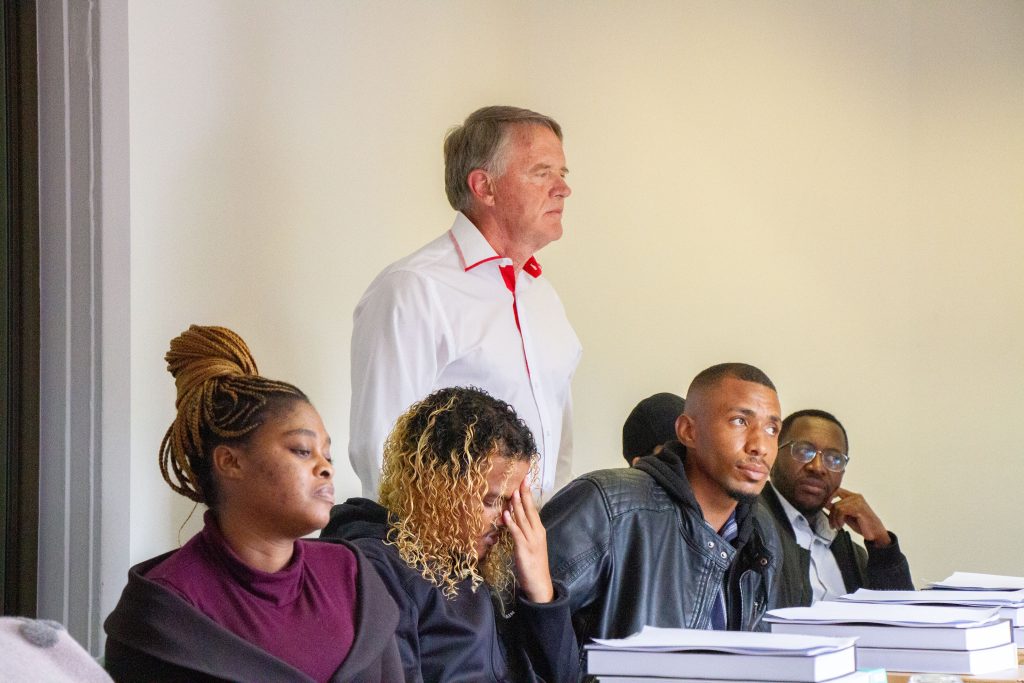
Head of Faculty: Technology and Innovation Management, Dr Sam February, welcomed the cohort on behalf of Prof Benjamin Anderson, President Edward Kieswetter and the Institute’s leadership, introducing students to what it means to become part of the DaVinci learning community.
Framing the experience through the meaning embedded in the DaVinci name, he emphasised principles such as discovery, adaptability, vision, innovation, navigation, collaboration, and impact. These concepts were not presented as abstract ideas, but as practical lenses through which students are expected to interpret their environments and make decisions.
As he noted, the journey ahead is about more than acquiring knowledge. It is about learning to think differently, to engage with complexity, and to apply insights in ways that create real value.
Purpose Beyond Qualification
Justin Nash, the CEO of IRCA Global, reinforced the significance of the decision taken by the students, positioning the qualification as both a professional and personal milestone.
He highlighted that the value of such a journey extends beyond financial reward, pointing instead to the deeper impact of informed decision-making and responsible leadership. The message was clear: the true return on learning lies in the ability to influence outcomes and improve the environments in which one operates.
Investing in Long-Term Impact
Naas Fischer, representing Advanced Group Transformation, emphasised the broader context within which the programme sits. He positioned the qualification as part of a larger developmental trajectory, both at an organisational and national level.
Students were encouraged to look beyond immediate outcomes and consider the long-term implications of their learning journey, particularly within a rapidly evolving global and local landscape. The credibility associated with a recognised tertiary qualification, he noted, plays a critical role in shaping future opportunities.
A Different Approach to Learning
A defining feature of the onboarding was the emphasis on DaVinci’s distinctive learning model. As reinforced during the session, the programme moves away from traditional academic conventions such as examinations and rigid assessment frameworks.
Instead, the focus is on active engagement, critical thinking, and the practical application of knowledge within real-world contexts. Learning is positioned as a dynamic process, requiring presence, reflection, and participation.
Setting the Tone for the Journey Ahead
Overall, the onboarding signalled a clear intent. This is not a programme designed for passive participation, but for individuals prepared to engage deeply with their own development and the challenges within their environments.
By aligning academic insight with organisational relevance, the partnership between The DaVinci Institute, IRCA Global, and Advanced Group Transformation establishes a strong foundation for meaningful learning and measurable impact.
As the cohort begins this journey, they do so as part of a broader learning community committed to inquiry, application, and purposeful leadership in an increasingly complex world.
Leave a Reply