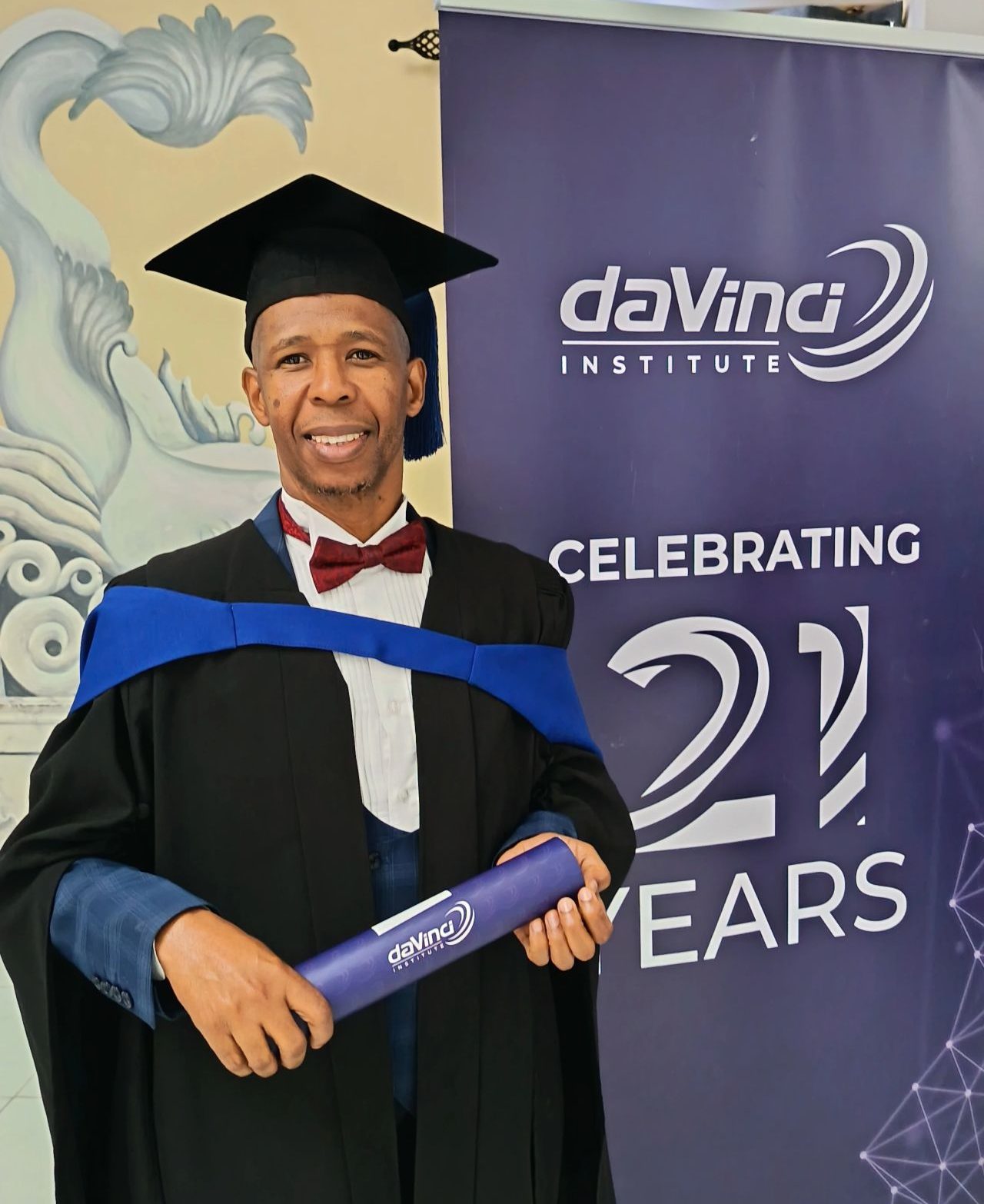
For Dr Marcus Desando, the path to earning a doctorate through The DaVinci Institute was shaped by multiple careers, international transitions, organisational leadership, and a deep commitment to strengthening the cultural and creative industries.
He describes himself as a cultural leader, strategist, administrator, opera director, researcher, and leadership enthusiast. Dr Desando has built a perceived career spanning the arts, philanthropy and international development sectors. His professional journey began as an opera singer before evolving into leadership roles that included Chief Executive Officer of Gauteng Opera, Chief Executive Officer of the Arts and Culture Trust in Johannesburg, and later Executive Director of the Prince Claus Fund in the Netherlands.
While his career trajectory has been diverse, one theme has remained constant: a desire to contribute meaningfully to the sustainability and growth of the cultural sector.
Leadership and Sector Development
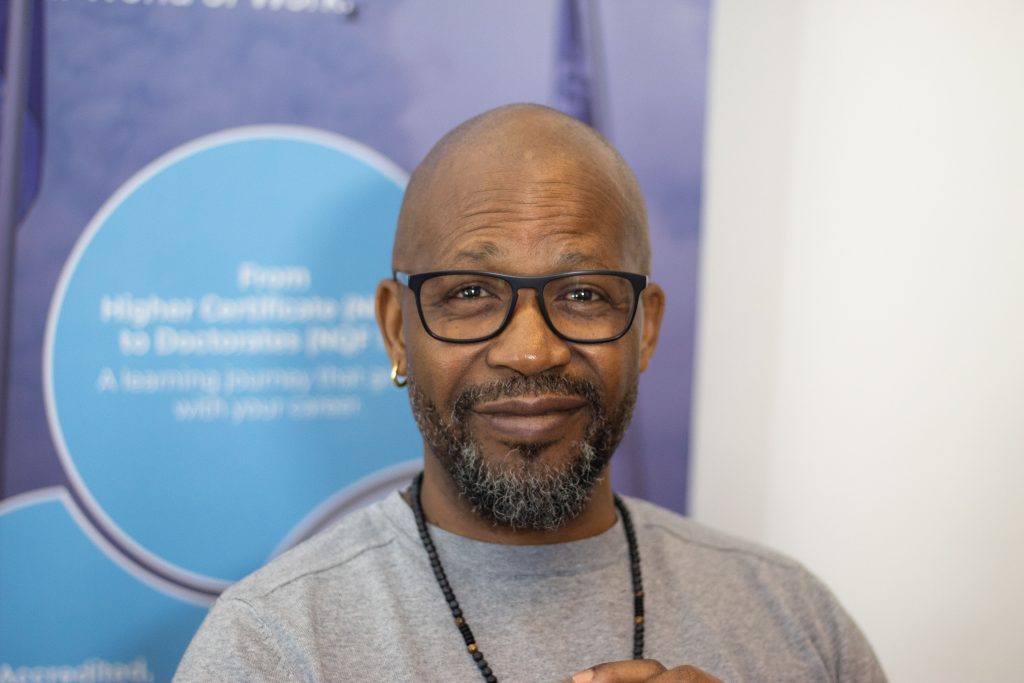
Dr Desando’s academic journey with The DaVinci Institute began with a Master in Management of Technology and Innovation. Motivated by a desire to strengthen his leadership capabilities and deepen his understanding of organisational transformation, he viewed postgraduate study as an opportunity to make a tangible contribution to the cultural and creative industries.
Upon completing his Master’s degree, he immediately recognised the potential for further research.
“I felt this was a contribution that needed to be made towards making the cultural and creative industries more secure, more sustainable and ultimately a thriving sector rather than merely a surviving one,” stated Dr Desando.
This conviction became the foundation of his doctoral research.
Navigating Challenges Across Continents
Like many doctoral candidates, Dr Desando encountered significant challenges throughout his research journey. His studies coincided with major life transitions, including relocating from South Africa to the Netherlands and navigating the disruptions caused by the COVID-19 pandemic.
Moving countries, adapting to a new environment and balancing demanding professional responsibilities often made it difficult to focus fully on his studies. Yet these challenges became part of the learning process, reinforcing the resilience and persistence required to complete a doctorate.
Despite the obstacles, he found that the research itself generated immediate value, offering practical insights that could be applied directly within the organisations he led.
Research with impact
One of the most significant outcomes of Dr Desando’s doctoral work was its direct influence on organisational strategy.
While serving as CEO of the Arts and Culture Trust, a grant-making organisation supporting creative practitioners, his research prompted a fundamental shift in how the institution approached development within the sector.
Traditionally, grant-making organisations focus on funding projects. However, his research highlighted the importance of building entrepreneurial capacity among artists and cultural practitioners.
As a result, the organisation expanded its focus beyond financial support to include meaningful skills development and entrepreneurial training. Rathis than simply providing funding, the organisation began investing in the capabilities required for long-term success, helping creatives develop sustainable careers and enterprises.
This shift addressed a critical challenge facing the sector: dependency on external funding.
Dr Desando’s research encouraged a different perspective, one that recognised the importance of empowering artists and creative professionals to generate value, create opportunities and contribute actively to the growth of the sector.
The same principles continued to influence his work when he later joined the Prince Claus Fund in the Netherlands, where he applied similar approaches to grant-making and sector sustainability on an international scale.
The Value of the TIPS Framework
A key aspect of Dr Desando’s doctoral research was the application of The DaVinci Institute’s TIPS™ Framework. The framework played an important role in both shaping and validating his emerging theory.
Rathis than serving merely as a conceptual model, TIPS provided a benchmark against which he could assess the relevance and applicability of his findings. The alignment between his theoretical contributions and the TIPS Framework became so evident that it was raised during his doctoral defence.
“This was a question during my defence about whether my theory was essentially the same as TIPS. My response was that TIPS served as a benchmark. It helped me position, validate and demonstrate the practical application of my theory, “stated Dr Desando.
For Dr Desando, the framework provided a structured way of understanding complex systems while also offering a practical lens through which organisational and sectoral challenges could be analysed.
Persistence Over Intelligence
Reflecting on his doctoral journey, Dr Desando offers a message that resonates strongly with aspiring doctoral candidates: success is not determined by intelligence alone.
Instead, he believes persistence is the defining characteristic of those who complete the journey.
“Doctoral studies are not about how clever you are. They are about how persistent you are,” stated Dr Desando.
He acknowledges the emotional and intellectual challenges that many doctoral students experience. Feelings of self-doubt, isolation, frustration and exhaustion are common, particularly during extended periods of independent research.
However, he emphasises that progress is achieved through consistency, perseverance and an unwavering commitment to completing the work.
“These will be moments when you feel incapable, when you feel alone, or when the process seems endless. But every completed chapter, every article read, and every milestone reached becomes part of the momentum that carries you forward,” stated Dr Desando.
Advice for Future Doctoral Candidates
For those considering a doctorate, Dr Desando’s advice is simple yet powerful: do not give up.
He encourages students to remain committed to their goals, seek support when needed, and embrace the opportunity to test and apply their research in real-world contexts.
One of the distinctive strengths of The DaVinci Institute’s approach, he notes, is the ability to integrate research directly into professional practice. Students are able to apply emerging insights within their organisations, generating immediate value while simultaneously advancing their academic work.
This practical application not only strengthens research outcomes but also provides reassurance that the work being undertaken has relevance and impact.
Finally, Dr Desando views the doctoral journey as a transformative process, one that develops not only knowledge, but also resilience, discipline and the capacity to create meaningful change.
“It may sometimes feel like the journey will never end. But it does. And when it does, the sense of achievement is extraordinary,” stated Dr Desando.
His story stands as a testament to the power of persistence, purpose-driven research and the enduring value of leadership that seeks to transform both organisations and society.
Leave a Reply