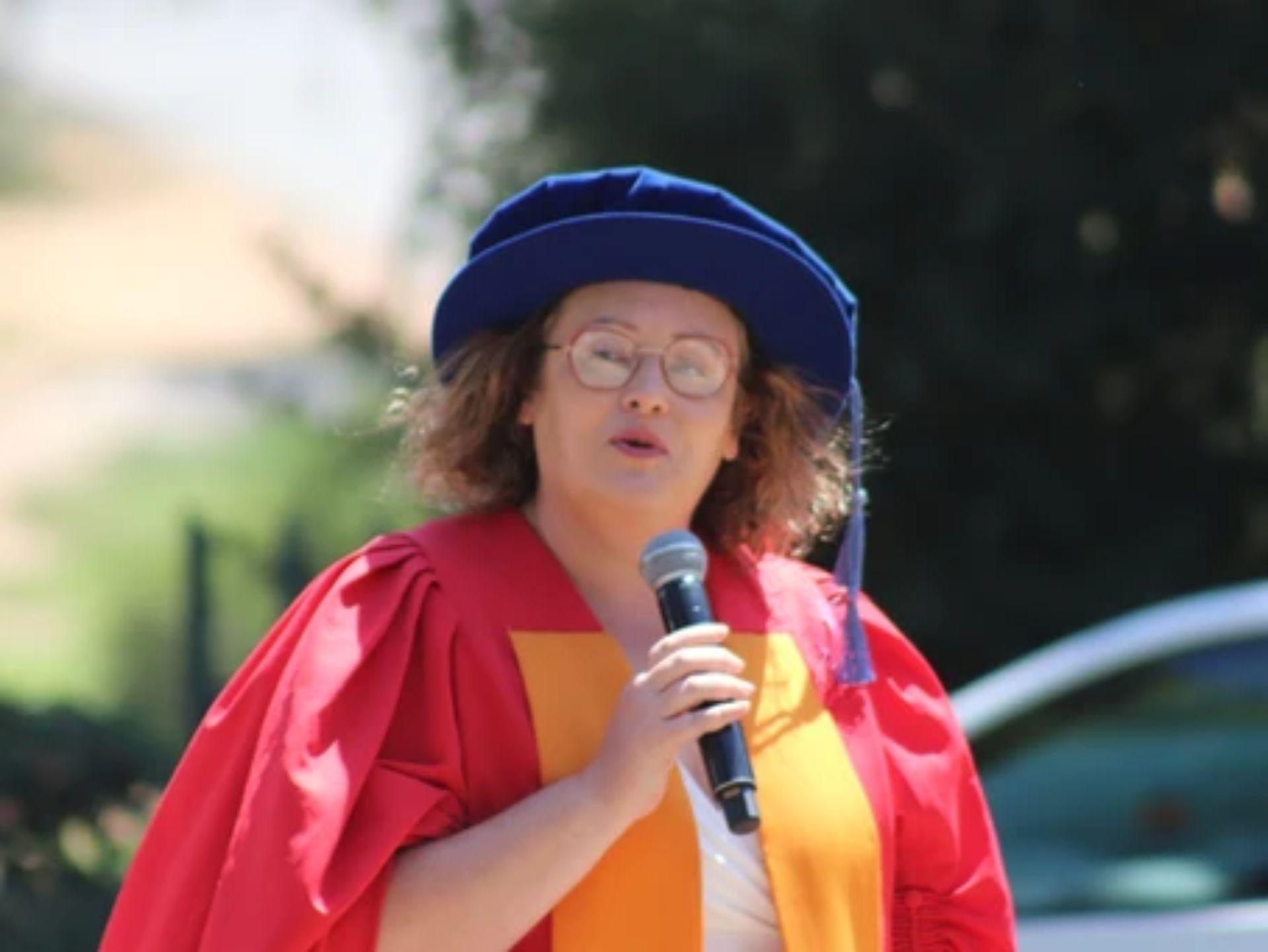
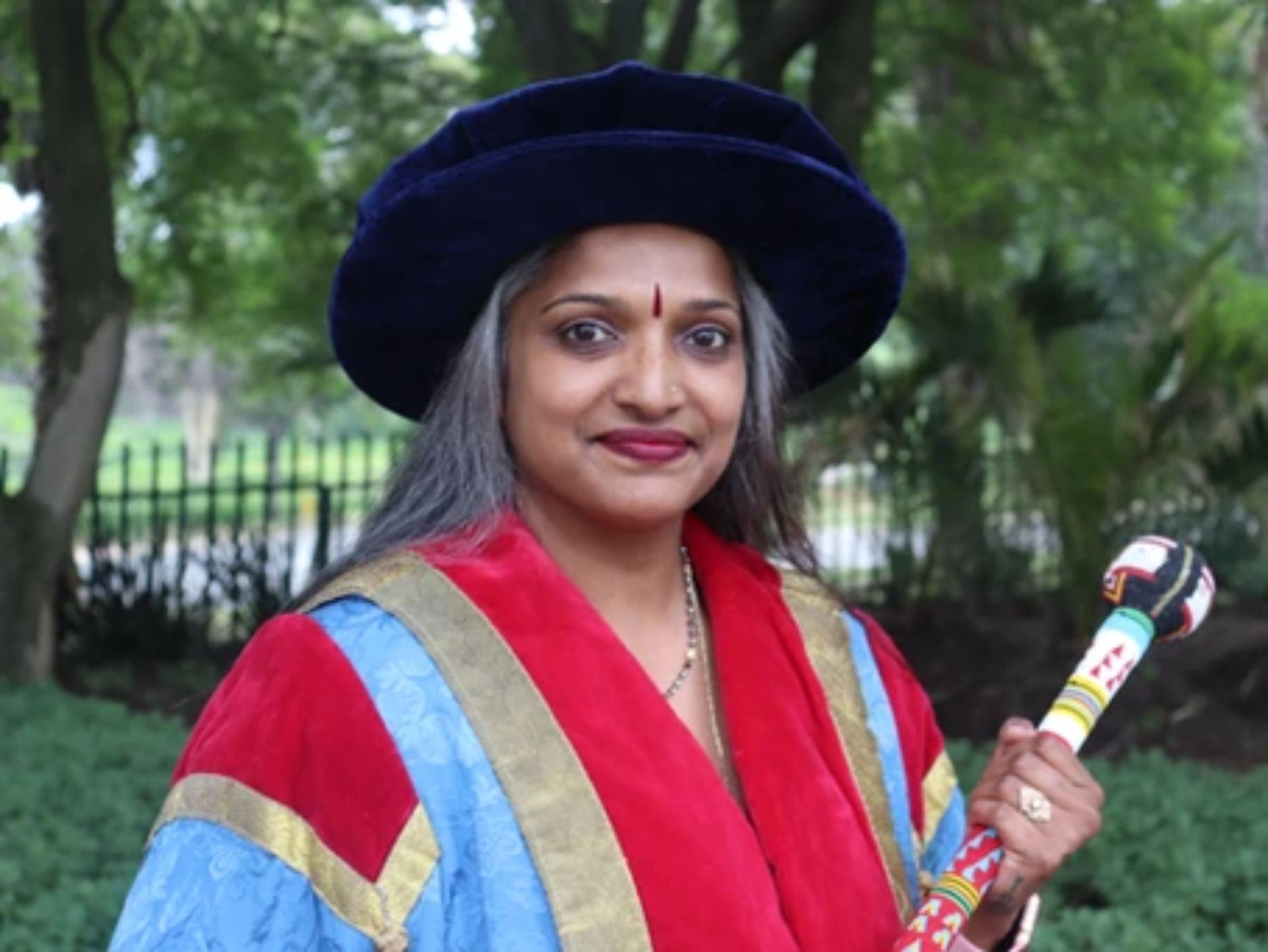
Executive Dean: Academic Operations, Student Support & Learning Experience
Making Time Count for Studies and Family
Global Family Day serves as a reminder of the significance of fostering harmony and unity in the midst of diversity, principles that are equally crucial.
when it comes to balancing academic pursuits with family commitments. In the grand scheme of things, time is our most valuable commodity, one that once spent, cannot be reclaimed. Therefore, it’s imperative that we make every moment count.
Spending hours on end engrossed in tasks doesn’t necessarily equate to meaningful productivity. To make the most of my time, I’ve adopted a structured approach, dividing my day into manageable chunks allocated to specific endeavours. Whether it’s work, research, study, family, or self-care, each aspect gets its dedicated time slot. By adhering to this strategy, even if I don’t tick off every task on my list, I still accomplish those I’ve earmarked for attention.
In the context of my PhD studies, implementing this method during the final year proved immensely beneficial. Setting aside dedicated hours from 5-6 am every weekday and a portion of one weekend day for my research ensured consistent progress without the pressure of playing catch-up later on. This disciplined approach not only alleviated feelings of overwhelm but also fuelled my motivation by fostering diligence and continuity.
The same principle extends to family time. As a single parent juggling work, study, and parenting responsibilities, I’ve come to understand that it’s not about the quantity, but the quality of time spent with my son. Amidst the chaos of daily life, I carve out one sacred hour each day exclusively for him. During this time, I disconnect from distractions and fully immerse myself in his world, letting him choose our family activity of the day. It’s a cherished ritual where we bond without interruptions, setting boundaries while instilling values of consistency and dedication.
As Marie Forleo aptly puts it, “Success doesn’t come from what you do occasionally, it comes from what you do consistently.” This sentiment rings true in both my academic and familial endeavours. By prioritising quality over quantity and maintaining a steadfast commitment to my chosen pursuits, I’ve fostered harmony and unity within my home while pursuing my goals guilt-free.
This approach is adaptable and applicable to any area of life that holds significance. So, as we celebrate Global Family Day, let’s remember to cherish our loved ones and make every moment count.
In today’s rapidly changing business landscape, pursuing a postgraduate diploma in South Africa is becoming crucial for those looking to escalate their career trajectory and enhance their expertise. Various industries demand increasingly specialised knowledge, so professionals are turning to postgraduate diplomas to secure a competitive advantage. This prestigious qualification doesn’t just enrich your theoretical and practical understanding but paves the way for higher leadership roles and further scholarly endeavours.
In this comprehensive guide, we delve into the essentials of obtaining a postgraduate diploma in South Africa, examining its equivalence to other qualifications, detailing the admission requirements, and highlighting the unique benefits it offers to propel your professional and academic goals.
What is a Postgraduate Diploma Equivalent to in South Africa?
In South Africa, a postgraduate diploma (PGDip) is a qualification equivalent to an honour’s degree. It follows a bachelor’s degree and is typically aimed at enhancing professional qualifications and expertise. The PGDip provides a focused approach to a specific field of study or professional practice, placing it between a bachelor’s degree and a master’s degree in complexity and depth. An example of a PGDip is our Postgraduate Diploma in Business Leadership.
DaVinci Alumnus
What Level is a Postgraduate Diploma in South Africa?
A postgraduate diploma in South Africa is classified as an NQF (National Qualifications Framework) level 8 qualification, the same level as an honour’s degree. This level signifies advanced knowledge and skills, focusing on specialised learning. It prepares students to solve complex practical problems and think critically within their field of study.
Is a Postgraduate Diploma Equivalent to an Honours Degree in South Africa?
While both the postgraduate diploma and an honours degree are classified at NQF level 8, they serve different purposes. An honours degree is typically more academic and research-focused, preparing students for a master’s degree. In contrast, a postgraduate diploma is more practice-oriented, aimed at enhancing professional skills and practical knowledge. However, both a PGDip and an honour’s degree led to entry into a master’s programme, such as our Master of Business Leadership and Master of Management in Technology and Innovation.
Postgraduate Diploma vs Honours Degree in South Africa
Deciding between a postgraduate diploma and an honours degree depends on your career goals and educational needs. Both are postgraduate qualifications usually offered at NQF level 8 and provide entry into a master’s degree. However, If you’re looking to bolster your professional skills and apply knowledge directly to your career, a postgraduate diploma could be the better choice.
Moreover, a postgraduate diploma could be the perfect fit if you’re considering furthering your education while keeping up with a busy work life. It’s tailored for real-world application, giving you the skills you need to shine in your job right away. The flexible nature of a postgraduate diploma means you can often balance study with your current job, moving up in your career without a pause in your professional life.
Who Qualifies for a Postgraduate Diploma?
To qualify for a postgraduate diploma in South Africa, applicants typically need a bachelor’s degree at NQF level 7 or an advanced diploma. The DaVinci Business School, for example, also considers applicants through a Recognition of Prior Learning (RPL) process, which evaluates an individual’s professional experience and previous learning.
Requirements for a Postgraduate Diploma in South Africa
The general entry requirements for a PGDip include a relevant undergraduate degree. Specific programmes, like the Postgraduate Diploma in Business Leadership at DaVinci Business School, might also require a certain level of professional experience or previous exposure to business studies.
DaVinci Alumnus
Exploring Postgraduate Diploma Options Online in South Africa
With the advancement of digital technology, some institutions now offer online postgraduate diplomas, allowing for flexibility and accessibility. These programmes are ideal for working professionals looking to advance their careers without compromising their work schedules.
In the digital age where adaptability is key, DaVinci Business School stands out as a beacon of innovation, providing a postgraduate diploma online via distance learning that seamlessly blends with the hectic lives of working professionals. With a history spanning 20 years, DaVinci has fine-tuned the art of distance education to prioritise the utmost flexibility and convenience.
This commitment to accommodating busy schedules is reflected in their learner-centric approach, where education moulds to fit your life, not the other way around. At DaVinci, education transcends the theoretical. By integrating work-based challenges into the study modules, the institution ensures a harmonious blend of academic theory with the practical demands of the business world. The curriculum is sharp and industry-focused, crafted to arm you with relevant, actionable knowledge that can be applied directly to your professional environment. Whether tuning in from the comfort of your home or between business meetings, DaVinci ensures that your educational journey is as dynamic and flexible as the industry it prepares you to lead.
Conclusion
In conclusion, a postgraduate diploma in South Africa offers a practical and esteemed pathway to further education and career advancement. Institutions like DaVinci Business School provide robust programmes to equip students with theoretical and practical business leadership skills, contributing significantly to personal and professional development. For those interested in such programmes, understanding the prerequisites, structure, and outcomes is crucial to making an informed decision.
Navigating the academic landscape to enhance professional growth through a postgraduate diploma in South Africa offers a unique opportunity to specialise and excel in competitive business environments. Institutions like DaVinci Business School are at the forefront, providing tailored programmes that align with industry demands and personal career aspirations. Whether you are aiming to bridge the gap to a master’s degree or enhance your professional skills for immediate application, a postgraduate diploma is a worthy investment. With its blend of practical focus and academic rigour, the postgraduate diploma stands out as a valuable credential for aspiring leaders and professionals committed to personal and professional excellence.
We are excited to announce a significant addition to our Strategic Advisory Board at DaVinci Business School. Professor Thuli Madonsela, a renowned professor of law and an influential figure in social justice, has joined our team of esteemed advisors. Professor Madonsela brings a wealth of experience, knowledge, and dedication that promises to enhance our institution’s mission and strategic direction significantly.
A Stalwart of Justice and Education
Professor Madonsela occupies the prestigious Law Trust Research Chair in Social Justice at Stellenbosch University and founded the Thuma Foundation for Democracy Leadership and Literacy. Her contributions to law and social justice are extensive and profound. As the former Public Protector of South Africa, she played a critical role in drafting the South African Constitution. She co-architected several constitutionally mandated laws, including the Equality Act, Employment Equity Act, and Promotion of Administrative Justice Act.
Her work has not only reshaped the landscape of South African law but has also had a ripple effect on international human rights practices. Professor Madonsela’s efforts in investigating improper conduct in state affairs have established new benchmarks for transparency and accountability in governance.
An Educator and a Leader
In her academic roles, Professor Madonsela is deeply involved in teaching and research, focusing on Constitutional Law, Social Justice Law, Administrative Law, and Constitutional Governance and Ethical Leadership courses. Her extensive publication record further underlines her commitment to advancing legal and social discourse. An advocate of the High Court of South Africa, she also holds eight honorary law doctorates and has received over 70 awards for her service and achievements.
Beyond the Professional Realm
Professor Madonsela’s commitment to social justice extends beyond her professional endeavours. She is an avid mountaineer who has twice summited Mt. Kilimanjaro in campaigns to raise awareness and funds for social causes, including the #Trek4Mandela and the Social Justice M-Plan. Her dedication to these causes speaks volumes about her character and commitment to making a tangible impact on society.
Looking Ahead
As we welcome Professor Thuli Madonsela to our Strategic Advisory Board, we look forward to the insights and inspiration she will bring to our school. Her unparalleled expertise and ethos of service will undoubtedly guide our strategic initiatives and help mould the future leaders we are committed to developing.
Stay tuned for more updates as Professor Madonsela begins her journey with us, and join us in embracing the wealth of opportunities her involvement is set to bring. We are confident that her presence on our board will be transformative, and we are eager to see the fruits of this new chapter in our school’s history.
Welcome, Professor Madonsela, to DaVinci Business School. Together, we will strive towards a brighter, more just future in business education.
When we think of gearing up to compete in the global knowledge economy, we tend to think about the need for universal access to the internet and broad-based digital education. Few of us think about the role that doctoral graduates have to play – or why they’re so important.
Dr. Pheaga Jacob Moasa, DaVinci doctoral graduate.
To gain some insight into this, we need to test our knowledge of exactly what a knowledge economy is. Unlike an industrial economy, which depends primarily on manufacturing output, a knowledge economy relies on the production, distribution and use of information and ideas. This is a radical shift in focus from what we have always seen as the source of value in an economy and is the concept that lies at the very heart of the fourth industrial revolution (4IR), the technology-driven tectonic shift that’s changing everything about the way we live, work, learn and play.
At an everyday level, this means that most jobs in today’s world require a well-developed ability to assess, analyse and apply knowledge in order to serve people in some way. Whether this is in banking, healthcare, education, retail or, indeed, manufacturing, the long and the short of it is that the greatest value a company or organisation has is the knowledge of its workforce. And that knowledge needs to be nurtured at every level. From a strategic point of view, the ability to be agile and to innovate quickly and successfully within the context of constantly evolving technologies and shifting levels of interaction can make or break a business.
Banks, for example, now have to offer not just a physical presence and an internet presence but also technologies that deliver a host of added values and an easy, user-friendly customer experience. Retailers, in turn, are rapidly having to adapt to the burgeoning demand for a seamless and convenient online purchasing experience that is backed up by a high level of customer service. Even in farming, the use of AI-driven technologies like drones and rain monitoring systems are essential if farms are to be efficient and remain competitive.
The role of doctoral graduates
This is where the need for doctoral graduates comes in: graduates who have the skills required to innovate and lead enterprises of all kinds into the future. And, if their qualifications are to be relevant in the contemporary working environment, studying towards a doctoral qualification means much more than proposing an area of study and writing up a lengthy thesis that few people beyond the academy are destined to read.
This applies especially in South Africa, which has such pressing transformation and development needs, the measure of a doctoral degree lies in the impact it has, both in the graduate’s field of study and on society as a whole.
The government has recognised how important it is to promote doctoral study and has set a target of producing 5 000 doctoral graduates a year from 2030, nearly double the number of candidates who graduated annually just five years ago. It is also aiming to ensure that 75% of all academics in universities across the country hold a doctoral degree by 2030, again double the number who held this qualification at the turn of the decade.
Dr. Raymond Toga (left), DaVinci Doctoral Graduate, and Kgalalelo Hlaoli (right), DaVinci Graduate
The motivation for this is to equip academia, government, business and industry with suitably qualified individuals to drive the development of a robust and sustainable knowledge economy characterised by a future-focused mindset and what can only be described as extreme technological proficiency. In a context such as this, knowledge is the new form of fuel and doctoral graduates are the engines.
A new breed of doctoral graduate
With this in mind, it’s clear that we need to cultivate an entirely new breed of doctoral graduates and that studying towards a doctoral degree needs to go way beyond the acquisition of specialised knowledge.
In short, doctoral degrees need to deliver graduates with a set of highly transferable skills in problem-solving, critical reasoning, in-depth analysis and original thinking. Above all, doctoral qualifications need to strengthen the graduate’s capacity to consider every challenge in a multidisciplinary way and to take many different variables into account when finding and implementing solutions to those challenges.
If South Africa is to be able to compete with developed economies driven by knowledge, the value of doctoral education can’t be underestimated. And it is for this reason that candidates need to adopt an entirely different approach to study — and to apply their learning.
Dr. Ilse Smuts (center), DaVinci Doctoral Graduate, and Her Family
A unique approach to doctoral study
The nature of business schools should be such that they require doctoral students to interrogate the nature and role of their area of study while still in the process of writing their degree proposals — and to find a unique voice before undertaking the degree itself.
Once equipped with a doctoral degree, candidates need to be able to make a significant contribution to change and development, both in their field of study and in society as a whole. They also need to be able to demonstrate a meaningful return on the investment they or their companies have made in advanced education.
They have to test and defend their theses before they are accepted for doctoral study, and throughout this initial process, they need to engage with faculty and other students in a way that reflects the real-life working environment.
What kind of doctoral graduates do we need?
There is a growing need for graduates who are equipped to take a multidisciplinary approach to the management of technology, innovation, people and systems. This is because there’s a need for learning programmes to support the goals of both the National Development Programme and the UN Millennium Development Goals (MDGs).
The aim of all institutions of higher learning is, therefore, to do more than impart knowledge; it’s to empower future leaders with the capacity to change the world based on the universal values and teachings of visionaries like Leonardo da Vinci and Nelson Mandela.
Like these and other historic leaders, we believe that education is the most powerful tool for effecting positive change in society. And if we boil it down to a single deliverable, as institutions of higher learning we need to contribute to the pipeline of excellence that will enable South Africa to compete successfully in the global knowledge economy.
Professor HB Klopper, Executive Dean: Research, DaVinci Business School
Welcome to The DaVinci Institute, where your journey of learning and leadership, with a focus on global impact, doesn’t end with graduation. Our alumni, leaders in various fields, are making big changes worldwide, focusing on solving Africa’s unique challenges.
We’re excited to start the #DaVinciAlumniVoices campaign, a weekly feature showcasing the valuable insights and experiences of our alumni. These individuals, who have led the way in business, technology, and innovation, are now using their skills to make a difference in their fields to improve conditions across Africa.
Each week, we’ll share a quote from one of our alumni that inspires action and innovation and highlights the importance of leadership and co-creation.
Stay tuned for our first highlight, and join us in celebrating the impactful stories from The DaVinci Institute community.
Engage With Us
We invite you to engage with us, share your thoughts, and be part of our continuous journey of growth and innovation. At DaVinci, we’re more than just a business school; we’re a community dedicated to excellence, innovation, and making a real difference in Africa.
In her enthusiastic address, “Let’s Innovate for Life and Stay Young at Heart”, at the 2024 academic year opening, Dr Marla Koonin emphasises the importance of staying connected to our hearts to foster innovation and sustain youthful enthusiasm.
Drawing on Tom Kelley’s insights from the Entrepreneurial Thought Leaders Series at Stanford, she outlines five habits to enhance creativity: thinking like a traveller to stay observant and curious, treating life as an experiment where failure is a step towards success, nurturing an attitude of wisdom by questioning what we know, using our ‘tortoise mind’ to allow subconscious processing and creativity, and following our passions to align our strengths with what we love doing. Dr Koonin’s message encourages embracing a mindset of continuous innovation and curiosity as keys to a fulfilling and impactful life.
Innovate for Life and Stay Young at Heart with Dr. Marla Koonin: Academic Year Opening 2024
Let’s Innovate for Life and Stay Young at Heart! By Dr Marla Koonin
If you are to believe Hallmark, then this is the month of love, the month of the heart. The heart is the essence of what keeps us alive and connected, and so today, I would like to connect us back to our hearts.
As part of the Entrepreneurial Thought Leaders Series at Stanford, Tom Kelley, General Manager at IDEO, presents five habits that enhance creativity, and he describes how they can help us be more innovative and successful in every part of our lives. His podcast is titled Young at Heart: How to be an Innovator for Life. It is also eloquently summarised by Guadalupe de la Mata.
For centuries people have wondered about what the elixir is to remain young at heart, perhaps one of the ways we can do so is to be an innovator for life, and in the process, we can influence more humane sustainable societies. Kelley, in his podcast, speaks of five habits for being an innovator for life and staying young at heart that I want to share with you on this quest to stay young at heart and innovate for life.
1. Think Like a Traveler
Take your mind to a place you have travelled to, a foreign place, something that is new to you. When you travel to somewhere new, you are in a heightened state of reality, you notice things differently and your brain is on elevated alert, your senses are enhanced, and you become more aware of the things that are happening around you.
Kelley explains that in these moments of newness, you observe your environment in more detail, and you switch off the autopilot that takes you through everyday life. He encourages us to keep that part of our brain switched on as often as possible.
We need to breathe, pause, and engage in life as if our senses are heightened, like we are travellers in our own life. We need to, as he says, “turn up the traveller part of our brain to capture the deep and up-to-date knowledge of what is happening around us.”
2. Treat Life as an Experiment
Kelley prompts us to succeed, we will have to fail. He reminisces that “unfortunately, failure is seen as undesirable in our society; however, people forget that most innovations are preceded by a number of failures.”
At DaVinci, as part of the Mode 2 approach to knowledge discourse and our approach to learning and teaching, as well as in the TIPS™ Managerial Leadership Framework, we highlight the importance of promoting experimentation. We explain that if you want to truly be agile as a managerial leader and for organisations to embody agility, they need to Manage their Technology and Innovation through several competencies and practices, one of which is to promote experimentation.
As a Business School DaVinci’s position on promoting experimentation is viewed through the lenses of Kolb (1984), Gelb (1998) and Leonardo DaVinci himself. To sensitise society about the benefits of experimentation in learning and working, experimentation should occur at both the individual and organisational levels. Underpinned by the principles of divergent thinking, assimilated thinking, convergent thinking and accommodative thinking and substituted by Gelb (1998), with reference to Leonardo Da Vinci’s principles of Curiosita (seeking the truth), Dimostrazione (taking responsibility), Sensazione (sharpening awareness), Sfumato (engaging the shadow), Corporalita (nurturing integration), Connesione (embracing holism) and Scienza (cultivating balance), individuals could develop an awareness of the power of integrating different modes of thinking, thus, successfully co-creating lasting solutions and innovations.
The competence to promote experimentation and to take risks in a safe-to-fail environment encourages self-reflection, stimulates novel and adaptive thinking, and assists in overcoming habits that may restrict creative thinking. Applying effective communication strategies (adult, parent, child relationship), consciously supports the expression of ideas and aspirations, which allows business leaders to find their voice. This competence of promoting experimentation tends to optimise collaboration and facilitates and grows cooperative mindsets (DaVinci 2020).
So continually remind yourself that no matter how young or old your heart feels, it is ok to fail, as long as you take lessons from the failure and refine your thinking, shift what you are doing, continue to grow and keep moving forward. If you want to stay young at heart and innovative, then never stop treating life as an experiment.
3. Nurture the Attitude of Wisdom
Kelley states that it is “not what you don’t know that gets you into trouble, it is what you know for sure that is not so.”
To nurture the attitude of wisdom, we need to keep an element of seeking and discovery in front of our minds. We must always distrust what we know, just enough to prompt us to keep searching. We need to think outside what is in the box and cast our minds to what is beyond our understanding and socially constructed reality of truth to see what is yonder and the possibility of what we cannot see but is out there to be discovered.
4. Use your Brain and your Tortoise Mind
Kelley tells us to think with our tortoise mind. Yes, that’s right, slow and steady even wins the race in innovation! Kelley positions the tortoise mind as a part of our subconscious mind that works in the background of our consciousness. It is the part of our mind where, even without knowing, we mull over thoughts, ideas, problems, solutions, etc., for days, weeks, months, and years as they tick away. It reminds us to stop thinking that the moment of innovation is that “aha” moment that seems to come like a bolt of lightning to one’s mind. Instead, the “aha” moment is the result of engaging the tortoise mind. It is just the moment of us stepping across the finish line, not running the race.
The tortoise mind needs time to process – so turn off your music and calls the next time you are driving home from work and give your mind time to daydream, think and be creative. Go on and engage that tortoise mind and stay young at heart!
5. Follow your Passions
We all get told to follow our passions to be successful, and then we will never work a day in our lives, but how does one put this into practice? Kelley encourages us to think about following our passion in three circles, as summarised by de la Mataas follows:
Circle 1: What are you good at?
It is important to keep in mind what you are good at. However, just because you are good at something doesn’t mean that this is the only thing you can do in life.
Circle 2: What are you born to do?
People have a good idea about what they are good at. But it’s harder to figure out what you are born to do. Take the time and reflect, even for just a few minutes a day on what it was in your day that you felt the happiest doing. Start reflecting over time on what that is to trace what it is you are passionate about and born to do.
Circle 3: What would people pay you to do?
Finding ways to get paid and live on what you love doing is the best blessing: you will never work again.
If you live your passion, you will naturally do so with more energy and invest more time into it and leverage your strengths by doing so. Innovators cannot be stuck in their ways; they must be flexible, creative, and continuously evolving to make an authentic change, and that requires us to give ourselves the space to reflect and engage our tortoise minds. I implore you to keep innovating and stay young at heart and mind no matter how your body ages.
Executive Dean: Learning Operations and Governance: DaVinci Business School
*The views expressed in this speech present the personal insights of the speaker, which are not intended to represent DaVinci Business School’s official positions or beliefs.
Short Bio: Dr Marla Koonin
Dr. Marla Koonin
Dr Marla Koonin stands out as a visionary leader in the field of higher education, boasting an illustrious career that spans over two decades. Her journey began with a solid foundation in journalism and public relations, which paved the way for her ascension to senior roles in academic administration, institutional research, and program development.
Dr Koonin’s expertise extends to the intricate process of accreditation, underscoring her dedication to maintaining high educational standards.
At the heart of her professional narrative is her role as Executive Dean of Learning Operations and Governance at DaVinci Business School, where she has been instrumental in shaping innovative educational practices and policies. Her academic credentials are impressive, with advanced degrees in Communication, Journalism and a PhD focusing on the nuances of Organisational Communication Culture and Climate. This academic prowess complements her practical experience, providing a strong foundation for her leadership and governance roles.
Dr Koonin is also celebrated for her contributions to scholarship and public discourse. She is a prolific writer, with her works published in esteemed academic journals and mainstream media outlets, and is a respected author and editor in her fields of expertise. Her writings not only reflect her deep understanding of public relations and journalism but also her commitment to advancing knowledge and fostering informed discussions.
Her vision for education is characterized by a relentless pursuit of excellence, innovation, and inclusivity. Dr Koonin’s leadership philosophy centres on enhancing the student experience, ensuring that educational programs are not only academically rigorous but also accessible and relevant to a diverse student body. Her efforts to streamline operations and governance at DaVinci Business School have been pivotal in creating an environment that encourages critical thinking, creativity, and lifelong learning.
Beyond her administrative and scholarly achievements, Dr Koonin is a mentor and advocate for students and educators alike. Her dedication to education extends beyond the confines of her institution, influencing educational policy and practice on a broader scale. Dr Marla Koonin’s career is a testament to her unwavering commitment to shaping the future of higher education through leadership, innovation, and a deep-seated belief in the transformative power of learning.
Yesterday, The DaVinci Institute hosted its annual academic year opening event. Dr Riaan Steenberg, one of our board members, delivered a thought-provoking commencement address.
In his inspiring commencement address, Dr Riaan Steenberg challenges the traditional notions of academic freedom with a compelling question: “Are we free to think and teach?” Against the backdrop of today’s global and societal demands, Dr Steenberg advocates for a revolutionary approach to scholarship and teaching, emphasizing the need for academic militancy to drive Africa’s development and prosperity. He underscores the importance of education in unlocking innovation and creating industries that not only spur economic growth but also address the continent’s most pressing needs. With a deep dive into the constraints on freedom imposed by societal and external forces, Dr Steenberg calls for a collective responsibility towards fostering a future where freedom is not just an individual aspiration but a collective achievement. This thought-provoking address from a leader in African education highlights the pivotal role of academic institutions like DaVinci Business School in shaping thinkers, leaders, and innovators who can rise to the challenges of the modern world and contribute significantly to Africa’s sustainable progress and freedom.
Are We Free to Think and Teach?
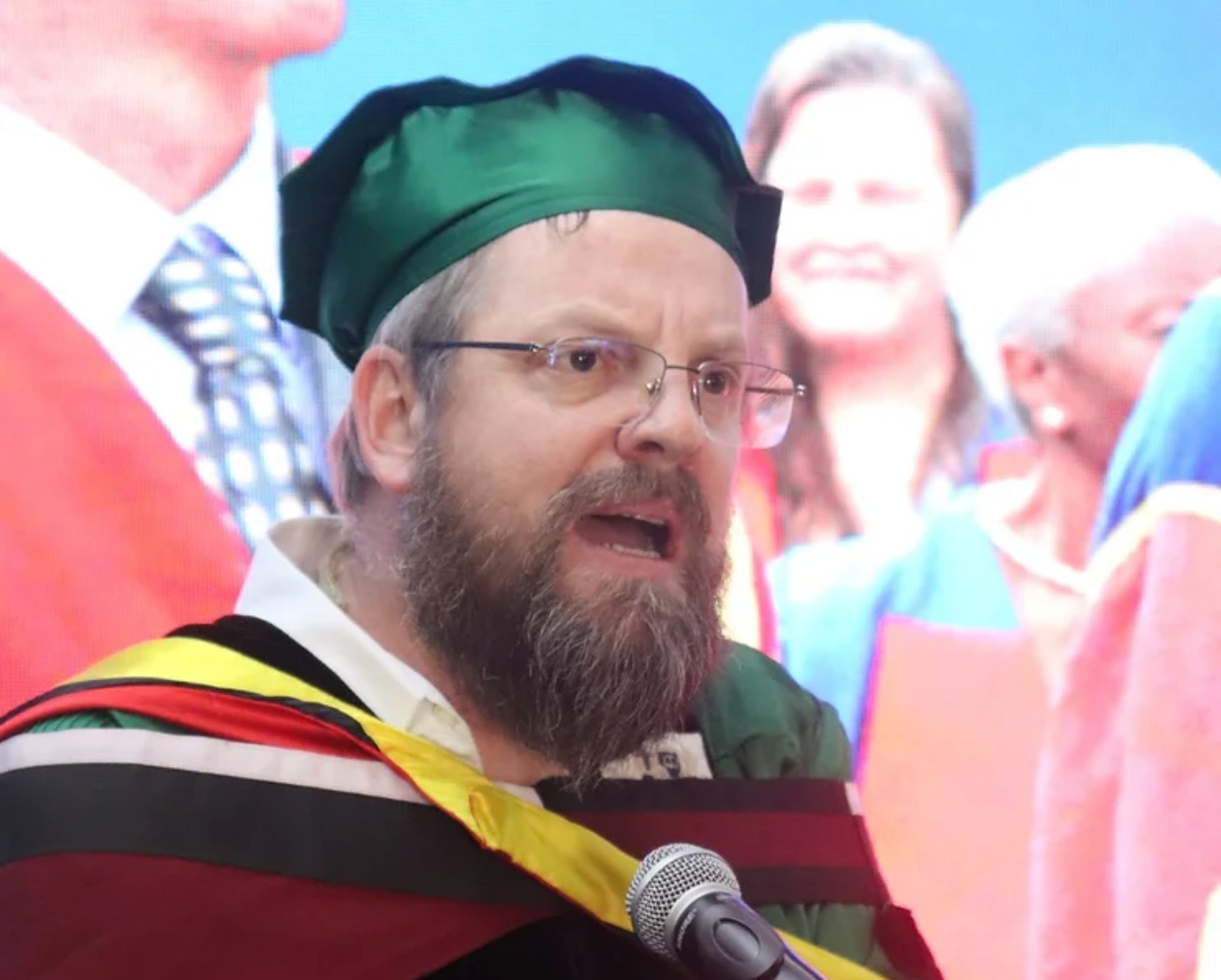
Dr. Riaan Steenberg
Good morning, esteemed colleagues, distinguished guests, and the brilliant minds that form the future of our continent. Today, as we stand at the academic precipice of a new era, I am tasked with exploring a question of profound depth and significance: “Are we free to think and teach? Scholarship and Teaching for the World as It Is Today”.
Are we free to think and teach? At first glance, the academic halls will open and echo with a resounding “Yes.” Yet, as we delve deeper into the fabric of our responsibilities and the context of our world today, we find that this freedom is intertwined with an inescapable duty. A duty not just to educate but to forge real and lasting solutions that address the pressing needs of our society and our continent at large.
Freedom
Freedom is a multifaceted concept that embodies the power and right to act, speak, or think as one wants without hindrance or restraint. It is both a fundamental human right and aspiration and a cornerstone of societal organization, encapsulating individual autonomy, the liberty of choice, and the absence of oppressive restrictions imposed by authority on one’s way of life, behaviour, and views.
We are all free – but we are often unwilling to accept the price of true freedom. You can do what you want, but if it hurts another, then there should be justice. You can live where you want but do not be surprised if another has a right to that land. You can feel what you want, but we universally have emotions when it involves others. So freedom itself is inherently constrained by having to interact with others and rules and norms built over time.
We can argue that the life of the ascetic is then the true price of academic freedom in the tradition of the sages that would go into a cave and come back years later – having achieved true wisdom. Invariably, these enlightened sages end up teaching or leading – so once again, freedom seems inextricably linked to serving others.
A Framework
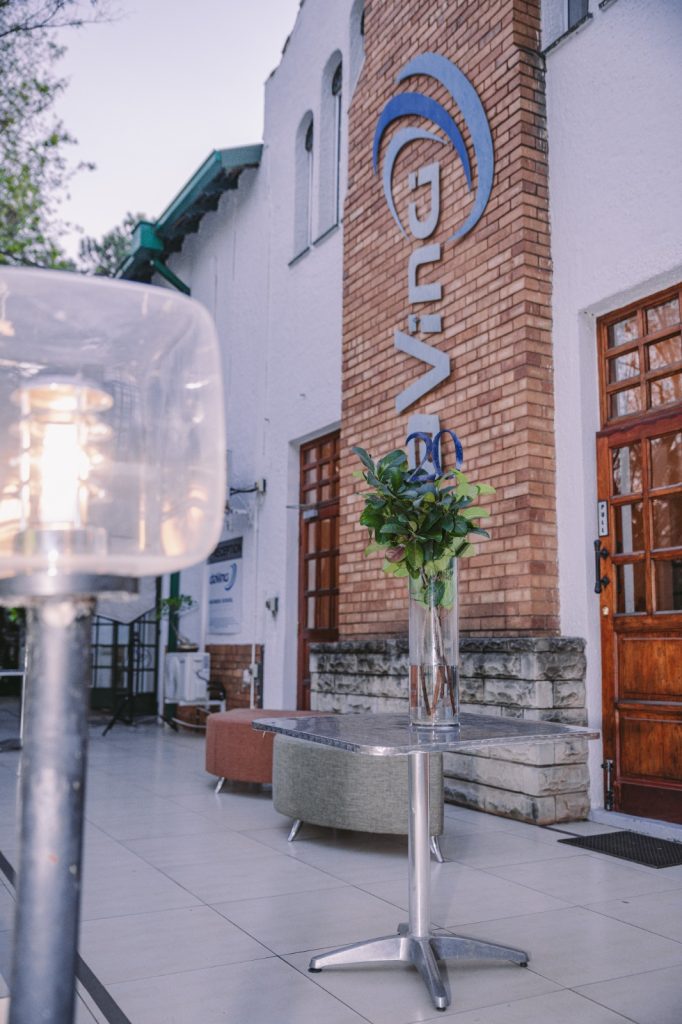
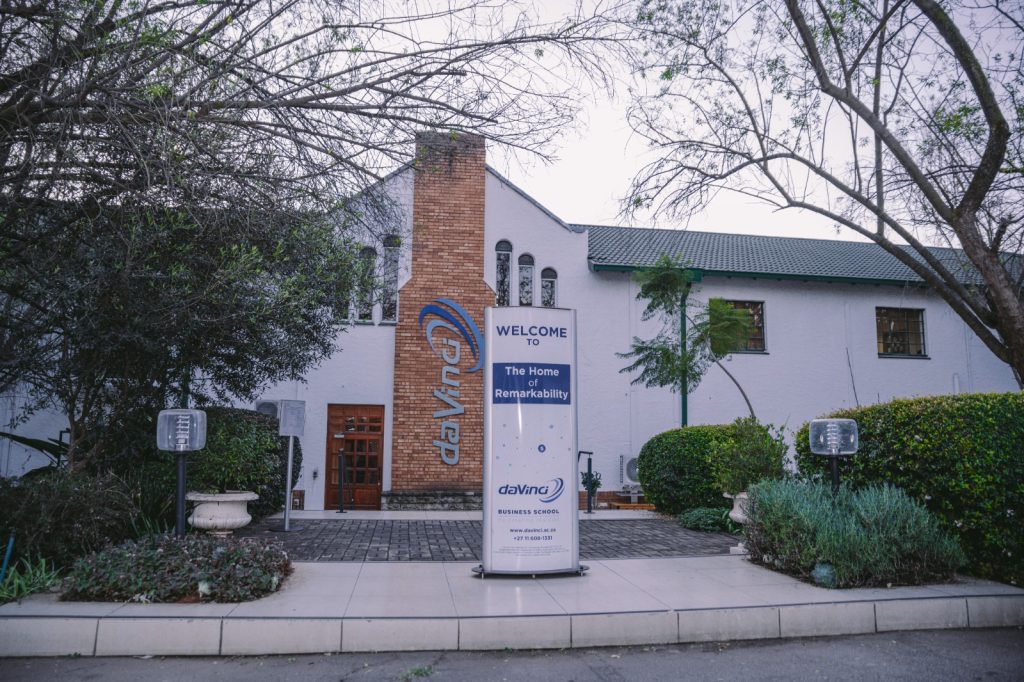
The DaVinci Institute’s headquarters building.
At its core, freedom involves the delicate balance between the individual’s rights and the collective well-being, necessitating a framework within which freedom is exercised responsibly. It transcends mere physical liberation, reaching into the realms of intellectual and spiritual expression, allowing for the free exchange of ideas, the pursuit of personal goals in the context of a just world, and the cultivation of a life that reflects one’s true self and values. The pursuit of freedom has always been in the essence of the human experience enabling growth, innovation, and the pursuit of happiness. So the prize that is bigger than personal freedom is the chance for collective freedom. To collectively achieve freedom, we collectively need to foster a society that respects and uplifts the dignity of all its members so that not just one but all can be free. We need to respect and uplift the value of each member of society so that all, and not just one, can be free. We need to respect and uplift the spirit of each person so that all, and not just one, can soar to the greatest heights of human fulfilment.
So it brings me to the most pressing question – why is Africa not free? How has this continent escaped the true fulfilment of its potential? Is it because we have let others define our freedom? Is it because we are squandering our resources at the cost of the freedom of our souls, serving as the bread and minerals basket for others for centuries?
Africa
While Africa faces a myriad of critical needs, ranging from economic diversification, education, healthcare, infrastructure, food security, clean water, environmental protection, governance, digital transformation, and energy sustainability, the core challenge transcends these individual issues. The continent’s paramount task is not merely addressing each need in isolation but fostering the creation of innovative industries that inherently solve these problems as a product of their operation. To do so, I pose it to you as an audience today that the true spirit of innovation will be ignited in the minds of PhDs and researchers who will design these industries to make a real and positive change.
The DaVinci Institute is ideally poised, through its management of technology and innovation programmes, to be that centre of innovation and growth that will ignite Africa’s freedom.
This singular real challenge, therefore, is to cultivate a robust ecosystem of thinkers and doers that design industries that not only drive economic growth but also seamlessly contribute to solving Africa’s most pressing needs. This approach underscores the importance of holistic solutions that integrate economic development with social and environmental well-being, suggesting that the creation of such industries is indeed Africa’s single biggest challenge and opportunity for sustainable progress. If we then take this to its logical conclusion, then we have to posit that our freedom is limited and that we need to apply ourselves ceaselessly to the intellectual pursuit of creating these industries – which inevitably leads to the conclusion that we need to start with education.
Today, I also want to honour pioneering thinkers such as Prof Ben Anderson, who has been a sentinel in saying we need to have a different conversation – that led to the formation of The DaVinci Institute.
Challenges And Opportunities
In this era of unprecedented challenges and opportunities, the traditional paradigms of learning and teaching are undergoing a transformative shift. No longer can we afford to be siloed in abstract theories and disconnected disciplines. The world today demands a more applied, integrated approach to scholarship—one that transcends academic boundaries and leads directly to the formation of new industries, innovations, and solutions that can uplift our communities and economies. There is simply not enough time for us to solve our collective challenges. The IP game is over and dead, and the solutions game has opened. It is interesting to note that service economies are experiencing rapid inflation as AI is already changing the order of labour both by making existing effective providers more productive, thus limiting new entrants, but also by moving to a more personalised paradigm of having the tools that you need and lifting the order of work away from manual solutions.
Scholarship Perspective?
What is the objective, then, from a scholarship perspective? While usually, a scholar seeking parsimony between their ideas and the proven “laws” found through the scientific method in those most glorious halls of intellectual breakthroughs that we would all like to enter – we must realise that many of those laws were often proven with Africa not being around the table. There can thus be no parsimony if the ideas we have do not line up with what we experience as researchers. I found in my own research that the tools to support entrepreneurs and the so-called challenges facing entrepreneurs were grossly misunderstood in the literature that was not from Africa. We must also realise that the very objectives that are currently prevalent in many disciplines do not serve us. I propose that our scholarship should look for solutions that many other scholars in the world will claim already exist and may lead to scathing and unpopular perspectives or violation of previous conventions or settled arguments. We should not be scared to overturn these findings – challenge and reprove these outcomes, and also, we should not be scared to claim the loss of humanity in these solutions. We should also not be afraid to draw on ourselves as African scholars and re-interpret the world to foster our own freedom and to serve our own needs.
China
I find it fascinating that if you want supply and demand statistics for Africa you can find it in China, Europe and the US – because they know what we buy from them, but you cannot find it in Africa. I find it challenging that we collaborate with drug researchers to test drugs in Africa that we end up buying at great cost from smart people who make us pay in diamonds, gold and rare minerals for things that they learnt from us. I find it most disturbing that we export iron ore to pay for cars that get imported from countries that have no mineral resources. So we rack up debts for buying things that we supplied the raw materials for. We have to buy chickens as part of trade deals so that farmers in other countries can prosper while our politicians kill our own local industries for hands full of silver and gold that was drawn from our own soil.
This brings us to the heart of our discussion: the notion of freedom within the academic realm. To be free to think and teach in the context of our shared reality is to recognize the weight of our responsibility. We are not free in the sense of operating in a vacuum, detached from the world’s ailments. Rather, we are entrusted with a profound duty to society—a duty to leverage our intellectual resources, creativity, and collective wisdom to tackle the issues that plague our continent and to use every tool possible to stop us from hindering its progress.
How Can We Think And Teach
The question then shifts from “Are we free to think and teach?” to “How can we think and teach in a way that serves the greater good?” This is where I am a proposer of the concept of academic militancy for Africa. As scholars, educators, and students of this esteemed institution, we are called upon to be academically militant. Not in a sense of aggression but in our unwavering commitment to pursue knowledge that directly contributes to Africa’s development and prosperity. I believe that many of the solutions that are in the academic discourse and indeed in the world today have been weaponised against Africa. Our recent experience with climate change is one such example – where we are being paid monies to fit into agendas that further entrench our dependencies on others. It is time for us to solve our own energy crises and not look to external solutions that exploit our mineral wealth in exchange for giving us tools to convert our own sun into power. Let us be the thinkers who design the tools to deploy these industries and learn from others rather than being sold our own futures that we then have to work back at great cost. This is definitionally not being free – it is to become economic slaves, mineral slaves and intellectual slaves.
I propose that academic militance is an important first step in getting us to a new place like Africa.
It is not our job to tear down others but to build our own new truth that works for us.
An Academically Militant
To be academically militant is to challenge the status quo, question outdated practices, and boldly venture into uncharted territories of research and innovation that can redefine the future of our continent. It is about harnessing the power of applied learning, interdisciplinary collaboration, and entrepreneurial thinking to create tangible change. It is to enable multiple generations to challenge others who use Africa as its doormat for exploitation, thus imposing restrictions on the fundamental expression of our humanness as Africans. It is observing for ourselves what others are so keen to tell us and being less bothered by restrictions that others place on us for their so-called help that they give us what we already have at our own expense through unburdening our minds with rules and conventions that are not applicable here.
Our role as part of this place of learning and this time of learning, and indeed as part of the broader academic community in Africa, is to prepare a new generation of thinkers, leaders, and innovators. Individuals who are not only equipped with theoretical knowledge but who are also deeply committed to applying this knowledge in ways that foster economic growth, social justice, and environmental sustainability in Africa, which is our context.
In preparing to conclude – while the freedom to think and teach is a foundational pillar of academia, it is not an end. It is a means through which we fulfil our societal duty to develop solutions that significantly impact our world. As we embark on this academic year, let us embrace our responsibility with vigour and vision. Let us be academically militant for Africa, not just in words but in actions that resonate across our continent and beyond.
Last Thoughts
In conclusion – we are free to think and teach only when we live that freedom. The rules are there to make us free. If others are not following them – we should call on those very rules to serve us – and redefine them when they do not. Without using this freedom that we have to think and teach, we become the oppressor, we become the constraint, and we destroy futures, and we destroy ourselves. We cannot be free without liberating ourselves.
We cannot liberate ourselves if we put on the shackles that others have prepared for ourselves daily and if we do not equip ourselves and others to express our true potential. This gives us a duty to teach, enable, guide and coax others to create these freedoms not only for ourselves but for others and to demand that Africa’s resources be used for the good of her people in the most efficient and prudent manner possible to achieve her sustainable prosperity and freedom.
It is also not an individual responsibility but a collective responsibility. I give you permission today to be free to think and teach in an African context and look forward to achieving our collective mission of lifting Africa to rise.
Thank you.
Dr Riaan Steenberg
Board Member: The DaVinci Institute
*The views expressed in this speech present the personal insights of the speaker, which are not intended to represent DaVinci Business School’s official positions or beliefs.
Riaan is the Director of Operations and Co-Founder of the NetEd Group, the fast-growing African education platform that incorporates Eduvos, Stellenbosch Business Institute and the Davinci Business School. His life’s mission is to build a network of private universities that educate 250,000 students per annum across Africa, and the NetEd group is currently on its way to achieving 15,000-20,000 students for the year 2024. He is a practical academic, and his doctorate is in using education to awaken the entrepreneurial spirit; he focuses on unlocking value for businesses through Culture, Entrepreneurship, Systems and Innovation. He is a lifetime learner, a business architect at heart and has more than a decade of experience in higher education management at the helm of some of South Africa’s most innovative private higher education environments.
Riaan has a strong technical and analytical approach, and he enjoys working with large teams and often complex implementations. He thrives in the world of mass communications and marketing. He enjoys shaping the potential of people through education in the fast-paced world or private higher education in South Africa. He is a deeply spiritual person and can be said to truly love life. He believes, together with his partners at NetEd, that Africa is too rich to be poor and that the true challenge is to create better education outcomes for as many people as possible.
Dr Riaan Steenberg’s multifaceted background, combining his passion for education with a wealth of leadership experiences and a strong educational foundation, marks him as a visionary leader who is making a substantial impact in the world of education and business. His commitment to fostering education and supporting the growth of businesses is a testament to his exceptional leadership capabilities. As a data scientist, management consultant, and entrepreneur, Dr. Steenberg will continue to shape the future of education and corporate growth across Africa and beyond.
In a passionate address at The DaVinci Institute’s 2024 Academic Opening yesterday, we were privileged to witness a powerful vision for the future of education. Samantha Naidoo, our distinguished Registrar, laid out an ambitious roadmap for the year ahead, emphasising the critical role of academic and research excellence in shaping the leaders of tomorrow.
Her speech highlighted the business school’s commitment to co-creating innovative learning experiences and underscored the importance of integrating academic rigour with real-world applications. Through initiatives like the redesign of the Moodle Learning Management System, the launch of the D@SH student helpdesk, and a series of student support workshops, DaVinci is setting a new standard for educational excellence.
The introduction of industry and academic leaders as subject conveners further enriches our curriculum, ensuring that our students are equipped to meet the challenges of a rapidly changing world. Join us as we embark on a journey of discovery, innovation, and growth at The DaVinci Institute, where every step forward is a step toward creating a more sustainable and compassionate world.
Samantha Naidoo
Navigating New Frontiers: DaVinci’s Vision for 2024 By Samantha Naidoo
To our distinguished guests, esteemed alumni and students, Chairperson of the Board of Directors, Directors, Programme Director, respected academic team and staff, and the broader DaVinci community, including those joining us online, I warmly welcome you to The Da Vinci Institute for Technology Management’s 2024 Academic Year Opening.
As we begin this academic year, we gather in the spirit of advancing academic and research excellence. As an institution of higher learning, we recognise our responsibility to co-create new learning experiences, not only for our current students, but also for the benefit of the broader sector. We embrace this honour with deep gratitude and humility, as it reflects our highest aspirations. Through our engagements and partnerships, we continue to generate bodies of knowledge that guide our students’ learning experiences towards sustainable development.
Academic Rigour
With academic rigour, The DaVinci Institute embraces the view that nothing is as practical as a good theory. A well-developed theoretical understanding offers valuable insight and guidance for practical application and problem-solving in real-world contexts.
We translate theory into practice by applying the principles of Mode 2 Knowledge Production in the student learning process. This approach grounds knowledge production in contextual application, transdisciplinarity, heterogeneity, social accountability, and enhanced quality control.
Mode 2 Knowledge Production places teaching, learning, and research within real-world contexts. It does not confine these initiatives to a single discipline-based theoretical framework. Instead, it positions them within a broader extra-disciplinary application, where knowledge responds directly to practical challenges.
We therefore encourage students to interrogate the practices of their workplaces, organisations, or communities. Through collaboration with colleagues, expert Faculty, and Supervisors, students co-create innovative solutions that remain relevant, current, and responsive to real-world needs.
The Year Ahead
In 2024, the Institute will continue to improve the student experience and align its policies, procedures, and practices with the Higher Education Practice Standards of the Council on Higher Education’s recently launched Quality Assurance Framework.
To strengthen customer centricity and service excellence, Davincians, with technical support from external stakeholders, have begun the phased redesign of Moodle, the Institute’s Learning Management System. This project seeks to enhance both the internal and external user experience, while demonstrating the innovative way in which we manage technology for maximum benefit.
The Learning Operations and Governance portfolio is also pleased to announce the launch of the student helpdesk, aptly named D@SH. Through this platform, students can log queries online from anywhere, at any time, and with any department. They will also receive a tracked record of their query and a direct response from the relevant DaVinci team member. This system improves the efficiency of query responses and promotes greater transparency in student engagements.
Student Support
We are pleased to offer a monthly series of student support and enhancement workshops, starting in March. Through these sessions, experts will lead discussions on topics that remain relevant to our students, including mental wellness, activating the mind as an adult learner, Design Thinking for work, and writing for research, among others.
The Executive Dean: Learning Operations and Governance has also introduced student chat groups to place the student voice at the centre of our engagements. This initiative creates a platform for students to raise matters they feel passionate about and bring important issues to the attention of the leadership team.
These student chat groups complement the Institute’s existing feedback mechanisms, including one-on-one calls, student surveys, and other channels that support open communication between students and the Institute.
Our Commitment
Our commitment to expanding the diversity of our faculty has resulted in the introduction of subject conveners who are recognised industry and academic leaders in the areas of technology, innovation, people and systems. We were thrilled to welcome the first of these appointments – Henra Mayer as the Subject Convener of Innovation – Henra is a respected and well-recognised industry player, and we are excited to have her as part of the team and see the impact to our curriculum and student experience.
DaVinci considers professional development to be a fundamental requirement for all staff. We are particularly excited to share that two of our established academics at the Institute reached their Doctoral milestones at the end of last year. Dr Greg Tosen and Dr Mark Fuller had their doctoral degrees conferred at the October graduation ceremony, together with Dr Raymond Toga, from our Learning Coordinator team. Well done on this achievement, Colleagues.
The Institute continued to add yet another Membership badge to its list of achievements, in not only being approved as a Member of the Association of African Business Schools but also successfully submitting its application for AABS accreditation and having been assigned an internationally recognised Mentor in Dr Jean-Phillipe Ammeux to guide us to reach this next milestone.
South African Business School
Picture of The DaVinci Institute
As the Institute strengthens its position as both a South African and African business school, it has reached an important milestone. With guidance from a member of the newly convened Strategic Advisory Board, DaVinci recently received approval from the Engineering Council of South Africa as a CPD Licensed Body.
This approval enables DaVinci to verify CPD Service Providers and validate CPD Category 1 developmental activities. It also positions the Institute to explore cross-border initiatives across Africa.
Under the leadership of Prof HB Klopper, the research portfolio will focus on attracting top research talent among faculty, partners, and senior students. The Institute will continue to build its research capacity through theme-based priorities across four domains of excellence: innovation, freight forwarding and customs, ESG, and corporate finance.
DaVinci will also advance its thought leadership agenda through initiatives such as MasterMinds, research seminars, focus group forums, and doctoral showcases. These platforms will strengthen the Institute’s research standing in the sector. In addition, DaVinci has begun laying the foundation for a research centre and continues to engage key partners in this process.
Commencing The Year
As we begin 2024 with meaningful endeavours that promote teaching excellence and impactful learning, we must also recognise the important role our industry partners play in supporting our facilitators, supervisors, and staff.
Our facilitators, supervisors, and staff continue to inspire curiosity, ignite new thinking, and nurture the knowledge they share with our students. Their dedication remains steadfast, and their commitment reflects their understanding of the profound role they play in shaping the future.
In their workshops and offices, they do more than share information. They open possibilities, encourage ambition, and help shape the personal and professional journeys of our students. We celebrate these dedicated individuals as architects of tomorrow, guardians of wisdom, and custodians of hope.
As we seek to emulate their dedication, navigate the demands of daily life, and commit ourselves to lifelong learning, we must continue working towards a more compassionate and sustainable world. We must ensure that education remains accessible to all and becomes deeply embedded in our cultural fabric, creating an environment where everyone values and celebrates teaching and learning.
In closing, I leave you with these words from our CEO, Mr Frik Landman:
“The concept of proximity between industry and education is to create a circular personnel economy in which education can be tailored to meet industry and business needs.”
Thank you.
Samantha Naidoo Registrar: The DaVinci Institute
*The views expressed in this speech present the personal insights of the speaker, which are not intended to represent DaVinci Business School’s official positions or beliefs.
Short Bio: Samantha Naidoo
Samantha Naidoo
Samantha Naidoo serves as the Registrar at DaVinci Business School, where she brings extensive experience and expertise in education management. She has built a strong professional background in programme management, business planning, academic report writing, and project management.
Her advanced business acumen, supported by strong academic qualifications, gives her a deep understanding of effective processes and systems. She resolves complex issues, implements meaningful improvements, and helps ensure that the institution not only meets, but exceeds, its required standards.
Samantha is currently pursuing a Master of Education in Educational Management at the University of Johannesburg. She also holds a Bachelor of Arts and a Bachelor of Arts with Honours from the University of the Witwatersrand.
One of her key career highlights includes managing the development, accreditation, and registration of South Africa’s first engineering higher education qualification offered by a private education provider. This achievement reflects her leadership, strategic capability, and innovative thinking..
Samantha is an Affiliate Member of the Chartered Institute of Professional Practitioners and Trainers and holds a Master Occupational Directed Practitioner (M.ODP) designation, further testament to her commitment to professional excellence. Samantha Naidoo is a forward-thinking education manager dedicated to fostering academic excellence and innovation at the DaVinci Business School.
Early last week, we had the privilege of attending the 8th World Conference on Qualitative Research (WCQR), Johannesburg, where academics (scholars), from local and international regions, congregated to present and discuss their research experiences and findings, with the support of Gauteng Provincial Government, co-sponsorship of The DaVinci Institute, in collaboration with Sci-Bono Discovery Centre, and various other equally important institutions that actively participated.
Professor King Costa and Mr. Panyaza Lesufi: 23 January 2024
As an aside, it is worth mentioning that the WCQR is an annual event (conference) that aims to bring together researchers, academics and professionals, promoting the sharing and discussion of knowledge, new perspectives, experiences and innovations on the field of Qualitative Research.
Setting the scene, introductory notes were made by Professor King Costa, the chairman of the Local Organising Committee (LOC) of WCQR. The Gauteng Premier, Mr. Panyaza Lesufi, graced the stage with his welcome address before the commencement of the conference on 23 January 2024.
The Nature of Qualitative Research: Its Essence and Methodology
What was evidently the main point of discussion centred around the nature of qualitative research, its essence, and methodology. Participants engaged in a lively exchange of ideas, each offering unique perspectives on how qualitative research could be defined and conducted. The conversation delved into the fundamental characteristics that distinguish qualitative research from quantitative approaches.
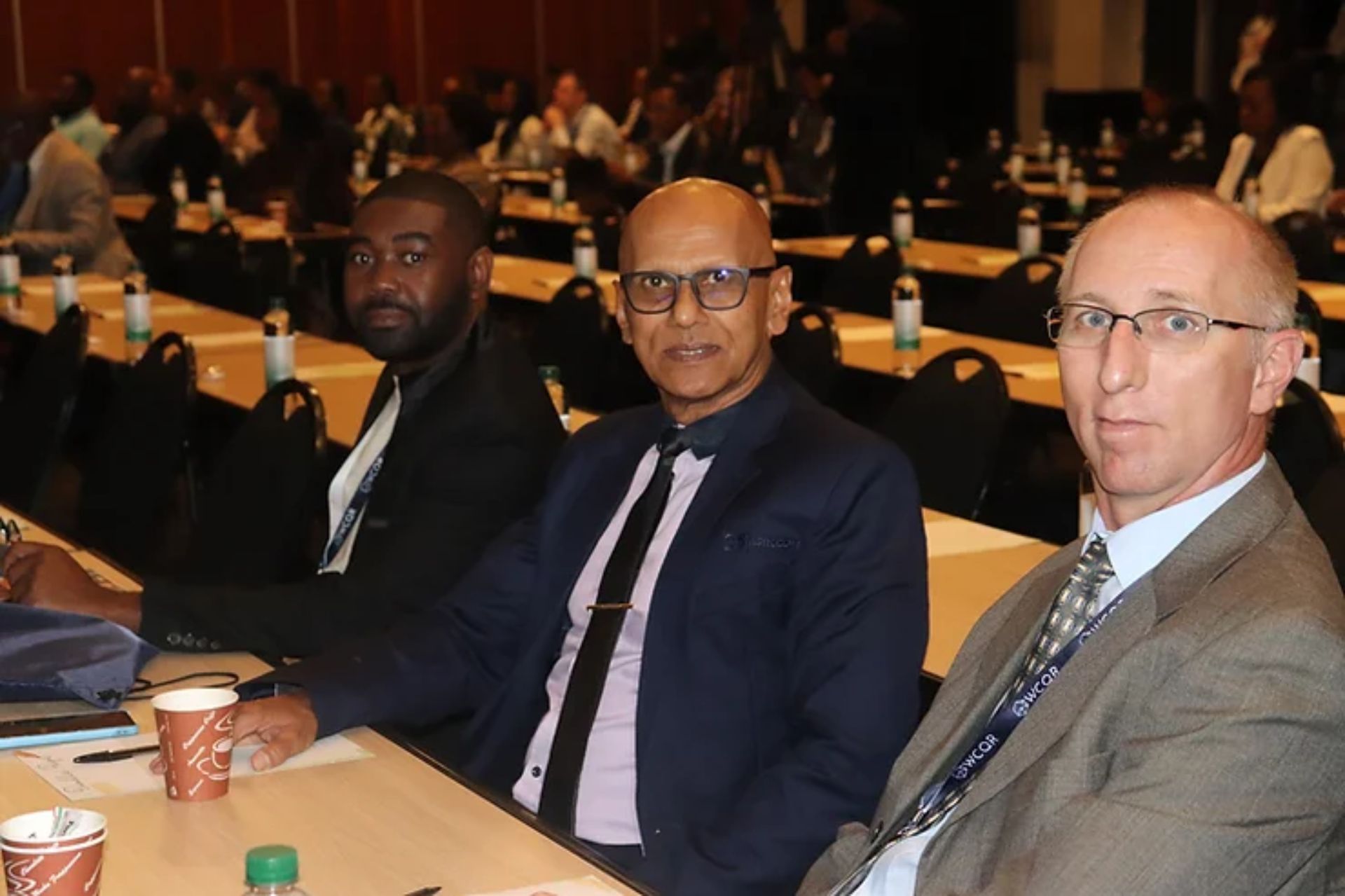
Professor Paul Singh, Dr. Raymond Toga, Professor H.B. Klopper
Our academic team representing DaVinci included Professor Paul Singh (Head of Postgraduate Studies), Dr Raymond Toga (Learning Coordinator: Doctoral Programmes), and Professor HB Klopper (Executive Dean: Research). All three were engaged participants in insightful discussions and presentations.
From a witness standpoint, emphasised was the importance of subjectivity and the researcher’s role in the qualitative research process; it was further argued that qualitative research is inherently interpretive and subjective, requiring researchers to immerse themselves in the context and meaning of the data. One of the participants during the conference brought attention to the flexibility and adaptability of qualitative methods, emphasising the need to be responsive to emergent themes and unexpected insights during the research journey.
Deep Exploration of the Social, Cultural, and Contextual Factors
As the discussion evolved, there was a thoughtful and contemplative consensus that qualitative research goes beyond mere data collection and analysis. It involves a deep exploration of the social, cultural, and contextual factors, meaning that this approach allows for a richer comprehension of the underlying meanings and complexities inherent in the studied phenomena.
All Speakers Expressed Passion in Their Individual Fields of Study
How remarkably insightful it was that all speakers expressed passion in their individual fields of study and the enthusiasm to share their individual journeys. This was especially evident during coffee intervals, where networks were forged and formed. The spirit for lifelong learning was palpably charged.
A Dynamic Exchange of Ideas and Knowledge Among Scholars, Researchers, and Industry Experts
In a country where there is a pressing need for research discussions and tangible outcomes, this conference marks a significant stride in advancing progress, particularly in the realm of qualitative research. We take great pride in having been key participants, actively collaborating, and co-sponsoring this meaningful occasion. It is through international academic events such as this conference (WCQR) that The DaVinci Institute, as a business school, fosters a dynamic exchange of ideas and knowledge among scholars, researchers, and industry experts.
We are delighted to present one of our distinguished doctoral alumni, Dr Pheaga Jacob Moasa, whose academic journey culminated in graduation from The DaVinci Institute.
Dr. Pheaga Jacob Moasa
Dr Pheaga Jacob Moasa, when asked about his career to date, says, “I started my career as a trainee accountant in a Chartered Accounting firm and moved through the ranks in various roles at different companies, specialising in monitoring and evaluation, governance, risk, and compliance. Currently, I am employed with the Wholesale and Retail Sector Education and Training Authority as a Senior Manager in Enterprise Risk Management. This position entails providing assurance on governance, risk, and compliance to the board and management on high-value projects and the annual strategic plan to optimise the delivery of the SETA objectives.”
Perhaps influenced by his work, Dr Moasa is of the view that monitoring, evaluation, and implementation of plans and processes have evolved over the years in all sectors and organisations. However, in South Africa, monitoring and evaluation were first formally implemented by the Department of Land Affairs, where the first Monitoring and Evaluation Directorate was established in 1995.
Research on Monitoring and Evaluation in Sector Education and Training Authorities
Thus, his doctoral study (entitled: Monitoring and Evaluation as a Governance Tool for Enhancing Accountability in the Sector Education and Training Authorities) is focused on various facets of monitoring and evaluation, including the evaluation process, cost-benefit, return on investment, social return on investment, and value for money, to gain more insight into the history and development of monitoring and evaluation.
This study, as Dr Moasa notes, reviewed current monitoring and evaluation practices adopted by the participating sector education and training authorities and explored typical, potential obstacles encountered in the execution of systematic monitoring and evaluation.
The research findings, Dr Moasa further accords, highlight a set of challenges that have generally contributed to the poor implementation of monitoring and evaluation in recent times. Findings indicated the extent to which planned monitoring and evaluation activities were conducted and were linked to the project monitoring together with risk management activities to mitigate the corruption risks that might materialise and disturb the proper implementation of the skills development. The findings further revealed that the existence of the monitoring and evaluation framework provided a structured measure on which projects were monitored as a process to curb negative events such as project failure or, in a worse case, corruption regarding the funds paid to learners in the form of stipends.
Research on Monitoring and Evaluation in Sector Education and Training Authorities
Interestingly and furthermore, notes the author, there is a strong relationship between monitoring and evaluation and good governance within the participating sector education and training authorities, namely the bank sector education and training authority, the insurance sector education and training authority, and the wholesale and retail sector education and training authority.
To this end, the study recommends that the approved monitoring and evaluation framework and policy in the sector education and training authorities be further used to enhance accountability and transparency in all participating sector education and training authorities. In addition, the study recommends that more efforts be made to advocate for the utilisation of the reports that were produced by these business units. The efforts will ensure that monitoring and evaluation of the discretionary grants accurately account for the money spent and enhance good governance, accountability, monitoring, and evaluation of activities relating to the quality of the learning experience for learners in various disciplines offered by relevant sector education and training authorities, says Dr Moasa.
The Post-PhD Path and Words of Wisdom for Aspiring Scholars
“Discipline, consistency, and focus are the three primary qualities that helped me in my PhD journey”, as Dr Moasa concedes, before adding: “Studying for doctoral qualifications is a path that transforms lives because it reveals important characteristics that one would not have known without this study. The voyage puts a person’s fortitude, tolerance, ability to manage their time, discipline, and critical thinking to the test. This was clear from how one handled the various problems and challenging situations encountered in the workplace. The qualification has brought a lot of pressure and, at times, unreasonable expectations from me by the people in my professional and social life. This includes the expectation to provide solutions and advice on subjects that I haven’t personally encountered.”
The Post-PhD Path and Words of Wisdom for Aspiring Scholars
In light of his distinguished academic prowess, we afford our esteemed alumnus the platform to divulge his forthcoming endeavours and impart pearls of wisdom, encapsulated in his declaration thus: “Given my passion for education, my next step will be to help other students with similar interests earn their postgraduate degrees through supervision roles and other unstructured required assistance. Hence, I will also soon begin post-doctoral programmes. My advice to students who want to take this journey is to prepare mentally and reorganise their social and professional lives in a way that won’t subject them to too much pressure.”