In today’s fast-paced and competitive environment, innovation is essential to remaining relevant and thriving in the ever-changing marketplace. Businesses must stay ahead of the curve and embrace new technologies and disruptive business models to remain competitive. The Master of Management in Technology and Innovation programme offered by The DaVinci Business School is designed to equip individuals with the skills and knowledge needed to drive innovation and lead transformational change within organisations.
The qualification offers a unique blend of management and technology-focused courses, providing students with a comprehensive understanding of the intersection between these two fields. From learning about the latest technologies such as blockchain, AI, and machine learning to developing skills in critical thinking, problem-solving, and decision-making, students are prepared to apply their knowledge to drive business growth and success.
The Master of Management in Technology and Innovation programme also emphasises the importance of leadership and strategic thinking in driving innovation. Students will develop the skills needed to lead teams and manage projects effectively, and to become leaders in driving innovation and transformational change within organisations.
Pursuing a Master of Management in Technology and Innovation is a valuable investment for individuals looking to advance their careers and become leaders in the innovative landscape. With this qualification, graduates will be equipped to drive innovation and lead transformational change within organisations, making a significant impact on the future of business.
Dimakatjo Elizabeth Thaba has a career spanning almost two decades in banking, predominantly retail/branch banking. Industries of which she has, over the years, gradually occupied several positions – from entry level to supervisory, senior management, and now she has reached the executive level. It may have been due to her industry work experiences that Dimakatjo witnessed at first hand the advent of digitalisation and advancements in technology that is compelling banks in South Africa into reorganising their model of operations, as well as strategic positioning.
Dimakatjo Thaba: Setting the Pace in Digital Banking
Dimakatjo asserts that while huge brick and mortar outlets are the centre of banking in developing nations, digitalisation is challenging the trend by offering customers conveniences for basic transactions. Her sharp eyes noticed a low customer adoption of digitalised technologies in South Africa’s banking sector, despite the numerous attempts by the South African government and banks to attract more customers to their digital platforms. Factors like perception, high unemployment and high poverty levels continue to challenge customer adoption of digitised banking services.
With the aforesaid in mind, Dimakatjo’s dissertation, entitled: Customer Adoption of Digitized Banking in the South African Retail Bank, adopted the qualitative methodology of research to collect perspectives of the customers on the adoption of digitised banking services as such a methodology of research allows the study to conduct a detailed examination of customer experiences and narrations. The findings indicate that there is a gradual adoption of digitised banking in First National Bank (FNB) South Africa. The main determinants for customer adoption of digitised banking include convenience, ease-of-use, functionality, low banking fees, timesaving, and 24/7 information access on financial status. The other determinants are user-friendlessness, safety, flexibility, and the alleviation of stress.
The findings further indicate that the ideal banking framework for the widespread adoption of digitalised banking by FNB South Africa’s customers is the IBM digitized banking model because of its compatibility to South Africa’s demographics and market. The IBM digitised banking model considers numerous spheres of South Africa’s banking sector, as well as transition. The South African banking industry, policymakers as well as regulators contemplate efficient customer adoption of digitised banking services. Importantly, Dimakatjo’s study raises the following recommendations: Customer education and awareness, gather more demographic information, regulate and foster a secure environment for banking and increased coordination.
When asked about the journey, Dimakatjo credits her tenacity, commitment and willpower, and recognises that her “journey was one filled with all sorts of emotions, trauma, loss, grief, growth, pressure, sacrifices and celebration. My plan was to complete on record time (which I did). It was not easy separating personal life, career growth and academia.”
Yet, finding a balance and sticking to a plan while committing to tasks kept Dimakatjo committed. Additionally, having cheerleaders and a firm support structure was critical in this path, she adds. Positively, having emerged from the experienced, Dimakatjo says presently, “more than ever, I am determined to make a tangible impact. Not only in my life but in society. I’d love to live a remarkable legacy … I plan to be active and to participate in Curiosita Colloquium and Think tank dialogues. There are plenty of platforms to gain more and to share knowledge. This journey is never ending. I’d love to learn and engage other dynamic leaders in different industries and spaces.”
“Management of Innovation” has become, with good reason, a popular buzz in the business world and having a good understanding of the organisation’s context is important. In fact, how the organisation tracks and interrogates external and internal issues and trends is key to building a successful organisation.
Organisations can uncover possibilities for innovation and stay ahead of the competition by tracking internal and external concerns and trends through various methods such as:
1. Market research and analysis:
Market research and analysis is a process of gathering and analyzing information about a market, including information about customers, competitors, and the overall industry. This research can be used to inform business decisions, such as product development, marketing strategy, and sales tactics. The goal of market research and analysis is to provide a deeper understanding of the market and to identify opportunities for growth and improvement.
2. SWOT analysis:
SWOT analysis is used to identify an organisation’s strengths, weaknesses, opportunities, and threats. It can be used to identify both internal and external factors that may impact the organisation.
Strengths and weaknesses lie within the business that give it an advantage or a disadvantage relative to others in the industry.
Threats and opportunities are external factors that could either negatively impact the business or present the business with exploitable opportunities to enhance their current situation.
By understanding the SWOT of a business, a company can make informed decisions on how to improve its performance and achieve its goals. The result of the analysis can help the company identify its core competencies, areas for improvement, and potential opportunities for growth.
3. Employee surveys:
A business cannot thrive without its employees – they are the income producers. and having the right employees with a good employee / company culture should always be measured.
Employee survey findings can be used to pinpoint workplace issues that need to be addressed, like poor communication or low morale, and to implement changes that will enhance employee skills and knowledge or even the interface with customers.
4. Social media monitoring:
Organisations can use social media monitoring tools to track mentions of their brand and identify any external issues or trends related to their industry or products.
The goal of social media monitoring is to gain insight into how a brand is perceived by its audience, identify key influencers and industry trends, and manage and respond to any negative or positive comments about the brand.
Tracking social media assists in the identification of areas of improvement and to make more informed decisions about social media strategies. In addition, it can help businesses to identify opportunities to engage with their audience and to build relationships with key influencers.
Overall, social media monitoring is a valuable tool for businesses of all sizes to track, analyze and engage with conversations on social media platforms, and gain a deeper understanding of their audience, competitors, and industry trends.
5. Key performance indicators (KPIs):
Key Performance Indicators (KPIs) are metrics that are used to measure and track the performance and success of a business, department, or specific project. They are chosen based on the specific goals and objectives of the organisation and are used to track progress over time.
Regularly monitoring and reporting on KPIs can help organisations to stay on track and to achieve their goals.
6. Incident management:
An incident\risk is any event that disrupts normal operations and can include things like natural disasters, equipment failures, cyber – attacks, and other types of emergencies.
Organisations can track internal issues and trends by implementing incident management systems (Risk Management) that allow them to log, track and resolve issues that may impact their operations, in order to minimize the impact of an incident on the organisation, its employees, customers and industries, and to quickly restore normal operations.
Using an innovation management system allows companies to achieve continued revenue and margin growth, increased market share and strong enduring brands – the primary goals of most companies today.
An innovation management system would and should cover many of the requirements of looking at internal and external factors plus monitoring of the critical criteria for best business practice.
Self-confidence. It helps people banish negativity and feel good about their lives and abilities. Those who are self-confident tend to try new things more often, bounce back from disappointment faster, and overcome obstacles more easily. As a result, they are more successful at handling stress, relating to others, and achieving their goals.
From physical fitness and mental health to work and finances, to social interactions and education, self-confidence affects every aspect of life.
The first steps to developing self-confidence take place in childhood, but it is possible to develop it on your own at any age. Finishing your degree is the perfect example of how you can achieve this. Adults can develop their self-confidence and social capital through tertiary education, as well as embrace their identity as learners.
The following advice, activities, and strategies will help you overcome self-defeating patterns and gain newfound self-confidence. These are the kinds of traits that will lead to better career opportunities, improved financial success, and greater job satisfaction.
ANALYSE THE SITUATION REALISTICALLY
Create a list of your best qualities. Are there any things you can do? What do you excel at? How do others perceive you? You should read your list slowly and out loud. Your strengths and achievements are unique, so take the time to appreciate and celebrate them.
TAKE THE CHALLENGE ON
Most people are afraid of trying something new. Getting back into study is no exception. The key to victory, however, is facing your fear. Instead of focusing on the fear, consider it an opportunity. Visualise a successful outcome. Once you have taken a small step, take another and another. When you complete a tough assignment or ask your facilitator for help, you gain confidence.
BEING SELF-CONFIDENT CAN ACTUALLY PRODUCE CONFIDENCE
The practice of assuming something to be true (despite it not being true) dates back to the 1960s. In addition to changing behaviour, it is an extremely effective tool known as a positive feedback loop. Suppose you feel uncomfortable during lectures. You haven’t studied in years. In addition, you are surrounded by people who are younger than you. Instead of focusing on your differences, act as if you belong. Due to the fact that going back to study does not have an age restriction, you can really belong! Interact with others and participate in discussions.
GATHER PROOF
Seek success. Verify your abilities. You can do this by creating an evidence file. On your computer, you can create a physical or electronic file. The folder should contain papers, projects, awards, notes from others that say good things about you, thank you notes from classmates, and a letter of recommendation from your facilitator.
KEEP IN MIND THAT YOU ARE ONLY HUMAN
It takes time and effort to build self-confidence. It is inevitable that you will make mistakes from time to time. There will be times when you feel defeated. It is common to encounter people who seem smarter or better than you in some way. Stay away from self-criticism. Don’t compare yourself to others. Behaviours like these are completely counterproductive. Instead, you should reassess your reality. Make a list of your admirable traits and qualities, and then add some new ones. Moreover, commend or reward yourself for your ability to bounce back from negative self-talk while you’re at it.
The 21st century has brought about many social challenges that require innovative solutions. Some of the most pressing issues include poverty, inequality, climate change, and political polarization. These challenges are interconnected and require a multi-disciplinary approach to address them effectively. A business degree can make a positive impact by equipping individuals with the skills and knowledge necessary to tackle these issues head-on.
Tackling Poverty Through Business Education
One of the most significant social challenges of the 21st century is poverty. Despite global economic growth, the number of people living in extreme poverty remains stubbornly high. A business degree can help individuals understand the economic systems that contribute to poverty and develop strategies to address it. For example, a business degree can equip individuals with the skills to create sustainable and inclusive economic growth, which can lift people out of poverty.
Addressing Inequality and Promoting Shared Prosperity
Another significant social challenge is inequality. The gap between the rich and the poor continues to widen, and this has a detrimental impact on society. A business degree can help individuals understand the structural factors that contribute to inequality and develop strategies to address it. For example, a business degree can equip individuals with the skills to create fair and equitable economic systems that promote shared prosperity.
Confronting Climate Change with Sustainable Solutions
Climate change is another pressing issue that requires urgent action. The burning of fossil fuels, deforestation, and other human activities have led to a warming planet, which poses a significant threat to humanity. A business degree can help individuals understand the economic systems that contribute to climate change and develop strategies to mitigate its effects. For example, a business degree can equip individuals with the skills to create sustainable and renewable energy systems, which can reduce greenhouse gas emissions and curb global warming.
Bridging Political Divides and Reducing Polarisation
Political polarization is another social challenge of the 21st century. In many countries, people are becoming increasingly divided along ideological lines, making it difficult to find common ground and work together to address social problems. A business degree can help individuals understand the economic and political systems that contribute to polarization and develop strategies to bridge the divide. For example, a business degree can equip individuals with the skills to create inclusive and participatory economic systems, which can promote social cohesion and reduce polarization.
Business Education as a Tool for Positive Change
In conclusion, the 21st century has brought about many social challenges that require innovative solutions. A business degree can make a positive impact by equipping individuals with the skills and knowledge necessary to tackle these issues head-on. A business degree can help individuals understand the economic systems that contribute to poverty, inequality, climate change, and political polarization, and develop strategies to address them effectively. In short, a business degree can be a powerful tool to bring about positive change in the world and make a real difference to the lives of people.
Artificial intelligence (AI) is rapidly transforming the business landscape, and it is having a significant impact on business education. Business schools are adapting to this technological revolution by integrating AI into their curriculum and research. This is important because it equips future business leaders with the skills and knowledge necessary to navigate the rapidly changing business environment. In this blog post, we will explore the benefits and challenges of incorporating AI in business education and how it is shaping the future of the industry.
Future Work
One of the main benefits of incorporating AI in business education is that it prepares students for the future of work. AI is already being used in a wide range of industries, from finance to healthcare, and it is expected to continue to grow in importance. By teaching students about AI, business schools are equipping them with the skills and knowledge necessary to succeed in the future job market. For example, students who understand how AI can be used to automate tasks and analyze data will be more valuable to employers than those who do not.
Critical Thinking and Problem Solving Skills
Another benefit of incorporating AI in business education is that it allows students to develop critical thinking and problem-solving skills. AI is a complex and rapidly evolving technology, and understanding it requires a deep understanding of the underlying principles. By teaching students about AI, business schools are helping them develop the ability to think critically and solve problems, which are valuable skills in any industry.
Research
AI is also providing new opportunities for research and innovation in business schools. By incorporating AI into their research, business schools can explore new areas of study and develop new insights into important business problems. For example, researchers can use AI to analyze large amounts of data and make predictions about consumer behavior, which can help businesses make better decisions.
Challenges Posed By AI
However, incorporating AI in business education also poses some challenges. One of the main challenges is keeping the curriculum up-to-date. AI is a rapidly evolving technology, and new advancements are being made all the time. This means that business schools must be constantly updating their curriculum to ensure that students are learning the most current information.
Another challenge is ensuring that students have access to the necessary resources. Incorporating AI into the curriculum requires specialised equipment and software, which can be expensive. This can be a barrier for some students, particularly those from low-income backgrounds.
Finally, there is a need for business schools to address ethical considerations surrounding AI. As AI is being integrated in more and more aspects of our lives, it’s important that future business leaders are familiar with the ethical implications of AI and how to navigate them. This includes understanding the potential biases that can be built into AI systems and the potential negative impact on society and the workforce.
In conclusion, AI is having a significant impact on business education. Business schools are incorporating AI into their curriculum and research to prepare students for the future of work, develop critical thinking and problem-solving skills, and explore new areas of study. However, there are also challenges to incorporating AI in business education, including keeping the curriculum up-to-date, ensuring that students have access to the necessary resources, and addressing ethical considerations. Business schools have to navigate these challenges in order to ensure that their students are well-equipped to tackle the business challenges of the future.
As a Business School, we understand that preparing for work is not just about getting dressed and heading to the office. It involves preparing yourself both mentally and physically for a productive day.
Starting Your Workweek Off Right
To help you start your workweek off right, we have compiled a list of tips that you can use to prepare yourself for a successful and fulfilling workweek:
Get a good night’s sleep
Aim for at least 7 hours of sleep each night so that you feel well-rested when you wake up. If it is difficult for you to fall asleep, try taking a warm bath, reading, or listening to soft music before bedtime.
Wake up at the same time every day
To help you develop a routine, set your alarm clock to go off a little earlier each day until you are waking up at the time you want. Listening to upbeat music can get those endorphins going, so start your day with some music.
Eat breakfast
Eating breakfast in the morning gives you energy and helps you stay alert during the day. If you don’t have time or simply don’t like eating in the morning, try drinking a glass of juice or milk.
Exercise for 30 minutes every day
Exercise is a great way to stay healthy, fit, relieve stress, and boost your mood. If you don’t have time in the morning, try exercising after work. If you don’t like to exercise, try joining a gym or taking dance lessons. Do something that you enjoy so that it becomes easier to stick to your routine.
Schedule time for relaxation during the day
It is important to take some time out of your busy schedule to relax and unwind. If you do not have much time, try doing something relaxing for just a few minutes each day. You can meditate, listen to music or read a good book.
Have fun at work
Try to find a way to bring some fun into your workday. This will help you look forward to going to work each day and make it less stressful.
Following these tips will help ensure a successful and fulfilling workweek, month, and year. Remember to approach each task or challenge with some positive energy and thrive in your remarkability!
With a new year comes new opportunities and for many, a new job search. The first step to a successful job search is a well-crafted CV. Your CV is the first impression an employer has of you, so it’s important to make it stand out. A good CV should highlight your skills, experience, and achievements in a concise manner, but how do you go about making your CV remarkable?
Crafting a Remarkable CV for Your Job Hunt
Here are some tips to help you craft a CV that will make you stand out from other applicants:
Keep it concise
A good CV should fit on one side of A4 paper, with margins, so keep your paragraphs short and use bullet points, headers, and tables to break up the text. Make sure to focus on the most relevant information.
Use action verbs
Choose words like “achieved” and “designed” instead of passive verbs like “developed” or “helped”. This helps to make your achievements sound more impactful.
Highlight personal achievements
If you have personal achievements, consider including them at the end of your CV as a list or on an extra page. This allows you to explain your skills and and achievements in more detail in your application form.
Use your cover letter to your advantage
If you don’t have any experience, it may be better not to include a CV at all. Use your cover letter as an opportunity to explain why you’re suited to the role and how your skills will benefit the employer. Consider doing some volunteer work to gain experience and show what you’ve been doing with your time.
Be honest and accurate
It’s important to be honest and accurate in your CV, especially if you have a gap in employment. If you’re changing careers, make sure to explain why this is relevant to the position you’re applying for.
With these tips, you’re on your way to crafting a remarkable CV. Remember, a good CV is the first step to a job interview, so take the time to make it stand out. Best of luck in your job hunt!
Dr. Rajaspree Pillay is a change agent whose mission is to create a humane and sustainable environment. A proud alum of The DaVinci Institute, Dr. Pillay has made significant contributions to her field of work and is now a highly regarded expert in Global HR Management, Transformation, Employee Relations, Social Inclusion, Change Management, and Business Strategy. With over 24 years of experience working in a range of industries, including the environmental sector, IT, FMCG, and finance, Dr. Pillay has proven to be a valuable asset to any organisation.
Rajaspree Pillay
Dr. Pillay’s Doctoral Thesis
Dr. Pillay’s Doctoral thesis, “Towards achieving a green environment and economic empowerment through the inclusion of waste pickers in South Africa: A Case Study within the Ekurhuleni Municipality,” is a testament to her dedication to making a difference in the world. The study focuses on the Ekurhuleni municipality, which is facing a growing landfill crisis. By examining the current state of waste management in the area and exploring ways to engage waste reclaimers, Dr. Pillay’s research argues that social cohesion among all stakeholders, including informal reclaimers, is key to creating a green environment and promoting economic empowerment.
Completing her Doctoral qualification was a challenging journey for Dr. Pillay, but her patience, perseverance, and tenacity saw her through to the end. The experience has transformed her from a research accumulator to a research contributor, allowing her to turn her ideas and words into action.
Completing Her Doctoral Degree
With her Doctoral degree now complete, Dr. Pillay is focused on operationalising social cohesion and multiparty stakeholder engagement to mobilise informal reclaimers towards a greener environment and socio-economic upliftment. She is also committed to poverty alleviation through job creation, skills transfer to other academic enthusiasts, and publishing articles.
Her Advice
For students embarking on the same journey, Dr. Pillay offers the following advice: “When you embark on your PhD journey, you are not expected to know everything. However, as you progress through each day you will become more knowledgeable and familiar with the subject matter than the previous day. Never underestimate the time you spend to reflect; it is in these moments of reflection that new ideas are born. Allow the ideas to develop and constantly remind yourself of your objectives. Write consistently. The paragraphs later develop into chapters. Always remember the final product is very rewarding, keep the end in sight and reward yourself regularly.”
In conclusion, Dr. Rajaspree Pillay is a true inspiration to all who are committed to creating a better world. Her dedication to her field of work, and her unwavering commitment to making a difference, is an example to us all. The DaVinci Institute is proud to call her one of its own, and we are honoured to showcase her achievements as part of our alumni showcase.
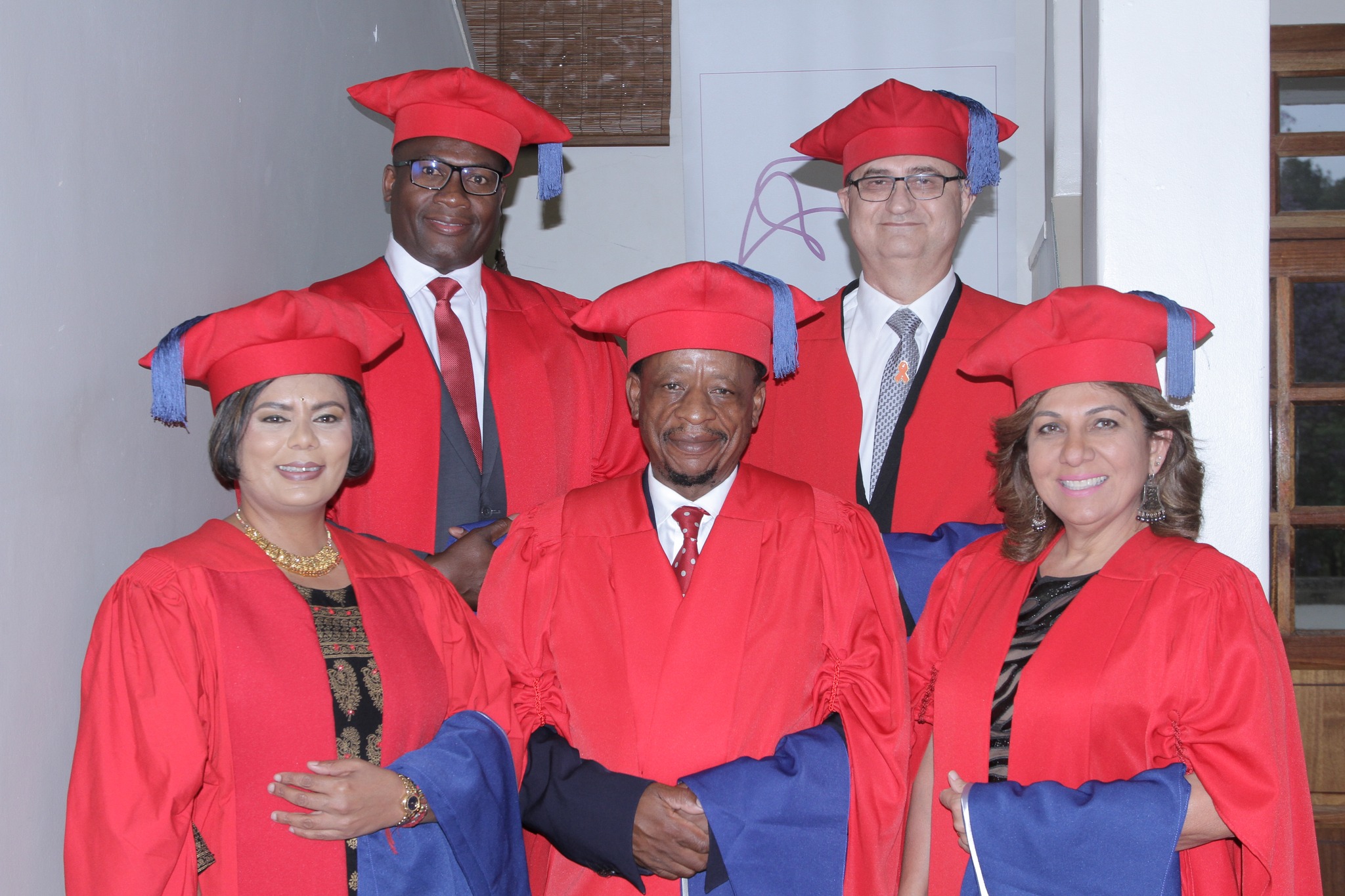
As The DaVinci Institute marks 21 years, a true coming of age, we reflect on a doctoral cohort that embodies the maturity of our mission and the depth of our impact. Our 2022 Doctoral graduates demonstrate how research, when grounded in real-world context, evolves into meaningful change across communities and industries.
Graduates came from different countries and worked in similar environments, which resulted in a variety of research topics related to important issues in their communities and workplaces. Each study, however, shared one goal, which was to make a positive impact on the lives and futures of communities around the globe.
Mayyada Abu Jaber
To counter the economic injustices women are facing as a result of a patriarchal system in Jordan, Mayyada Abu Jaber’s main interest was to create an eco-feminist economy for the benefit of women of Jordan and the Arab region at large. Impact as a result of her research includes education and vocational skill acquisition for women, the revival of cultural memory of the roles of women in building the community, the creation of the Feminist Integral Centre for Research and Innovation to drive policy reforms in future, and the protection of the historical and environmental wealth of women as sustainable economic providers.
Said Abu Jaber: “The pursuit of my Doctoral journey has yielded both a positive impact and a continuous improvement in feminist research as it unfolds the varied feminist and emancipatory dimensions of the Arab culture to provoke critical thinking and discourses in Ficr (thought) circles for the economic emancipation and participation of women and the creation of an eco-feminist economy.”
Lanre Kazeem-Abimbola
Lanre Kazeem-Abimbola gained first-hand knowledge of delving into a struggling business when she tried to support her mother’s efforts to sustain their family. However, as an employee in the Bank of Industry of Nigeria she came to realise that her case was not unique, but an experience shared by many other informal SMEs. This inspired her research journey aimed at supporting enterprises in the Ajegunie community in Lagos, Nigeria, through perspective-shifting, transformative value-based integral education, that balances western ideas of business management with indigenous cultural economic values, coined African Integral Communipreneurship Education (AICE).
As a result of the success achieved in her doctoral study, the AICE framework is currently applied to educate a new set of local entrepreneurs in Lagos. “Evidently, my research journey does not have an end in sight but has paved the way for unfolding realities in developing a truly African entrepreneurship enterprise education”, she said.
Johan Nel
The main aim of Johan Nel’s study was to gain insight into how performance-based renumeration systems could add economic value to profit-based companies and at the same time ensured fair and equitable distribution of free cash flow between employees (especially executive management) and shareholders or investors. The integrated performance-based renumeration system framework which was developed during the study has already been incorporated and implemented in the total rewards strategy of several client organisations.
Nel said his experience with The DaVinci Institute had been superb as he was allowed the freedom to be innovative and to manage his research to arrive at a value-add conclusion. “Completing my PhD has exposed me to research much broader than the topic itself. The Mode 2 methodology allowed me to do my research in a trans-disciplinary manner.” He added that he had also recommended The Da Vinci Institute’s Bachelor of Commerce programme to various individuals because it was so strongly focused on workplace integration.
Rajas Pillay
Rajas Pillay’s research on green economic empowerment, through the inclusion of waste claimers, would certainly have an impact on municipalities, both locally and internationally. The research highlighted the looming landfill crises as municipalities were not implementing effective and efficient waste management practices. However, this ecological disaster could be averted if recycling occurs. The study defined and demonstrated waste reclaimers as key enablers to waste minimisation, and argued that social cohesion of stakeholders, inclusive of informal reclaimers, allowed for the development of a green environment and the economic empowerment of relevant stakeholders.
Pillay said attaining her PhD was a tough and lonely academic journey. “However, despite the numerous challenges, I constantly reminded myself of my purpose in making a difference. This assisted me in realising this degree. The sense of fulfilment has been tremendous.”
Esther Shebi
The plight of women in general, but specifically women facing fertility challenges and who were marginalised and oppressed in the community of Jos, Nigeria, has been the motivation for Esther Shebi’s study. The main purpose of the study was to deconstruct the narrow concept of biological fertility and construct it towards a more encompassing concept referred to as ‘integral fertility’, which also included the social, spiritual, intellectual, and economical dimensions of human existence.
Shebi said her study underscored that a narrow definition informed by traditional beliefs could be detrimental to development in a contemporary society. “What this implied for me and other professional fields, both at a personal and professional level, was to work at redefining various concepts such as fertility integrally, and to adopt innovative approaches for transforming their narratives.”
Smart Zongololo
In his research Smart Zongololo explores communiversity as an innovation ecosystem for economic development in Zimbabwe. To close the gaps that exist between the community, the academic world, and the corporate world, he attempted to focus on the advancement of the natural, cultural, technological, and economic aspects of society, as captured in a newly defined form of the African economy.
Zongololo said his Doctoral studies through The Da Vinci Institute has been a transformational journey for himself and others. It equipped him to grow from being a mere business executive to becoming a catalyst for change, and the organisations and communities he works with equally benefitted from his research.
Raghda Butros
Raghda Butros’s research was based on an integral journey she undertook over a period of four years across Halaqaat al-Wujoud (circle of being). The Halaqaat process was the action research methodology through which Qafilat al-Hikma wal Taharur (caravan of wisdom and liberation) emerged as the collective new offering to the field of decolonisation anchored by a newly coined feminism of the soil and soul.
Muvengwa Mutyanda
Through his study Muvengwa Mutyanda committed himself to the regeneration of the Chivhu community in Zimbabwe from which he originates. To encourage social innovation, the study drew on technology, innovation, people, and systems, indigenously and exogenously, whereby the Wungano circles created amongst the people, drew on the positive features of their Unhu/Ubuntu laden Shona culture, as an overarching system, via socio-technical development, with a view to social innovation, mediated by Weph commercial agencies and Chivhu.
Mutyanda said his doctoral study had multiple outcomes. “On an individual level there was dynamic mental development, to society there was societal and economic emancipation, and The Da Vinci Institute gained from new knowledge creation and concepts that were innovative and created through the amalgamation of both modern and indigenous practices.”
Mr. Landman concludes that the impact and social upliftment, because of the Doctoral research conducted, resonates with former President Nelson Mandela’s belief that education is the most powerful weapon which you could use to change the world. “As the Board, we wish our Doctoral alum all the best with their future plans and journeys, as remarkable scholars, who are committed to co-create a prosperous future for their communities and society at large.”