Recently, The DaVinci Institute hosted its first, yet insightful, student funding webinar on external bursaries and student loans in partnership with Vela Trust and Student Hero. During this event, the evolution of our business school, along with an overview of DaVinci’s academic programmes, was outlined by our Executive Dean of Learning and Design, Dr Rudi Buys.
Crucial Steps To Unlocking Student Funding Dr. Retha Langa’s Expert Advice From Vela Trust
Crucial Steps to Unlocking Student Funding, Dr Retha Langa’s Expert Advice from Vela Trust
To set the scene, Dr Retha Langa, Executive Head at Vela Trust, provided a glimpse of the trust itself, explaining its purpose. Crucially, she delved into the discussion surrounding the various ways one can obtain education funding or bursaries. Dr Langa noted the fact that student funding is a major challenge for many in South Africa and, therefore, as Vela Trust, “we are trying to unlock more funding for students, and we support students to apply for bursaries. We do a lot of work to empower students to grab the opportunities that are there. My input tonight is really around shedding light on how both these work and to give you some insight into how you can successfully apply for them.”
During her presentation, Dr Langa spoke about various key bursary requirements and tips – further noting that bursary applications are quite competitive, thus ensuring that one meets the application criteria and submits within the application timeframe is imperative.
Simplifying Student Funding, Johan Wiggins Shares Expertise as CEO of Student Hero
Johan Wiggins, Co-founder and CEO of Student Hero, joined the discussion and introduced the organisation he leads as “South Africa’s largest student finance facilitation service; it is an initiative aimed at helping current and prospective students learn about, apply for, and qualify for study finance from various educational finance providers on a single platform.” Johan also spoke about the nature and intricacies of student funding, giving invaluable insights about the qualifying criteria and the process to apply for study finance.
Building Opportunities, DaVinci’s Quarterly Webinar Spotlights Funding Insights and Collaborations for Students
Focused on the pivotal task of identifying and leveraging funding opportunities for our students at Davinci, events like these play a crucial role in empowering our student community. The insights provided during the webinar not only shed light on the challenges students face but also offered practical guidance on successfully applying for bursaries and student loans. The DaVinci Institute remains dedicated to fostering an environment where education is accessible to all, irrespective of financial constraints.
Next year, in our quarterly student funding webinar, we look forward to continued collaborations with organisations like Vela Trust and Student Hero to co-create more opportunities for our students in the years to come.
External Bursaries
Discover bursaries provided by external organisations that we’re excited to share with you. Thanks to our partner, Vela Trust, which provides bursaries, student support, and employability initiatives to enable graduates to find meaningful work. Don’t allow financial constraints to hinder your education and future prospects. Take the opportunity.
Are you considering furthering your education but feeling overwhelmed by the various academic degrees? Let’s unpack two often-confused terms in the South African higher education landscape: the Doctorate and the PhD. Understanding the nuances of these degrees can help you make an informed decision that aligns with your career aspirations.
Choosing The Right Path For Your Career
The PhD: Diving into the World of Research
A PhD, or Doctor of Philosophy, is the epitome of academic research degrees. It’s focused on significantly contributing to a specific field through original research. In South Africa, pursuing a PhD means you’re in for a journey of deep academic research, culminating in a thesis that offers new insights and theories.
South African PhD programmes are known for their rigorous approach. You’ll immerse yourself in existing literature, develop a comprehensive research methodology, and produce a thesis that is scrutinised for its contribution to your field. This path is especially rewarding for those with a passion for academia (e.g., lecturers) or research-oriented careers (e.g., scientists).
The Doctorate: Bridging Academia and the Professional World
When discussing a Doctorate, we refer to a broader category of degrees. This includes professional doctorates like the Doctor of Business Leadership (DBL), Doctor of Business Administration (DBA), Doctor of Management in Technology and Innovation, and Doctor of Education (EdD). These degrees are unique as they merge academic research with professional practice.
Doctor of Business Leadership
For instance, a Doctor of Business Leadership is a professional degree designed to apply advanced leadership theories and concepts directly to the professional business environment. Unlike a traditional PhD, which is primarily academic and research-focused, a DBL typically focuses on developing high-level leadership skills, strategic thinking, and practical solutions to complex business challenges. A DBL aims to equip professionals with the knowledge and abilities to lead organisations effectively and significantly contribute to their fields.
Doctor Of Business Leadership
Advancing Your Career with Professional Doctorates
Professional doctorates are ideal for those already in the workforce and looking to elevate their professional practice through research. These programmes are about applying scholarly insights to real-world challenges, focusing on practical problem-solving and innovation in various fields.
Comparing the Two Paths: Doctorate vs PhD
Research Focus: The PhD is your route if you want to create new knowledge and develop theoretical frameworks. On the other hand, a Doctorate is perfect if you want to apply existing knowledge to enhance your professional practice.
Career Direction: Graduates with a PhD often head into academia or specialised research roles. In contrast, those with a Professional Doctorate typically use their advanced knowledge to excel in their current professional fields.
Programme Structure: PhD programmes are usually more focused on independent research, whereas Doctorate programmes often blend professional experience with academic study.
National Qualifications Framework (NQF) Level: Both a PhD and a Doctorate are typically classified at NQF Level 10. This is the highest level on the NQF and indicates a significant level of advanced academic or professional skill. It reflects the ability to conduct advanced research, provide new academic or professional insights, and demonstrate leadership in a particular field.
Making Your Decision
Choosing between a PhD and a Doctorate in South Africa boils down to your career objectives and the kind of research you’re excited about. A PhD is your calling if you’re aspiring to contribute to academic theory and knowledge. But, if you’re more inclined towards applying research in a practical, professional setting, then a Doctorate could be your ideal match.
Both paths are challenging and prestigious, each serving a unique purpose in South African higher education and professional development. So, take a moment to reflect on your goals and dive into the path that will best help you achieve your dreams! Advance from practitioner to thought leader. Enrol for a Doctorate at The DaVinci Institute and drive innovation through research that matters here.
Our upcoming webinar is tailored for you – the student. We’re shining a light on the often confusing world of student funding. In collaboration with Vela Trust and Student Hero, we aim to transform ‘the complex’ into ‘the understandable,’ providing you with a clear roadmap to funding your studies.
Designed With You in Mind: The Must-Attend Webinar
Personalised Expertise: Our specialist speakers from Vela Trust and Student Hero are ready to guide you through financial terminology and processes with advice that you can put into action immediately.
Content That Speaks to You: Whether you’re just exploring study loans or bursaries, this webinar is crafted with your needs in mind.
Your Questions, Answered: This isn’t just a presentation; it’s a conversation. We encourage you to bring your questions to create a learning experience that speaks directly to your concerns.
What’s On the Agenda for You?
The ABCs of Funding: We clarify what bursaries and loans are, setting a solid foundation for your understanding.
Discover Vela Trust’s Offerings: Look at how Vela Trust can support your educational goals.
Your Guide Through Student Hero Loans: We’ll help simplify student loans, showing you the ins and outs of securing the funding you need.
Application Success Strategies: Gain insights into crafting a successful application with insider tips and tricks.
Empowering Your Educational Journey
It’s not just about getting information; it’s about unlocking your educational and financial potential. With our webinar, you gain the power to make informed choices that align with your academic ambitions and financial reality.
Take Control of Your Future
Your educational journey is a significant one, and the right financial start can set you up for unparalleled success. Don’t let today’s financial challenges overshadow your academic goals. Register now for our webinar on 22 November 22, from 7pm to 8pm, and take an essential step towards mastering your future.
Together, let’s navigate the complexities of student funding. Reserve your seat at our Webinar Registration, and be part of a community that’s actively clarifying student finance.
Embark on a journey towards an empowered, financially savvy future in education. It all starts with one decisive step – let’s take it together.
Remembering The Legacy of Dr Giovanni Mariano: The Da Vinci Convocation Chair
Dr Gianni was conferred his apex qualification – Doctor of Management in Technology and Innovation – in the year 2016; and his thesis entitled: “Developing a framework linking motivating factors in restaurants to sustainable personal development and career growth.”
He had an illustrious career, of which a major highlight was as co-founder and CEO of the Mastrantonio group of companies. Though, his primary passion was in fostering and empowering individual growth and sustainable career advancement, with a specific focus on the disadvantaged. He has spearheaded numerous projects dedicated to nurturing social unity, primarily concentrating on Italy and South Africa.
It was his humanitarian style by which he co-created with others which leaves behind the legacy of a remarkable man. For his tireless efforts extended well beyond the boardroom and into the realms of social change. Those who knew Dr Gianni say that he was renowned as a guiding beacon and a source of unwavering inspiration. His boundless passion was contagious, and he served as a mentor and inspiration to numerous leaders, not only within our community but also far beyond its borders.
We, as the DaVinci community, extend our profound condolences to the Mariano family. Let us take solace in knowing that Dr Giovanni (Gianni) Mariano can now find his peaceful repose, having etched an enduring imprint not only within our community but upon the broader canvas of the world. His trailblazing resolve, unrelenting quest for wisdom, and steadfast dedication to enhancing the human condition have served as a wellspring of inspiration for us all.
His memory will forever reside within our hearts, while his legacy perseveres through the profound impact of his work and the lives he has enriched.
How can you access information regarding esteemed business schools and determine the optimal timing for pursuing your postgraduate qualifications while aligning them with your educational goals? Although the internet offers a vast pool of resources, it can be overwhelming to know where to begin. These are the questions we ponder with great enthusiasm, and we are delighted to announce that DaVinci recently engaged in Africa’s largest assembly of business schools, faculty members, and admissions professionals, known as the MBA Expo.
MBA Expo
Empowering Dialogue: Our CEO, Prof. HB Klopper, and Top Business Schools Illuminate the value of Business Education
We proudly participated as exhibitors and actively engaged in dialogue sessions, with our CEO, Prof. HB Klopper, serving as one of the distinguished panellists. His participation added significant value to the discussions while sharing the stage with other thought leaders in the industry. The dialogues, hosted by educational industry experts, were a melting pot, rich in depth and meaningfully insightful for those who attended. During these discussions, top local and international business schools delved into cutting-edge topics and shared their expertise in the field of business education.
Empowering Dialogue: Our CEO Prof HB Klopper and Top Business Schools Illuminate the Value of Business Education
Those offering MBA qualifications highlighted the uniqueness and relevance of their programmes, while the DaVinci team emphasised the remarkability of its Master of Management in Technology and Innovation and Master of Business Leadership qualifications; both of these programmes advance analytical and problem-solving techniques, research methodologies –as the business school facilitates the process of developing strategies to address socio-economic transformation challenges, thus co-creating sustainable business improvement initiatives.
Master of Management in Technology and Innovation and Master of Business Leadership Qualifications
DaVinci’s Distinctive Approach: A Spotlight at the MBA Expo
Business executives and prospective students conducted a comparative analysis of MBA programme choices and associated expenses. They also assessed DaVinci’s distinctive features and approaches. Additionally, during the event, insights were exchanged on effective strategies for choosing a preferred business school. Our presence at the MBA Expo allowed us to showcase DaVinci’s commitment to excellence in education and our dedication to fostering innovative business leaders. We had the opportunity to engage with aspiring students, potential partners, and fellow educators from around the globe. Our booth at the expo was a hub of activity, where we provided information about our programmes, showcased who we are – our ethos –and interacted with attendees eager to explore the opportunities DaVinci has to offer.
Da Vinci’s Distinctive Approach: A Spotlight at the MBA Expo
Fostering a Culture of Lifelong Learning and Self-Improvement
We observed at the event what was palpable: the fact that people are quite eager to further develop themselves, and there is a sense that continuous learning is the key to personal and professional growth. The palpable enthusiasm for self-improvement and the pursuit of knowledge was evident throughout the MBA Expo. Attendees, whether prospective students or industry professionals, shared something common – the desire to broaden their horizons and enhance their skillsets. This collective commitment to self-development aligns perfectly with DaVinci’s mission. We believe that education should be a lifelong journey, and events like the MBA Expo reinforce the importance of staying curious, agile, and engaged with new ideas.
Fostering A Culture Of Lifelong Learning And Self-Improvement
Empowering Tomorrow’s Leaders
Thus, as we reflect on our experience at the expo, we are reminded of the countless opportunities that lie ahead for those who are willing to invest in their education and embrace change. The world of business is constantly evolving, as this has been correctly reiterated during the occasion, and it is those who are proactive in seeking knowledge and innovation who will thrive in this dynamic landscape.
Empowering Tomorrow’s Leaders
The MBA Expo was a testament to the power of education to shape a brighter future, and we are proud to have taken part as participants at the event.
Today, more than ever, there is a sense in which people have identified the need for South Africa to strengthen its corporate governance mechanisms to ensure the long-term sustainability and ethical functioning of its businesses and state-owned organisations. The importance of robust corporate governance cannot be overstated, especially in a landscape where transparency, accountability, and responsible business practices are paramount.
Leading With Integrity: The DaVinci Institute‘s Dedication to Strengthening Corporate Governance (1)
Recent Challenges and Controversies: Lessons from Prominent South African Entities
It is worth noting that recent challenges and controversies surrounding some prominent South African companies and government entities have underscored the urgency of reinforcing corporate governance standards. These issues have eroded public trust and hindered the country’s economic growth and international reputation. To address some of these concerns, The DaVinci Institute recently partnered with the Knowledge Anchor Group, led by Dr Nimrod Mbele, on a corporate governance conference hosted at the PwC Midrand offices on 31 August 2023.
Leading With Integrity: The Da Vinci Institute’s Dedication to Strengthening
A Pioneering Partnership: The DaVinci Institute and the Knowledge Anchor Group
The conference, themed “The Role of Corporate Governance in Rebooting and Sustaining Economic Recovery and Growth,” featured a vibrant lineup of guest speakers. This lineup included a presentation by DaVinci’s Chief Executive Officer, Prof HB Klopper, messages of support from Professor Bonang Mohale, Warren Gule, and a keynote address by Dr Geraldine Fraser Moleketi, former Minister of Public Service and Administration. With representatives from diverse industries, regulatory bodies, and academia, the event aimed to foster a rich exchange of ideas and insights.
Leading With Integrity: The DaVinci Institute’s Dedication to Strengthening Corporate Governance
The Essence of Dialogue: Questions, Answers, and Insights from SOEs Governance
The dialogue themes ranged from State-Owned Enterprises (SOEs) governance and overcoming transformation and prejudice challenges to panel discussions reflecting on the country’s broken business model of SOEs. Particularly exciting, especially among the panellists, attendees/observers, and discussion facilitators, were the question and answer sessions. During these sessions, participants had the opportunity to probe and ask questions about the concept of governance lapses, their causes, and whether boards can sharpen governance oversight without crossing operational boundaries.
Leading With Integrity: The DaVinci Institute’s Dedication to Strengthening
The Ethical Imperative: Strengthening Ethics and Advancing Meritocracy
Crucially, among the attendees, there was a strong sense of the need and desire to strengthen ethics and meritocracy to support transformation. What further became a common goal was the necessity for women to participate in leading organisations, thereby influencing organisational culture.
Leading With Integrity: The DaVinci Institute’s Dedication to Strengthening
From an observer’s perspective, this conference underscores the necessity for improving corporate governance and the enhancement of civilised order in how businesses (and SOEs) operate and conduct their affairs. This imperative calls for a fundamental shift in the ethos of business practices towards greater accountability, transparency, and ethical conduct, fostering an
environment where companies thrive financially and contribute positively to society. It is through such endeavours that sustainable, humane societies are collaboratively nurtured and cultivated.
Leading With Integrity: The DaVinci Institute’s Dedication to Strengthening
The Spirit of National Unity: The Role of Corporate Governance in Democratic Successes
We can uphold the spirit of national unity and continue commemorating the successes of our democracy by nurturing effective and trustworthy corporate governance practices that enhance both business and society as a whole. An event of this nature ensures that corporate South Africa, the government, and its citizens engage in a constructive dialogue concerning the imperative of fortifying corporate governance. This fosters cohesion among stakeholders and a shared sense of purpose.
The DaVinci Institute is a distinguished business school committed to cultivating the next generation of business leaders, critical thinkers, and transformative innovators.
Why The Da Vinci Institute Should Be Your First Choice For Business Learning (1)
Here are the reasons why you should consider taking the leap with The DaVinci Institute:
We recognise that you have diverse schedules. With this in mind, we have five annual intakes (January, March, June, August, and October) and a robust online platform with recorded sessions to cater to busy professionals.
Our convenient part-time distance learning approach is perfect for those juggling personal and professional commitments.
Prestigious Alumni and Student Network
Our alumni are a testament to our excellence and remarkability. They’ve etched their mark as critical thinkers, thought leaders, and business moguls. Join a vibrant community of alumni and students, including executives, senior managers, and directors. The networking possibilities are remarkable!
We also proudly host one of the largest populations of doctoral students, showcasing our commitment to advanced research and intellectual pursuit.
Real-World Relevance
Our curriculum is rich in real-world case studies, promoting the bigger picture and systems thinking. This approach ensures our students gain practical knowledge that’s immediately applicable. In addition, our unique Managerial Leadership Framework ensures a holistic understanding of business. addition
Personal Touch and Self-Mastery
At DaVinci, we pride ourselves on personalised customer service and career guidance. Here, you’re more than just a student number – you’re an individual with ambitions and dreams.
Before commencing your qualification with us, you will be assessed through an innovative tool to help you understand your learning style, ensuring a tailored learning experience.
Pragmatic Curriculum and a Focus on Real-world Problem-Solving
We pose application-based questions that resonate with the business world. Designed for working professionals, our courses enable them to integrate and apply their learnings seamlessly.
Our qualifications are designed to equip students to tackle real-world challenges head-on, fostering a solutions-driven mindset.
Revolutionary Approach to Business Education
At DaVinci, you will not be spoon-fed knowledge through textbooks or memos. Instead, we challenge conventional thinking, fostering co-creation and solving current, relevant problems.
We believe in empowering our students to think beyond the ordinary and make remarkable contributions to the business landscape. Join us and embark on a transformative journey that bridges the gap between knowledge and application.
What our students and alumni say about their experience with us
“When I was 19 years old and looking at possible universities, my dad recommended DaVinci… Doing the BCom degree through DaVinci was life-changing! The teaching methodology at DaVinci, better known as the mode 2 learning approach, encourages individuals to leverage the strongest aspects of their thinking, to capitalise on them.” – Karl Tischlhauser (DaVinci Alumnus – BCom Class of 2020 and current Master’s student).
“When I think of the intersection of unwavering dedication, cutting-edge knowledge, and exemplary professionalism, my experience at The DaVinci Institute immediately comes to mind, especially as I reflect on my journey with them. As an electrical engineer, project manager, and currently the engineering and projects manager for the Western Cape region at Transnet Port Terminals, I found the academic rigor at DaVinci instrumental in shaping my professional trajectory. My doctoral thesis aimed at bridging a significant gap in infrastructure project delivery, and I am proud to have developed a success model that holds potential to transform the economic landscape by ensuring infrastructure projects are more successful. This model doesn’t just remain on paper but is poised to reduce risks and costs, enhance stakeholder outcomes, and improve overall infrastructure development quality.” –Dr Tonny Mhondiwa, Doctoral Alumnus
At The DaVinci Institute, we believe that an empowered student thinks beyond the ordinary; they thrive in their remarkability. Ready to make a mark in the business landscape?
Taking the plunge into a doctoral programme is both exhilarating and challenging, filled with numerous questions like, “What happens after my application?” Here’s a snapshot to guide you through your transformative journey at The DaVinci Institute.
After completing your application to one of our Doctoral programmes, you may wonder, “What now?”
The DaVinci Institute’s 2022 Research Report Showcases Resilience And Progress
Well, let’s start at the very beginning. After completing your admission, your dedicated Programme Convener will invite you to the onboarding. The onboarding phase consists of a number of online sessions that will introduce you to DaVinci staff, as well as a range of concepts applicable to the DaVinci approach.
Session one will begin with a virtual meet and greet by the Executive Management team, where you can virtually meet your fellow students.
Session two will focus on understanding two important concepts related to the DaVinci approach to leadership, namely Jarche and Cynefin.
The Jarche Model, developed by Harold Jarche, illustrates a modern work approach. It emphasises “Seek-Sense-Share”: seeking knowledge, making sense of it, and sharing insights for personal growth and effective collaboration in today’s knowledge-driven environments.
The Cynefin Framework, developed by Dave Snowden, is a sense-making tool for decision-making. It categorises problems into Simple, Complicated, Complex, and Chaotic domains, guiding appropriate strategies to address challenges in various contexts.
From Classroom to Real-World Solutions: Navigating 5IR with Experiential Learning
Session three will begin with an understanding of the Mode 2 and Experiential approach to learning. This will be presented with a view of the Fifth Industrial Revolution (5IR) and how your studies will impact on the National Development Plan for South Africa. By the end of the session, you will have gained new perspectives and knowledge to help you excel in your learning journey.
The Mode 2 approach to learning, proposed by Carl Bereiter, emphasises experiential and collaborative learning. It focuses on solving real-world problems, fostering adaptability, and promoting creativity by integrating practical experiences with theoretical knowledge in dynamic settings. Complimentary to this is the experiential learning approach, which immerses learners in hands-on experiences to grasp concepts, fostering active participation, reflection, and application. It emphasises practical knowledge acquisition and skill development through engagement with real-world situations.
The South African National Development Plan is a comprehensive blueprint for the country’s growth. It aims for inclusive socio-economic progress, reducing inequality, and addressing key challenges through sustainable development strategies, infrastructure enhancement, and social transformation.
Navigating Your Doctorate Journey at The Da Vinci Institute
From Onboarding to Dissertation: Navigating the DaVinci Research Journey
The final session concludes on the fourth day with information sessions by the Library and IT support.
Once the onboarding has been completed, your access to DaVinci Connect will be up and running, where you will be able to download additional reading, templates, referencing guides, and all other resources needed to be successful in your dissertation.
Once you have had some time to make sense of your onboarding sessions and the information available on DaVinci Connect, the research support workshops will begin. The research support workshops are presented to assist you in writing your research proposal, which is essentially chapters one and three of your dissertation. The research support workshops are presented in the order of consideration of where you need to begin thinking and writing in your proposal phase. These are presented each month over a period of seven months.
Session 1: Conceptual/theoretical frameworks
During this informative research session, your facilitator will discuss the differences between conceptual and theoretical frameworks and how to decide which is best for your research.
Session 2: Research philosophy and paradigms – from conceptualisation to method
During this session, the facilitator will enable an understanding of Research Philosophy and Research Paradigms and further distinguishes between the main paradigms and how they guide you to conceptualise your study.
Session 3: Research topic, aims, and objectives
The facilitator helps students decide on and refine the following: a topic for research, writing the aims and objectives of the study, formulating hypotheses and/or value propositions, and formulating research questions. This stage enables students to do their 1st proposal submission of Chapter 1.
Session 4: The Dale Method: Project management (PM) & literature review methodology
Join Caroline Dale as you explore key elements of PM, including timelines and planning, and then delve into a comprehensive methodology to help navigate your literature review process. By the end of this session, you will have gained valuable insights and practical tools that will be key to your entire thesis process.
Session 5: Research design and methodology and specific underpinning methods
This session assists students in describing their research design, strategy, methods, procedures, and data gathering and analysis techniques. Qualitative, Quantitative, and Mixed Methods are discussed.
Session 6: TIPS Managerial Leadership Framework
The TIPS Managerial Leadership Framework is demystified in this session. The different pillars of the framework, the competencies, the practices of leaders, and the actualisation of a systemic perspective to your work and research are discussed in depth.
Session 7: Proposal Development
After the first 6 research proposal development workshops, what is next? In this last session, you will be taken through the practical steps to bring it all together. Emphasis will be on integrating all your learning and presenting a feasible proposal for summative assessment.
Navigating Your Doctorate Journey at The Da Vinci Institute
Feedback, Refinement, and Defense: Perfecting Your Doctoral Proposal at DaVinci
After the workshops, chapter one must be submitted for feedback. Upon receipt of your qualitative feedback, you will make your recommended changes. Should you wish to consult with a member of the research office for further insights into your feedback, your Programme Convener may arrange this for you.
Approximately two to three months after submission of chapter one, your edited chapter one, plus your first draft of chapter three, is due for submission. Both will be assessed, and feedback will be provided. Within the next two months, feedback on your draft submitted (chapters one and three) must be submitted for assessment. Proposals that achieve a mark of 60% or more will be accepted. Once the proposal is accepted, a supervisor will be appointed. After consultation with your newly appointed supervisor, you will be invited to an oral defense of your proposal. You must apply for ethical clearance once your proposal has been successfully defended. Your supervisor will guide you through this process.
Navigating Your Doctorate Journey at The Da Vinci Institute
The Road to a DaVinci Doctorate: From Ethical Clearance to Dissertation Defense
After your ethical clearance has been approved, you will continue on your research journey to complete the remaining chapters in consultation with your supervisor. Continuous support will be provided by your supervisor, programme convener, the research office, and research seminars presented throughout the year. You have a maximum of 6 years in which to complete your dissertation.
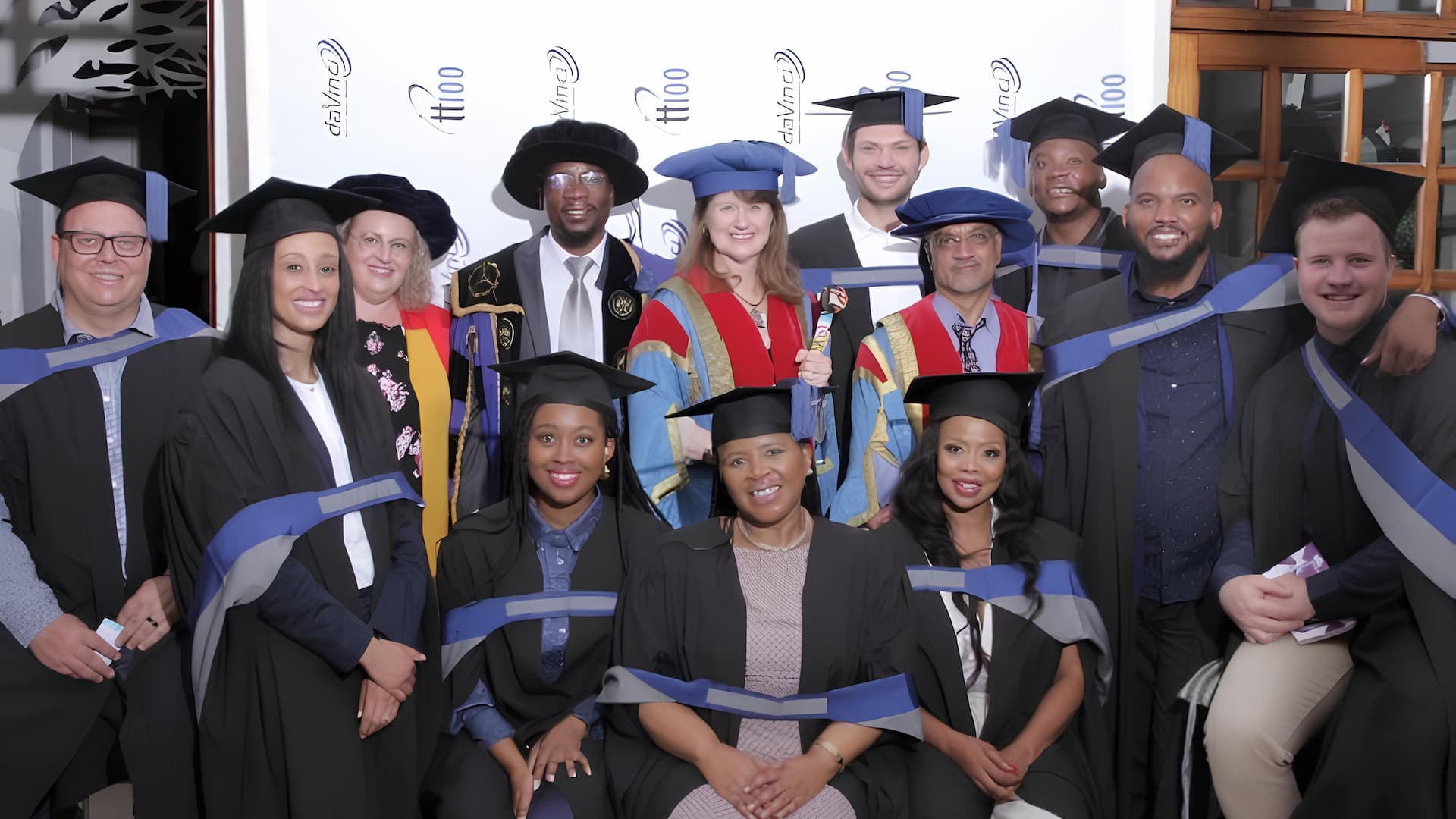
When you are ready to submit, you must have your ‘intention to submit’ signed off by your supervisor so that the Research Office is ready to receive your dissertation and to appoint examiners. After examination of your dissertation, you will need to defend your research in an oral defense with a panel of seasoned researchers. Once completed and final comments actioned, you will be awarded your doctorate at a live graduation ceremony in either May or October.
From Aspiration to Dr.: DaVinci’s Distinguished Doctorate Degrees
In today’s rapidly evolving educational landscape, you must align yourself with a higher education institution that offers more than just academic excellence. The DaVinci Institute is a beacon of credibility, stability, and comprehensive growth, blending academic rigour with personal growth and real-world applications.
If you’ve been looking for an institution that offers such holistic development, The DaVinci Institute is a worthy choice.
A Guide for Transferring to DaVinci for Distance Learners
DaVinci’s Strengths Mirror Established Higher Education Virtues
While change can be daunting, it’s comforting to know that DaVinci embodies many of the strengths associated with longstanding, respected institutions:
Distance Learning Mastery: A renowned higher education institution, DaVinci offers top-tier distance learning programmes (from NQF 5 to NQF 10), allowing you to study from anywhere, anytime.
Advanced Academic Paths: Our postgraduate programmes are on par with those of major universities, ensuring continuity in your academic journey.
Flexible Schedules: Tailored for personal development and career advancement, our programmes cater to working professionals, adult learners, and those with diverse responsibilities.
Cutting-Edge Research Opportunities: Step into the realm of impactful research with DaVinci, mirroring the opportunities at major research institutions such as public universities.
Accreditation Excellence: DaVinci shares the honour of being accredited by the Department of Higher Education and Training in South Africa, underscoring our commitment to quality education.
Proudly African: We are deeply rooted in the African context, creating programmes and initiatives that resonate with the continent’s unique challenges and opportunities.
Engaged Community: Like the best higher education institutions, we believe in fostering a strong sense of community and spearheading projects that benefit society.
E-Learning Prowess: Our state-of-the-art digital resources and platforms ensure you have the tools you need to succeed.
Holistic Student Support: From academic advising to career counseling, our support services mirror those of larger higher education institutions, guaranteeing you’re never alone on your academic journey.
Cultural and Professional Diversity: Join a rich tapestry of students, from working professionals to learners from diverse backgrounds, enriching your learning experience.
The Unparalleled DaVinci Experience
In addition to these shared strengths, DaVinci offers a range of unique attributes:
Networking Galore: Our alumni community boasts of thought leaders and business stalwarts, promising unparalleled networking opportunities.
Practical Learning: Delve deep into real-world case studies, ensuring readiness for practical challenges.
Diverse Classroom Interactions: Engage with professionals from varied walks of life, offering rich peer learning opportunities.
Tailored Learning Experiences: With tools like Shadowmatch, understand and harness your unique learning style for maximum academic growth.
Transfer Process
How long does the transfer process usually take? This depends on the information received, but we endeavour to send feedback within 7 working days.
What documents and information will I need to provide for the transfer? You will need to complete the CAT application form and attach the following documents to your application: (1) A copy of the academic transcript or statement of results that verifies the above. (2) The learning outcomes for each of the modules listed above. This information is available from the previous institution(s).
Will I have to pay any additional fees for the credit transfer process? No, you will not have to pay for a credit transfer.
Does DaVinci accept NSFAS? Private education institutions cannot accept NSFAS. DaVinci fees are comparable to public universities, and we assist our students with getting student loans at reasonable through our funding partners.
Embark On A New Journey
As you contemplate your next academic adventure, consider The DaVinci Institute, where growth, success, and personal development are intertwined. at DaVinci, education isn’t just about knowledge; it’s about application and transformation. Join us and co-create a remarkable future. Click here to enrol.
As a business school with a remarkable doctoral student and graduate population, The DaVinci Institute is delighted to announce the release of our Research Report for 2022. This document serves as a testament to our commitment to remarkable research contributions within the areas of technology management, innovation, people, and systemic thinking. We have successfully implemented our Strategic Research Plan 2021-2025, even amidst the worldwide disruptions caused by the Covid-19 pandemic.
In this report, we are excited to share our collective knowledge and achievements, presenting an extensive overview of the research published during the past year. Our dedicated team of researchers has shown remarkable drive, applying new knowledge across diverse industries and government sectors to stimulate national economic growth, enhance socio-economic development, and shape policy-making and governance.
The DaVinci Institute’s 2022 Research Report Showcases Resilience And Progress
Aligning Research with Global Goals
With our sights set on the United Nations Sustainable Development Goals (SDGs) and the African Union’s Agenda 2063, much of our research aligns with the National Development Plan 2030, advocating for an Africa-centric approach to sustainable development. Our work is targeted toward achieving lasting positive change, thereby creating a better Africa.
Supporting a Culture of Research
A key component of our institutional practice is fostering a supportive environment for research productivity. This past year, we hosted an assortment of webinars, workshops, and seminars designed to enhance scholarly activities amongst our students, staff, and researchers. Partnering with the South African Business Schools Association (SABSA), we hosted an online series chaired by esteemed faculty members, Professor HB Klopper, Professor Ben Anderson, and Dr. du Plooy-Cilliers.
Nurturing Future Researchers
In our commitment to nurturing budding researchers, we’re thrilled to congratulate Dr. Heather Goode and Dr. Catherina Opperman, who obtained their Doctoral degrees, along with other staff members who have made significant strides in their studies.
Creating a Unique Research Ecosystem
At the DaVinci Institute, we uphold the belief that research is pivotal for societal well-being, driving innovation, and fostering understanding on a global scale. We have established a unique research ecosystem, setting us apart within the national, continental, and global research community.
Global Engagement and Investment
We’re proud to have excelled in our engagement with the global research community and other universities. Our academic staff serves on various editorial boards and professional bodies, bringing their expertise to broader audiences. We’ve also made significant investments in administrative and IT infrastructure to better support our research-active students.
Navigating the Future with Systems Thinking
Our Head of Programme for Postgraduate Research, Professor Paul Singh, also emphasises the importance of adaptability in the rapidly changing world. Underpinning our initiatives is the principle of ‘systems thinking’, enabling multiple stakeholders to share best practices and reshape enterprises and environments for societal benefit.
The DaVinci Institute’s 2022 Research Report Showcases Resilience And Progress
Embracing the 5th Industrial Revolution (5IR)
As we journey towards the 5th Industrial Revolution (5IR), the DaVinci Institute is committed to fostering a symbiotic relationship between AI and humans, ensuring both dimensions integrate into our lives to create a beneficial influence on society for years to come.
The DaVinci Institute’s Commitment
In conclusion, the DaVinci Institute remains committed to its goals of agility, alignment, and engagement, founded on the TIPS Managerial Leadership Framework to support innovation and continuous improvement. Despite the challenges of the past year, we’ve made significant progress, and we’re excited to continue this journey with all members of our community.