On 19 February 2026, the academic community of The DaVinci Institute gathered for its formal Academic Opening, marking the start of the 2026 academic year under the theme “Co-Creating for the Greater Good.” The ceremony signaled a collective commitment to purpose-driven education, collaborative leadership, and the ongoing evolution of the institution’s academic, research and technological agenda.
Tradition and Purpose
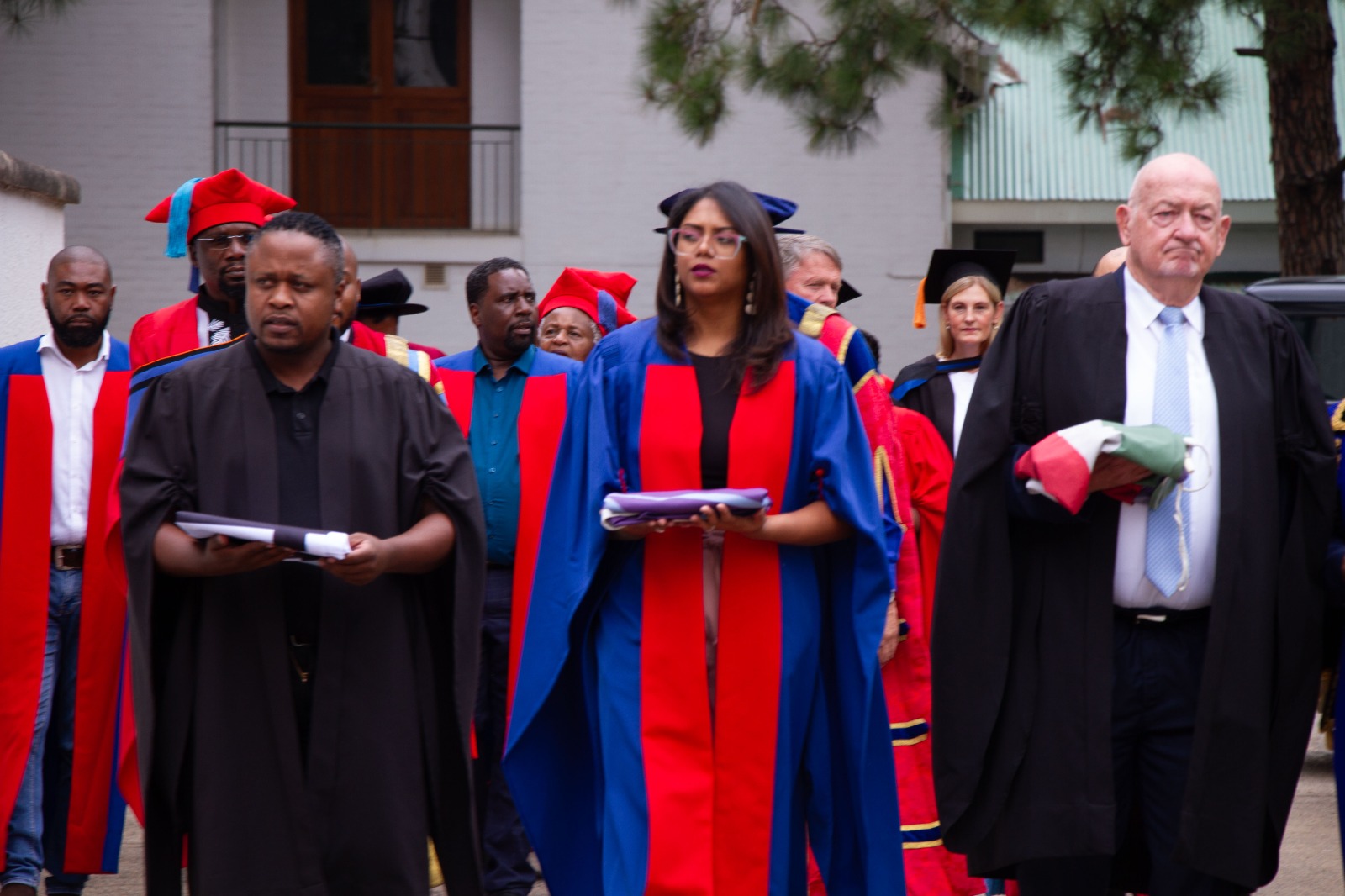
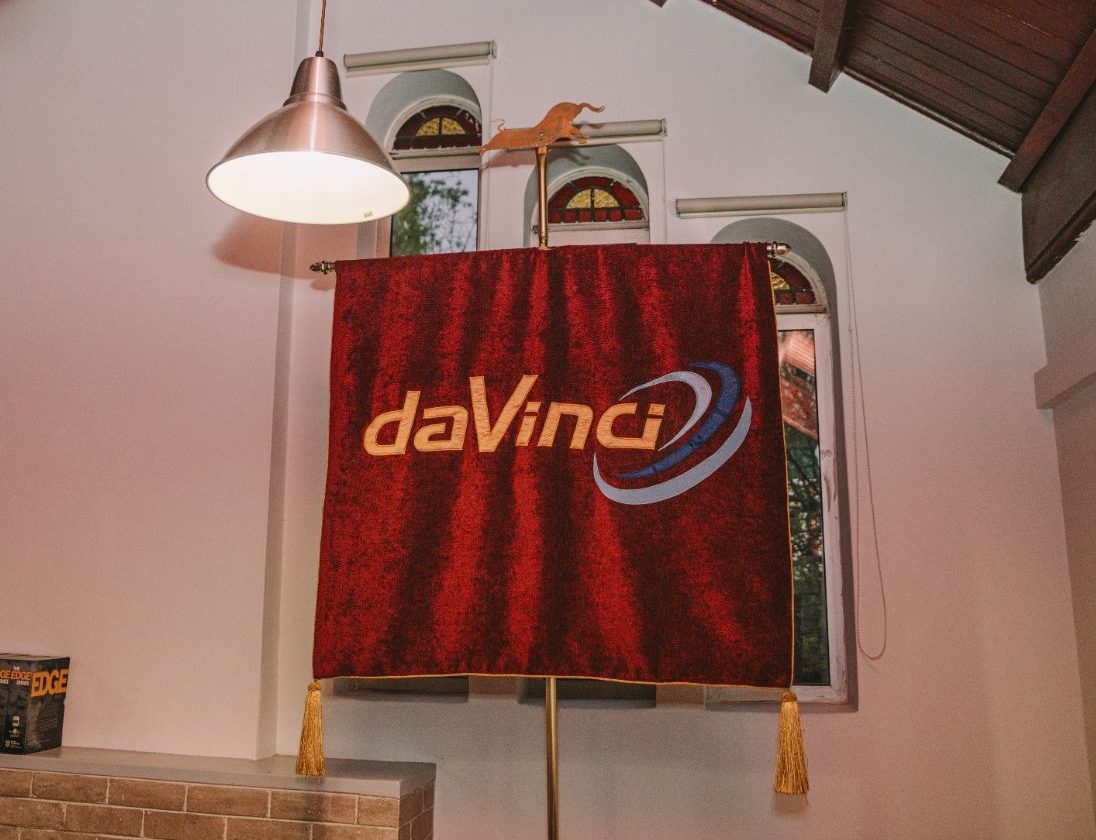
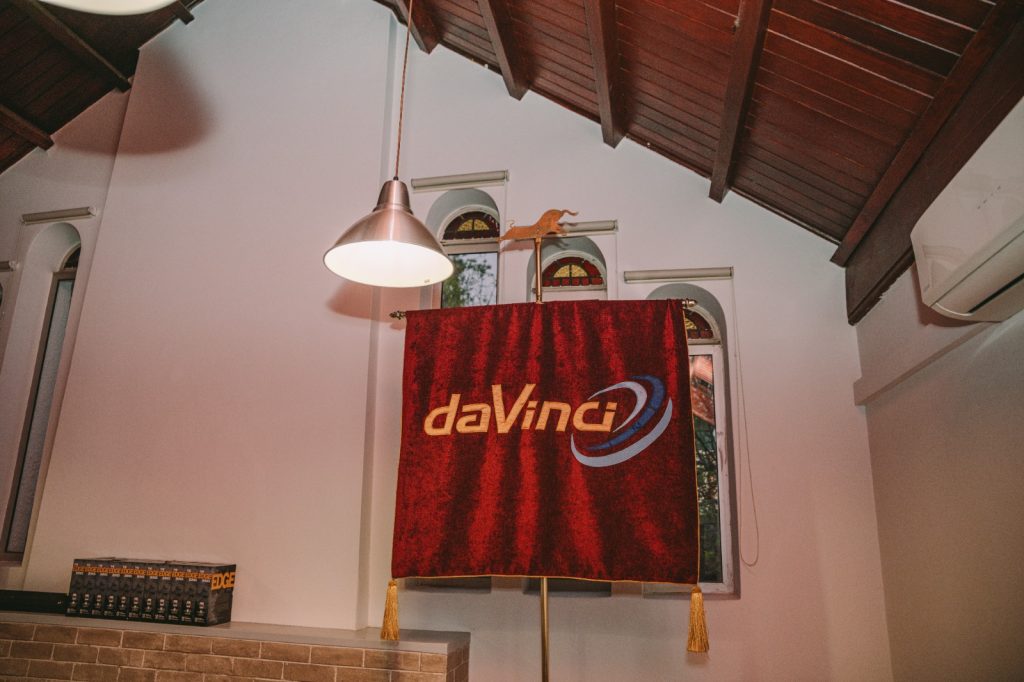
The morning began with the academic procession, accompanied by Jozi Opera, setting a tone of reflection and anticipation. The ceremony included the flag hoisting, symbolising institutional identity, national responsibility and the shared values underpinning DaVinci’s learning community.
The congregation was formally constituted by Dr Gavin Isaacs, acting in his capacity as Chairperson of Senate, establishing the gathering as a lawful academic congregation of the Institute.
Leadership voices frame the year ahead
Programme Director Prof Benjamin Anderson guided the ceremony, introducing institutional leaders, governance structures and the wider learning ecosystem, including Board members, Senate, faculty, students, industry partners and convocation.
Institutional leadership, including President Edward Kieswetter and Board Chair Ndumiso Khubeka, reinforced the Institute’s strategic focus on responsible leadership and societal contribution.
Articulating the meaning of the Greater Good
The central moment of the ceremony was the keynote address delivered by Ndumiso Khubeka, which explored the underlying principles of the Greater Good, positioning education not only as capability development but as a platform for impact.
The address highlighted:
Leadership as stewardship
Innovation as a societal responsibility
Collaboration as the foundation of complex problem-solving
The role of higher education in shaping ethical decision-makers
This framing aligned closely with DaVinci’s long-standing emphasis on systems thinking, transdisciplinary learning and organisational transformation.
Institutional achievements unveiled
The Academic Opening also served as a platform for key institutional launches. The Unified Technology Upgrade, introduced by Executive: Information Technology Riaan van Niekerk, highlighted continued investment in the digital learning environment and infrastructure supporting hybrid, practice-based education. The launch of the DaVinci song further strengthened institutional identity and community culture.
In addition, the research report launch, presented by Executive Dean Dr Gavin Isaacs, reflected the Institute’s growing postgraduate scholarship footprint and its commitment to applied, industry-relevant research.
Setting the tone for 2026
The Academic Opening reaffirmed The DaVinci Institute’s positioning as a learning institution oriented toward purpose, partnership and impact.
Under the theme Co-Creating for the Greater Good, the ceremony did more than open an academic calendar. It established a shared intention: that education, research and leadership development must actively contribute to organisations, communities and society. In this way, the event marked both a beginning and a reaffirmation of a continuing institutional journey.
The DaVinci Institute is pleased to announce the release of its Research Report 2025, a comprehensive reflection of the Institute’s scholarly output, intellectual direction, and continued commitment to research that creates meaningful impact across organisations, industries, and society.
The report presents a rich body of postgraduate research conducted across doctoral, master’s, postgraduate diploma, and undergraduate levels. It highlights how research at DaVinci is intentionally positioned as applied, transdisciplinary, and work-based, designed not only to contribute to academic knowledge but to resolve real challenges faced by professionals, organisations, and broader ecosystems.
A Comprehensive Overview of DaVinci’s Applied, Work-Based, and Transdisciplinary Research
Central to the Research Report 2025 is the Institute’s research philosophy: enabling leaders and managers to develop advanced research capability while producing innovative, practical, and contextually relevant solutions. Across programmes, students explore complex issues such as digital transformation, employability, entrepreneurship, knowledge management, infrastructure delivery, cybersecurity, township economic development, sector skills planning, and leadership development. These research contributions demonstrate the growing importance of scholarship that bridges theory and practice in an increasingly uncertain and rapidly evolving world.
Doctoral Research: Advancing Frameworks, Models, and Methodologies
The report documents significant doctoral research that advances new frameworks, models, and methodologies addressing systemic challenges. From innovation management measurement and integrated business analytics frameworks for infrastructure projects to employability design, entrepreneurial behaviour in resource-constrained environments, and knowledge management in the context of the Fourth Industrial Revolution, the doctoral portfolio illustrates the Institute’s focus on research that generates original contributions with practical value.
Master’s, Postgraduate Diploma, and Undergraduate Research in Action
Master’s research further expands this impact by examining workplace productivity, digital fraud investigation, service quality, organisational adaptation, learning transfer, and performance management. At the postgraduate diploma level, work-based research projects provide direct organisational insight, tackling challenges ranging from digital transformation and customer experience to project delivery, leadership practice, skills gaps, and emerging technology integration. Undergraduate research continues this trajectory by addressing real workplace challenges, reinforcing the Institute’s long-standing commitment to applied learning.
Strengthening the Research Ecosystem
Beyond individual studies, the Research Report 2025 reflects the strength of the Institute’s research ecosystem. The report highlights publications in accredited journals, scholarly book contributions, peer-reviewed activities, and structured research development workshops supporting master’s and doctoral candidates. These initiatives ensure academic rigour while strengthening student progression, research quality, and scholarly engagement.
Institutional Growth and Strategic Partnerships
The year also marked important institutional developments. Enhancements within the Research Office strengthened research processes, supported improved student experience, and contributed to successful graduation outcomes across programmes. The Institute also continued its engagement with key academic and professional networks, including the South African Business Schools Association, the African Association of Business Schools, and the South African Private Higher Education Association, reinforcing its commitment to advancing scholarly dialogue across South Africa and the continent.
The Research Report 2025 ultimately stands as more than an annual record of outputs. It represents a collective intellectual journey involving students, supervisors, alumni, industry partners, and academic leadership. It captures the evolving role of research in enabling professionals to rethink assumptions, challenge existing paradigms, and co-create new possibilities in contexts defined by disruption and transformation.
Through this report, The DaVinci Institute reaffirms its commitment to research that is relevant, rigorous, and impactful, research that strengthens leadership, advances innovation, and contributes to the greater good.
Postgraduate research is often treated as a technical exercise, a proposal to submit, a thesis or a dissertation to defend, or a qualification to complete. Yet as the room settled on the first morning at DaVinci House, it became clear that this gathering would challenge that assumption.
“Are you writing to pass or are you writing to influence?” asked Prof Ben Anderson, CEO of The DaVinci Institute.
The silence that followed was not uncertainty; it was recognition.
What unfolded over the two days was less a technical seminar and more an intellectual reset.
Day One: Confronting the Researcher Within
Day One opened with energy, curiosity, and at times, discomfort. Participants were invited to interrogate how they approach postgraduate research.
Some indicated that they realised they have been writing cautiously. One participant reflected during a roundtable exchange: “Almost as if I am asking permission to have a perspective.”
Another added, “I start from my professional practice, but I often struggle to translate that lived experience into scholarly argument.”
The discussion revealed a shared tension: many researchers approach postgraduate study with deep professional insight, yet hesitate to claim authority in academic spaces.
Prof Anderson challenged the group to move beyond compliance-driven research. Finding one’s scholarly voice, he argued, requires intellectual courage, the willingness to position oneself clearly within theory, methodology, and argument.
The room was animated, notebooks open, ideas crossing tables, debates forming and reforming. By mid-afternoon, conversations had shifted from “How do I complete this?” to “What am I really trying to change?”
Research Across Systems: From Micro to Macro Influence
A defining moment of the workshop came as the conversation expanded beyond individual theses to systemic influence. Participants mapped their potential impact across interconnected systems:
Microsystem: their immediate classrooms, teams, and professional environments.
Mesosystem: their institutions and collaborative networks.
Exosystem: sector bodies and professional communities.
Macrosystem: national policy and societal transformation.
The shift was refined but powerful: research was no longer framed as an endpoint, but as an intervention.
Day Two: From Concept to Completion
While Day One focused on identity and positioning, Day Two turned to craft and coherence.The workshop moved deliberately through the full research lifecycle, refining research questions, aligning methodology, interrogating theoretical frameworks, ensuring ethical integrity, and strengthening the logical progression from data to argument.
“Everything must speak to everything else. Your research problem, your theory, your method, they must form a coherent conversation,” Prof Anderson emphasised.
Participants worked through real examples, challenging one another’s assumptions, refining questions, and testing methodological fit. The energy had shifted from uncertainty to clarity. By the close of the second day, the tone in the room had changed. What began as a cautious inquest had evolved into confident articulation.
A Collective Commitment to Research Maturity
As organiser, SAPHE demonstrated the power of convening diverse private higher education institutions around a shared commitment to research excellence. The presence of multiple member institutions reinforced a broader message: postgraduate scholarship within the private higher education sector is deepening in maturity and influence.
The sponsorship by ETDP SETA further highlighted the strategic importance of building research capability within South Africa’s education and training ecosystem.
Beyond Compliance, Towards Influence
By the end of the workshop, one message stood out clearly: postgraduate research within SAPHE institutions is not peripheral; it is central to shaping practice, informing policy, and strengthening the credibility of private higher education.
As one participant concluded:
“We are not just producing dissertations or theses. We are producing knowledge that can move systems.”
Through initiatives such as this workshop, SAPHE continues to cultivate scholars who are not only academically rigorous but systemically aware, researchers prepared to contribute meaningfully at micro, meso, exo, and macro levels of influence.
On 16 and 17 February 2026, a new group of leaders from DSV gathered for their face-to-face onboarding at The DaVinci Institute. While it marked the start of a Higher Certificate in Technology Management and Innovation, it also reflected something more significant: the continued strengthening of a partnership between DSV and DaVinci, one built on trust, shared values and measurable impact.
This is not a once-off collaboration. It is an evolving relationship grounded in the belief that organisational transformation begins with intentional leadership development.
A Shared Commitment to Talent Development
The DSV programme represents a strategic investment in people identified as having high potential across the organisation. Drawing participants from multiple regions, Gqeberha, Cape Town, Durban and Gauteng, the initiative reinforces DSV’s commitment to building interconnected leadership capacity across its national footprint.
Rather than treating development as an isolated HR intervention, DSV positions this qualification as part of its broader transformation and innovation agenda. The programme is embedded in business realities. Participants are expected to engage directly with operational challenges, interrogate systems and design practical, work-based solutions that contribute to organisational performance.
For DSV, the message to delegates was clear: selection into the programme reflects both recognition and expectation. This is an investment in capability, and a call to ownership.
DaVinci’s Co-Creation Philosophy in Action
The strength of the partnership lies in alignment. DaVinci’s learning philosophy, centred on co-creation, systems thinking and responsible leadership, integrates seamlessly with DSV’s operational complexity and global footprint.
At DaVinci, learning is not treated as a content delivery system. It is participative, reflective and applied. Students are challenged to remain curious, seek truth beyond assumption, appreciate interconnected systems and embrace responsibility for shaping just and dynamic organisations.
This philosophy resonates strongly in a global logistics environment, where complexity, digitisation and rapid change demand leaders who think systemically rather than operate in silos.
The Higher Certificate at NQF Level 5 provides academic rigor and formal articulation pathways, but its real value lies in application. Each participant will develop an integrative learning project rooted in DSV’s live business challenges, presenting their insights and innovations to executive leadership.
The classroom becomes an extension of the workplace. The workplace becomes a laboratory for innovation.
Moving Beyond Technical Competence
One of the recurring themes during onboarding was that technical expertise alone is no longer sufficient. Engineers, IT professionals, operational managers and administrators are increasingly required to lead people, manage uncertainty and interpret layered systems.
The DSV-DaVinci partnership responds directly to this shift.
The programme is designed not only to build knowledge, but to transform mindset, cultivating disciplined learning habits, critical thinking and collaborative problem-solving. Participants are encouraged to speak up, engage deeply and take accountability for their development.
Importantly, the structure is intentionally supportive. A dedicated Learning Coordinator, academic guidance, digital learning platforms and leadership profiling tools ensure that participants are equipped to balance work, study and personal commitments. This integrated support model reflects the maturity of the partnership: both institutions recognise that sustained performance requires both challenge and care.
A Model of Industry-Academic Collaboration
The decision to host face-to-face sessions at DaVinci’s campus provides a protected space away from operational distractions. The environment aimed to encourage reflection, dialogue and cross-divisional connection, critical ingredients for innovation.
Over successive cohorts, the partnership has demonstrated consistent success. Previous groups have achieved strong academic results, with several graduating cum laude, reinforcing DSV’s confidence in its talent identification processes and DaVinci’s ability to translate academic rigor into workplace impact.
More significantly, the collaboration models what effective industry-academic engagement can look like:
This reciprocal relationship ensures that the qualification remains relevant, rigorous and responsive to evolving industry demands.
Co-Creating the Future
As global logistics continues to digitise and transform, the need for leaders who can integrate technology, manage complexity and drive responsible innovation becomes more urgent. Through this partnership, DSV and DaVinci are not merely delivering a qualification; they are co-creating a leadership pipeline capable of sustaining competitive advantage.
The 2026 cohort now joins a growing community of DSV professionals shaped through this collaboration, individuals equipped not only with academic credentials but with sharpened strategic awareness and a deeper understanding of their role within interconnected systems.
The onboarding session, therefore, symbolised more than the beginning of a study journey. It reaffirmed a shared commitment between DSV and DaVinci: to invest deliberately in people, to align learning with strategy, and to co-create the future of leadership in a complex and rapidly evolving environment.
Service delivery sits at the heart of South Africa’s post-1994 democratic project, which envisioned municipalities as developmental local governments tasked with driving economic growth, reducing poverty and inequality, and leading social transformation. Yet, despite strong constitutional and policy foundations, many municipalities remain distressed, dysfunctional, and unable to realise this vision.
The study by Dr Thabo Moses Ramodula, doctoral alumnus of The DaVinci Institute, interrogated one of the most pressing governance questions in South Africa’s democratic project: why does the vision of developmental local government remain largely unrealised despite extensive strategic planning and policy frameworks?
Situated within the intellectual tradition of The DaVinci Institute, an institution known for advancing systems thinking, innovation, and strategic leadership in complex environments, this doctoral study explores the critical nexus between strategy and vision in the South African local government system.
This study investigates a critical question:
What is the relationship between municipal strategy and the vision of developmental local government?
At its core, the research explored whether municipal strategies genuinely advance the developmental vision or whether a disconnect between vision and strategy undermines performance.
The Vision: Developmental Local Government
The White Paper on Local Government (1998) defines developmental local government as a municipality committed to:
Maximising social development and economic growth
Integrating and coordinating development efforts
Democratising development through community participation
Leading and learning as adaptive institutions
This vision moves municipalities beyond basic service delivery toward becoming drivers of local economic development, social inclusion, and long-term transformation.
However, the study finds that while this vision is clearly articulated in policy, its translation into practice remains inconsistent.
Strategy in Municipal Practice
In theory, strategy bridges the gap between a desired future (vision) and current reality. Drawing from military origins and corporate practice, strategy involves:
Long-term orientation
Clear resource allocation
Organisational alignment
Leadership direction
Continuous evaluation
In South African municipalities, strategy is primarily operationalised through the Integrated Development Plan (IDP), a five-year planning instrument required by legislation.
While the IDP is comprehensive and procedurally compliant, the study argues that it often reflects a linear, compliance-driven planning exercise, rather than a holistic, long-term strategic approach anchored in the developmental vision.
Research Design and Case Studies
The study adopted a qualitative, multi-site case study approach across three municipalities:
Through interviews, document analysis, and thematic coding, the research examined how each municipality conceptualised and implemented a strategy in relation to its vision.
Key Findings
1. A Weak Strategy-Vision Nexus
The central finding is that the connection between municipal strategy and the developmental vision lacks consistency, particularly in traditional municipalities like RLM and MMM.
Frequent political turnover leads to:
Shifting priorities
Changing visions with new incumbents
Fragmented long-term continuity
Strategy becomes tied to political cycles rather than intergenerational developmental objectives.
2. Dominance of Compliance Over Strategy
Municipal strategy is heavily influenced by:
Legislative compliance requirements
Budget cycles
Reporting frameworks
Audit pressures
This results in a focus on procedural correctness rather than transformative developmental outcomes. Strategy becomes administrative rather than visionary.
3. Political Tenure Undermines Continuity
The five-year electoral cycle creates structural instability:
New mayors introduce new visions
Long-term strategies are interrupted
Institutional memory weakens
Development initiatives lose momentum
In contrast, Orania demonstrated stronger continuity due to ideological cohesion and leadership stability, resulting in a clearer alignment between vision and strategy.
4. Institutional Capacity and Ethical Leadership
Municipal distress is exacerbated by:
Weak institutional capacity
Skills shortages
Inadequate performance management
Ethical leadership deficits
Untapped grants and resource inefficiencies
The study emphasises that strategy requires not only plans, but capable and ethical actors who understand and own the vision.
5. Historical and Structural Constraints
The legacy of apartheid spatial planning, liberation movement politics, and macroeconomic challenges continues to shape municipal realities. These systemic pressures complicate the implementation of a developmental agenda.
Theoretical Contribution
The research reintroduces strategy through its military etymology, emphasising:
Strategy as intergenerational leadership
Long-term orientation over short-term compliance
Systems thinking
Alignment between structure and purpose
The study broadens municipal strategy beyond planning tools like IDPs and argues for strategy as a dynamic, vision-driven phenomenon.
Proposed Framework: A Holistic Approach to Municipal Strategy
The study proposes a framework built around:
1. Vision Primacy
The developmental vision must precede and shape strategy, not the other way around.
2. Long-Term Growth and Development Strategy (GDS)
Municipalities should adopt long-term strategies aligned with the National Development Plan (NDP), extending beyond political terms.
3. Key Actors in Strategy-Vision Alignment
Local community
Political leadership
Municipal administration
Economic development stakeholders
4. Structural and Performance Alignment
Strategy must influence:
Resource allocation
Organisational design
Performance management systems
Learning and adaptation processes
Practical Implications
To strengthen the strategy-vision nexus, municipalities should:
Institutionalise long-term strategy beyond political cycles
Strengthen ethical leadership and meritocracy
Improve performance management systems
Legislate developmental mandates more robustly
Focus on local economic development as a core strategy driver
Without structural continuity and leadership alignment, compliance will continue to dominate transformation.
Conclusion
The study concluded that South Africa’s local government crisis is not primarily a failure of policy vision, but a failure of strategic alignment and continuity. The vision of developmental local government remains compelling and constitutionally grounded. However, its realisation depends on:
Moving beyond reductionist planning
Reclaiming strategy as long-term leadership
Embedding continuity across political transitions
Building institutional capacity with ethical foundations
At the end, developmental local government will only emerge where strategy is not merely a document, but a sustained, intergenerational commitment to transformation.
In response to growing demand for workplace-ready professionals in a transforming economy, The DaVinci Institute has expanded its accredited portfolio with five nationally recognised Occupational and Higher Occupational Certificates. These qualifications, registered on the National Qualifications Framework (NQF) and listed with the South African Qualifications Authority (SAQA), strengthen DaVinci’s commitment to delivering industry-relevant, practice-based learning that advances professional capability and organisational performance.
Occupational Certificate: Project Manager
SAQA ID: 101869
This qualification prepares professionals to plan, execute, monitor and close projects effectively within diverse organisational environments. The programme develops competence in project integration, scope, time, cost, quality, risk and stakeholder management. Graduates will be equipped to lead projects across sectors, ensuring delivery within defined constraints while aligning outcomes to strategic objectives.
Occupational Certificate: Small Business Consultant
SAQA ID: 118741
Designed for professionals supporting entrepreneurship and enterprise development, this qualification develops expertise in advising, mentoring and guiding small businesses toward sustainability and growth. The programme strengthens capacity in business diagnostics, financial management, compliance, strategy and operational improvement, contributing meaningfully to South Africa’s entrepreneurial ecosystem.
Occupational Certificate: Retail Chain Store Manager
SAQA ID: 103150
This qualification develops managerial capability within the retail sector, focusing on operational excellence, financial performance, customer experience, merchandising and team leadership. Graduates will be prepared to manage retail chain stores effectively in competitive and technology-driven environments.
Higher Occupational Certificate: Human Resource Management Administrator
SAQA ID: 121150
This Higher Occupational Certificate equips learners with specialised knowledge and practical skills in HR administration, labour legislation, payroll processes, talent support and organisational compliance. The programme prepares HR professionals to function as competent administrators within complex organisational systems.
Occupational Certificate: Training and Development Practitioner
SAQA ID: 101321
This qualification develops professionals who design, facilitate and evaluate learning interventions within organisations. It emphasises workplace learning, skills development legislation, instructional design and assessment practice. Graduates will be positioned to contribute meaningfully to organisational capability development and national skills advancement.
Strengthening Professional Practice in a Transforming Economy
The inclusion of these qualifications reflects The DaVinci Institute’s strategic commitment to:
Advancing occupational excellence
Bridging theory and practice
Supporting economic development and organisational sustainability
Enhancing employability and professional credibility
These programmes are structured to combine theoretical insight, applied learning and workplace-based experience, ensuring graduates are workplace-ready and future-fit.
Prospective students, corporate partners and industry stakeholders are invited to engage with The DaVinci Institute to explore enrolment pathways, corporate partnerships and customised delivery options
This appointment represents a significant professional milestone and affirms her differentiated leadership in information technology and digital transformation. With more than 25 years of experience across major financial services institutions and complex enterprise environments, Padayachee brings strategic foresight, governance depth, and a proven capacity to lead large-scale technology transformation initiatives.
Contribution to SAICA
Her responsibility for advancing SAICA’s technology strategy and digital transformation agenda reflects her ability to align innovation with institutional purpose and public interest. In an era where professional bodies must strengthen their digital foundations while remaining responsive to societal change, her leadership will play a critical role in shaping sustainable, future-ready systems at scale.
Academic Journey At DaVinci
As a doctoral candidate in Technology and Innovation at The DaVinci Institute, and an alumna of the Institute’s Master of Technology and Innovation programme, Padayachee exemplifies the integration of rigorous scholarship and executive practice. Her continued academic pursuit underscores a commitment not only to organisational excellence, but to advancing technology leadership in the service of broader societal impact.
The DaVinci Institute celebrates this achievement and wishes her continued success in this important national leadership role.
Why does effectuation and bricolage matter in developing economies? Entrepreneurship is widely recognised as a critical lever for economic growth and job creation, particularly in developing countries where formal employment opportunities are limited. Yet for many aspiring entrepreneurs, especially young people and graduates, the reality of starting and sustaining a business is shaped by severe resource constraints: limited access to finance, weak institutional support, and fragile economic conditions.
Rethinking entrepreneurship in resource-constrained environments
Traditional models of entrepreneurship often assume access to capital, networks, and stable markets. In contrast, entrepreneurs in contexts such as Zimbabwe and other developing economies must frequently “create something from nothing.” Dr Mundondo’s study argued that resourcefulness, rather than resource abundance, is the decisive factor.
The research focuses on two entrepreneurial approaches particularly relevant to such environments:
Effectuation: starting with available means (who you are, what you know, and whom you know) and allowing goals to emerge over time, rather than pursuing fixed plans.
Bricolage: creatively recombining and repurposing existing resources to solve new problems, even when those resources were not originally intended for that use.
Both approaches challenge the idea that entrepreneurship requires prior access to substantial resources.
What the study examined
Using a quantitative, cross-sectional research design, the study surveyed:
Nascent entrepreneurs (students from two universities), representing individuals still forming entrepreneurial intentions or beginning early activities.
Emerging entrepreneurs (members of the SME Association of Zimbabwe) represent individuals already engaged in venture creation and growth.
In total, over 900 respondents participated. The study examined how effectuation and bricolage influence:
Entrepreneurial intentions: the desire and commitment to start a business
Entrepreneurial behaviour: concrete actions taken to create a venture
Perceived entrepreneurial success: entrepreneurs’ assessment of venture progress and outcomes
Advanced statistical techniques, including regression analysis and Partial Least Squares Structural Equation Modelling (PLS-SEM), were used to test the relationships.
Key findings
The results reveal a nuanced picture of how resourceful behaviours operate at different stages of the entrepreneurial journey.
For nascent entrepreneurs:
Both effectuation and bricolage positively influence entrepreneurial intentions.
Bricolage also supports early entrepreneurial behaviour, helping individuals act despite limited resources.
However, effectuation did not significantly influence behaviour at this early stage, suggesting that planning flexibility alone may not be enough to trigger action without hands-on resource improvisation.
For emerging entrepreneurs:
Effectuation strongly influences both entrepreneurial behaviour and perceived success, indicating its importance once ventures are underway.
Bricolage plays a more limited role at this stage, showing weaker and sometimes insignificant effects on behaviour and success.
In short, bricolage appears especially valuable for getting started, while effectuation becomes more important for sustaining and scaling entrepreneurial activity.
Bridging the intention-action gap
One of the study’s most important contributions is its insight into the intention-behaviour gap, a well-documented challenge where many individuals express a desire to start a business but fail to act.
The findings suggest that resourceful behaviours help close this gap by:
Reframing how entrepreneurs perceive constraints
Reducing dependence on external funding
Encouraging experimentation, partnerships, and incremental progress
Rather than waiting for ideal conditions, entrepreneurs who adopt effectuation and bricolage act with what is already available.
Why this matters for policy and institutions
Dr Mundondo’s study concluded that entrepreneurship support in developing economies must move beyond access-to-finance narratives. Instead, institutions, universities, and policymakers should actively cultivate resourceful entrepreneurial mindsets.
Key implications include:
Embedding effectuation and bricolage into entrepreneurship education
Designing incubators and accelerators that emphasise experimentation and partnerships, not only funding
Creating policy environments that recognise informal resource mobilisation as legitimate entrepreneurial practice
A shift in how success is enabled
Entrepreneurship in resource-constrained environments is not primarily a story of shortage; it is a story of ingenuity. This research demonstrates that when entrepreneurs learn how to think and act resourcefully, they are better equipped to turn intentions into action and action into impact. In contexts where resources are scarce, how entrepreneurs think about resources may matter more than how many they have.
The DaVinci Institute’s alumnus, Mthokozisi Ntumba, investigated a persistent paradox in South Africa’s post-apartheid governance context. Despite official reports indicating satisfactory performance by the City of Tshwane’s Human Settlements Department, communities continue to experience inadequate service delivery and engage in frequent protests. The research aimed to determine whether a direct correlation exists between departmental performance and reported service delivery failures.
Research Aim and Question
The primary aim was to establish whether the performance of the Human Settlements Department correlates with inadequate service delivery in the City of Tshwane.
The central research question asked:
Is there a correlation between the department’s performance and inadequate service delivery experienced by communities?
Theoretical and Methodological Approach
Paradigm: Post-positivist
Approach: Quantitative, deductive
Analytical Lens: Systems Thinking Model
Data Collection: Structured questionnaire
Sample: 110 respondents drawn from approximately 125 officials across the Human Settlements Department and related municipal departments using stratified probability sampling
The Systems Thinking Model was used to analyse the department as an interconnected system, focusing on leadership, management systems, collaboration, and capacity building rather than isolated performance indicators.
Key Findings
The study found no direct correlation between the department’s reported performance and the inadequate service delivery experienced by communities. Official performance metrics and community service delivery outcomes were shown to be mutually exclusive. The null hypotheses were rejected in favour of alternative explanations.
Critical Issues Identified
While performance metrics appeared positive, the study identified several underlying systemic challenges that negatively affect service delivery:
Weak or inconsistent leadership practices
Insufficient training and capacity development for employees
Misalignment between management systems and operational realities
Limited interdepartmental collaboration
These factors undermine service delivery outcomes despite compliance with formal performance reporting requirements.
Conclusions
The DaVinci Institute’s headquarters building.
The research concludes that service delivery failures in the City of Tshwane cannot be explained solely by departmental performance scores. Instead, deeper systemic and leadership-related issues play a decisive role. Performance management systems measure outputs but fail to capture the lived realities of communities.
Recommendations
Adoption of transformational leadership to improve accountability, vision, and organisational culture
Implementation of Systems Thinking as a management approach to enhance coordination, learning, and long-term planning
Increased investment in training and capacity building
Strengthened interdepartmental collaboration to improve integrated human settlements delivery
Contribution of the Study
The study contributes to limited empirical research within municipal human settlements departments and provides a nuanced understanding of why performance compliance does not necessarily translate into improved service delivery. It offers practical insights for policymakers and municipal leaders seeking to bridge the gap between institutional performance and citizen experience.
In a world defined by complexity, uncertainty, and rapid change, higher education institutions face a defining question: are we preparing students to operate within existing systems, or to challenge the future?
At The DaVinci Institute, the answer is quite clear. Our difference lies not merely in our programmes, but in how we develop leaders who challenge the future. This distinction is most clearly expressed through what we refer to as the Cooperative Framework.
Moving beyond traditional education models
Conventional education models often separate theory from practice, individual achievement from societal impact, and knowledge acquisition from ethical responsibility. Learning is frequently framed as a linear process: content delivery, assessment, qualification.
DaVinci’s deliberate disruption of this logic
Our Cooperative Framework positions learning as a dynamic, integrative, and contextual process, rooted in organisational and societal challenges. It recognises that leadership today does not emerge from technical competence alone, but from the ability to navigate systems, engage people, manage innovation, and create value responsibly.
Starting with the student’s reality
Picture of The DaVinci Institute
At the heart of the Cooperative Framework is the student’s lived organisational and social reality. Rather than abstract case studies or simulated problems, DaVinci students work with challenges drawn directly from their professional environments. These work-based challenges form the anchor for learning, ensuring immediate relevance, practical application, and measurable impact.
Learning, therefore, begins not with theory, but with context:
The client or organisation’s reality
The constraints of existing systems
The social, economic, and ethical implications of decisions
This grounding ensures that leadership development is authentic, not hypothetical.
Reframing: Developing the Leader’s Mindset
A defining feature of the Cooperative Framework is reframing. Before solutions are pursued, students are guided to deepen their understanding of:
Self (values, assumptions, leadership identity)
Others (stakeholders, power dynamics, diversity of perspectives)
Social and organisational context
This reframing process challenges habitual thinking and surface-level problem-solving. It enables leaders to see complexity clearly, question dominant narratives, and recognise unintended consequences. At DaVinci, thinking differently precedes acting differently. Therefore, reframing means:
Understanding the system and strategic intent
Effective leadership requires systemic awareness.
Through the Cooperative Framework, students develop the capability to:
Understand how organisational systems function
Clarify roles, relationships, and interdependencies
Align actions with strategic intent and ecosystem realities
Rather than treating strategy as a static plan, DaVinci positions it as a sense-making activity, one that requires continuous interpretation of environmental signals, stakeholder needs, and societal expectations.
This prepares leaders to operate not only within organisations, but across complex ecosystems.
Integrating Technology, Innovation, and People
What truly differentiates DaVinci is the integration of leadership domains. The Cooperative Framework brings together:
Management of Technology: enabling leaders to use technology as an enabler of value, not an end in itself
Management of Innovation: fostering adaptive, creative, and experimental approaches to change or transformation
Management of People: cultivating ethical, inclusive, and developmental leadership practices
These are not engaged in isolation. They are applied concurrently to the same work-based challenge, reflecting the reality that leadership decisions are always multi-dimensional.
Decision-making with responsibility
At the convergence of these elements lies decision-making. DaVinci’s approach recognises that leadership decisions are never neutral. They shape organisations, communities, and futures. The Cooperative Framework therefore emphasises:
Conscious trade-offs
Ethical accountability
Long-term societal consequences
Students learn to justify decisions not only in terms of efficiency or profit, but in terms of value creation and social legitimacy.
From value proposition to social return
The Cooperative Framework does not end with implementation. It explicitly extends to:
Implementation of value propositions
Measurement of Social Return on Investment (SROI)
This ensures that learning outcomes are visible beyond the classroom. The success of leadership interventions is evaluated based on their contribution to organisational performance, human development, and societal benefit.
In doing so, DaVinci reinforces a powerful message: leadership is validated by impact, not intention.
The DaVinci difference
What makes The DaVinci Institute different is not a single programme or methodology, but a coherent philosophy of leadership education.
Through the Cooperative Framework, DaVinci:
Integrates theory and practice seamlessly
Develops leaders who can navigate complexity
Prioritises ethical responsibility and societal value
Anchors learning in real-world challenges
Measures success through meaningful impact
In an era where the future demands leaders who can think systemically, act responsibly, and collaborate across boundaries, DaVinci does not simply prepare graduates for the world as it is. We develop leaders capable of shaping the world as it should be.