
Early in 2025, the tt100 Business Innovation Awards Programme, in partnership with The DaVinci Institute and key stakeholders from government and the banking sector, initiated the Structured Incubated Entrepreneurial Development Programme. The programme focused on developing youth in the agricultural sector across four provinces: North West, Free State, Gauteng, and KwaZulu-Natal.
According to the tt100 Project Manager, Tebogo Thabethe, the programme created moments of reflection that extended far beyond the formal learning activities.
During the closing celebration of a recent youth leadership programme, Thabethe found himself making an unexpected remark while serving as Programme Director.
“Standing before participants and community members in the North West, I said that the community should consider adopting me,” he said.
The statement was not intended as humour. It was a sincere reflection of the connection he felt after spending time engaging with participants and communities throughout the programme. Their warmth, openness and strong sense of community left an impression on him.
As the tt100 Project Manager, Thabethe has been involved in numerous initiatives aimed at developing leaders, contributing to innovation and organisational excellence. However, this programme provided an experience that shifted his understanding of the agricultural sector and its importance to South Africa’s future.
Understanding the purpose of the programme

The initiative was designed as a youth leadership programme aimed at broadening young South Africans’ understanding of agriculture and its role within the national economy. Rather than focusing only on farming activities, the programme exposed participants to the wider systemic view that shapes the sector, including agricultural communities, supply chains, technological innovation, sustainability, and economic development. Through this approach, participants were encouraged to see agriculture not simply as production, but as a complex industry with opportunities across entrepreneurship, logistics, food security and innovation.
Participants were drawn from different regions across the country, bringing with them diverse experiences and perspectives. This diversity enriched the learning environment and created opportunities for meaningful dialogue about the challenges and opportunities facing the sector.
The relevance of such initiatives must also be understood within the broader socio-economic context of South Africa. Youth unemployment remains one of the country’s most pressing challenges, with the official rate estimated at approximately 45.5%. This statistic represents a significant portion of the population whose potential remains underutilised.
At the same time, agriculture continues to present opportunities for growth and employment. Yet the average age of farmers in South Africa is estimated to be around 57 years, highlighting the need to cultivate a new generation of individuals who understand the complexities of the industry and are prepared to contribute to its development.
Learning through direct engagement
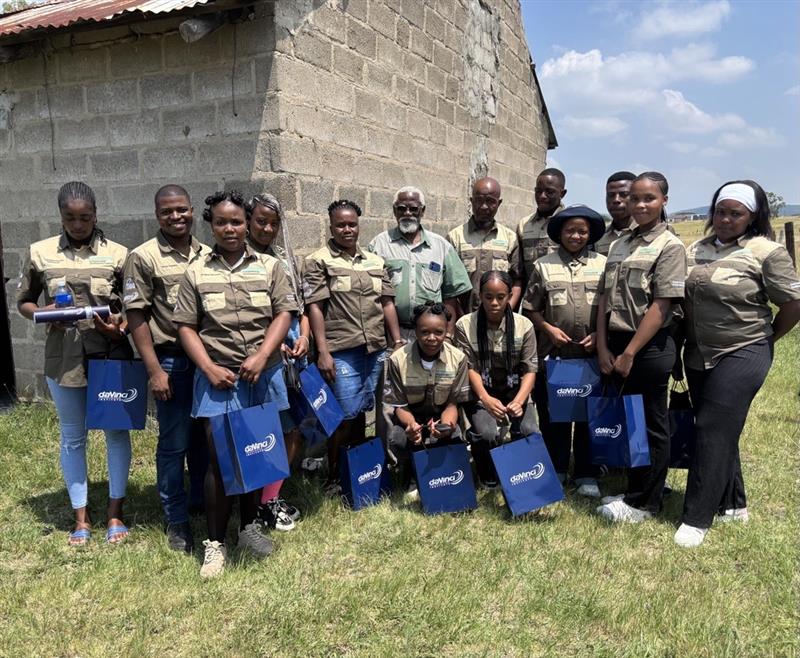
From a project management perspective, coordinating and leading this programme presented both rewarding and challenging moments. The initiative required careful planning, stakeholder engagement and the ability to adapt to the dynamics of different communities and regions.
Throughout the programme, participants travelled across several provinces, engaging with diverse agricultural environments and community contexts. These experiences allowed them to see firsthand how agriculture operates within different local realities.
While the programme included presentations, discussions and structured learning activities, many of the most valuable insights emerged from direct engagement with community members and practitioners working within the sector.
“Observing the dedication of individuals involved in agriculture, listening to local experiences, and understanding the realities faced by farming communities provided participants with perspectives that cannot easily be replicated in a classroom environment,” said Thabethe.
These engagements highlighted the resilience, commitment and innovation that exist within the agricultural sector, often in circumstances that require individuals to adapt continuously to economic and environmental pressures.
The importance of challenging young people
According to Thabethe, one of the most significant lessons from the experience is the value of exposing young people to environments that challenge their thinking and expand their perspectives.
Young leaders often develop the most when they are presented with opportunities that push them beyond familiar surroundings and require them to engage with complex, real-world issues.
Programmes of this nature create spaces where participants can explore industries they may not previously have considered, while also gaining a deeper appreciation for the role these sectors play in the national economy.
Such exposure is essential if young people are to see themselves as future contributors to sectors that are vital to national development.
The need to expand such initiatives
The experience also highlighted the importance of expanding programmes that combine leadership development with practical exposure to industry environments.
While initiatives such as this one have demonstrated their value, their reach remains limited. If South Africa is to address both youth unemployment and the long-term sustainability of key sectors such as agriculture, greater efforts must be made to scale these opportunities.
Providing young people with access to structured leadership and industry exposure programmes should be viewed not as an optional intervention, but as a strategic investment in the country’s future workforce.
A role for industry and institutions
Achieving this objective will require collaboration between educational institutions, industry stakeholders and community organisations. Educational initiatives can provide the framework for leadership development, but industry participation is essential in ensuring that learning remains connected to real-world challenges and opportunities.
Organisations operating within the agricultural value chain have an opportunity to contribute by supporting programmes that expose young people to the realities of the sector. Such collaboration can help bridge the gap between education and industry while creating pathways for the next generation of leaders.
Looking ahead to the future
“This programme reinforced an important insight for me as a tt100 Project Manager: the leadership potential South Africa requires already exists within its communities,” said Thabethe.
Young people across the country possess the curiosity, determination and capacity to contribute meaningfully to sectors that are critical to national development. What they require are platforms that allow them to learn, engage and develop their capabilities within real-world environments.
Programmes that combine leadership development with practical exposure can play a vital role in creating those opportunities.
“For me personally, this initiative did more than deliver a successful programme. It provided a renewed appreciation for the agricultural sector and for the communities that sustain it,” he said.
It also reaffirmed a simple but important truth: meaningful leadership development occurs when learning moves beyond theory and connects directly with people, industries and the realities of everyday life.



Leave a Reply