
Category: Qualifications

  • Higher Certificate In Management Of Technology And Innovation: Strengthening Leadership In The Logistics Industry

    Higher Certificate In Management Of Technology And Innovation: Strengthening Leadership In The Logistics Industry

    The logistics and supply chain industry sits at the centre of the modern economy. From global freight networks to last-mile delivery operations, logistics organisations are responsible for ensuring that goods move efficiently, safely, and reliably across complex systems.

    Yet the industry is evolving rapidly. Digital technologies, automation, real-time data, global trade pressures, and changing customer expectations are reshaping how logistics organisations operate.

    In this environment, success depends not only on operational capability but also on employees who understand systems thinking, technology integration, innovation, and people management.

    The Higher Certificate in Management of Technology and Innovation at The DaVinci Institute provides logistics professionals with the foundational management skills required to navigate these complexities, strengthen operational performance, and prepare for leadership roles within the supply chain environment.

    Positioned at NQF Level 5, the qualification enables working professionals to develop structured management knowledge while continuing to perform in their current roles.

    Why Management Development Matters in the Logistics Sector

    Logistics organisations operate within highly interconnected systems. A delay in a warehouse, an inefficiency in transport planning, or a breakdown in communication can ripple across the entire supply chain.

    As logistics networks become more sophisticated, employees are increasingly expected to:

    • Understand the systems that connect operations, technology, and customer service
    • Improve operational processes and efficiency
    • Apply problem-solving techniques to operational challenges
    • Use technology and innovation to optimise logistics operations
    • Communicate effectively across departments and supply chain partners

    Many logistics professionals gain deep operational experience over time but may not have had the opportunity to obtain formal management qualifications.

    The Higher Certificate in Management of Technology and Innovation bridges this gap by providing structured learning that strengthens both operational understanding and management capability.

    What Is the Higher Certificate in Management of Technology and Innovation?

    The Higher Certificate in Management of Technology and Innovation is a foundational management qualification designed to help professionals better understand their role within organisational systems and contribute more effectively to operational performance.

    For professionals in the logistics sector, this means gaining the knowledge needed to manage complex operations, understand technology-driven supply chains, and support innovation within logistics networks.

    Key Programme Details

    Qualification: Higher Certificate in Management of Technology and Innovation
    NQF Level: 5
    Total Credits: 120
    Study Mode: Online Distance Education with structured online engagements
    Duration: Minimum 1 year, Maximum 2 years
    Intakes: March, June, and October

    The programme allows working professionals to strengthen their management capabilities without interrupting their careers.

    Key Skills Developed for Logistics Professionals

    The qualification equips logistics professionals with practical capabilities that support operational performance and career growth.

    Systems Thinking in Supply Chains

    Modern supply chains operate as interconnected systems involving suppliers, transport networks, warehouses, technology platforms, and customer service teams.

    Through systems thinking, professionals learn how to:

    • Understand supply chain interdependencies
    • Identify root causes of operational problems
    • Design improvements that strengthen overall logistics performance

    This capability is essential for managing complex logistics environments.

    Technology and Innovation in Logistics

    Technology continues to transform the logistics industry through tools such as:

    • Warehouse management systems
    • Transport management platforms
    • Data analytics and tracking systems
    • Automation and digital logistics solutions

    The programme helps learners understand how technology and innovation can improve operational efficiency and competitiveness.

    Leadership and Team Coordination

    Logistics operations rely heavily on teamwork and coordination across departments.

    Participants develop leadership capabilities that enable them to:

    • Support operational teams
    • improve collaboration between departments
    • guide operational improvements
    • strengthen organisational performance

    These leadership skills are particularly valuable for professionals moving into supervisory or management roles.

    Programme Structure

    The Higher Certificate consists of 120 credits, divided between compulsory modules and elective modules.

    Compulsory Modules (60 Credits)

    All students complete the following core modules:

    • Managerial and Leadership Development – 20 credits
    • Systemic Thinking and Problem Solving – 20 credits
    • Management Fundamentals: Technology, People, and Innovation Management – 20 credits

    These modules provide the management foundations required for professionals working in operational environments such as logistics.

    Elective Modules (60 Credits)

    Students select five electives totalling 60 credits, allowing them to tailor their studies to their professional environment.

    Systems and Technology Electives

    • Customer Centricity – 12 credits
    • Safety, Health, Environmental, Risk and Quality (SHERQ) Management – 12 credits
    • Supply Chain Management: Logistics and Transport – 12 credits

    These modules are particularly relevant for logistics professionals responsible for operational quality, risk management, and supply chain efficiency.

    Innovation and People Electives

    • Business Improvement Specialist – 12 credits
    • Principles of Leadership – 12 credits
    • Entrepreneurship – 12 credits
    • Sales Process and Management Environment – 12 credits

    These electives strengthen leadership, innovation, and operational improvement capabilities within logistics organisations.

    Career Opportunities in Logistics

    The qualification prepares professionals for a wide range of roles within the logistics and supply chain sector.

    Graduates often strengthen or transition into positions such as:

    • Logistics Coordinator
    • Distribution Manager
    • Operations Supervisor
    • Supply Chain Administrator
    • Customer Service Manager
    • Warehouse Operations Manager
    • Sales Area Supervisor
    • Stock Logistics Team Leader
    • Commercial Assistant
    • Operations Controller
    • Risk Officer
    • Project Manager within logistics environments

    By strengthening management knowledge and systems thinking capability, the qualification supports career progression within logistics organisations.

    Minimum Admission Requirements

    Applicants must meet one of the following criteria:

    • National Senior Certificate (NSC/SC(a)) with a minimum of 30% in English, or
    • Senior Certificate (SC) with 33.3% in English, or
    • National Certificate Vocational (NCV) Level 4 with 40% in English, or
    • National Nated Certificate 4 (N4)

    Applicants who do not meet these criteria may still be considered through Recognition of Prior Learning (RPL), assessed on a case-by-case basis.

    Flexible Learning for Logistics Professionals

    Logistics professionals often work in demanding operational environments with irregular schedules. The programme’s online distance education model allows learners to balance study with professional responsibilities.

    Students benefit from:

    • Flexible online learning
    • access to subject matter experts
    • structured academic support
    • practical learning connected to workplace environments

    This flexibility makes the programme particularly suitable for professionals already working within logistics operations.

    A Pathway to Further Study

    Another major advantage of the Higher Certificate is that it provides a foundation for further academic progression.

    Graduates can use the qualification as a pathway into Bachelor’s Degree programmes, enabling them to expand their leadership and management capabilities even further.

    Supporting the Future of Logistics Leadership

    As global supply chains become more sophisticated, logistics organisations require professionals who can think strategically, understand technology, and manage complex systems.

    Developing these capabilities early in a career creates a strong foundation for future leadership roles within logistics and supply chain management.

    The Higher Certificate in Management of Technology and Innovation equips professionals with the knowledge, systems thinking capability, and management skills required to contribute to operational excellence and organisational growth within the logistics sector.

    Enrol Today

    If you are working in logistics or supply chain operations and want to strengthen your management capability, the Higher Certificate in Management of Technology and Innovation offers a practical pathway to professional development.

    Explore enrolment options, admission requirements, and upcoming intake dates with The DaVinci Institute and begin building the management skills needed for the future of logistics. Enrol here.

  • Master Of Business Leadership: Developing Strategic Leaders For The Mining Industry

    Master Of Business Leadership: Developing Strategic Leaders For The Mining Industry

    Organisations today are navigating a landscape shaped by technological disruption, economic uncertainty, regulatory pressure, and rapidly evolving stakeholder expectations. In this environment, leadership is no longer limited to operational oversight or managerial experience. It requires the ability to integrate strategy, systems thinking, innovation, technology, and people leadership in order to guide institutions through complexity.

    Senior leaders are increasingly expected to look beyond short-term performance and build organisations that remain resilient, competitive, and socially responsible over time. Boards and executive teams are therefore placing greater emphasis on leadership capability that combines strategic insight with the ability to translate ideas into practical organisational outcomes.

    This is where advanced leadership education becomes essential.

    The Master of Business Leadership (MBL) at The DaVinci Institute is designed to develop experienced professionals, senior managers, and entrepreneurs into strategic leaders capable of addressing complex organisational and socio-economic challenges through advanced scholarship, applied research, and systems thinking.

    Rather than focusing purely on theory, the programme integrates academic insight with real-world application, enabling leaders to translate knowledge into meaningful organisational impact.

    Why Leadership Development Matters More Than Ever?

    Modern organisations operate within highly interconnected systems. Decisions taken in one part of the organisation often ripple across operations, technology infrastructure, financial performance, and stakeholder relationships.

    As a result, leadership today requires far more than operational management.

    Leaders are expected to:

    • Navigate organisational complexity
    • Align strategy with technology and innovation
    • Manage people and culture in rapidly evolving workplaces
    • Make evidence-based decisions grounded in economic and financial insight
    • Design solutions that contribute to both organisational performance and broader socio-economic development

    Traditional leadership development approaches often separate academic learning from organisational reality. The Master of Business Leadership bridges this gap by combining advanced theoretical engagement with practical application in real professional contexts.

    What Is the Master of Business Leadership?

    Mining Leadership

    The Master of Business Leadership (MBL) is a postgraduate qualification positioned at NQF Level 9 and registered under SAQA ID 112553, comprising 184 credits.

    The programme develops leaders who can apply integrated thinking across strategy, technology, people management, and organisational systems to solve complex business challenges.

    Key Programme Details

    • Qualification: Master of Business Leadership
    • NQF Level: 9
    • Credits: 184
    • Duration: Minimum 2 years, Maximum 4 years
    • Fees: From R100 267.55 per year

    The qualification prepares professionals to contribute to organisational knowledge through advanced research, critical reflection, and strategic problem-solving.

    Leadership Capability the Programme Develops

    Participants develop advanced competencies that are essential for senior leadership roles.

    Strategic and Systems Thinking

    Leaders learn how to analyse organisations as interconnected systems. This enables more effective strategic decision-making and sustainable organisational interventions.

    Technology and Innovation Leadership

    Modern leaders must understand how technology and innovation shape competitiveness. The programme equips participants to integrate these dimensions into organisational strategy.

    People and Organisational Leadership

    Managing people remains central to organisational performance. The qualification strengthens leaders’ ability to guide teams, shape organisational culture, and lead transformation initiatives.

    Financial and Economic Insight

    Senior leadership requires strong financial literacy and economic awareness. The programme develops the analytical capability needed to make informed decisions in complex business environments.

    Applied Research and Evidence-Based Decision-Making

    Participants conduct rigorous research on real organisational issues, producing insights that contribute both to academic knowledge and organisational improvement.

    Programme Structure

    The Master of Business Leadership combines core modules, elective specialisations, and a research mini-dissertation.

    Core Modules

    The compulsory modules focus on the foundational capabilities required for advanced leadership:

    • Business Leadership for the Management of People (20 credits)
    • Business Leadership for the Management of Technology and Innovation (12 credits)
    • Corporate Governance and Ethics (12 credits)
    • Economics for Business Leaders (12 credits)
    • Financial Management for Business Leaders (12 credits)
    • Strategic Systems Thinking (20 credits)
    • Mini-dissertation (60 credits)

    Together, these modules provide a strong platform in leadership theory, strategic management, governance, and organisational systems.

    Elective Modules

    Participants select elective modules totalling 36 credits, allowing them to tailor the qualification to their professional context.

    Elective options include:

    • Business Intelligence and Data Analysis
    • Customer Relationship Management
    • Contemporary Workplace Context
    • Integrated Supply Chain Management
    • Project Leadership
    • Social Entrepreneurship and Innovation
    • Strategic Marketing for the Contemporary Business Context
    • Strategy in a Global Context

    Labour law electives are also available for those specialising in workplace governance and labour relations.

    This flexibility enables leaders to align their studies with industry priorities and organisational challenges.

    Research and the Mini-Dissertation

    A central feature of the programme is the 60-credit mini-dissertation, which requires participants to investigate a real business leadership problem.

    Through this research process, students:

    • Formulate and refine a research question
    • Apply appropriate research methodologies
    • Analyse organisational challenges critically
    • Develop practical, implementable solutions
    • Reflect on outcomes within an ethical framework

    The result is research that contributes to organisational learning, leadership practice, and socio-economic development.

    Who Should Study the Master of Business Leadership?

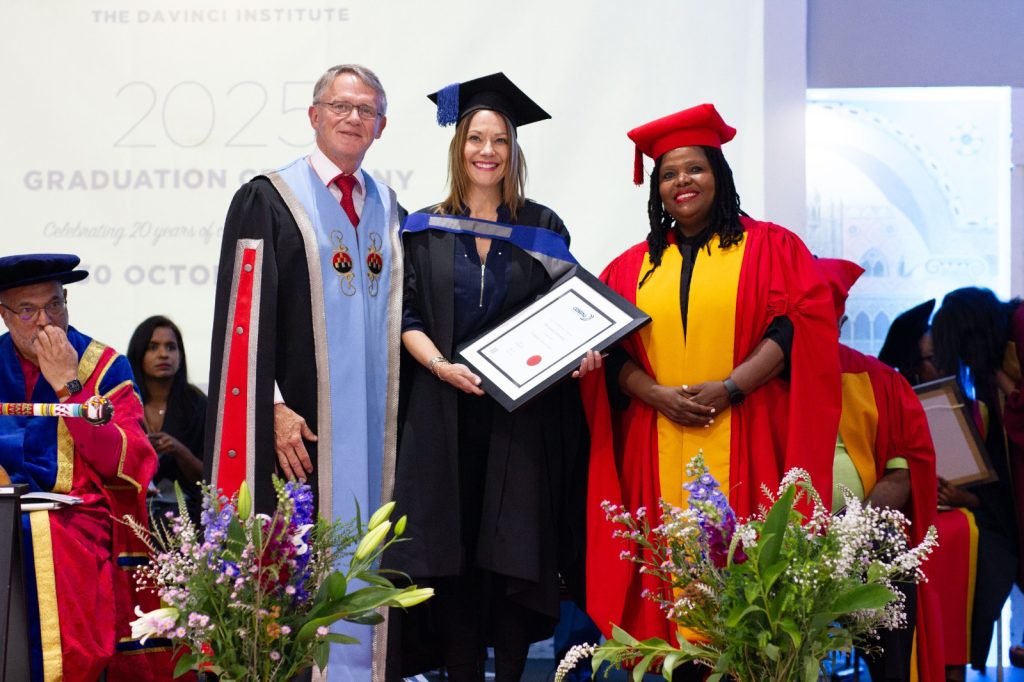
    Graduation Ceremony

    The qualification is designed for experienced professionals seeking to deepen their leadership capability and strategic impact.

    Typical participants include:

    • Senior managers and executives
    • Business leaders and organisational decision-makers
    • Entrepreneurs and founders
    • Transformation and strategy leaders
    • Professionals moving into executive leadership roles

    It is particularly valuable for leaders who want to combine academic depth with practical organisational impact.

    Admission Requirements

    Applicants must meet the following criteria:

    Minimum Requirements

    • A four-year Bachelor’s Degree in Business Management or a related field (NQF Level 8) with three years of relevant work experience, or
    • An Honours Degree or Postgraduate Diploma in Business Management or related field (NQF Level 8) with three years of relevant work experience

    Additional Requirements

    • A research idea approved by the Research Office

    Alternative access may be granted through Recognition of Prior Learning (RPL) at the discretion of the Senate.

    Career and Leadership Outcomes

    Graduates of the Master of Business Leadership often strengthen or transition into roles such as:

    • Executive or Senior Manager
    • Strategy and Transformation Leader
    • Business Development Executive
    • Innovation and Technology Leader
    • Organisational Consultant
    • Entrepreneur or Business Founder

    Beyond job titles, the programme develops leaders who can design strategic interventions, guide organisational change, and contribute to sustainable economic development.

    Why Study Business Leadership at The DaVinci Institute?

    The DaVinci Institute has developed a distinctive approach to leadership development grounded in systems thinking, innovation, and applied learning.

    Key advantages include:

    A Systems Thinking Approach

    Participants learn to understand organisations as interconnected systems rather than isolated functions.

    Applied Learning

    Theory is continuously connected to real organisational contexts and challenges.

    Flexible Learning

    The programme accommodates working professionals, enabling them to balance study with leadership responsibilities.

    Leadership for Socio-Economic Transformation

    The qualification emphasises the role of leadership in addressing broader societal challenges and promoting sustainable development.

    Leadership for a Changing World

    Business environments are becoming more complex, not less.

    Technology is transforming industries. Global competition is intensifying. Organisations are expected to create economic value while contributing to social progress and sustainability.

    In this environment, leadership must evolve.

    The Master of Business Leadership at The DaVinci Institute equips leaders with the knowledge, research capability, and systems thinking required to guide organisations through complexity and change.

    Next Steps

    If you are ready to deepen your leadership capability and contribute to organisational transformation, the Master of Business Leadership offers a pathway to advanced strategic development.

    Enrol for the Master of Business Leadership here.

  • Master Of Management In Technology and Innovation: Developing Leaders Inside Complex Organisations

    Master Of Management In Technology and Innovation: Developing Leaders Inside Complex Organisations

    Today, organisational performance is increasingly determined by how effectively leaders integrate technology, innovation, and strategy, not by how well these functions operate in isolation. Boards are no longer asking whether digital transformation is happening. They are asking whether leadership capability is sufficient to execute it.

    Across industries, organisations face a growing leadership constraint. Experienced managers are delivering operational results, yet many have not formally developed the strategic, systems, and innovation capability required to lead in environments shaped by artificial intelligence, automation, data ecosystems, and continuous transformation. The gap is not effort or ambition. It is the ability to lead complexity.

     Why Is Leadership Development Shifting? 

    This is why leadership development is shifting. Organisations are no longer investing only in management education. They are investing in qualifications that build organisational capability while leaders remain inside the business, working on real strategic challenges.

    The Master of Management in Technology and Innovation at The DaVinci Institute is designed for this reality. It develops leaders who can align technology, systems, and strategy, lead innovation deliberately, and make evidence-based decisions that strengthen organisational performance.

    Rather than removing leaders from the workplace, the programme uses the workplace itself as the learning environment, ensuring that development delivers measurable organisational value alongside academic achievement.

    In this article, we outline what the programme delivers, who it is designed for, the capabilities it builds, and why organisations use DaVinci as a partner in leadership and innovation development.

    The Leadership Capability Challenge Organisations Face

    MMTI

    The rules of leadership have changed.

    A decade ago, strong operational management was often sufficient. Today, leaders are expected to understand and integrate digital systems, data, innovation cycles, automation, and organisational complexity. Strategy is no longer separate from technology. Innovation is no longer optional. It sits at the centre of competitiveness, resilience, and growth.

    At the same time, organisations are raising the bar for senior and executive roles. Postgraduate qualifications are increasingly becoming a baseline requirement for:

    • Executive and senior management roles
    • Strategic and transformation leadership positions
    • Specialist leadership roles in technology, innovation, and systems
    • Succession and leadership pipeline development

    Many organisations already have experienced managers who are delivering results, leading teams, and driving change. The gap is not experience. The gap is formal, advanced strategic and systems capability that aligns leadership practice with the complexity of modern organisations.

    The Master of Management in Technology and Innovation is designed to close this gap.

    What Is the Master of Management in Technology and Innovation?

    A postgraduate qualification that develops leaders who can work across strategy, technology, innovation, and organisational systems to drive sustainable performance and transformation.

    What does it develop?

    It builds leaders who can:

    • Navigate organisational complexity
    • Lead innovation and transformation
    • Align technology, systems, and strategy
    • Make evidence-based strategic decisions
    • Design sustainable organisational solutions

    What is it not?

    • It is not a technical IT degree.
    • It is not a traditional MBA focused only on general management.

    Where does it sit?

    It sits at the intersection of:

    • Strategy and leadership
    • Technology and systems
    • Innovation and organisational change
    • Applied research and evidence-based decision-making

    What makes it distinct at The DaVinci Institute?

    At DaVinci, the programme is grounded in Mode 2 learning and the TIPS™ (Technological, Institutional, Personal, and Social) framework. This means learning is context-driven, practice-based, and focused on real organisational value.

    How does it work in practice?

    • Your organisation becomes the learning environment
    • Your strategic and operational challenges become the case studies
    • Assignments and research are applied directly to real organisational issues
    • Learning delivers measurable organisational value, not only academic outcomes

    Why does this matter for employers?

    The qualification does not only develop individuals. It builds organisational capability while leaders remain in their roles, ensuring immediate relevance and return on investment.

    Why Organisations Choose The DaVinci Institute

    Accredited and Recognised
    The Master of Management in Technology and Innovation is fully accredited and registered with the relevant South African higher education authorities, ensuring organisational and professional credibility.

    Designed for Working Leaders
    The programme is built for employed professionals in leadership and management roles. There is no need to remove people from the business to develop them.

    Work-Based Learning Model
    Learning is embedded in real organisational priorities, projects, and strategic challenges. Participants apply theory directly to their own context, ensuring immediate and measurable return on development investment.

    Applied Research and Practice-Based Methodology
    The qualification follows a practice-oriented, applied research methodology. Participants investigate real organisational challenges using a combination of case-based inquiry, qualitative and quantitative methods, and systems thinking. The emphasis is on solving complex, real-world management and innovation problems, not abstract theory. Research outputs are designed to generate practical, implementable solutions that create value for both the organisation and the individual leader.

    Flexible Online Delivery
    Leaders can study from anywhere without disrupting operational responsibilities.

    Personalised Academic Supervision
    Participants receive structured academic guidance and supervision throughout their research and project work, ensuring academic rigour, relevance, and meaningful organisational impact.

    Systems and Innovation Lens
    DaVinci develops leaders who can understand whole systems, manage complexity, and design sustainable strategic interventions, rather than relying on narrow, siloed solutions.

    Who Should Study a Technology and Innovation Leadership Degree?  

    This qualification is designed for organisations that want to develop:

    • Senior managers and high-potential leaders
    • Technology, operations, innovation, and strategy leaders
    • Transformation and change leaders
    • Future executives and succession candidates
    • Specialists moving into broader strategic leadership roles

    It is particularly valuable where organisations want to:

    • Build internal leadership pipelines
    • Strengthen innovation and transformation capability
    • Improve strategic and systems thinking at senior levels
    • Formalise leadership development with a recognised Master’s qualification
    • Align leadership development with real organisational priorities

    In short, this programme is for organisations that want leadership development to deliver business impact, not just certificates.

    Core Capabilities Leaders Develop

    Participants develop advanced capability in:

    Strategic and Systems Thinking

    Leaders learn to see the organisation as an integrated system, enabling smarter, more sustainable strategic decisions.

    Innovation Leadership

    They gain the tools to lead innovation deliberately, aligning new ideas, processes, and technologies with organisational strategy.

    Technology and Systems Management

    They develop the ability to align technology investment and systems decisions with performance and long-term organisational goals.

    Change and Transformation Leadership

    They acquire practical frameworks for leading people, processes, and culture through complex change.

    Applied Research and Evidence-Based Decision-Making

    They learn how to investigate real organisational problems and design solutions grounded in data, theory, and practice.

    Executive-Level Decision-Making

    They move beyond operational problem-solving into strategic, long-term leadership thinking.

    Organisational Impact and Career Outcomes

    Graduates typically strengthen or move into roles such as:

    • Head of Innovation or Innovation Manager
    • Digital Transformation or Technology Strategy Lead
    • Operations or Systems Executive
    • Strategy or Transformation Leader
    • General or Executive Manager
    • Internal or External Strategy and Transformation Consultant

    For organisations, the value is not only in the title. It is in increased leadership depth, stronger strategic capability, and improved organisational decision-making.

    How DaVinci Differs from Traditional Business Schools

    AspectThe DaVinci InstituteTraditional Business School
    DeliveryFully online, flexibleOften campus-based or rigid hybrid
    Target MarketWorking leaders in organisationsOften full-time or early-career students
    Learning ModelWork-based, applied, Mode 2Mostly theory and case studies
    AssessmentReal organisational projects and applied researchExams, essays, simulated cases
    Business IntegrationWorkplace is central to learningWorkplace mostly separate from studies
    SupportPersonalised supervision and mentoringStandardised, cohort-based support
    Thinking LensSystems, innovation, complexityTraditional management disciplines

    The difference is simple: DaVinci uses the organisation as the classroom.

    Why This Matters Now

    The pace of technological and organisational change is accelerating, not slowing down.

    Artificial intelligence, automation, data platforms, and digital ecosystems are reshaping how organisations compete and operate. At the same time, economic pressure demands better decisions, stronger leadership, and more integrated thinking.

    In this environment:

    • Experience alone is no longer enough
    • Theory alone has never been enough
    • Organisations need leaders who can combine both, in practice

    A Master’s degree is no longer just an individual achievement. It is increasingly a strategic talent and leadership investment.

    A Strategic Leadership Development Partner

    At The DaVinci Institute, participants do not step out of the organisation to study leadership. They develop leadership inside the organisation, through real projects, real challenges, and real strategic work.

    They return to their roles with:

    • Stronger strategic capability
    • Better systems and innovation thinking
    • Greater leadership confidence and impact
    • And a recognised Master’s qualification that strengthens organisational credibility and succession planning

    Next Steps for Organisations

    If your organisation is looking to:

    • Strengthen its leadership pipeline
    • Build innovation and transformation capability
    • Develop senior and high-potential leaders with real business impact
    • Align leadership development with organisational strategy

    The Master of Management in Technology and Innovation atThe DaVinci Institute offers a proven, work-based, and strategically aligned solution.

    Explore the programme and begin your enrolment journey here. You can also connect with one of our DaVincians to discuss organisational enrolment, leadership development pathways, and partnership opportunities.

  • Postgraduate Diploma In Business Leadership: Leadership Pipeline For Organisations

    Postgraduate Diploma In Business Leadership: Leadership Pipeline For Organisations

    Every organisation reaches a point where growth is no longer limited by strategy or opportunity, but by leadership depth.

    You may have strong managers who deliver results. High-potential professionals who understand your business, your systems, and your culture. Technical specialists who have become critical to performance. Yet when the organisation faces bigger change, digital pressure, restructuring, or expansion, a familiar gap appears. The gap between operational management and strategic leadership.

    This is where structured leadership development becomes a business priority, not an HR nice-to-have.

    The Postgraduate Diploma in Business Leadership offers organisations a powerful, practical way to upskill high-potential employees, strengthen leadership capability, and build a credible pipeline into Master’s-level development without pulling people out of the business.

    It is not just an academic qualification. It is a strategic talent investment.

    Leadership Development Challenges Organisations Face Today

    Jana Britz

    The business environment has become more complex, not less.

    Leaders are expected to navigate technological and operational change, lead diverse teams, make decisions under uncertainty, and balance performance with long-term strategy. At the same time, many organisations promote strong performers into leadership roles only to discover that operational excellence does not automatically translate into strategic leadership capability.

    The result is a leadership layer that works hard, but is often stretched when it comes to enterprise-level thinking, systems leadership, and long-term direction.

    This is exactly the gap that a Postgraduate Diploma in Business Leadership is designed to close.

    What Is a Postgraduate Diploma in Business Leadership?

    A Postgraduate Diploma in Business Leadership is an advanced qualification, typically at NQF Level 8, focused on developing strategic leadership, management capability, and higher-level decision-making skills.

    From an organisational perspective, it does three critical things:

    1. It upgrades leadership capability by strengthening strategic thinking, leadership judgement, and organisational insight.
    2. It prepares high-potential talent for senior roles by shifting people from operational management to enterprise-level leadership thinking.
    3. It creates a pipeline into Master’s-level development because it sits at the same academic level as an Honours degree and is widely recognised as a pathway into Master’s programmes.

    In practical terms, it allows organisations to grow their own leaders instead of always having to buy them from the market.

    Why This Qualification Works So Well for Employers

    Many organisations invest in short courses, workshops, and leadership seminars. These have value, but they often lack depth, continuity, and measurable progression.

    The Postgraduate Diploma in Business Leadership offers something different.

    It is a structured, substantial development journey that builds real capability over time. Participants develop stronger strategic thinking, better leadership judgement, and deeper organisational understanding. They also build academic and analytical capability, which is increasingly important for senior leaders who need to make evidence-based decisions in complex environments.

    Just as importantly, this qualification supports succession planning. High-performing employees can be developed in a deliberate, structured way towards senior and executive roles, while also building a credible pathway into Master’s-level leadership development.

    Trusted by Leading Organisations

    Choosing to invest in leadership development is a strategic decision. It requires confidence that the institution you partner with understands business realities and can deliver real, workplace-relevant impact.

    Over the years, a wide range of respected organisations have trusted The DaVinci Institute to develop their people, including:

    • DSV – Global transport and logistics
    • FNB – Financial services and banking
    • WesBank – Vehicle and asset finance
    • ZIEGLER – International logistics and supply chain
    • Sibanye-Stillwater – Mining and resources
    • SAAFF – Freight and logistics
    • Kuehne + Nagel – Global logistics
    • DHL – International logistics and supply chain
    • Capitec Bank – Retail banking and financial services

    These organisations operate in highly competitive, regulated, and complex environments. Their decision to develop employees through DaVinci programmes reflects a clear focus on building leadership capability, strengthening strategic thinking, and preparing future leaders for greater responsibility.

    For employers, this track record matters. It demonstrates that DaVinci’s approach to work-based learning and applied leadership development is not only academically sound, but also proven in real organisational contexts.

    Who Should You Put on This Programme?

    From an employer’s point of view, this qualification is ideal for:

    • High-potential managers identified in talent or succession plans
    • Team leaders and middle managers moving into more strategic roles
    • Technical specialists transitioning into leadership positions
    • Business unit or functional managers who need stronger strategic capability
    • Future leaders being prepared for senior and executive tracks

    In short, this is for people you cannot afford to lose, and cannot afford not to develop.

    The Skills Your Organisation Gets Back

    A Postgraduate Diploma in Business Leadership delivers clear organisational value.

    Your business benefits from leaders who can think strategically, lead in complexity, make better decisions, understand the organisation as a system, communicate more effectively at senior levels, and contribute meaningfully to long-term direction and change.

    Just as importantly, they are better prepared for advanced leadership development at Master’s level, creating continuity in your leadership pipeline.

    The Business Case: Why This Is a Smart Investment

    From a return-on-investment perspective, this qualification supports stronger leadership capability without constant external recruitment, improved retention of high-potential employees, better succession planning, reduced risk when promoting into senior roles, and higher organisational resilience during periods of change and transformation.

    Instead of reacting to leadership gaps, organisations can build leadership capacity deliberately and systematically.

    The Bridge to Master’s Level: Why That Matters for Employers

    One of the long-term challenges in leadership development is continuity.

    The Postgraduate Diploma in Business Leadership creates a formal, credible bridge to Master’s-level study. This means high-potential employees can progress into advanced leadership qualifications, and your organisation can build deeper strategic and executive capability over time.

    Rather than relying only on external hires for critical roles, you create a sustainable internal pipeline of future leaders.

    Why Now Is the Right Time to Invest in Leadership Upskilling

    The pressure on leaders is increasing. Technology, competition, regulation, and economic uncertainty are forcing organisations to demand more strategic, more adaptable, and more capable leadership at every level.

    Upskilling your people through a Postgraduate Diploma in Business Leadership is not a cost. It is a strategic investment in performance, resilience, and long-term competitiveness.

    From Capability Building to Competitive Advantage

    When you invest in structured, high-level leadership development, you gain more than better managers. You build stronger decision-making, better strategic alignment, a healthier succession pipeline, and a more resilient organisation.

    And when that development includes a clear pathway to Master’s-level leadership capability, you are not just solving today’s leadership challenges. You are designing tomorrow’s leadership advantage.

    Take the Next Step

    If you are serious about strengthening your leadership bench, retaining high-potential talent, and building a sustainable pipeline of future leaders, the Postgraduate Diploma in Business Leadership is a powerful place to start.

    It develops leaders who think better, decide better, and lead at a higher level. And it builds a clear bridge to Master’s-level leadership capability in your organisation.

    Visit www.davinci.ac.za to explore how this programme can support your leadership development strategy, or speak to one of our DaVincians about upskilling your people for the future.

  • Advanced Diploma In Innovation Management Practices (NQF Level 7)

    Advanced Diploma In Innovation Management Practices (NQF Level 7)

    Advance your innovation leadership with an NQF Level 7 Advanced Diploma. Designed for working professionals leading change in complex organisations. For many experienced professionals, innovation has quietly become part of the job description. You are expected to lead initiatives, manage uncertainty, balance sustainability with performance, and make decisions that shape long-term outcomes. Yet these responsibilities often arrive without structured development, leaving capable leaders to rely on instinct, experience, and trial and error.

    This is not a failure of ability. It is a gap in formal innovation leadership capability.

    The Advanced Diploma in Innovation Management Practices is designed for professionals who have moved beyond operational problem-solving and now operate at a level where innovation must be managed, governed, and sustained across teams, systems, and organisations.

    Innovation Leadership in Complex Organisations 

    In earlier career stages, innovation often means contributing ideas or improving isolated processes. At more senior levels, innovation becomes a leadership function. Decisions carry wider consequences, resources are limited, and change must be aligned to strategy, policy, and long-term sustainability.

    Leaders are expected to:

    • Drive innovation that supports organisational objectives
    • Balance creativity with governance and risk management
    • Embed innovation into systems rather than treating it as a project
    • Influence people and culture, not just outcomes

    Without advanced innovation management capability, even well-intentioned initiatives can stall or fail to scale.

    Why Formal Innovation Management Qualifications Matter 

    Experience provides context, judgment, and credibility. However, innovation in complex environments is no longer intuitive or informal. It is increasingly recognised as a structured, research-informed management discipline.

    Organisations now look for leaders who can demonstrate:

    • Advanced innovation frameworks and models
    • Systems thinking and strategic problem-solving
    • Research literacy and evidence-based decision-making
    • The ability to lead innovation under constraint

    The absence of formal development at this level often results in capable professionals being overlooked for senior roles, not because they lack competence, but because their innovation capability is not formally recognised.

    Advanced Diploma in Innovation Management for Working Professionals 

    The Advanced Diploma in Innovation Management Practices is not intended for full-time students or early-career entrants. It is designed for professionals who are already embedded in organisations and cannot afford to step away from their responsibilities.

    The qualification allows you to:

    • Study while working full-time
    • Apply learning directly to real organisational challenges
    • Develop advanced leadership and innovation capability
    • Strengthen your strategic influence without pausing your career

    At The DaVinci Institute, learning is work-integrated. Assessments are grounded in your professional context, ensuring immediate relevance and tangible workplace value.

    Advanced Diploma in Innovation Management Practices (NQF Level 7) 

    Statement On Class Of 2025

    An Advanced Diploma is a recognised higher education qualification positioned at NQF Level 7, representing postgraduate-level learning with an emphasis on application, analysis, and research-informed practice.

    Key characteristics include:

    • Advanced theoretical and practical integration
    • Formal assessment and national recognition
    • Strong emphasis on leadership and strategic capability
    • A pathway to further postgraduate study

    This positions graduates to operate with greater confidence, credibility, and authority in innovation-related leadership roles.

    What You Will Study

    The programme consists of 120 credits, with all modules compulsory:

    • Innovation-Driven Business Efficiency (30 Credits)
    • Innovation Management for Entrepreneurial Success (30 Credits)
    • Innovation Leadership for Competitive Success (30 Credits)
    • Innovation Practice: Business Research Report (30 Credits)

    Together, these modules develop your ability to lead innovation initiatives, evaluate impact, and produce research-informed solutions relevant to your organisation.

    Skills You Will Develop

    Through this qualification, you will strengthen your ability to:

    • Lead and manage innovation across organisational systems
    • Apply systems thinking to complex problems
    • Align innovation initiatives with strategy and sustainability
    • Conduct applied research to inform decision-making
    • Influence people and processes in uncertain environments

    These capabilities are increasingly critical for leaders operating in both public and private sector contexts.

    Who This Qualification Is For

    This qualification is ideal if:

    • You are already leading or coordinating innovation initiatives
    • You operate in complex, constrained, or regulated environments
    • You seek formal recognition for advanced innovation capability
    • You want to strengthen your leadership credibility and influence
    • You are preparing for senior or strategic roles

    If innovation is already part of your responsibility, this qualification helps you lead it with intention and confidence.

    Why Now Matters

    Innovation pressures are not easing. Digital transformation, sustainability imperatives, and organisational reform are accelerating. Leaders who wait to formalise their capability often find themselves reacting rather than shaping outcomes.

    The professionals who progress are those who:

    • Invest in leadership capability before they are forced to
    • Use learning as a strategic advantage, not a recovery tool
    • Strengthen resilience through structured, applied development

    Take the Next Step

    You do not need more responsibility.
    You need deeper capability, structure, and recognition.

    The Advanced Diploma in Innovation Management Practices allows you to consolidate what you already do and lead innovation with greater clarity, credibility, and impact.Click here to enrol for the Advanced Diploma in Innovation Management Practices or book a consultation with a DaVincian today.

  • Advanced Certificate In Business Innovation Management: Skills For The Next Stage Of Your Career

    Advanced Certificate In Business Innovation Management: Skills For The Next Stage Of Your Career

    You are not short on experience. You are short on time.

    Between meetings, deadlines, family responsibilities, and the daily pressure to keep things running, the idea of sitting in a classroom full-time is simply unrealistic. Yet at the same time, your role is demanding more from you than ever. You are expected to innovate, improve systems, adopt new technologies, and lead change, often without formal authority or recognition.

    This is the reality for many experienced professionals. You are already doing innovative work, but you cannot afford to pause your career to study, and you cannot afford to fall behind either.

    The Advanced Certificate in Business Innovation Management is designed precisely for this moment. It is a qualification that fits around your working life, formalises what you already do, and equips you with the tools to stay relevant in a rapidly changing environment.

    The Innovation Pressure Is Accelerating

    The pace of change in organisations is no longer gradual. It is constant.

    According to the OECD Skills Outlook, organisations globally are experiencing a growing skills mismatch, where roles are changing faster than formal job titles and qualifications can keep up. Employees are increasingly expected to redesign processes, respond to digital disruption, and solve complex problems without having been formally trained to do so.

    Closer to home, South African employers are feeling this pressure acutely. Public sector reform, digital transformation initiatives, and private sector competitiveness all rely on people who can innovate within constraints. Yet many professionals are promoted into these responsibilities without the frameworks, language, or confidence that formal innovation training provides.

    The result? Capable professionals plateau, not because they lack ability, but because they lack recognised innovation capability.

    Why Experience Alone Is No Longer Enough

    Experience remains valuable, but it is no longer sufficient on its own.

    Research by McKinsey & Company shows that organisations that actively build innovation capability are significantly more likely to sustain performance during periods of disruption. However, innovation is no longer seen as instinctive or informal. It is increasingly treated as a structured, learnable discipline.

    For individuals, this means that being “good at problem-solving” is no longer enough. Employers want to see:

    • Structured thinking
    • Innovation frameworks
    • Evidence of applied learning
    • Formal credentials that validate capability

    Without this, experienced professionals risk being overlooked, even while carrying the weight of change on their shoulders.

    A Qualification Designed for Working Adults

    The Advanced Certificate in Business Innovation Management is not aimed at school leavers or full-time students. It is designed for professionals who are already in the system and cannot afford to step out of it.

    This qualification allows you to:

    • Study while working full-time
    • Apply learning directly to your current role
    • Build formal innovation capability without pausing your career

    At The DaVinci Institute, learning is work-integrated and practical. Assignments are not hypothetical. They are based on challenges in your organisation, ensuring that your study time immediately translates into workplace value.

    What Is an Advanced Certificate in Business Innovation Management?

    An Advanced Certificate is a nationally recognised higher education qualification that sits between short courses and diplomas.

    Key features include:

    • NQF Level 6 positioning
    • Formal assessment and recognition
    • Strong applied and workplace focus
    • A clear pathway to further study

    Unlike short courses, which often lack depth and recognition, this qualification provides structured learning that strengthens credibility and supports long-term career progression.

    Why Choose the DaVinci Advanced Certificate?

    The DaVinci Institute’s approach is intentionally different:

    • CHE and SAQA accredited, ensuring national recognition
    • Flexible online delivery, built for time-constrained professionals
    • Work-based assessments, linked to your role and organisation
    • Immediate relevance, with tools you can use from the first module
    • A strong emphasis on innovation, systems thinking, and real-world application

    This is not academic theory for its own sake. It is learning designed to help you perform better now.

    Who Is This Qualification For?

    This qualification is ideal if:

    • You are already responsible for improvement, innovation, or change
    • You cannot commit to full-time, classroom-based study
    • You want formal recognition for work you are already doing
    • You are seeking career progression without stepping away from employment
    • You work in complex public or private sector environments

    If your role is changing faster than your job title, this qualification helps you keep up and move forward.

    Key Skills You Will Gain

    Through the programme, you will develop skills in:

    • Structured innovation problem-solving
    • Systems thinking and organisational analysis
    • Business model and process innovation
    • Technology-enabled improvement
    • Leading change in uncertain environments

    These skills are increasingly essential as organisations navigate digitalisation, resource constraints, and transformation.

    Career Paths After an Advanced Certificate in Business Innovation Management

    Graduates typically move into or strengthen roles such as:

    • Innovation Coordinator
    • Business Improvement Manager
    • Process Improvement Specialist
    • Project or Change Manager

    These roles exist across government, corporates, NGOs, and entrepreneurial environments, wherever organisations need people who can improve how things work.

    Why Now Matters

    Artificial intelligence, automation, and digital reform are already reshaping jobs. Waiting for “the right time” to formalise your skills often means waiting too long.

    The professionals who progress are those who:

    • Act before change forces their hand
    • Formalise capability while they are still employed
    • Use learning as a tool for resilience, not recovery

    The Advanced Certificate in Business Innovation Management allows you to do exactly that, without putting your life or career on hold.

    Take the Next Step

    You do not need more experience.
    You need recognition, structure, and momentum.

    Turn what you already do into recognised innovation capability with the Advanced Certificate in Business Innovation Management at The DaVinci Institute.

    Visit www.davinci.ac.za to apply or book a conversation with one of our DaVincians today.

  • Why The DaVinci Institute Is Different: Cooperative Framework A Differentiator

    Why The DaVinci Institute Is Different: Cooperative Framework A Differentiator

    In a world defined by complexity, uncertainty, and rapid change, higher education institutions face a defining question: are we preparing students to operate within existing systems, or to challenge the future?

    At The DaVinci Institute, the answer is quite clear. Our difference lies not merely in our programmes, but in how we develop leaders who challenge the future. This distinction is most clearly expressed through what we refer to as the Cooperative Framework.

    Moving beyond traditional education models

    Conventional education models often separate theory from practice, individual achievement from societal impact, and knowledge acquisition from ethical responsibility. Learning is frequently framed as a linear process: content delivery, assessment, qualification.

    DaVinci’s deliberate disruption of this logic

    Our Cooperative Framework positions learning as a dynamic, integrative, and contextual process, rooted in organisational and societal challenges. It recognises that leadership today does not emerge from technical competence alone, but from the ability to navigate systems, engage people, manage innovation, and create value responsibly.

    Starting with the student’s reality

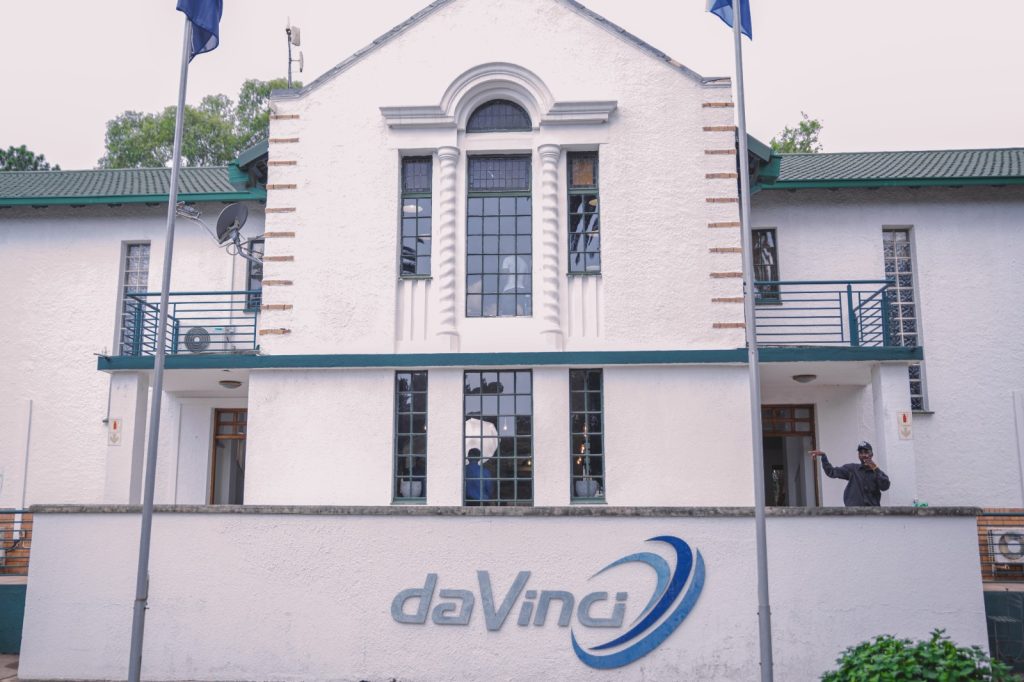
    The DaVinci Institute
    Picture of The DaVinci Institute

    At the heart of the Cooperative Framework is the student’s lived organisational and social reality. Rather than abstract case studies or simulated problems, DaVinci students work with challenges drawn directly from their professional environments. These work-based challenges form the anchor for learning, ensuring immediate relevance, practical application, and measurable impact.

    Learning, therefore, begins not with theory, but with context:

    • The client or organisation’s reality
    • The constraints of existing systems
    • The social, economic, and ethical implications of decisions
    • This grounding ensures that leadership development is authentic, not hypothetical.

    Reframing: Developing the Leader’s Mindset

    A defining feature of the Cooperative Framework is reframing. Before solutions are pursued, students are guided to deepen their understanding of:

    • Self (values, assumptions, leadership identity)
    • Others (stakeholders, power dynamics, diversity of perspectives)
    • Social and organisational context

    This reframing process challenges habitual thinking and surface-level problem-solving. It enables leaders to see complexity clearly, question dominant narratives, and recognise unintended consequences. At DaVinci, thinking differently precedes acting differently. Therefore, reframing means:

    • Understanding the system and strategic intent
    • Effective leadership requires systemic awareness.

    Through the Cooperative Framework, students develop the capability to:

    • Understand how organisational systems function
    • Clarify roles, relationships, and interdependencies
    • Align actions with strategic intent and ecosystem realities

    Rather than treating strategy as a static plan, DaVinci positions it as a sense-making activity, one that requires continuous interpretation of environmental signals, stakeholder needs, and societal expectations.

    This prepares leaders to operate not only within organisations, but across complex ecosystems.

    Integrating Technology, Innovation, and People

    What truly differentiates DaVinci is the integration of leadership domains. The Cooperative Framework brings together:

    • Management of Technology: enabling leaders to use technology as an enabler of value, not an end in itself
    • Management of Innovation: fostering adaptive, creative, and experimental approaches to change or transformation
    • Management of People: cultivating ethical, inclusive, and developmental leadership practices

    These are not engaged in isolation. They are applied concurrently to the same work-based challenge, reflecting the reality that leadership decisions are always multi-dimensional.

    Decision-making with responsibility

    At the convergence of these elements lies decision-making. DaVinci’s approach recognises that leadership decisions are never neutral. They shape organisations, communities, and futures. The Cooperative Framework therefore emphasises:

    • Conscious trade-offs
    • Ethical accountability
    • Long-term societal consequences

    Students learn to justify decisions not only in terms of efficiency or profit, but in terms of value creation and social legitimacy.

    From value proposition to social return

    The Cooperative Framework does not end with implementation. It explicitly extends to:

    • Implementation of value propositions
    • Measurement of Social Return on Investment (SROI)

    This ensures that learning outcomes are visible beyond the classroom. The success of leadership interventions is evaluated based on their contribution to organisational performance, human development, and societal benefit.

    In doing so, DaVinci reinforces a powerful message: leadership is validated by impact, not intention.

    The DaVinci difference

    What makes The DaVinci Institute different is not a single programme or methodology, but a coherent philosophy of leadership education.

    Through the Cooperative Framework, DaVinci:

    • Integrates theory and practice seamlessly
    • Develops leaders who can navigate complexity
    • Prioritises ethical responsibility and societal value
    • Anchors learning in real-world challenges
    • Measures success through meaningful impact

    In an era where the future demands leaders who can think systemically, act responsibly, and collaborate across boundaries, DaVinci does not simply prepare graduates for the world as it is. We develop leaders capable of shaping the world as it should be.

  • Why DaVinci’s MBL Stands Out

    Why DaVinci’s MBL Stands Out

    Although both the Master of Business Administration (MBA) and the Master of Business Leadership (MBL) represent prestigious graduate credentials in business education, they pursue different objectives and study areas. The MBL programme develops strategic leadership skills with a strong focus on transformational thinking and visionary management which extends beyond conventional business administration methods.

    What makes DaVinci’s MBL different?

    Our  MBL places a strong emphasis on leadership development, change management, and applied research. It is more concerned with addressing organisational challenges through innovation, systems thinking, and people management,  inclusive within a strategic leadership framework.

    We emphasis a focus on technology, innovation, systems thinking, and people development. The programme is designed for managers and executives who want to drive transformation, and show results for sustainability development.

    Offered over a minimum of two years, and allowing up to four years to complete, the degree is flexible for working professionals. The cost starts at R95 681.50 per year, making it a competitive return on investment both locally and internationally.

    The qualification is structured around 240 credits, including a 120-credit dissertation, which underscores its research nature.

    The compulsory modules include:

    • Managerial and Leadership Development
    • Managing Systems
    • Creative Thinking and Decision-Making
    • Self, Other and Social Contexts
    • Management of Innovation
    • Management of People
    • Management of Technology

     Students are required to choose five electives from topics such as Governance and Ethics, Change Management, Strategic Management, and Leadership Challenges in Africa.

    The return on investment, this qualification blends academic rigour with practical application, preparing graduates not just for corporate success, but for meaningful contribution to socio-economic transformation.

    Admission requirements for our MBL

    Students seeking admission to The DaVinci MBL must possess an NQF Level 8 qualification which commonly includes an Honours degree or postgraduate diploma. Students must present an approved research idea which demonstrates that the programme emphasizes practical investigation and critical reflection.

    The DaVinci Institute provides an alternative entry route through Recognition of Prior Learning (RPL) for applicants who fail to meet the standard admission criteria. Experienced professionals can secure entry by demonstrating their industry expertise along with their professional accomplishments and leadership capabilities. The DaVinci Institute evaluates each application individually to demonstrate its dedication to providing accessible and transformative education

    A Research-Led Approach

    Research is a fundamental priority in the DaVinci MBL curriculum. Our MBL demands completion of a full dissertation which will lead to resolvent of industry or organisational challenges. This experience requires students to undertake a particular framework to guide approach challenges in leadership, innovation, or technology.

    Leadership in the Age of Complexity

    The world of business is no longer siloed. Leaders are now expected to evolve and understand global systems, emerging digital technologies, and the socio-political forces shaping markets. The DaVinci MBL positions itself at this intersection, combining business, innovation, and human development in a way that reflects the needs of adaptive modern leadership.

    What sets it apart is not just the content, but the philosophy behind the programme. It’s about building transformational leaders who understand that leadership is not about control, it’s about vision, ethics, empathy, and the courage to think outside the box, connecting the dots..

    Evolving of global markets, requires a leader with qualitative skills to assess and apply systems thinking to draw results driven solution.

  • Ignite Your Leadership Journey

    Ignite Your Leadership Journey

    Education should spark transformation in leadership and community at large, not merely transfer information. In today’s fast-paced world, professional success demands more than textbook theories: it requires the dynamic capability to innovate, adapt, and lead with vision. At The DaVinci Institute, our Higher Certificate in Management of Technology and Innovation is designed to redefine your future, turning everyday challenges into stepping stones for groundbreaking success.

    Higher Certificate - The DaVinci Institute

    Forget the old model of traditional learning that struggles to bridge theory with practice. We champion Mode 2 learning, an immersive, real-world approach that moulds you into a proactive problem-solver, an inventive thinker, and an inspiring leader. This programme is meticulously crafted for professionals who are determined to rise above the conventional, amplifying their leadership prowess, and driving impactful change within their organisations.

    The curriculum of our Higher Certificate in Management of Technology and Innovation, underpinned by our unique TIPS® framework, fuses technology, innovation, and human-centric management in a systemic manner to empower you to tackle today’s complex business landscapes. You will emerge as an agile, strategic leader, perfectly equipped to navigate the challenges of the 5th Industrial Revolution.

    Designed with flexibility in mind, our online distance learning format ensures that your career progression continues uninterrupted. This Higher Certificate isn’t just a credential; it’s the launchpad for your advancement towards a bachelor’s degree and a transformative career trajectory.

    Learning should be a catalyst for change, challenging, inspiring, and relentlessly action-oriented. At DaVinci Institute, we don’t just graduate students; we forge visionary leaders ready to leave their mark on the world.

  • The Value of a Master of Business Leadership (MBL) Degree from The DaVinci Institute

    The Value of a Master of Business Leadership (MBL) Degree from The DaVinci Institute

    The Master of Business Leadership (MBL) at The DaVinci Institute is designed to equip leaders with the ability to navigate complex business environments while fostering innovation and strategic decision-making. Unlike traditional Master of Business Administration (MBA) degrees, our MBL integrates the Management of Technology, Innovation, People, and Systems Thinking (TIPS™), our proprietary managerial leadership framework, to develop well-rounded, future-focused leaders.

    The content of our MBL covers leadership strategy, organisational development, digital transformation, and sustainability, ensuring graduates can lead businesses effectively in a dynamic global market. A strong emphasis is placed on critical thinking, adaptive problem-solving, and ethical leadership.

    MBL at The DaVinci Institute

    The methodology used in our MBL is a Mode 2 Knowledge Production approach, encouraging applied learning through real-world business challenges and industry projects. Students engage in work-based research, collaborating with peers and faculty to generate actionable insights. The flexible, modular format allows professionals to integrate learning into their work environments, ensuring immediate applicability.

    Our Master of Business Leadership is ideal for mid-to-senior-level executives, entrepreneurs, and professionals seeking to enhance their leadership and strategic management capabilities. If you are looking to drive business growth, lead digital transformation, and implement sustainable strategies in your organisation, this is the master’s degree for you. The DaVinci MBL differs from an MBA in three key ways:

    • It prioritises leadership development over functional business management, focusing on strategic leadership and decision-making.
    • The work-based learning approach ensures that students apply their learning directly to their organisations, rather than working with generic case studies.
    • The curriculum integrates Technology, Innovation, People, and Systems Thinking (TIPS™) as a core framework, differentiating it from the traditional business-focused MBA.

    With its applied, innovation-driven approach, the DaVinci MBL prepares leaders to shape the future of business. It is not just a degree, it is a transformational journey that equips professionals to lead with purpose, innovate with confidence, and drive meaningful change.