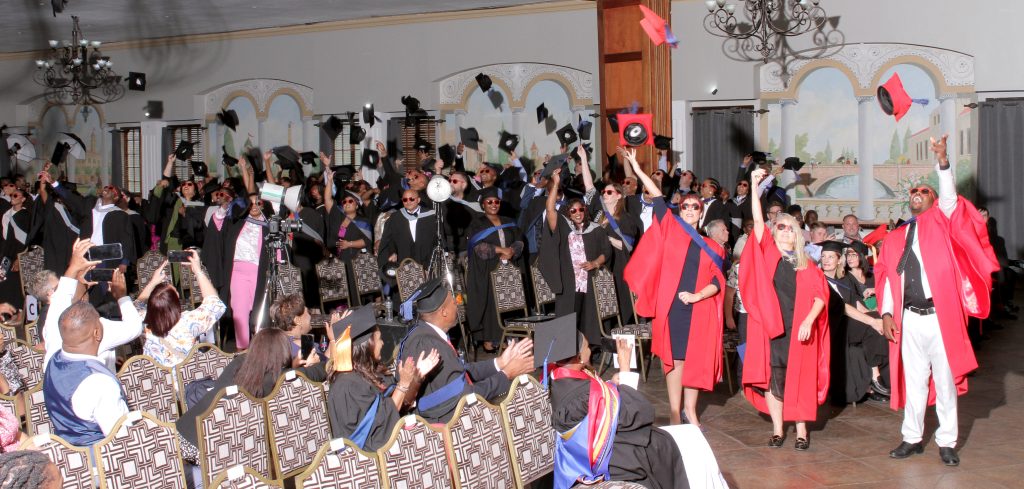
On 24 June 2025, The DaVinci House came alive with vibrant conversation and intellectual energy as we hosted a thought-provoking Curiosita session. Themed “The Role of Artificial Intelligence in Higher Education: Approaching 2050,” the event drew Master’s students, high school learners, and professionals from various sectors into a powerful shared dialogue.
Diverse Voices, Shared Curiosity
The session was enriched by the presence of sharp minds from engineering, business, and other industries. This diverse mix created a dynamic environment where theoretical insights met practical applications, allowing for a well-rounded exploration of the future of education in an AI-driven world.
Opening Reflections from Dr Amaleya Goneos-Malka
Leading the conversation was Dr Amaleya Goneos-Malka, CEO of A-P Management Consultancy. She opened the session with a compelling observation:
“AI is not just knocking on the doors of higher education, it is already inside, moving furniture.”
Her words set the tone for a bold and honest exploration of what lies ahead for academic institutions as they adapt to technological shifts.
Key Themes and Discussions
The afternoon’s dialogue touched on a range of themes, including:
The potential for AI to personalise learning and support student progress
The need for critical thinking in an age of automation
The ethical questions surrounding algorithmic bias and data use
The role of educators in nurturing emotional intelligence alongside technical skills
Attendees emphasised that while AI can enhance learning, it must be used with care, ensuring that human connection, creativity, and empathy remain central to the educational experience.
Shaping, Not Reacting to, the Future
One of the key takeaways from the session was the importance of intentional design. Rather than reacting passively to technological change, participants encouraged higher education institutions to proactively shape how AI is integrated, always with learners’ well-being and development in mind.
Looking Ahead: Education In 2050
We extend our heartfelt thanks to everyone who joined this important conversation. Curiosita remains a platform for intergenerational thinking, where bold ideas are not only welcomed but needed. Together, we continue to imagine a future where innovation and humanity walk side by side in the pursuit of knowledge.
At The DaVinci Institute, DaVinci ExecutiveDr Sam February exemplifies our commitment to co-creating realities that foster sustainable, human-centred innovation. This ethos came to life in a recent Rise FM interview, where he joined Taking Care of Business to unpack the importance of entrepreneurship education.
Speaking with clarity and purpose, Dr February challenged the traditional mindset that sees young people as future employees waiting to slot into a job-giving economy. Instead, he proposed a radical but necessary shift, nurturing an entrepreneurial mindset from an early age, not as an afterthought, but as a core part of how we educate and empower.
Listen to the interview By The DaVinci Executive
Listen to the interview here:
Dr Sam February, Executive: Business Development
Co-Creating a New Educational Mindset
During the conversation, Dr February challenged the traditional belief that education should prepare young people solely for employment. Instead, he advocated for a bold shift, one that positions entrepreneurship as a way of thinking that must be nurtured from early on in a learner’s journey.
He highlighted the need for communities, educators, families and leaders to work together in co-creating an environment where innovation and agency are encouraged. Entrepreneurship, he emphasised, is not simply about running a business. It’s about helping young people see new possibilities for their lives and communities, and equipping them to take meaningful action.
What does it mean to graduate after facing one of life’s biggest setbacks? For Siphiwe Mngomezulu, a 2025 BCom graduate from The DaVinci Institute and Premium Banker at FNB, it means everything.
“Graduating with my BCom is more than just an academic achievement, it is a huge personal life achievement,” Siphiwe shares. “It’s a symbol of resilience, faith, and growth.”
Having survived a serious accident while studying, Siphiwe’s journey is not just about a qualification, it’s a testimony of inner strength, community support, and staying focused on the goal.
Studying at The DaVinci Institute
For Siphiwe Mngomezulu, enrolling at The DaVinci Institute was a turning point.
“My experience at The DaVinci Institute has been transformative,” he says. “The environment was not just academic, but eye-opening.”
He credits the Institute’s unique approach to learning, which combines practical thinking with real-world application, for giving him the tools to thrive in both his career and personal development.
“The support from the lecturers and the collaborative nature of the learning made it a place of growth and inspiration.”
The Power of Support and Purpose
After the accident, Siphiwe faced both physical and emotional hurdles. But he never considered giving up.
“My motivation came from a deep sense of unfinished business,” he says. “I wasn’t willing to let the accident define or derail my journey.”
His wife’s encouragement played a major role in keeping him on track.
“Her encouragement and patience meant everything,” he reflects. “That inner drive, combined with external support, kept me going.”
Balancing Work, Recovery and Studies
In addition to recovering from his accident, Siphiwe was working full time at FNB while completing his degree. So how did he manage?
“I learned to be intentional with my time and energy,” he explains. “I developed a strict routine, prioritised tasks, and asked for help when I needed it.”
Support from his family and friends, along with flexibility from his manager at FNB, helped him stay afloat.
“Mentally, I leaned on faith, reflection, and staying connected to my journey.”
Applying the TIPS™ Framework in the Workplace
The DaVinci Institute’s TIPS™ Framework (Technology, Innovation, People, Systemic thinking) shaped Siphiwe’s approach to leadership and teamwork.
“I used systemic thinking to better understand the broader impact of changes within the department’s internal processes,” he says.
Innovation and people-focused strategies helped him lead collaborative efforts at FNB, driving better ways of working across teams.
Words of Wisdom for Other Students
Siphiwe Mngomezulu has advice for students facing tough times during their studies.
“Take it one day at a time. Ask for help, lean on your support system, and never lose sight of your journey.”
He adds, “It’s okay to pause and regroup, but don’t give up. Progress isn’t always linear. What matters most is that you keep moving forward.”
Looking Ahead
Siphiwe is not done learning. In fact, this achievement has only ignited more ambition.
“Further studies are definitely on the horizon,” he says. “I’m also exploring leadership roles at work and looking forward to mentoring others going through difficult times.”
In true DaVinci spirit, Siphiwe is using his journey not only to advance his own goals, but to uplift those around him.
From leading national strategies to working on global platforms, Dr Muofhe’s influence stretches far and wide. His journey, deeply grounded in both research and policy, reflects the spirit of DaVinci’s TIPS™ framework: Technology, Innovation, People and Systems.
Bridging the Innovation Chasm
Dr Muofhe’s doctoral thesis explored the persistent gap between research and market-ready innovation, a challenge long acknowledged in South Africa.
“It’s more than just one thing,” he says. “But addressing each of them, skills, support instruments, institutional ecosystems, and culture, in a coordinated way narrows the gap effectively. For years, we thought funding alone was the missing piece, but it’s a combination of several levers that must be pulled in sync.”
Turning Research Into Real-World Change
His research has already reshaped how innovation is supported within the DSI. One standout example is the shift in how funding instruments are aligned to support innovation across the entire value chain.
“We discovered that many funding instruments were scattered and uncoordinated,” he explains. “Most had a ‘wait to be approached’ model. We changed that, now, we actively track innovation pipelines, advise on suitable instruments, and help projects graduate to the next stage.”
This work directly influenced the development of the Sovereign Innovation Fund, a game-changer in supporting commercialisation of local innovation.
Making Innovation Inclusive
Innovation shouldn’t be confined to labs and lecture halls, Dr Muofhe insists. For him, true transformation means involving people from all walks of life, especially those in rural and township settings.
“We focused too much on R&D-driven innovation, excluding grassroots solutions born out of necessity. Many young graduates leave institutions with ideas, but no access to labs, funding or mentorship. We need to cast the net wider and nurture these overlooked innovations.”
Lessons from Abroad: Ecosystems Matter
During his studies, Dr Muofhe visited innovation hubs in countries known for their thriving ecosystems. What struck him most was their proactive approach.
“They don’t wait. They build active partnerships with universities, guide innovations through structured stage-gate processes, and are bold enough to pull the plug when necessary. We need that clarity and courage here too.”
Inspired by Pioneers: The Mae Jemison Effect
Meeting Dr Mae Jemison, the first African-American woman in space, was a turning point for Dr Muofhe.
“She’s not just about incremental change. She believes in disrupting the norm. From our first meeting, she reminded me that dreaming big isn’t enough, you must follow through. Her influence still shapes my thinking.”
He’s since spoken at her 100 Year Starship Conference in Houston and Silicon Valley, deepening his commitment to bold, imaginative leadership.
The TIPS Legacy
The TIPS™ framework, central to DaVinci’s philosophy, remains a daily compass in Dr Muofhe’s leadership.
“TIPS made me realise the importance of co-creation and systemic thinking. I now see goals as temporary states. Once you reach one, you must innovate yourself into the next. It’s how progress is sustained.”
A Future Where Success Feels Normal
Looking ahead, Dr Muofhe’s vision for South Africa’s innovation landscape is not just ambitious, it’s deeply human.
“Success will look and feel normal. When we’ve conquered crime, corruption, poverty, and inequality, people will simply feel that life is working. Jobs, food security, and good leadership won’t feel extraordinary, they’ll be expected.”
But he adds a word of caution: “Our choices matter. We can just as easily flip this the other way.”
As The DaVinci Institute celebrates 20 years of impact, Dr Muofhe’s journey reminds us that real innovation is not just about science or technology, it’s about people, purpose, and the courage to build what doesn’t yet exist.
Did you know Mode 2 learning encourages students to challenge traditional academic boundaries and solve real-world problems as part of their studies? That’s what drew Thomas Van Niekerk to The DaVinci Institute, a place where theory meets practice, and knowledge is immediately applied. Thomas graduated in 2017 with a BCom in Operational Risk Management. Today, he serves as National Training Manager at IRCA Group, a role he’s held for over a year and a half, helping shape safer workplaces across the globe.
Inside the World of IRCA Group
Founded in 1993, IRCA operates under a clear philosophy: assess, advise, assist. “We help organisations understand where they are in their risk management journey, then guide and support them in improving it,” Thomas explains. With offices in Brazil, Australia, Dubai, and Saudi Arabia, their reach is international. But their impact is personal. “Our focus is people. You can raise awareness, but if behaviour doesn’t change, you still have a problem.”
Why DaVinci Was the Right Fit
Asked if DaVinci prepared him for his current role, Thomas Van Niekerk answers without hesitation: “Yes. At traditional universities, you’re confined to set textbooks. At DaVinci, you get to explore, research, and apply real-time knowledge. You’re never boxed in, that’s a big advantage.”
Thomas believes DaVinci saw the future long before it became mainstream. “AI is now a buzzword, but DaVinci has always focused on critical thinking and application. Back then, we used Moodle, and academic integrity was key. You had to show your own understanding – there were no shortcuts.”
TIPS That Make a Difference
One of the most powerful tools he used at DaVinci was the TIPS Framework™. “It’s structured in a way that helps you think through problems, plan your approach, and reflect on outcomes. It helped me approach challenges with confidence.”
Thomas Van Niekerk didn’t just study, he shaped his learning around his interests. “My focus has always been operational risk and safety, how we keep people alive at work. The electives helped me drill into that, while the core subjects like economics and stats prepared me for the leadership side.”
A Message to DaVinci at 20
His final word is one of heartfelt congratulations: “A huge congratulations to DaVinci. The number of students they’ve taken through their programmes, and what those students have achieved – is remarkable. Their success speaks volumes. I believe their next 20 years will be even more impactful.”
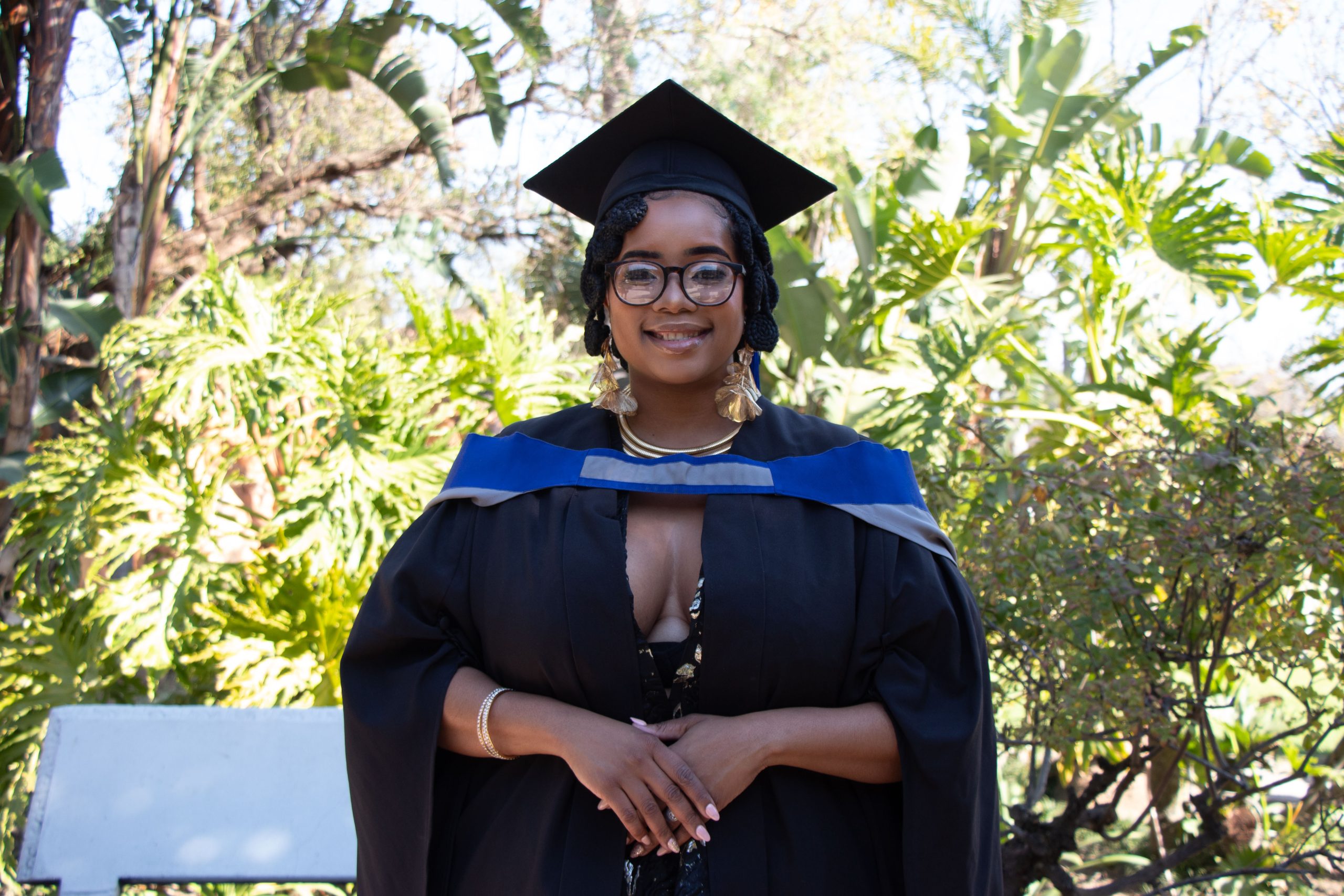
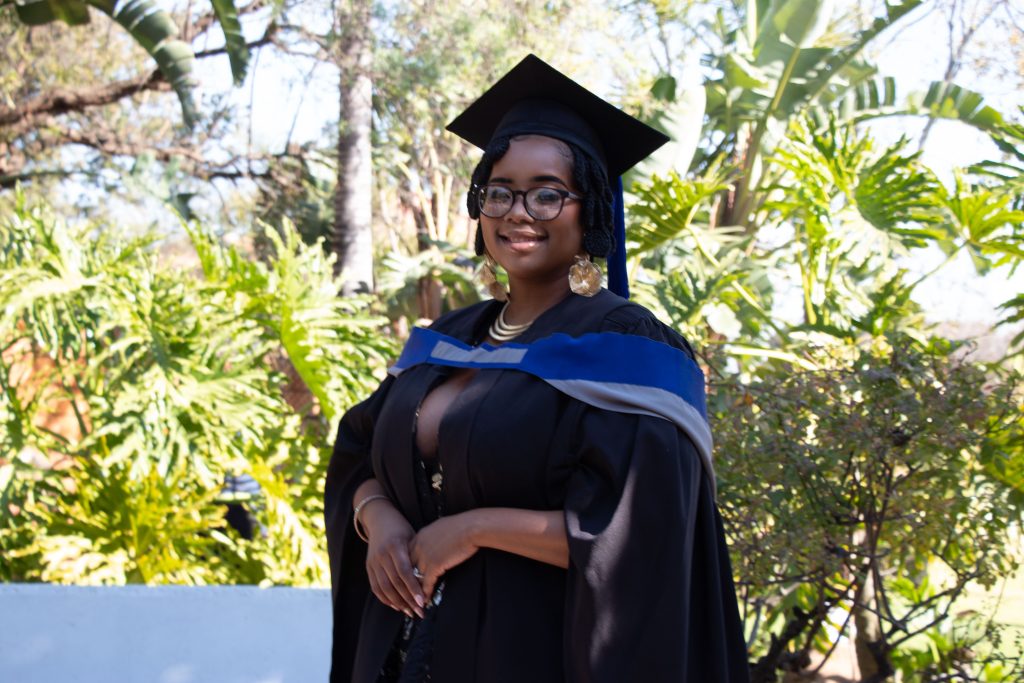
Few people embody versatility and purpose like Thuso Mojatau, a proud DaVinci alumna. She is a mother of two, wife, and Office Support Manager at FNB’s real estate division. She somehow finds time to host a radio show, manage large-scale events, and release spiritually-inspired music, all while earning her BCom in Project Management, a journey that culminated in her graduation on 29 May 2025.
Meet Thuso Mojatau: DaVinci Alumna and FNB Manager
We caught up with Thuso shortly after the graduation ceremony, and her enthusiasm was infectious.
“Honestly, I feel proud,” she said, pausing slightly as if taking it all in. “Project management has always been part of what I do, but this degree puts a name to the work I’ve been doing for years.”
Just weeks before graduating, she was deep in preparations for the Africa Rising music concert, a major event she managed from beginning to end. It’s this kind of juggling act that seems almost impossible on paper, but for Thuso, it’s simply her way of life.
“I live by my schedule,” she said with a chuckle. “I colour-code everything, plan out my days to the last detail. But here’s the thing, you must genuinely love what you’re doing. That’s what makes the balancing act possible.”
Between career, family, and creative projects, it’s clear she’s not just multitasking, she’s weaving together different parts of her life in a way that feels intentional and grounded.
The TIPS™ framework
One of the biggest tools that shaped her journey? The TIPS™ framework at DaVinci, short for Technology, Innovation, People and Systems Thinking.
“It really changed the way I see things,” she explained. “Whether I’m preparing for a radio show or working on a corporate presentation, I find myself thinking in systems. It’s not something I switch off when I leave campus. It’s with me all the time.”
Mode 2 Learning
Another game-changer was Mode 2 learning, a fresh concept for her, but one that quickly made sense.
“Before DaVinci, I’d never come across Mode 2. But it clicked fast. We were asked to write about real issues, things like the economic impact of COVID-19 or what’s happening in South Africa right now. That’s when learning becomes real.”
Her academic research, in fact, came straight from her heart. It explored how spirituality in the workplace can uplift morale and boost performance, something she believes companies should embrace more.
“My paper didn’t aim to solve a problem,” she said, thoughtfully. “It was more of an invitation to explore. What happens when employees have a space to step away, reflect, pray, or just breathe? Regardless of one’s belief system, that moment of spiritual reconnection can have a powerful impact on work culture,” said the DaVinci alumna.
As a recording artist in the Afro-house genre, though classically trained, Thuso says her music carries the same spirit as her research: joyful, rooted, and meaningful.
Encouragement From DaVinci Alumna to Students
But like most stories of success, hers isn’t without moments of doubt.
“In my first year, I had to repeat academic literacy,” she admitted. “I was embarrassed. I thought, maybe this isn’t for me. I nearly gave up. But something told me to keep going. And I’m glad I did.”
Her advice to others?
“Just stay. Even when it’s rough. Even when you feel alone. It takes time, but eventually, you start understanding what this learning model is about. Then it stops feeling hard and starts feeling alive.”
With her degree now in hand, Thuso Mojatau joins the growing number of DaVinci alumni who are not only excelling in their careers but living out their purpose, in full colour.
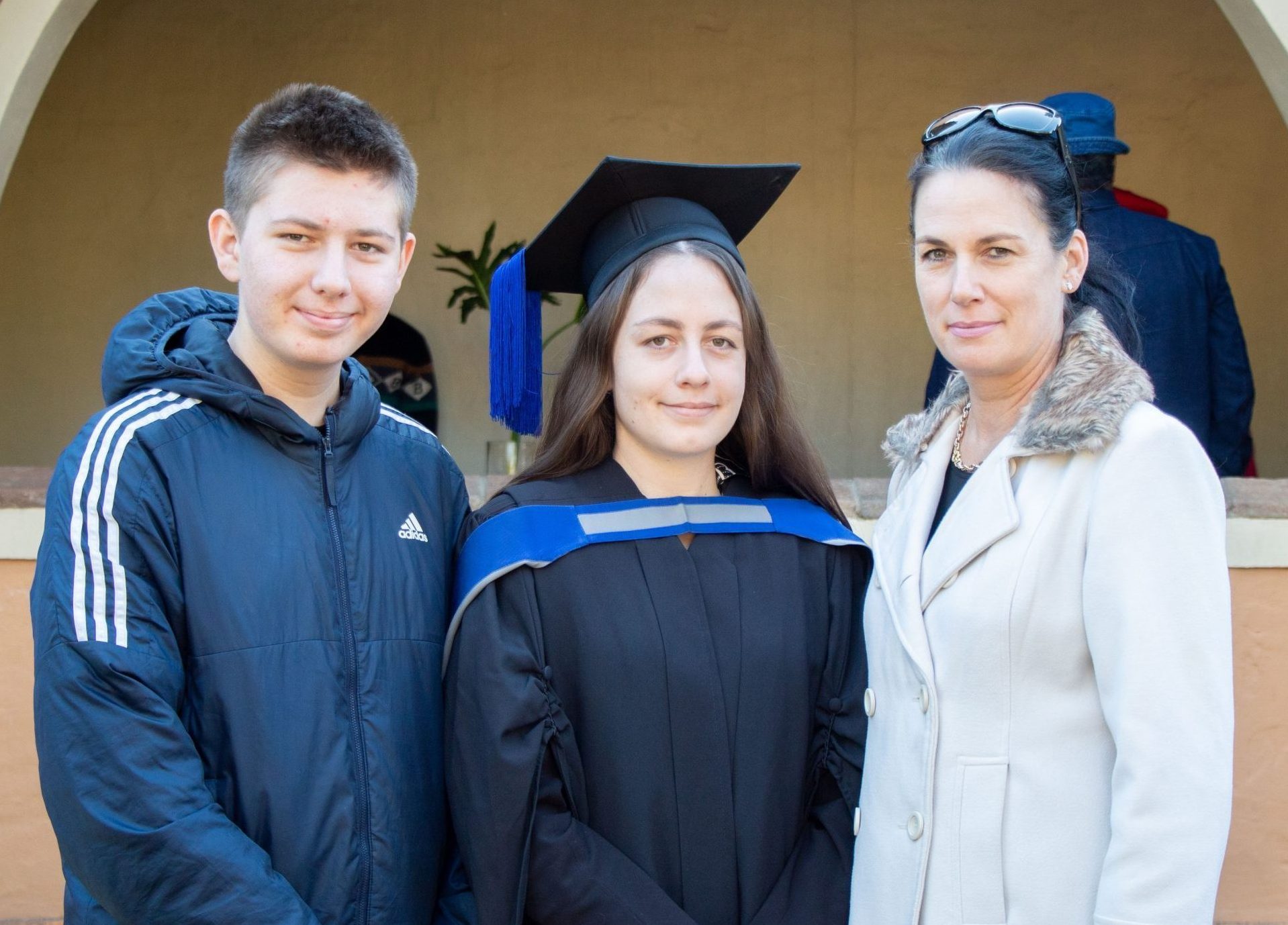
It’s not every day that a mother and daughter walk the same academic path, and graduate from the same institution. But for Ingrid Du Boisson and her daughter, DaVinci Institute has become more than just a place of learning, it’s where two generations found purpose, clarity, and growth.
Discovering a New Way of Thinking
Ingrid is an experienced leader and executive with a solid background in education and human capital development. She holds a Master of Science in the Management of Technology and Innovation from DaVinci and is currently pursuing her Doctorate at the same institution. But her academic journey didn’t come easy, it was filled with both discovery and difficult decisions.
“When I started my journey with DaVinci I was still employed at the Transport Education Training Authority heading up the Freight Forwarding and Supply Chain sector,” Ingrid explains. “I spent 21 years facilitating development of skills and strategies for capacity building in the sector nationally, and I thought I was doing a great job. Starting my Masters was an eye opener for me; it took my thinking to another level. I slowly began to realise whilst applying the TIPS Framework that I was working in a very dysfunctional organisation, and in fact it became clear to me that our country’s entire skills development system and strategy was dysfunctional. In that I became very frustrated with my reality.”
The Power of the Cohort
Despite the frustrations, Ingrid found joy in the classroom.
“What I enjoyed most was attending classes, we had a great cohort, and excellent lecturers who allowed us students to have the most phenomenal discussions and debates on the application of concepts and theories. The discussions and debates were often contentious, depending which lenses were applied and on the background of individuals in our cohort, this is where a lot of my learning occurred, listening to different perspectives which lead to rigorous research on topics I wouldn’t have thought of.”
A Tough Balancing Act
Balancing work, studies, and parenting was no small task.
“The challenges I must say were few, doing my master’s whilst working fulltime and being a parent was not an easy feat. The assignments almost killed me, but after each one was submitted my reality became worse! But my journey going forward became clear. I realised that working in my environment at the time was no longer feasible, my input in the work environment was ignored and seen as controversial, and so there was no improvement in the entire system. I decided it was time to move on where my thinking and contribution in co-creation would be accepted and embraced.”
A New Chapter with DHL
Her next chapter took her to DHL International.
“My journey after the Transport SETA took me to DHL International as Director for Learning & Development for 4 years, this was an environment that embraced innovative thinking. I found a space to co-create and develop within the business. Again, once I had implemented innovative strategies within the company, I began to get involved in external industry initiatives at a national level, and as they say the rest is history.”
“It has given me the ability to look at an organisation or an industry from a strategic perspective and through different lenses, as a system and which has become 2nd nature to me. This has enabled me to understand that integration and collaboration across the industry’s value chain is the only way to address its current challenges, and address identified risks.”
A Full-Circle Moment: Her Daughter Graduates Too
On 29 May, Ingrid proudly watched her daughter graduate from DaVinci with a BCom in Supply Chain Management, a full-circle moment.
“My experiences taught me to think differently and more effectively, and I wanted my daughter to learn and experience just that, to be innovative and to co-create, to make a difference in her life as it did mine and to my career. ‘Be the change you want to see’,” she says. “I have seen so many graduates come out of university that found adapting to the world of work very challenging. They had no practical experiences and suffered from death by textbook syndrome. No free thinking and curiosity to learn outside the norm.”
Learning That Sticks
“DaVinci’s mode 2 methodology was different, and it challenges students to research and to find solutions to their challenges for themselves, it encourages co-creation within society. My daughter started her degree straight out of school, and she adapted to this methodology and was fortunate enough to get an internship with a logistics company for most of her studies. The workbased challenges is where most of the learning happened, as its practical and research based. Suffice to say my daughters way of thinking and applying herself has grown significantly, in my opinion very different from a traditional student.”
What Sets DaVinci Apart
After experiencing DaVinci as both a student and a parent, Ingrid is certain of what sets it apart.
“What sets DaVinci apart is their mode 2 methodology and their collaborative approach to industry, which makes their programs focused and which addresses industry realities. They customise offerings that address specific skills in industry as well as management leadership development which is crucial in the business reality.”
“The TIPS Framework is a phenomenal tool which students are taught and apply during their studies and into the real world, and which I have witnessed being applied in the corporate world and how it changes students’ way of thinking. Ultimately, the return on investment from a business perspective is phenomenal.”
Words of Wisdom for Fellow Students
“As an alumnus I have absolute belief and trust in the institute and its ability to develop people, and in so doing related industries. I have experienced this first hand. Students should allow their minds to be opened, as was mine and not be stuck in doing the same thing and expecting results, especially in the changing world we live in. Students should be the change they want to see in which ever environment they find themselves.”
“Being a student at Da Vinci allows you to think innovatively, creatively outside the box. The different lenses they apply will also contribute to the outcomes of their learning journey, embrace the challenges, and make the difference. My parting words are continue developing yourself, the future changes continuously, you need to innovate and change with the world or be left behind.”
Mushtaq Alli, Head of Inventory and Logistics Operations at DSV, is a firm believer in the DaVinci Thinking. Since enrolling for his Higher Certificate in Leadership at the DaVinci Institute, he’s not only seen a shift in how he thinks, but also in how he operates both at work and at home.
“It does not make sense for you being in the class, learning and not being able to apply it in the workplace,” Mushtaq says. “So it goes hand in glove, what we learn here we apply in the workplace, and some of the things is that you even apply it unintentionally without you knowing that you are doing it because you’ve learned it in class.”
TIPS in Action at Work and Home
It’s been just six months since he joined DaVinci, but Mushtaq says his development has been “leaps and bounds”. He explains, “It just opens your mind up to a certain level of thinking, you no longer think of limitations, you think beyond that. That’s what DaVinci actually teaches you, it teaches you to think outside the box. And even removes the box, and there is no box. So your thinking is unlimited.”
Before DaVinci, TIPS was a foreign concept. Today, it’s part of how Mushtaq navigates life. “Before I came here I knew nothing about TIPS, but right now I can find TIPS in almost everything. From school to work,” he says.
DaVinci Thinking At Home
One of the most powerful moments comes from home, where he uses the TIPS framework to support his nine-year-old daughter’s learning. “Her curriculum at this level is very high, but I am able to instil TIPS principles when I teach her at home because I spend a lot of time with her. I feel it’s critical thinking, it’s mind boggling. And it’s a pity I only got to experience it at 40.”
As Mushtaq continues his DaVinci journey, his story is a reminder that leadership is not confined to the office. It starts with a mindset, stretches across every part of life and, with the right tools like TIPS, becomes a lifelong habit.
Although both the Master of Business Administration (MBA) and the Master of Business Leadership (MBL) represent prestigious graduate credentials in business education, they pursue different objectives and study areas. The MBL programme develops strategic leadership skills with a strong focus on transformational thinking and visionary management which extends beyond conventional business administration methods.
What makes DaVinci’s MBL different?
Our MBL places a strong emphasis on leadership development, change management, and applied research. It is more concerned with addressing organisational challenges through innovation, systems thinking, and people management, inclusive within a strategic leadership framework.
We emphasis a focus on technology, innovation, systems thinking, and people development. The programme is designed for managers and executives who want to drive transformation, and show results for sustainability development.
Offered over a minimum of two years, and allowing up to four years to complete, the degree is flexible for working professionals. The cost starts at R95 681.50 per year, making it a competitive return on investment both locally and internationally.
The qualification is structured around 240 credits, including a 120-credit dissertation, which underscores its research nature.
The compulsory modules include:
Managerial and Leadership Development
Managing Systems
Creative Thinking and Decision-Making
Self, Other and Social Contexts
Management of Innovation
Management of People
Management of Technology
Students are required to choose five electives from topics such as Governance and Ethics, Change Management, Strategic Management, and Leadership Challenges in Africa.
The return on investment, this qualification blends academic rigour with practical application, preparing graduates not just for corporate success, but for meaningful contribution to socio-economic transformation.
Admission requirements for our MBL
Students seeking admission to The DaVinci MBL must possess an NQF Level 8 qualification which commonly includes an Honours degree or postgraduate diploma. Students must present an approved research idea which demonstrates that the programme emphasizes practical investigation and critical reflection.
The DaVinci Institute provides an alternative entry route through Recognition of Prior Learning (RPL) for applicants who fail to meet the standard admission criteria. Experienced professionals can secure entry by demonstrating their industry expertise along with their professional accomplishments and leadership capabilities. The DaVinci Institute evaluates each application individually to demonstrate its dedication to providing accessible and transformative education
A Research-Led Approach
Research is a fundamental priority in the DaVinci MBL curriculum. Our MBL demands completion of a full dissertation which will lead to resolvent of industry or organisational challenges. This experience requires students to undertake a particular framework to guide approach challenges in leadership, innovation, or technology.
Leadership in the Age of Complexity
The world of business is no longer siloed. Leaders are now expected to evolve and understand global systems, emerging digital technologies, and the socio-political forces shaping markets. The DaVinci MBL positions itself at this intersection, combining business, innovation, and human development in a way that reflects the needs of adaptive modern leadership.
What sets it apart is not just the content, but the philosophy behind the programme. It’s about building transformational leaders who understand that leadership is not about control, it’s about vision, ethics, empathy, and the courage to think outside the box, connecting the dots..
Evolving of global markets, requires a leader with qualitative skills to assess and apply systems thinking to draw results driven solution.
Dr Kwanele Ngwenya, a distinguished alumnus of The DaVinci Institute, has taken on a transformative new role, he is now the Group Chief Operating Officer of Nico Holdings PLC. This marks a powerful new chapter in a career defined by excellence, purpose, and a relentless drive to elevate Africa’s financial systems.
Announcing the news on LinkedIn, Dr Ngwenya expressed his gratitude and humility:
“So it came to pass that I’ve recently moved into my next assignment, as the newly appointed Group Chief Operating Officer of Nico Holdings PLC – a position I’ve accepted with great gratitude and humility, and for which I’m deeply honoured to have been chosen.
It’s a step towards further development in my career, as learning continues and new lessons further enhance my life and purpose. At this stage, I can’t say I’ve reached the pinnacle, but I am certainly and continuously heading towards becoming a better leader and contributor. Really, this journey never ends.
I’m grateful to those who trust in my abilities and will certainly make both myself and them proud to have appointed me, as I look forward to making a meaningful, lasting impact in this role.
Thanks for the support from colleagues, associates, friends, and (crucially) my family for their sustained patience, love, and care.
The journey continues.”
A Leader of Impact and Innovation
Dr Kwanele Ngwenya
Dr Ngwenya’s appointment is the continuation of an exceptional leadership journey. Until recently, he served as the Chief Executive Officer of NBS Bank, where he earned widespread respect for his transformational leadership. His work led to him being honoured with a 2024 Today’s Africa Award, a fitting recognition of his contributions to financial inclusion and banking innovation.
Under his guidance, NBS Bank introduced the Pafupi Savings and Agent Banking solutions—groundbreaking services designed to empower communities traditionally excluded from formal financial systems. His leadership has been instrumental in broadening access and creating sustainable change.
His study explored the barriers marginalised populations face in accessing banking services and how inclusive financial models can make a difference. Dr Ngwenya exemplifies how knowledge, when paired with empathy and vision, can reshape communities.
From Nedbank to the Continent
With over 25 years in banking, including 14 years in executive roles—Dr Ngwenya has held key positions across South Af
rica, Botswana, Zimbabwe, and Malawi. His journey began at Nedbank, followed by an 11-year tenure at FNB, before taking on leadership roles at NBS Bank and now, Nico Holdings.
In addition to his executive responsibilities, he serves on the Board of NICO Technologies and holds an advisory position with the Centre of Agricultural Transformation – testament to his broad influence across finance and development sectors.
A Lifelong Learner and Chartered Banker
Dr Ngwenya’s academic portfolio includes three master’s degrees from top UK universities, Oxford Brookes, Derby, and Bangor University – as well as Chartered Banker status from the Institute of Bankers in Scotland. He has also completed advanced programmes at Wits and GIBS Business School, consistently sharpening his leadership edge.
The Journey Continues
As Dr Ngwenya steps into his new role at Nico Holdings, he carries with him not just a legacy of results, but a vision rooted in integrity, excellence, and transformation. His journey is far from over -in fact, it’s only gaining momentum.
Congratulations to Dr Kwanele Ngwenya – a visionary leader, accomplished scholar, and proud DaVinci alumnus. Africa is rising, and with leaders like you, the future is indeed luminous.