Curiosita at The DaVinci Institute is more than a conversation, it is a space where ideas meet practice. In our latest session held on the 30th September, the focus was on innovation management measurement. Participants had an opportunity to question, explore, and connect research with real-world impact. Through this lens of curiosita, the dialogue highlighted how South Africa continues to shape global standards while addressing local challenges.
Key participants who shaped the engagement included DaVinci’s doctoral candidate, Moses Kgosane Motshekga; Dr Mamohau Sekgaphane, Head of Faculty: Innovation Management; Prof Lucky Mathebula, Head of Faculty: People Management; Ofentse Rapakgadi, Executive: Marketing, Branding and Communication at DaVinci; Mmakgabo Maheya, Supervisor: ICT, Systems and Services Standards at SABS; and Dr Phumuza Langa, Senior Manager and Commercialisation Specialist at the University of Johannesburg

The Background of South Africa’s Contribution In Global Innovation Management Standards
South Africa continues to make its mark on the international stage of innovation management. Two of the country’s thought leaders, The DaVinci Institute CEO, Prof Ben Anderson, and South African Bureau of Standards (SABS), Supervisor: ICT, Systems and Services Standards, Mmakgabo Maheya, have been instrumental in shaping the development of ISO 56000/56001, the international standard for innovation management systems. Their complementary contributions ensured that South Africa’s voice, priorities, and innovation agenda are firmly embedded in this globally recognised framework.
Against this background, The DaVinci Institute hosted its September Curiosita, a platform designed to integrate academic enquiry with industry experience, highlighting innovation management measurement and its practical applications for doctoral research.
DaVinci’s Role in Global Innovation Standards
At the centre of South Africa’s global innovation management engagement is Prof Anderson, who has played a critical role in both national and international forums. As Chairperson of SABS TC 279 (Innovation Management), he has guided South Africa’s intellectual and technical input into the ISO process for more than a decade, including six years serving as international chair.
His leadership ensured that South Africa’s innovative perspectives, particularly those rooted in industrialisation, technology commercialisation, and the United Nations Sustainable Development Goals (SDGs), were recognised and embedded in the global framework.
Among his key contributions were:
- Guiding South Africa’s technical and academic input into the ISO standardisation process.
- Representing South Africa in ISO/TC 279, the global committee overseeing the standards.
- Producing reflections that underscore the significance of ISO 56001 as a systematic framework for unlocking organisational innovation.
- This intellectual contribution positioned South Africa not only as a participant but as a leader in innovation management thinking, influencing how organisations worldwide measure and manage innovation.
Curiosita: Bridging Research and Industry

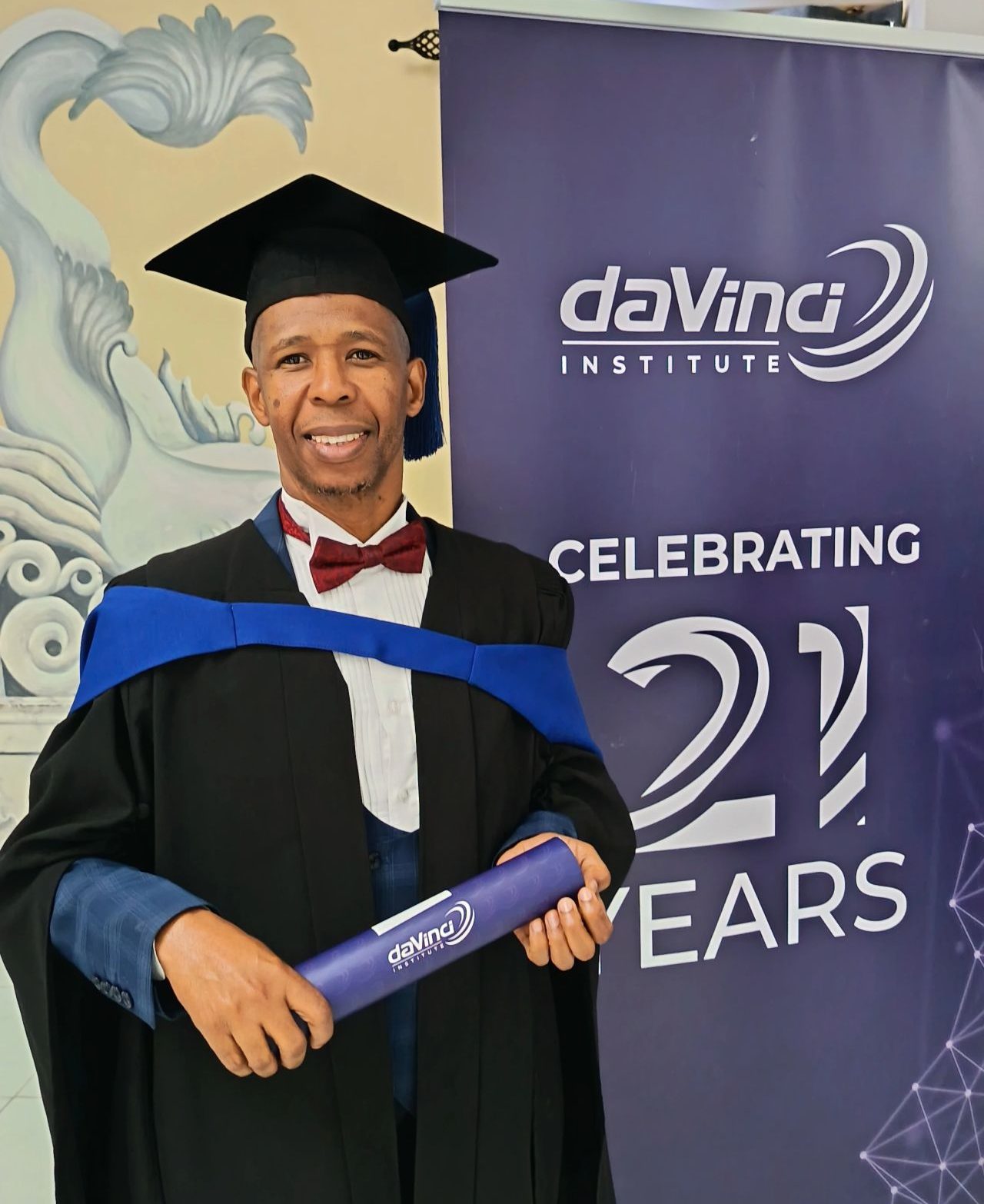
DaVinci’s Curiosita was dedicated to the theme of Innovation Management Measurement. The engagement created a space for our doctoral candidate, Moses Kgosane Motshekga, to present his work and receive valuable input from both academic practitioners and industry leaders.
The candidate’s research stood out: a study focused on developing a framework to automate fair collection systems for the City of Johannesburg’s Metro Bus. The candidate argued that the current legacy system makes it difficult for the organisation to manage and account for its operations effectively.
Global crises, such as the COVID-19 pandemic, have further exacerbated the financial challenges facing Metro Bus, particularly in terms of revenue collection. The candidate positioned his research as an attempt to help the city address these pressing issues by exploring ways to improve fairness and accountability in fare collection.
Technology or Systemic Change?

A key discussion during the session centred on whether the candidate’s solution would introduce entirely new technology or work to improve the systems already in place. This question highlighted a central principle of innovation management: innovation does not always mean a new tool; it can also mean a new approach.
The DaVinci faculty and participating industry professionals advised the candidate not to make assumptions that the solution must necessarily be a technological tool. Instead, they encouraged him to let his findings, drawn from thorough research and data, inform the most appropriate solution.
This guidance urged the candidate to adopt a systemic perspective, looking beyond Metro Bus alone and considering the broader urban transport ecosystem. Innovation, they emphasised, should not only resolve immediate operational inefficiencies but also align with long-term sustainability and organisational resilience.
Embedding South Africa’s Innovation Agenda
The Curiosita dialogue emphasised the role of the platform that blends research, industry insights, and global standards. By grounding doctoral studies in the broader context of ISO 56000/56001, The DaVinci Institute is ensuring that research projects do more than solve local problems; they contribute to shaping global best practices in innovation management.
Prof Anderson’s leadership in ISO development, combined with the intellectual rigor fostered through DaVinci’s doctoral programmes, ensures that South Africa’s innovation priorities, industrialisation, technology, sustainability, and inclusiveness remain central to global conversations.
Conclusion: Innovation Management Measurement
The September Curiosita reaffirmed DaVinci’s role as a bridge between research, industry, and international standards. The focus on innovation management measurement demonstrated that while tools and technology are important, the real power of innovation lies in creating systematic frameworks that encourage fairness, sustainability, and accountability.