The logistics and warehousing industry is evolving rapidly under the pressure of globalisation, digital transformation, operational complexity, and rising customer expectations. While organisations continue to invest heavily in systems, automation, and infrastructure, one insight has become increasingly clear to me: sustainable success depends less on technology alone and more on people, specifically on leadership.
My journey through the Postgraduate Diploma in Business Leadership at The DaVinci Institute significantly transformed my understanding of leadership, organisational performance, and personal growth. Coming from a logistics and training background, I initially viewed leadership through a managerial and operational lens. Over time, however, I came to understand leadership as something far more nuanced than authority, titles, or hierarchy.
Leadership begins with the self
One of the most important lessons I encountered during the programme, particularly through the guidance of Dr J Mgwenya, is that leadership is not a position. It is a practice. Each of us leads in different contexts and in different ways, but leadership always begins with self-leadership.
This insight prompted deeper personal reflection and challenged me to examine my values, behaviours, discipline, and accountability. I came to recognise that effective leadership is grounded in self-awareness, emotional intelligence, integrity, and a commitment to continuous development.
This internal shift reshaped my understanding of leadership in logistics and warehousing environments. In many operational settings, leadership is often equated with seniority or positional authority. Yet in reality, frontline supervisors, team leaders, and operational staff influence workplace culture, employee morale, productivity, and organisational outcomes daily. Leadership exists at every level, whether formally recognised or not.
Systems thinking in practice

Another significant dimension of the programme was the introduction to systems thinking and the understanding of organisations as interconnected systems rather than isolated functions. This perspective is particularly relevant in supply chain environments, where operational efficiency, employee engagement, customer experience, and strategic decision-making are deeply interdependent.
The DaVinci’s TIPS™ Managerial Leadership Framework, grounded in systems thinking, provided a practical lens for evaluating and navigating this complexity.
Learning through research and discomfort
The Business Research component of the programme, under the guidance of Dr Gavin Isaacs, was both one of the most challenging and most rewarding experiences of my academic journey. There were moments of uncertainty, questioning my research focus, doubting my capabilities, and struggling with confidence. The process demanded discipline, critical thinking, resilience, and intellectual courage.
Yet it was within this discomfort that meaningful growth occurred. Through consistent mentorship and support, I was able to persist and complete my research to a standard I am proud of. This experience reinforced a valuable lesson: growth rarely happens in comfort. It also highlighted the importance of leaders and educators who enable others to recognise their potential, especially when they cannot yet see it themselves.
Leadership as a strategic priority
From a professional standpoint, the programme strengthened my conviction that leadership development within logistics and warehousing must be treated as a strategic priority rather than a secondary function. Too often, organisations promote technically skilled individuals into leadership roles without adequately preparing them to lead people, manage change, resolve conflict, or think systemically.
As the industry continues to face technological disruption, workforce transformation, and increasing operational pressure, there is a growing need for leaders who are adaptable, emotionally intelligent, and capable of navigating complexity.
Leadership development initiatives such as mentorship, coaching, competency frameworks, and workplace-integrated learning are not optional extras. They are essential investments in organisational performance and resilience.
A broader South African imperative
In the South African context, leadership and skills development carry even greater significance. Building leadership capability contributes not only to organisational success but also to broader socio-economic outcomes, including employment creation, workforce empowerment, and sustainable economic participation.
Organisations therefore hold both a business and societal responsibility to cultivate leadership across all levels.
Leadership as a lifelong practice
Reflecting on my journey, I now see leadership not as a destination, but as a continuous developmental process. The Postgraduate Diploma in Business Leadership challenged me intellectually, professionally, and personally. It reshaped how I think about leadership, people development, and organisational impact.
The future of logistics and warehousing will not be defined solely by advances in technology or operational efficiency. It will be shaped by leaders who can inspire people, navigate complexity, embrace continuous learning, and lead with purpose, humility, and self-awareness. These are leaders who understand that sustainable performance emerges from systems thinking, human capability, and meaningful innovation.
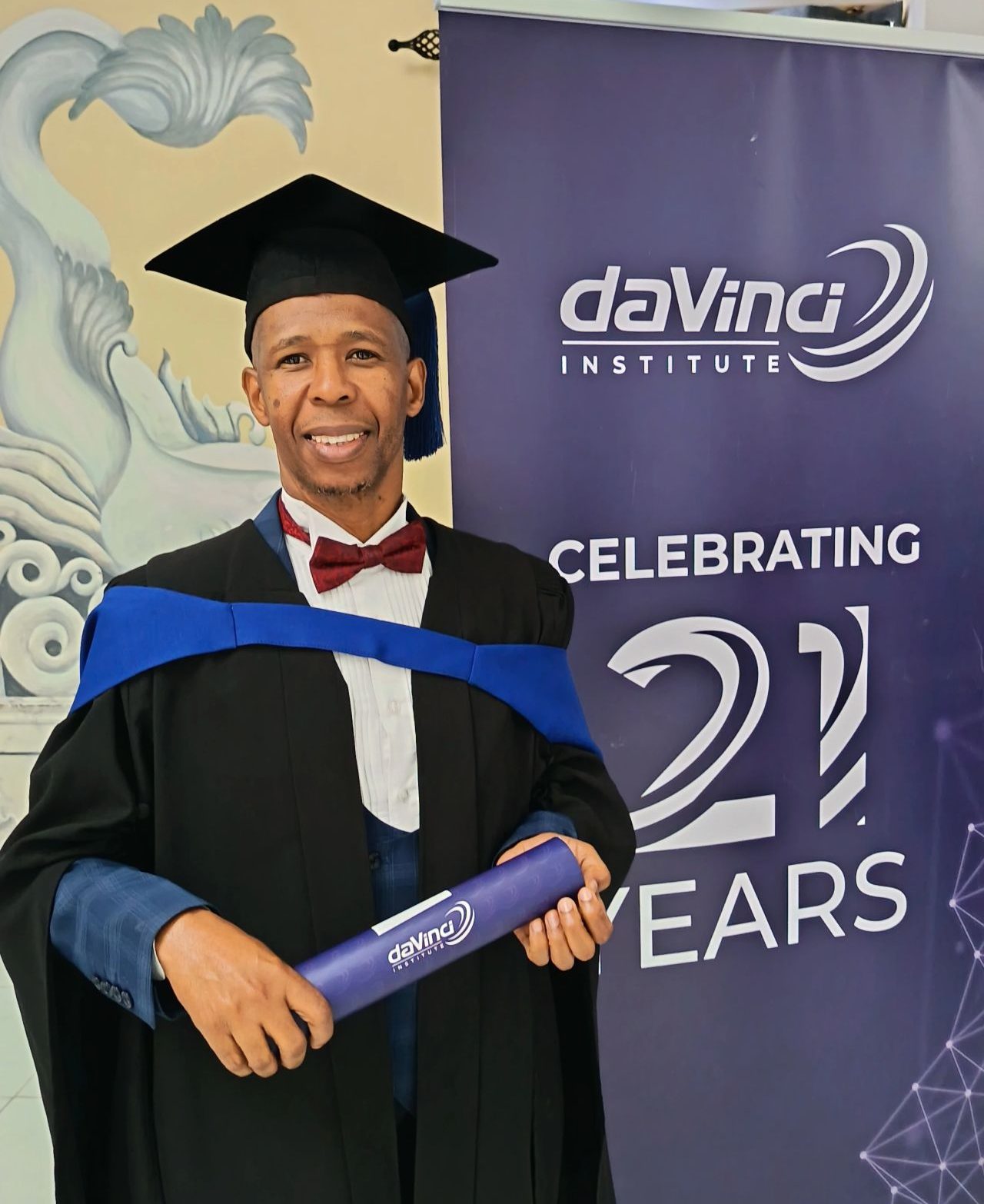
Rhulani Hlongwane serves as a Training Manager at Digistics and an alumnus of The DaVinci Institute.

Leave a Reply