At a time when the business environment is changing, organisations need more than creative thinking. They need professionals who can connect ideas, technology, people and systems to create meaningful value.
Innovation has become one of the defining conversations of modern business. Organisations are investing in digital technologies, exploring new business models and encouraging employees to think differently. Yet having ideas is different from being innovative.
The challenge is turning an idea into something that works. An organisation can have talented people, sophisticated technology and a culture that encourages creativity, but still struggles to translate ideas into meaningful outcomes. This raises a more important question for today’s professionals: What enables an organisation to move from ideation to innovation?
This is the thinking behind the Advanced Certificate in Business Innovation Management at The DaVinci Institute.
Closing the Gap Between Ideas and Action
Ideation is the process of generating ideas. Innovation goes further. It involves creating and implementing new or improved ideas in ways that generate value.
The gap between the two is where many organisations struggle. Employees may identify problems and develop potential solutions, but they may not have the resources, platforms, skills or organisational support required to take those ideas forward. Innovation therefore cannot depend on creativity alone. It requires an environment that enables ideas to develop, be tested and ultimately implemented.
For professionals, this means learning to look at innovation not as an isolated activity, but as part of a broader organisational system.
The TIPS Framework for Innovation
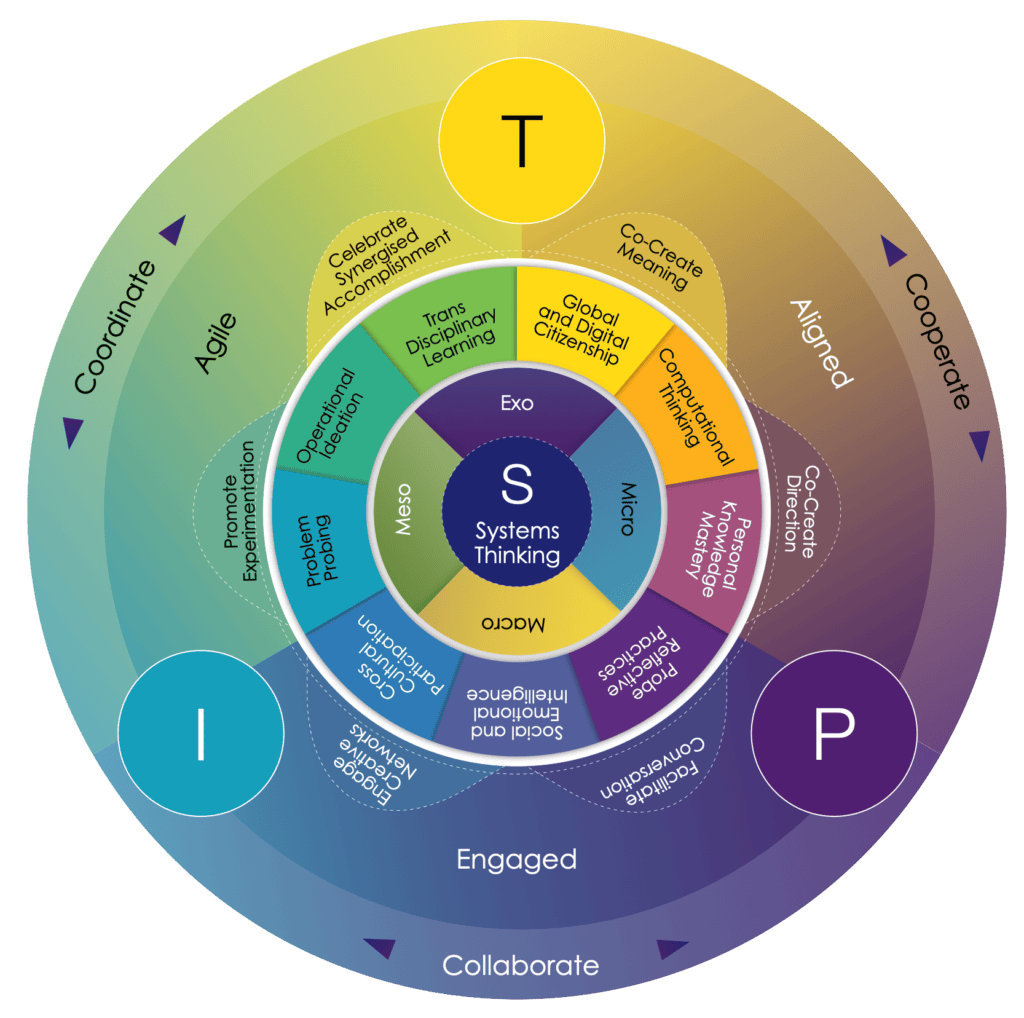
At the heart of The DaVinci Institute’s approach is the TIPS framework: Technology, Innovation, People and Systems Thinking.
The framework provides a way of understanding how these elements interact. Technology provides tools and capabilities. Innovation creates new possibilities. People bring the human dimension to how those possibilities are adopted and implemented. Systems thinking connects these elements and helps professionals understand how a change in one part of an organisation can affect another.
Consider the introduction of a new digital platform. The technology may be available, but will employees have the necessary skills? Will existing processes support it? Is leadership aligned with the change? Will the new system actually solve the problem it was introduced to address?
These questions demonstrate why innovation cannot be separated from people, technology and the wider organisational system.
When Improvement Becomes Innovation
Organisations are constantly improving. They automate processes, improve reporting systems, streamline operations and make existing services more efficient. These improvements can create significant value.
But innovation requires another level of thinking. It asks professionals to challenge existing assumptions and consider what could be done differently.
The distinction is important because organisations can become very good at improving what already exists while failing to explore what might be possible. Developing the ability to recognise this difference enables professionals to make better decisions about when to optimise, when to improve and when to innovate.
Start With the Problem, Not the Technology
Innovation can also fail when organisations start with technology instead of the problem. The availability of artificial intelligence, cloud platforms, analytics and other technologies does not automatically make an organisation innovative.
The starting point should be the challenge. What is the problem? Who is affected? What evidence demonstrates that the problem exists? What is its impact? What would a successful outcome look like?
Reframing Challenges Through Systems Thinking
Understanding these questions requires professionals to engage with context. A solution that works in one organisation, community or environment may not work in another. This is why reframing is important. It requires professionals to move beyond their own perspective and consider the broader context surrounding a challenge.
In doing so, they can develop a more holistic understanding of the problem before proposing a solution.
The Real Measure of Innovation Is Value
Ultimately, innovation is about value. An idea does not become meaningful simply because it is new. Its significance lies in what it enables an organisation to achieve.
That value may be financial, through increased revenue or reduced costs. It may be operational, through improved productivity or efficiency. It may be experienced by customers through better services. It may also involve creating better ways of working or strengthening an organisation’s ability to respond to change.
This shifts the question from:
How many ideas do we have? to: How effectively can we turn ideas into value? That is the capability modern organisations increasingly need. The Advanced Certificate in Business Innovation Management at The DaVinci Institute is positioned within this changing business environment.
The programme provides professionals with an opportunity to develop their understanding of innovation through the interconnected lenses of technology, innovation, people and systems thinking. It encourages professionals to interrogate challenges, understand context, explore ideas and consider how innovation can be translated into organisational value.
For professionals navigating increasingly complex workplaces, this is an important shift in capability.
The future will not simply belong to those who know the latest technology or can generate the most ideas. It will belong to those who can understand complex challenges, connect different parts of an organisation and turn possibilities into meaningful outcomes. Innovation begins with an idea. But its real value is realised when that idea becomes action. And that is where innovation management becomes a critical leadership capability.



Leave a Reply