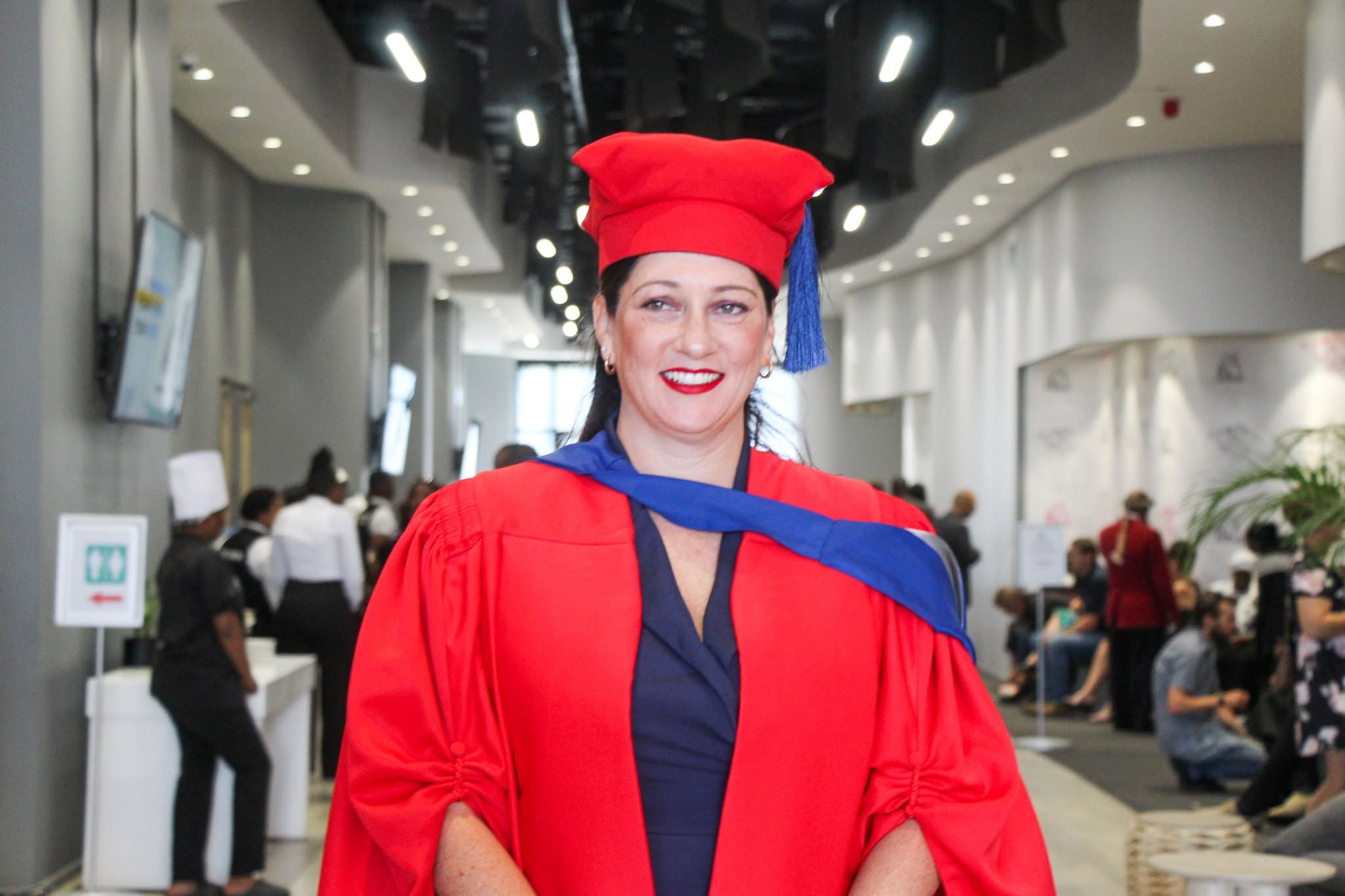
Having started her career as a high school teacher before moving into higher education, Dr Tamara Carter‘s doctoral research examines a question that private higher education institutions can no longer afford to ignore: how do we prepare for a generation of students whose expectations of learning, technology and the world of work may be fundamentally different from those of previous generations?
The future of higher education will not be shaped by institutions alone. It will increasingly be influenced by the expectations, experiences and learning preferences of the generations entering their classrooms.
For Dr Tamara Carter, understanding this evolving educational landscape became the focus of her doctoral research at The DaVinci Institute, where she investigated how private higher education institutions can prepare for the emerging needs and expectations of Generation Alpha.
Her interest in education is grounded in years of professional experience across different parts of the sector.
Carter began her career as a high school teacher before transitioning into higher education, where she worked in sales and student recruitment at Pearson, which subsequently became Eduvos. She later joined The DaVinci Institute, spending more than two years at the institution.
It was during this period that she embarked on her doctoral studies, bringing together her experience in teaching, higher education and student recruitment to investigate the future of the sector.
Understanding the generation that will shape the future of education
Generation Alpha, generally understood as the generation born from 2010 onwards, represents an emerging group of learners whose educational expectations will increasingly influence how institutions design and deliver higher education.
However, researching the needs of a generation that is still too young to meaningfully articulate its future higher education expectations presented an interesting challenge.
Rather than relying on assumptions about what these future students might want, Carter adopted a qualitative, exploratory research design conducted in two phases.
The first phase involved analysing documentary sources relating to Generation Alpha and its anticipated educational needs. The emerging themes informed the second phase, which involved semi-structured interviews with 23 subject matter experts.
These experts represented a range of fields, including education, higher education, educational technology, student support, mental health, marketing, parenting and the world of work.
By bringing together perspectives from these different disciplines, the research explored the interconnected factors that could influence Generation Alpha’s future educational experiences.
The findings examined three broad areas: the characteristics and anticipated expectations of Generation Alpha, how private higher education institutions may need to evolve, and the implications for future teaching, learning and educational technology.
The study’s original contribution was the development of a preparatory institutional framework for private higher education.
The framework provides a systemic basis for institutions to consider how their practices, student experiences, teaching and learning approaches, technology, student support structures and preparation for the world of work can evolve in anticipation of this generation’s needs.
For Dr Carter, the research speaks to the importance of looking beyond current educational practices and considering what institutions must begin doing today to remain relevant tomorrow.
A doctoral journey that demanded resilience

While the subject of her research focused on preparing institutions for the future, Dr Carter’s own doctoral journey required considerable perseverance.
She describes the initial three years of research and writing as a largely positive experience, supported by a constructive relationship with her supervisor.
However, the submission and examination stages introduced a different set of challenges, including extensive feedback, additional corrections and an emotionally demanding assessment process.
Having progressed through the various stages of doctoral research, including proposal approval, ethical clearance and research, navigating unexpected challenges towards the end of the process tested her resolve.
She credits the support of her supervisor, Mario, as particularly important during this period.
After investing years in her research, having someone who understood the journey and continued to support and advocate for her made a significant difference.
She acknowledges that without this support, she might have considered abandoning the process.
Her experience highlights an often-overlooked aspect of doctoral studies: completing the research itself is only one part of the journey. The final stages can demand patience, resilience and the ability to respond constructively to difficult feedback.
Why institutions must start preparing now
Dr Carter’s research raises an important question for private higher education institutions: are existing educational models sufficiently responsive to the learners who will enter their institutions in the years ahead?
The emergence of Generation Alpha will require institutions to think more deliberately about the relationship between technology, teaching methodologies, student support and the changing demands of the workplace.
The research suggests that preparing for this generation cannot be reduced to introducing new technologies or digitising existing learning environments.
Instead, institutions need to consider the entire student experience, including how learners engage with educational content, access support, develop relevant capabilities and transition into the world of work.
This calls for a more integrated institutional approach, where academic delivery, technology, student well-being and organisational readiness are considered together.
For the higher education sector, the value of this research lies in encouraging institutions to become more proactive rather than waiting for generational changes to disrupt established approaches.
Looking ahead
Dr Carter’s doctoral achievement reflects the value of combining professional experience with academic inquiry to address emerging challenges in education.
Her journey from high school teaching to higher education, and ultimately to doctoral research, demonstrates how experience gained across different areas of the education sector can inform meaningful research and contribute to broader industry conversations.
Her work also reinforces an important message for aspiring doctoral students: the research journey may not always unfold as expected, and the final stages can be just as demanding as the work that precedes them.
Yet perseverance, the right academic guidance and a commitment to one’s research can help students navigate the challenges along the way.
As Generation Alpha moves closer to entering higher education, Dr Carter’s research offers institutions an opportunity to reflect on the future of learning and begin preparing for the expectations of a new generation.
Ultimately, preparing for the future of higher education starts with understanding that the students of tomorrow may require institutions to rethink how they teach, how they support learners and how they prepare graduates for an evolving world.


Leave a Reply