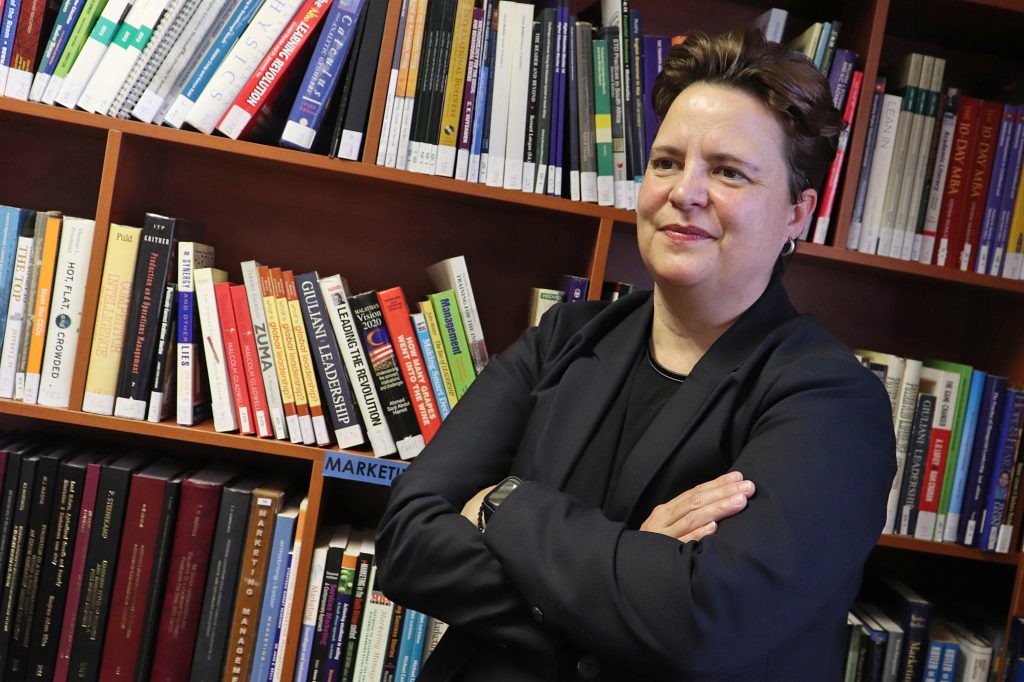
The DaVinci Institute celebrates its 20 years of remarkability and co-creation. Since 2004, the institute has produced quality leaders who are transforming industries and societies, one of the spotlights is Dr Linda Meyer, the current Managing Director at IIE Rosebank.
She studied for her Doctor of Philosophy doctorate in Management of Technology and Innovation from The DaVinci Institute., with her thesis focused on Discussions in education: A post-modern approach.
20-Year Celebration Message
“Congratulations to The DaVinci Institute on this remarkable 20-year milestone. Your commitment to cultivating purpose-driven leadership and pioneering the integration of technology, innovation, people, and systems thinking has positioned the Institute as a global exemplar of transdisciplinary education. At a time when the world is confronting unprecedented social, economic, and environmental challenges, DaVinci’s model stands out as a beacon of relevance and resilience. May this celebration be both a moment of reflection and a launchpad for an even more profound impact on global education and human development.”
DaVinci’s Leadership Empowerment
Dr Meyer said her doctoral experience at DaVinci was transformative. It empowered her to interrogate systems, challenge orthodoxy, and implement evidence-based strategies across complex educational and organisational landscapes.
“The Institute’s emphasis on contextualised research and applied knowledge strengthened my capacity to lead institutional reform and develop sustainable education ecosystems across South Africa and beyond,” stated Dr Meyer.
The intellectual journey drawn from the institute has enriched Dr Meyer’s contributions to policy, academic leadership, and enterprise development across the African continent and in international forums focused on education and innovation.
Impact of TIPS™ Framework and Mode 2 Knowledge Production
What makes The DaVinci Institute unique, according to Dr Meyer, is its defining example of the TIPS™ Framework in action was during the implementation of a multi-institutional turnaround strategy. Applying Mode 2 knowledge production, she leveraged insights from staff, students, policymakers, and industry partners to co-create a responsive governance and performance model.
“This dynamic, participative approach, so central to DaVinci’s ethos, ensured that solutions were not only academically robust but also socially attuned and practically executable. It demonstrated that knowledge, when co-created and applied systemically, can produce sustainable organisational transformation,” stated Dr Meyer.
Significance of Co-Creation
DaVinci’s emphasis on co-creation has deeply informed Dr Meyer’s approach to leadership in education. She alluded that by embracing collaborative innovation and rejecting siloed thinking, she has been able to drive strategies that are responsive to market shifts and community needs.
“Whether engaging with industry to shape curricula or working with government to improve skills pipelines, the foundation laid by DaVinci has enabled me to foster cross-sector partnerships that prioritise both employability and societal advancement. This approach is increasingly critical in preparing graduates to be globally competent, ethically grounded changemakers,” stated Dr Meyer.
Advice to Students
Dr Meyer advised and encouraged current students and emerging scholars to remain intellectually agile, socially conscious, and relentlessly curious.
“The world needs professionals who can traverse disciplines, engage with complexity, and lead with integrity. Use the TIPS™ Framework not just as an academic tool but as a life philosophy—one that embraces innovation, human-centred leadership, and systemic insight,” stated Dr Linda.
Adding that journey will not be linear, but it will be gratifying if anchored in purpose and contribution. Students should learn to embrace both failure and learning as part of the path toward meaningful impact.
Envisioning DaVinci’s Potential
“Moving forward, I see DaVinci playing a pivotal role in shaping globally conscious, system-literate leaders who are equipped to drive inclusive development. In an era defined by artificial intelligence, climate crisis, and socio-political flux, institutions like DaVinci must continue to cultivate leaders who can navigate complexity with ethical clarity and strategic vision,” stated Dr Meyer.
Dr Meyer, in closing, indicated that by expanding its DaVinci’s international footprint, deepening its research agenda, and continuing to foreground co-creation and innovation, DaVinci can remain a vital contributor to both African and global progress, empowering leaders who not only adapt to change but shape it.
Leave a Reply