Author: admin

  • Equipping Future Leaders Through Business Process Simulation

    Equipping Future Leaders Through Business Process Simulation

    By Dr Sam A. F. February, Executive: Business Development and Strategic Support

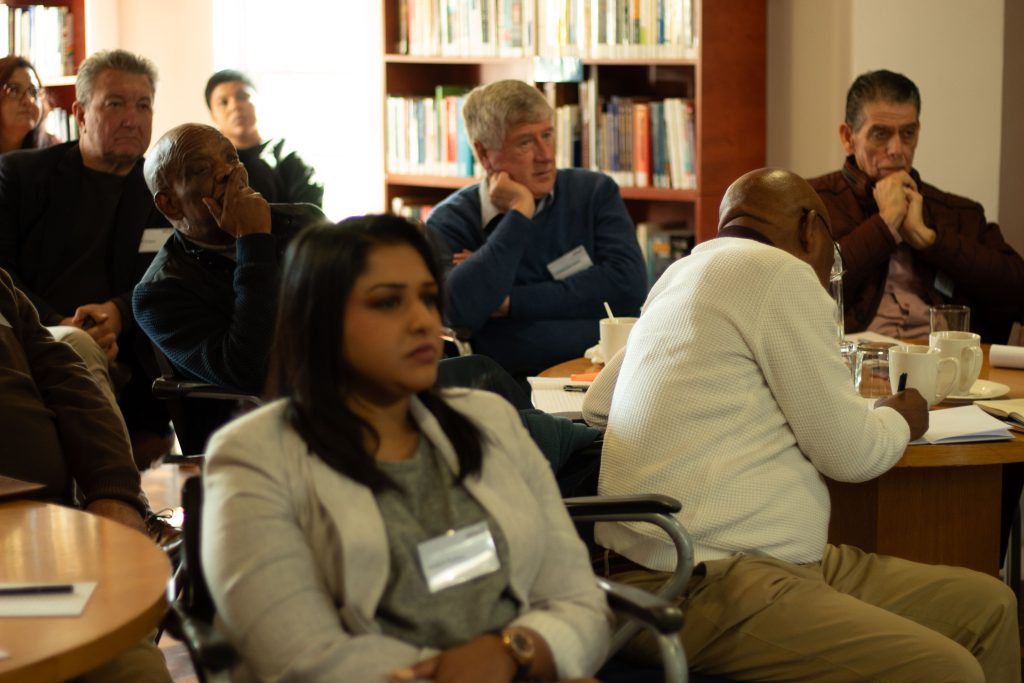
    These were some of the students who took part in the Business Process Management Simulation class. Their energy, participation, and willingness to engage critically with the learning material made the programme a valuable and collaborative experience.

    Dr Sam February
    Dr Sam February- Executive : Business Development and Strategic Support

    In March 2024, I had the opportunity to engage with the 4th semester MBA students from ESB Business School at Reutlingen University, where I facilitated the Business Process Management Simulation (BPMS) module. This module formed part of ESB’s formal MBA curriculum and was delivered entirely online to a part-time cohort of professionals. These students brought with them industry experience from across various industries, creating a valuable environment for applied, work-integrated learning. The BPMS module aimed to strengthen students’ understanding of how business processes operate within complex organisations and how these processes can be strategically analysed, modelled, and improved.

    The learning experience was built around practical engagement. Across the week, students explored the fundamentals of business process design, simulation techniques, and performance measurement. Sessions addressed real-world concerns, such as how to identify bottlenecks in production, use automation to streamline workflows, and align processes with long-term sustainability goals. One of the core discussions throughout the module centred on how businesses can integrate environmental, social, and governance (ESG) considerations into operational thinking, particularly when aligning to sustainability targets and compliance standards. We also examined the role of artificial intelligence in optimising and informing process-based decisions, particularly in data-rich, resource-intensive industries.

    A major part of the module involved a group-based case simulation. Students were given a scenario focused on EcoTech Manufacturing, a fictional company facing operational inefficiencies and sustainability pressures. Each group was tasked with analysing the existing process framework, identifying improvement opportunities, and delivering a redesign that considered ESG alignment and the possible role of AI. Students were also required to present an implementation strategy with clear performance metrics and decision-making frameworks. The presentations showcased thoughtful, integrated problem-solving and reflected the diversity of thinking within the cohort.

    In addition to the group project, students submitted an individual assignment that allowed them to apply the principles of business process management to their own organisational contexts. They were asked to reflect on how AI tools, ESG imperatives, and sustainability considerations could inform the rethinking of business processes within their professional environments. This assignment reinforced the importance of connecting theory with real-world complexity, and many students demonstrated deep insight into how process transformation links directly to ethical leadership, operational performance, and long-term strategy.

    The part-time structure of the ESB MBA programme contributed significantly to the depth of engagement throughout the module. Students, who are simultaneously active in professional roles, brought current workplace challenges and live organisational insights into the learning environment. This created a continuous exchange between academic content and real-world application. As students explored frameworks and tools during the module, they were able to reflect on their immediate relevance, enhancing both individual and group learning. The contributions from across industries enriched the discussion and demonstrated a high level of professional awareness and collaborative learning throughout the sessions.

    The Business Process Management Simulation module not only provided students with technical understanding of process optimisation but also encouraged ethical and sustainable leadership. Through collaborative case work, structured feedback, and applied reflection, students developed practical capabilities in process governance, innovation integration, and technology alignment.

    The Da Vinci Institute values the opportunity to contribute to the ESB MBA programme and looks forward to further engagements that promote workplace-aligned learning and strategic thinking across borders.

  • The DaVinci Institute Launches Alumni Office to Strengthen Lifelong Connections 

    The DaVinci Institute Launches Alumni Office to Strengthen Lifelong Connections 

    Graduation is not the end – it’s the beginning of something greater. At The DaVinci Institute, we believe that education is a lifelong journey. Our commitment to co-creating sustainable futures continues well beyond the classroom, and today, we are thrilled to mark a major milestone in that journey: the official launch of the Alumni Office

    This newly established space is more than just an administrative function – it is a vibrant hub dedicated to nurturing enduring relationships with our graduates. It reflects our belief that the power of the DaVinci experience doesn’t end with a qualification, it evolves, grows, and flourishes as our alumni go on to shape industries, influence change, and inspire new generations. 

    The Alumni Office is here to celebrate that journey, to connect past and present, and to amplify the impact of a growing network of professionals united by a shared DaVinci DNA. 

    A Space to Nurture Lifelong Relationships 

    The DaVinci Institute has always stood for more than just academic excellence. It is a place where visionaries are shaped, where leadership meets innovation, and where knowledge is applied for real-world impact. Our alumni carry the spirit of DaVinci wherever they go – in boardrooms, classrooms, start-ups, NGOs, and communities around the globe. 

    With the establishment of the Alumni Office, we are formalising and energising our commitment to walking alongside our graduates long after they leave the graduation stage. This office will act as the heart of alumni engagement, a place where former students can reconnect, share their journeys, and explore opportunities to continue growing with us. 

    Objectives of the Alumni Office 

    Mduduzi Biyela - Registry & Alumni Coordinator
    Mduduzi Biyela – Registry & Alumni Coordinator

    The Alumni Office is more than just a department – it is a community catalyst. Its core objectives include: 

    • Serving as a central hub for alumni engagement and communication 
    • Celebrating alumni achievements through stories, events, and newsletters 
    • Facilitating networking and professional development through dedicated forums and resources 
    • Encouraging mentorship between alumni and current students, fostering a culture of support and knowledge transfer 
    • Supporting innovation and collaboration, allowing alumni to contribute to DaVinci’s broader mission of co-creating sustainable futures 

    Our Alumni: A Powerful Network of Influence 

    Our alumni are not only representatives of The DaVinci Institute’s values – but they are also key players in shaping industries and communities. From leading multinational companies to launching social impact ventures, their work embodies the spirit of innovation, inclusivity, and impact-driven leadership that we champion at the Institute. 

    The creation of the Alumni Office offers a formal avenue for these trailblazers to connect with each other and with DaVinci — to share insights, to inspire, and to shape the next generation of thinkers and doers. 

    A Message from the Registry Office 

    Towera Gondwe, the Registrar of The DaVinci Institute, shared her thoughts on the significance of this development: 

    Our alumni are the living embodiment of what The DaVinci Institute stands for, intellectual curiosity, innovation, and impact. The Alumni Office is a testament to our commitment to nurturing this community and ensuring that our relationship with graduates continues to grow beyond the classroom. We look forward to seeing how this space will ignite new collaborations, celebrate success stories, and create valuable mentorship opportunities that benefit both alumni and current students.” 

    Events and Engagements: What to Expect 

    We are excited to roll out a series of events and initiatives throughout the year, all tailored to bring alumni closer to each other and to the DaVinci community. These may include: 

    • Alumni networking evenings and panel discussions featuring thought leaders and industry pioneers 
    • Workshops and webinars to support continuous professional development 
    • Mentorship programmes, connecting alumni with students for career guidance and knowledge exchange 
    • Alumni spotlights shared through our newsletters and social platforms to showcase your stories and successes 
    • Volunteering and collaboration opportunities, from guest lectures to project involvement and advisory roles 

    These engagements are designed not only to recognise the accomplishments of our graduates but also to create avenues for meaningful contribution and growth. 

    Why Get Involved? 

    Being part of the DaVinci alumni network comes with a host of benefits — both personal and professional. Here are just a few reasons why reconnecting through the Alumni Office matters: 

    1. Lifelong Learning 

    Alumni will gain access to curated learning resources, exclusive webinars, and professional development opportunities that keep them at the forefront of innovation. 

    2. Networking and Collaboration 

    Expand your professional network by connecting with peers from diverse industries and disciplines. Collaborate on projects, business ventures, or knowledge-sharing initiatives. 

    3. Mentorship and Giving Back 

    Play a transformative role in shaping future DaVinci graduates by sharing your experiences and mentoring current students. Your story can inspire and guide the leaders of tomorrow. 

    4. Mentorship and Giving Back 

    We’ll spotlight alumni achievements across our platforms — celebrating your journey while inspiring others within our community. 

    5. Community and Purpose 

    Rekindle the sense of purpose, belonging, and impact that brought you to DaVinci in the first place. Help us co-create a future that benefits not just individuals, but industries and society at large. 

    Co-Creating the Future – Together 

    The launch of the Alumni Office is not simply a milestone — it is an invitation. We invite all DaVinci alumni to reconnect, to reimagine their role in our shared journey, and to help co-create the future. 

    Whether you graduated last year or twenty years ago, your story is part of ours. And now, more than ever, we want to hear from you, walk with you, and celebrate what comes next. 

    Update your details, share your journey, and become part of something bigger. Because at The DaVinci Institute, learning never ends — it evolves, it expands, and it empowers. 

    Join the Movement 

    For more information or to get involved, contact the Alumni Office: 

    📧 alumni@davinci.ac.za 
    📞 +27 (0)11 579 4419 
    🌐 www.davinci.ac.za/alumni 

    Let’s continue building, innovating, and growing together. 

  • The DaVinci Institute and ICFF Join Forces to Redefine Professional Development

    The DaVinci Institute and ICFF Join Forces to Redefine Professional Development

    At The DaVinci Institute, we believe that learning is not confined to the walls of academia. It lives and breathes in boardrooms, on factory floors, along supply chains, and in the lived experiences of professionals navigating real-world complexity. In that spirit, we are proud to announce a bold and strategic partnership with the Institute of Customs and Freight Forwarding (ICFF), an organisation as committed to professionalisation and innovation as we are. 

    Aligning Education with Industry: A Shared Vision

    This collaboration brings forth a shared vision of education that is both relevant and responsive. Dr Sam February, Executive: Business Development at The DaVinci Institute, explained that the partnership opens numerous strategic opportunities:

    “Together, we aim to align academic programmes with industry needs by integrating customs and freight content into Da Vinci’s offerings – content that ICFF recognises as key pathways to professional growth. Through co-developed short courses and micro-credentials that balance theory and practice, we will empower learners at every stage of their careers. We are also exploring joint research initiatives on critical topics such as digitalisation, sustainability, and regulatory compliance – backed by real-world case studies from ICFF members.”

    Dr February added that the partnership will enable events like workshops and conferences that bring together students, faculty, and professionals for meaningful knowledge exchange:

    “We’re also looking at structured opportunities for internships, mentorships, and executive training to strengthen engagement with the industry. Our collaboration will address digital transformation in freight, including blockchain and AI applications—and champion ESG awareness across supply chains. At its core, this partnership bridges academia and industry, fuelling innovation and growth across the customs and freight forwarding sectors.”

    The Memorandum of Understanding (MoU) signed between the two institutions marks the beginning of this journey – one grounded in co-creation, mutual respect, and a commitment to unlocking the full potential of industry professionals.

    Addressing Industry Gaps and Setting New Standards

    Ingrid Du Buisson - CEO Of CFF
    Ingrid Du Buisson – CEO Of CFF

    Ingrid Du Buisson, Chief Executive Officer of ICFF and Master of Science Degree, a Master of Science in the Management of Technology and Innovation (MSc) alumna of The DaVinci Institute, highlighted the longstanding challenges that have hindered the sector:   

    “Learning and development in the logistics and freight forwarding industry have historically been fragmented and misaligned. Over time, industry standards have drifted from business realities, severely impacting the development of competent professionals. This is further compounded by a bureaucratic skills development landscape that has failed to adequately support a small yet vital sector – one that facilitates 90% of South Africa’s international trade. Sadly, a very small percentage of the workforce holds formal qualifications.” 

    But the partnership with The DaVinci Institute marks a turning point. As Du Buisson explained: 

    “This collaboration presents an opportunity to reshape learning in our sector. By co-developing programmes and qualifications aligned to real-world business realities, we are redefining the standards for competency and proficiency. Our goal is to build an ecosystem that supports professionals and strengthens their role in facilitating international supply chains.” 

    She also underscored the importance of Da Vinci’s learning model: 

    “DaVinci’s Mode 2 methodology is especially valuable as it supports working professionals in practical, accessible ways. The programmes are aligned to the ICFF competency framework and enjoy strong industry recognition. This partnership fits squarely within our vision of professionalisation – an imperative increasingly driven by global legislation and compliance requirements. Licensing of customs operators and professional designations are no longer optional, and this partnership enables us to respond proactively by creating learning and development strategies that meet these demands,” Ingrid added. 

    What This Means in Practice 

    This partnership will bring to life a range of impactful initiatives, including: 

    • Workshops, seminars, and conferences that explore emerging challenges in customs, logistics, and freight forwarding. 
    • Collaborative research and publications that merge academic insight with industry relevance. 
    • Competency-based certifications that reflect the full scope of skills needed in a fast-evolving trade environment. 
    • Professional development pathways for ICFF members and Da Vinci students to expand their influence and impact. 

    ICFF brings to the table a robust community of logistics and freight experts, deep sector knowledge, and a commitment to maintaining international standards. The Da Vinci Institute complements this with academic rigour, research capacity, and a human-centred approach to innovation. 

    A Shared Vision for Professional Growth 

    At the heart of this partnership is the belief that people drive the future of every industry. Knowledge is most powerful when co-created, and innovation takes root when diverse perspectives come together with shared intent. 

    We are not simply preparing individuals for existing roles – we are cultivating systems thinkers, adaptable leaders, and change-makers who can shape the industries of tomorrow. Together, The DaVinci Institute and ICFF are nurturing an environment where learning is ongoing, credentials are meaningful, and real-world challenges become springboards for growth. 

    Why This Matters 

    This partnership signals a new way forward – one where academic institution doesn’t operate in isolation from industry but walks alongside it. Where professional bodies don’t merely train but actively co-create the future of their sectors. Where learning is a lifelong journey marked by innovation, collaboration, and reinvention. 

    By aligning on ethical standards, intellectual property, transparent reporting, and ongoing communication, The DaVinci Institute and ICFF have built a foundation for a lasting and transformative partnership. 

    The DaVinci Institute and ICFF. Reimagining professional development together. 
    For those ready to think differently. Lead courageously. Learn continuously. Welcome to a new era of collaborative partnership. 

  • How AI is Transforming Agriculture and Empowering Communities

    How AI is Transforming Agriculture and Empowering Communities

    Leonardo Snyman, Head of Strategic Support: Executive Education

    The rise of Artificial Intelligence (AI) marks a pivotal moment in human history, ushering in the 5th Industrial Revolution, a wave of innovation set to redefine technology’s role in our lives. Far from being a distant concept, AI is already reshaping industries, stimulating economic growth, and creating new opportunities, particularly in agriculture. At The DaVinci Institute, we see this as a chance to harness technology for good, solving social challenges and driving sustainable progress, especially in Africa.

    The Digital Economy: A Gateway to Opportunity

    The 5th Industrial Revolution isn’t just about machines; it’s about people accessing the digital economy. This economy, powered by the internet, data, and interconnected systems, is where goods, services, and value are created and exchanged through digital means. It encompasses digital infrastructure, data as a currency, platforms and ecosystems, e-commerce, and the sharing economy. By integrating AI into this framework, we can unlock new business solutions and empower communities to thrive in a connected world.

    AI in Agriculture: Innovation Meets Tradition

    Agriculture, a cornerstone of human civilisation, is undergoing a transformation thanks to AI. From tackling labour shortages to addressing climate change and ensuring sustainable food production, AI is automating repetitive tasks and enhancing decision-making. But it’s not just about efficiency, it’s about opportunity. As AI takes on the grunt work (think weeding or data crunching), it frees up humans for higher-value roles, blending technology with traditional farming expertise.

    This shift is creating a host of exciting new jobs:

    • AI System Developers and Programmers: Building the tools that power smart agriculture.
    • Drone Operators and Analysts: Monitoring crops from above with precision.
    • Precision Agriculture Technicians: Optimising resources like water and fertiliser.
    • Data Scientists for Agri-Technology: Turning raw data into actionable insights.
    • AI Advisors: Guiding farmers on tech adoption.
    • Robotic Specialists: Managing automated farming equipment.
    • Sustainability Analysts: Ensuring eco-friendly practices.
    • Supply Chain AI Coordinators: Streamlining food distribution.

    These roles don’t replace traditional farming, they enhance it, requiring a mix of tech savvy and agricultural know-how.

    Upskilling for the Future

    To seize these opportunities, education and training must evolve. The workforce of tomorrow will need skills like:

    • Digital literacy and technology familiarity
    • Data analysis and interpretation
    • Basics of AI and machine learning
    • Drone and robotic operations
    • Cybersecurity awareness
    • Sustainability and environmental management
    • Adaptability and problem-solving
    • Supply chain and market analytics
    • Collaboration with tech experts

    These skills don’t overshadow traditional expertise – like understanding soil or livestock but complement it, creating a hybrid workforce ready to boost productivity, sustainability, and profitability.

    Understanding Your Ecosystem

    Beyond formal skills, individuals must also grasp their place in their ecosystem:

    • Microsystem: What’s your job or function?
    • Mesosystem: What’s your work environment?
    • Exosystem: What’s your network?
    • Macrosystem: Where do you fit globally?

    By upskilling and mapping their roles, individuals and communities can fully participate in the 5th Industrial Revolution.

    DaVinci: Empowering the Next Generation

    The DaVinci Institute has been committed to widening access to education and empowering future leaders, for over 20 years. Drawing from the wisdom of Mandela and Leonardo da Vinci, we believe education is the ultimate tool for positive change.

    Our unique TIPS™ framework – Management of Technology, Innovation, People, and Systems Thinking – equips students to excel in different industries. Whether you’re starting your career, reskilling, or upskilling, our flexible business qualifications let you study at your own pace, from anywhere. We go beyond traditional learning, ensuring a personal, social, and economic return on investment for every student.

    Executive Education: Distance learning modules

    An Executive Education module is a focused, short-term learning programme designed for professionals, business owners, executives and senior managers, to enhance their skills and knowledge in specific areas of business, leadership, or industry expertise.

    Key Features of DaVinci Executive Education:

    • Upskilling in key areas.
    • Gaining insights into best practices and global trends.
    • Networking with other executives and professionals.
    • Addressing specific challenges faced in one’s industry or organisation.

    Executive education modules can be used as credits towards a full qualification or as standalone skills development interventions.

    About the Author: Leonardo Snyman

    Leonardo Snyman is a leader in higher education with nearly two decades of experience driving strategic innovation, brand development, and community engagement. As the Head of Strategic Support for Executive Education at The DaVinci Institute, he aims to champion learning that blends technology, humanity, and purpose.

    His career spans key roles in the public and private higher education institutions, where he successfully led major brand launches and academic transformations. With a Master’s in Business Management, an Honours in Development Studies, and a background in psychology, Leonardo brings both strategic depth and emotional intelligence to his work.

    Passionate about mindful leadership and sustainable progress, he is committed to unlocking the potential of people and systems in an era of digital change.

  • 2025 Budget Speech Analysis: Smart spending fuels growth

    2025 Budget Speech Analysis: Smart spending fuels growth

    The efficacy of spending is not simply a good idea, but a strategic pathway for answering the growth question.

    The decision to postpone the delivery of the 2025 budget by cabinet on the 19th of February 2025 to the 12th of March 2025, was not only a reminder that South Africa is governed through coalition government dynamics in the GNU. It was also a reminder of the complex fiscal policy choices that confronts its 31-year-old democracy.

    In a world where some of the leading economies are governed through coalition arrangements, the postponement of the budget signals a new era. While this unprecedented delay may suggest a crisis or strain within the cabinet, it can also be seen as a sign of South Africa’s maturing democracy—an opportunity to elevate the quality of discourse around fiscal policy choices and broader economic strategies.

    The initial tax proposal to increase value added tax (VAT) from 15% to 17%, to a revised 0.5% in 2025/26 and another 0.5% in 2026/27, in order to finance key priorities such as expanding the headcount of front facing public servants in health, education and other essential services. Thus, raising R28 billion in additional revenue in 2025/26 and R14.5 billion in 2026/27 respectively.

    The socioeconomic determinants that inform SA’s fiscal policy are reflected in the policy framework. The elevated levels of unemployment, inequality and poverty are binding constraints to the country’s long-term prospects. In responses to this, on the expenditure side, the growth in government spending has been more pronounced in areas such as social development, education and healthcare. The unintended consequence, in the advent of limited resources, areas such as general public services and economic development have taken somewhat of a backseat. In the period, 2024/25 to 2026/27 the net increase for social development and education is  R47.1 billion and R11.2 billion respectively. In comparison to R23.8 billion for economic development. Which is an improvement from the 2024/25 budget.

    It goes without saying that all of these spending priorities are indeed important. Whilst acknowledging this reality, bold steps need to be taken to unlock economic growth because the reduction in important fiscal ratios such as the debt-to-GDP and spending allocations are a function of economic growth.

    From a sustainability point of view, economic development activity is important in order to grow the economy and broaden the tax base. This would improve the pool of available resources. The additional R3.5 billion allocation to the collector of revenue is another important step to increase tax compliance. This is important as it will strengthen SA’s efforts in relation to illicit financial flows and the risk areas identified by the Financial Action Task Force (FATF) Greylist. Wherein, significant progress has been made thus far. The effect of this, will be realized in lower borrowing costs in the bond markets.

    The efficacy of government spending, in this context, is crucial. Government will soon publish the Medium-Term Development Plan (MTDP), which forecasts a 3% GDP growth over the next 5 years, provided that specific interventions are implemented effectively. The factors that should anchor such a plan, over the next 5 years ought to be complimented by the budget are:

    • The extent to which there is improvement in the efficacy of government spending.
    • The optimal tax rates for SA given the prevailing macroeconomic condition and forecast period.  
    • The extent to which SA’s fiscal and industrial policy conditions are able to attract further foreign direct investment to bridge the additional 15% of GDP fixed investment required to increase GDP growth to 5% and flatten unemployment and reduce poverty.

    We should anticipate a heightened debate regarding the proposed budget for 2025/26 in light of the proposed VAT adjustments and reduced collections from corporate taxes. More importantly, the unseen cost of a lack of good governance in some organs of state should receive more attention and preconditions may have to be considered, followed up on and reported on effectively to prevent leakages in the system. In the event that this foundation is set, the growth question for SA will be answered.