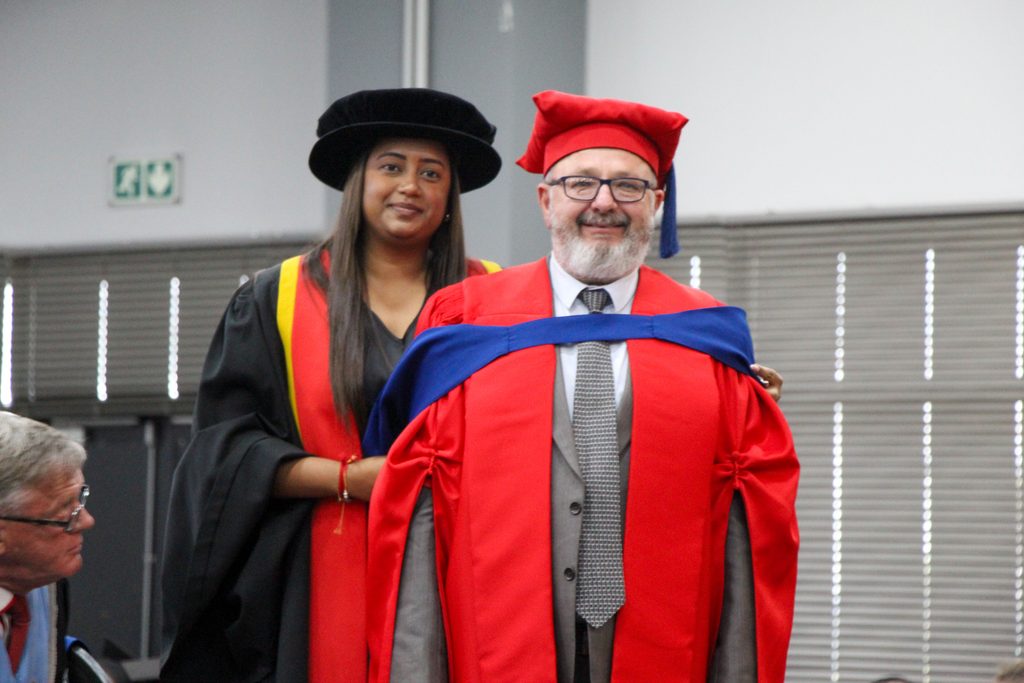
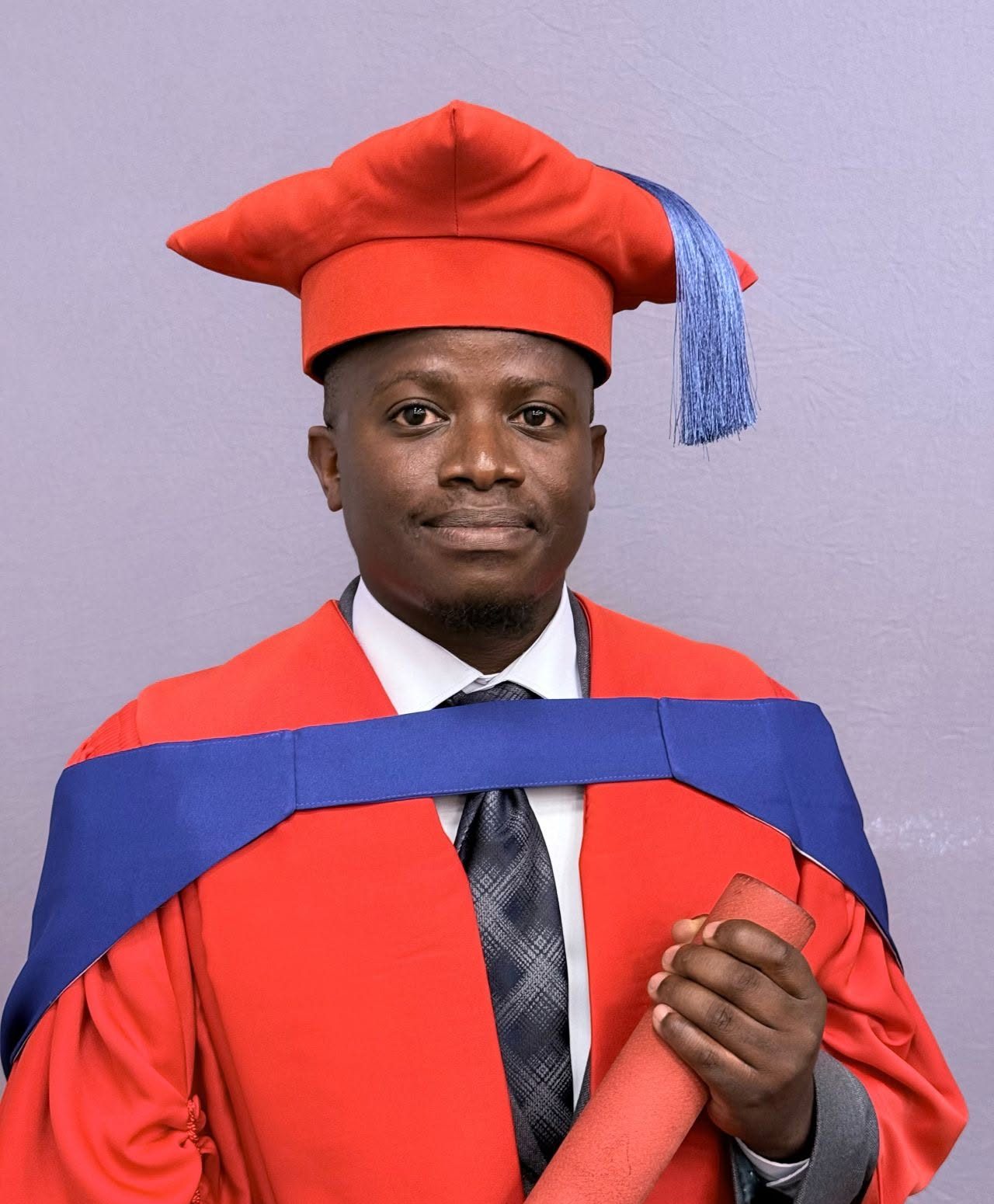
Commercial farmer and doctoral graduate Dr Johannes Lodewicus Jacobs believes that improving agricultural performance requires more than better farming practices. It demands a deeper understanding of the systems, relationships and realities that shape the industry.
For Dr Johannes Lodewicus Jacobs, a full-time commercial livestock farmer in the southern Free State, farming has always been about more than producing meat. It is about understanding the relationship between people, natural resources, economics and the systems that sustain agricultural production.
This perspective became central to his doctoral research, which explored the realities of the small ruminant food system in semi-arid sub-Saharan Africa and proposed guidelines for facilitating a higher-performing system.
His research was informed by a practical understanding of farming, combined with a desire to investigate the underlying factors influencing the performance of the broader agricultural value chain.
Focusing on selected semi-arid regions in South Africa and Kenya, Jacobs examined the interconnected realities experienced by farmers and other stakeholders within the small ruminant food system. His study highlighted a fragmented and often incoherent system, characterised by disrupted information flows, challenges in the movement of resources between different elements, and imbalances across various subsystems.
Drawing on a critical realist research approach, Dr Jacobs investigated not only what could be observed within the system, but also the underlying mechanisms influencing its performance.
The research involved 37 participants and seven small ruminant study groups comprising 29 members. Through qualitative research, supported by quantitative analysis, agricultural economic margins and statistical assessment, the study identified 14 themes that helped explain the realities shaping the food system.
Among its recommendations was the need to rethink the structure of the small ruminant food system by reactivating dormant feedback loops, reviewing production practices using kilograms of meat produced per hectare, reconsidering carcass grading to accommodate younger animals in premium price categories, and strengthening the relationship between planned grazing, pasture management, animal production and overall farm management.
For Dr Jacobs, however, the significance of the research extends beyond its academic contribution. It points to opportunities to improve the economic performance of commercial livestock farming while strengthening the sustainability of the agricultural system.
Learning through theory, practice and mentorship
Reflecting on his doctoral journey, Jacobs describes it as a process built on three interconnected elements: theoretical learning, practical application and mentorship.
He believes that academic knowledge becomes particularly valuable when it can be tested against real-world experiences.
“It was a process of learning, and I define learning through doing the theoretical part, the practical part, and having a mentor, a study leader, to guide you through the process. It is the nexus of those three parts,” he explains.
One of the greatest challenges was being pushed to think critically beyond familiar ways of approaching problems.
Jacobs believes that doctoral studies expose individuals to dimensions of their thinking that they may not have previously developed or fully utilised.
“The programme forced me to think critically on another level. It opened up my thinking of reality around me,” he explains.
This shift in perspective became particularly important as he investigated the complex relationships influencing agricultural production.
A moment in Kenya that changed his perspective
One of the most significant experiences during his research took place in Kenya, where he engaged with local stakeholders to better understand the relationship between producers and consumers.
Having worked with systems thinking for many years, Jacobs was particularly interested in understanding how feedback between different parts of the food system could influence performance.
During one of these interactions, a participant demonstrated what could be achieved through the implementation of grazing systems on his farm in Ngwenya.
The experience became a defining moment in Jacobs’ research journey.
It demonstrated how the relationship between people, natural resource management and economics could be influenced by changes in farming practices.
In particular, it illustrated how improved grazing management could translate into better economic outcomes for farmers.
For Dr Jacobs, this reinforced an important principle: agricultural performance cannot be understood by looking at production in isolation. It requires an appreciation of the interconnected relationships between the environment, management decisions, human behaviour and economic outcomes.
Rethinking development, technology and innovation
Dr Jacobs also draws a strong connection between his research and The DaVinci Institute’s TIPS™ framework, particularly its emphasis on the relationship between technology, innovation, people and systems.
Having applied systems thinking in his professional and farming life for approximately 30 years, he believes that development must ultimately be measured by its contribution to human well-being and livelihoods.
“In economics, we cannot always quantify the developing economies of a developing country. Development must always be connected with the well-being and the livelihood of its citizens,” he says.
He also argues that technology and innovation should not be viewed as external influences on a system, but rather as resources that form part of the system itself.
This requires organisations, industries and individuals to continuously develop knowledge about the management systems within which they operate.
For Jacobs, understanding reality and developing knowledge about the systems that shape it are among the most important resources available to society.
His perspective reflects a broader understanding of leadership and development: economic progress, technological advancement and innovation must ultimately translate into meaningful improvements in people’s lives.
Taking ownership of the doctoral journey
For aspiring doctoral students, Dr Jacobs’ advice is grounded in personal responsibility and intellectual independence.
He believes that students must take ownership of their research journey rather than becoming overly dependent on their study leaders.
“You must be in charge of your study, not the study leader. The study leader must only guide you, and you must stick to your guns.”
His advice reflects the discipline required to complete a doctoral qualification: the willingness to challenge one’s own thinking, remain committed to an area of inquiry and take responsibility for the direction and quality of one’s research.
For Dr Jacobs, completing his doctorate represents more than reaching an academic milestone. It is an extension of a lifelong commitment to understanding complex systems and finding better ways of managing them.
And while his research is rooted in the realities of livestock farming, its implications extend further. It demonstrates why meaningful progress requires people who can connect knowledge with practice, recognise the relationships within complex systems and challenge established ways of thinking.
For a farmer who set out to understand the realities shaping his industry, the doctoral journey has reinforced a fundamental lesson: improving a system begins with understanding how all its parts work together.
Leave a Reply