
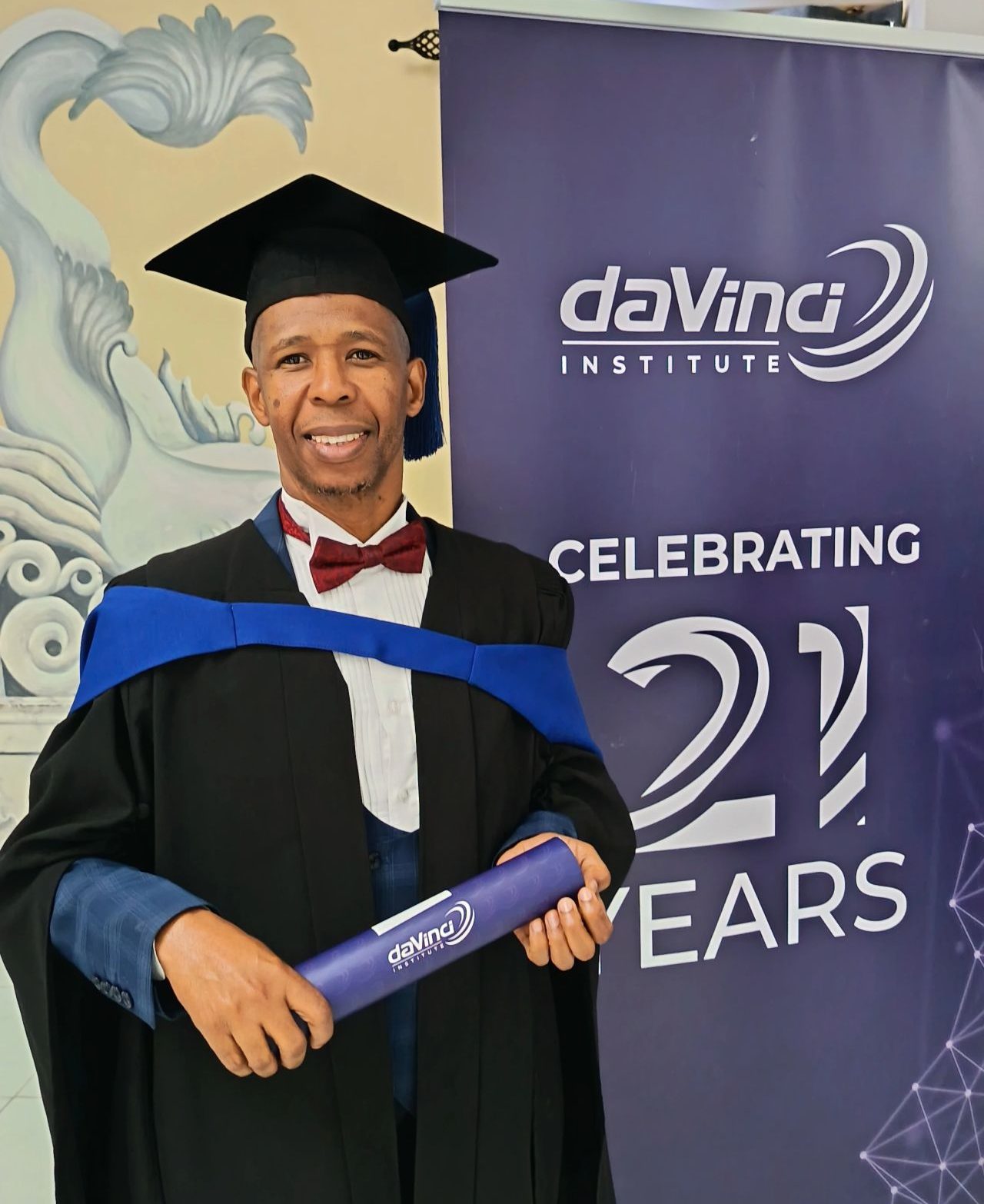
For Dr Neo Harrison Masithela, completing a doctoral degree was never simply about earning another qualification. It was about strengthening his ability to contribute meaningfully to economic development, business growth, and societal transformation.
Having served South Africa in various leadership positions, including as a Member of Parliament and as a Member of the Executive Council (MEC) in the Free State Provincial Government, Dr Masithela transitioned from public office in 2010 to focus on his entrepreneurial ventures.
Today, his interests span property development, agriculture, and economic development. His property portfolio includes shopping centre developments and healthcare infrastructure projects, while agriculture has become a strategic anchor within its broader business ecosystem.
“I started in the property sector, but through my work I recognised the importance of agriculture as one of the country’s key industries. I acquired a farm and integrated farming into my broader business activities,” he explains.
Beyond business, Dr Masithela currently serves as Chairperson of the Free State Development Corporation (FDC), an institution dedicated to supporting and developing small businesses across the province.
Navigating the Doctoral Journey
Like many doctoral candidates balancing multiple responsibilities, Dr Masithela describes his doctoral journey as both demanding and rewarding.
“Studying while managing businesses, family responsibilities and professional commitments is not easy,” he says. “A doctoral degree is a long journey and often a lonely one. However, with endurance, discipline, support from supervisors and institutional guidance, it becomes manageable,” says Dr Masithela.
As a father of five, Dr Masithela had to carefully structure his time. Family remained a priority, which often meant sacrificing personal rest and working during the early hours of the morning.
“My children needed my attention, and I wanted to be present for them. We are a close family. We spend time together, we dance, we enjoy life. That meant I often worked when everyone else was asleep. I would wake up very early in the morning to focus on my research,” he indicated.
Despite the challenges, the experience proved transformative.
“The doctoral journey enabled me to develop frameworks and ideas that I could immediately apply in practice. It was not only an academic exercise; it became a tool for real-world development,” says Dr Masithela.
Research with Practical Impact
Dr Masithela’s doctoral research focused on the role of the manufacturing and services sectors in socio-economic development across the African continent.
His work explored how these sectors can contribute to sustainable growth, job creation and economic transformation.
What makes his research particularly significant is how it has informed his leadership responsibilities at the Free State Development Corporation.
“I was able to apply what I was studying directly within my professional environment. The knowledge gained through the research process strengthened the way I approach economic development initiatives,” he says.
His research reinforced the importance of integrating systems thinking, organisational structures and developmental frameworks to create sustainable economic outcomes.
Applying the DaVinci TIPS™ Framework
Reflecting on the value of The DaVinci Institute‘s Teaching, Innovation and Performance (TIPS™) Framework, Dr Masithela credits it with helping him bridge theory and practice.
“The framework added value because it enabled me to transfer skills and knowledge into the institutions where I work. It contributed to both organisational development and my own personal growth,” says Dr Masithela.
He explains that the framework encouraged him to integrate technical systems, strategic thinking and information flows within organisational environments.
“It enabled me to develop systems that ensure information moves effectively throughout an organisation. This improves decision-making and supports the achievement of developmental objectives,” says Dr Masithela.
Agriculture as an Incentive for Development
Although his doctoral research focused primarily on manufacturing and services, agriculture remains a sector close to Dr Masithela’s heart.
Drawing on both his previous experience as MEC for Agriculture and his doctoral insights, he has championed the establishment of an Agricultural Economic Development Unit within the Free State Development Corporation.
The initiative seeks to empower emerging farmers, particularly black farmers who have gained access to land but require support to build sustainable agricultural enterprises.
“We need to ensure that people working in agriculture understand their role in socio-economic development. Agriculture should not only be viewed as farming; it should be understood as a driver of economic growth and business development,” says Dr Masithela.
He believes emerging agricultural enterprises should be treated as small businesses and provided with the necessary support structures to enable growth and sustainability.
“This approach has the potential to create economic opportunities not only within the Free State but across South Africa and the continent,” he says.
Advice for Future Doctoral Students
Having completed the journey, Dr Masithela offers practical advice to prospective doctoral candidates.
His first recommendation is simple: respect deadlines.
“Once timelines are established, stick to them. If you do not, you will create unnecessary challenges for yourself.”
He also encourages students to remain proactive throughout the process.
“Do not wait to be told when to submit. Follow your research framework and keep moving forward. When your supervisors provide feedback, address it immediately while the information is still fresh in your mind.”
Most importantly, he emphasises the importance of reading.
“Doctoral studies require you to be a reader. Reading strengthens your comprehension and broadens your understanding of the many issues you will encounter during your research journey.”
For younger scholars, his advice is particularly direct.
“Do not wait until you are married, working and carrying many responsibilities before pursuing a doctorate. If you have the opportunity, start earlier.”
Contributing to the Future
For Dr Masithela, doctoral education is ultimately about contribution.
He believes research plays a critical role in advancing societies, economies and institutions.
“Doctoral studies contribute to the socio-economic growth of countries, continents and the world. Through your research, you become part of that contribution,” says Dr Masithela.
While acknowledging the challenges, he encourages aspiring doctoral candidates not to be intimidated by the process.
“It is a lonely journey at times, but once you are in it, you begin to understand what former President Nelson Mandela meant when he said: ‘It always seems impossible until it is done.’”
For Dr Neo Masithela, that journey is now complete, but the impact of his research and leadership is only beginning.

Leave a Reply