The DaVinci Institute Alumni Association is dedicated to co-creating with, and fostering connections between, our alumni community, ensuring alumni stay connected and continue with life-long learning.
Some journeys demand bold choices, unwavering commitment, and the courage to step into the unknown. For Neritha Pillay, the decision to pursue a Postgraduate Diploma in Business Leadership at The DaVinci Institute was more than an academic milestone, it was a strategic move to advance her career, expand her horizons, and create lasting impact. From her early beginnings in South Africa to an international career with SKF, Pillay’s story is a testament to what’s possible when ambition meets opportunity and perseverance becomes a guiding principle.
From Humble Beginnings to Bold Decisions
Pillay grew up in a challenging environment and transitioned directly from school into employment without any formal qualifications. She reflects on her journey with pride on her LinkedIn profile: “Creating a career from humble beginnings called for grit, perseverance, and resilience to keep moving forward no matter the obstacles, giving up was never an option!”
Nearly 20 months ago, she took one of the boldest steps of her life, relocating from SKF South Africa to SKF UK to pursue new professional opportunities. Despite the challenges of adjusting to a foreign country and a new work environment, Pillay remained steadfast in her goals. She attributes her growth to the support of mentors, colleagues, and loved ones: “I deeply appreciate everyone who stood by me and believed in my potential, you know who you are. Thank you for being part of this journey!”
Achieving Academic Excellence While Advancing Professionally
Neritha Pillay’s journey proves that determination and ambition can turn challenges into triumphs.
Pillay graduated Cum Laude on 30 October 2025 with her Postgraduate Diploma in Business Leadership. Her project, “Exploring the strategic integration of Lincoln Lubrication South Africa by SKF South Africa,” applied practical business insight to a real organisational challenge, demonstrating the impact of postgraduate study on professional performance.
Her achievement shows that virtual learning offers a powerful platform for ambitious professionals. Through The DaVinci Institute’s flexible online model, students can pursue advanced qualifications from anywhere in the world, gaining knowledge and skills that directly enhance their careers.
Lessons in Resilience, Courage, and Growth
Pillay’s journey has been defined by determination and adaptability. She shares, “It’s been a period of triumphs and trials, but also immense growth and learning. Backed by a fantastic team, I have emerged more brave, courageous, confident, and determined.”
For prospective students, her experience highlights an important principle: obstacles are stepping stones when paired with perseverance, strategic planning, and a clear vision.
Inspiration for the Next Generation of Leaders
Neritha Pillay’s story illustrates the transformative power of postgraduate study and the potential of virtual learning. Her journey demonstrates that professional ambition and academic excellence can go hand in hand, creating tangible impact both in the workplace and beyond.
“To anyone chasing their dreams: keep going, even when the road feels impossible. Your persistence will turn obstacles into stepping stones,” Pillay advises.
Her achievement is more than a personal milestone, it is a beacon for all professionals considering further education. With ambition, resilience, and access to flexible learning, success is possible without pausing life or career.
Balancing executive leadership with academic rigour is no small feat. For Adele Hartdegen, CEO of Dogan Exhibitions and the Johannesburg Expo Centre, her Postgraduate Diploma journey at The DaVinci Institute became both a strategic lens and a catalyst for deeper impact. With more than a decade of experience in the MICE industry, her academic work reflects a commitment to growth, clarity, and national economic contribution.
Adele’s journey speaks to purposeful leadership, grounded research, and the ability to translate insight into action within one of South Africa’s most influential industries.
A Career Rooted in Strategy and Transformation
Hartdegen’s professional expertise lies in strategic development, with a strong focus on sales growth, brand enhancement, operational efficiency, and business turnaround. Leading two major entities at the heart of South Africa’s business events ecosystem, she has consistently leveraged sales, marketing, and operational best practices to drive measurable results and sustainable success.
Her decision to pursue further academic development was driven by a desire to sharpen her strategic thinking while applying theory directly to complex, real-world environments.
Unlocking the Economic Power of the MICE Industry
Hartdegen’s research, titled “The utilisation of the South African MICE industry as a catalyst for economic growth,” was inspired by a recurring realisation throughout her career.
“I have spent the last 12 years in the MICE industry, and I realised that the industry is still widely misunderstood, particularly its economic impact and potential,” Hartdegen explained.
She noted that while the MICE industry has a far-reaching global economic footprint, South Africa lacks standardised data collection and economic impact assessments, resulting in underrepresentation of the industry’s true contribution.
Her study revealed several critical insights:
The MICE industry has a significant and far-reaching economic impact globally, with strong potential locally
South Africa is well-positioned to capitalise on this potential if supported by credible, standardised data
There is a pressing need for consistent economic impact assessments to quantify contribution
Stronger alignment between public and private sector stakeholders is essential
Multiple areas of structural improvement are required to unlock greater economic value
“These findings confirm that while the opportunity is substantial, strategic coordination and further focused research are needed to fully unlock the industry’s contribution,” Hartdegen explained.
Leading at the Centre of Global Events: The G20 Experience
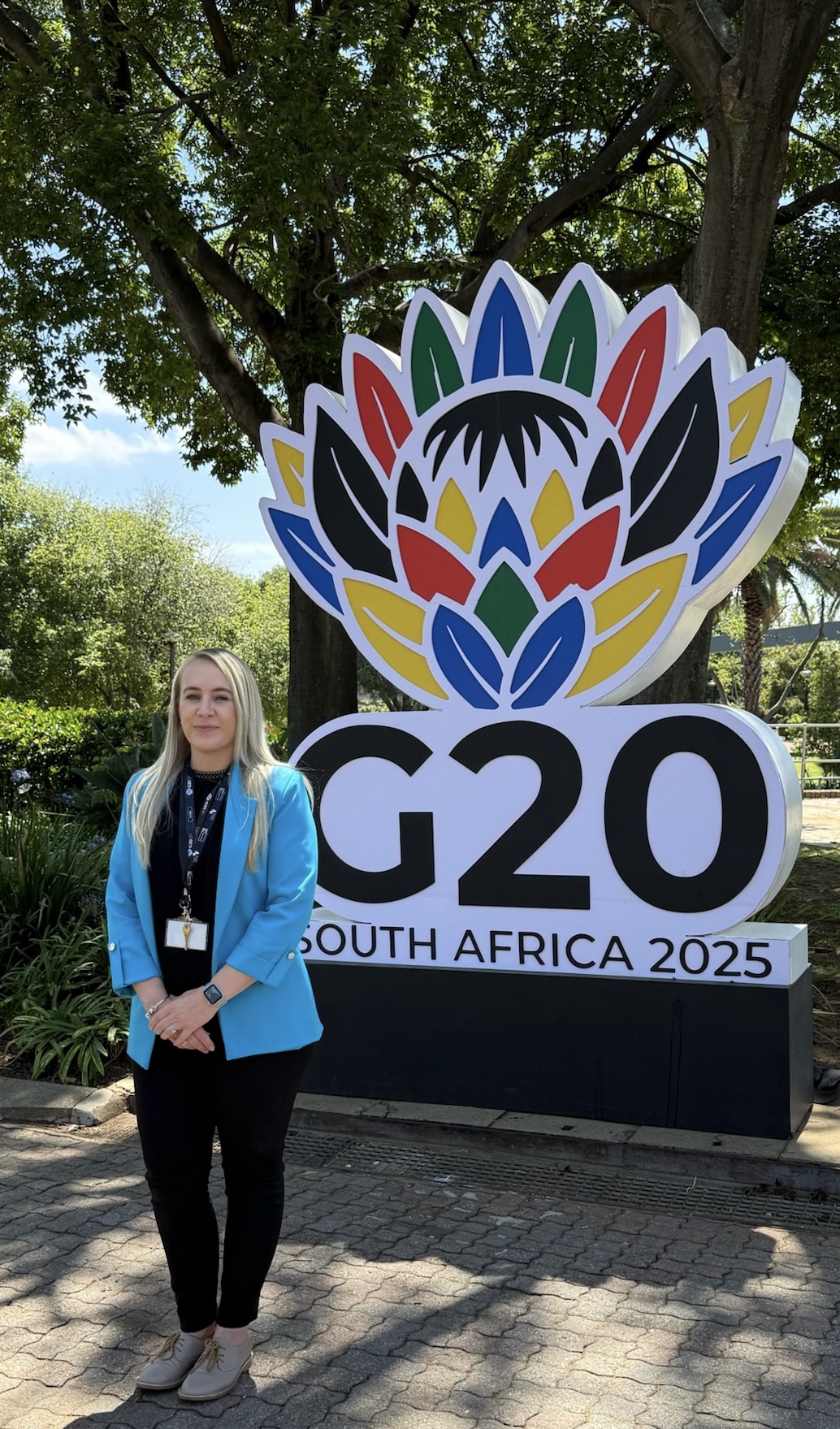
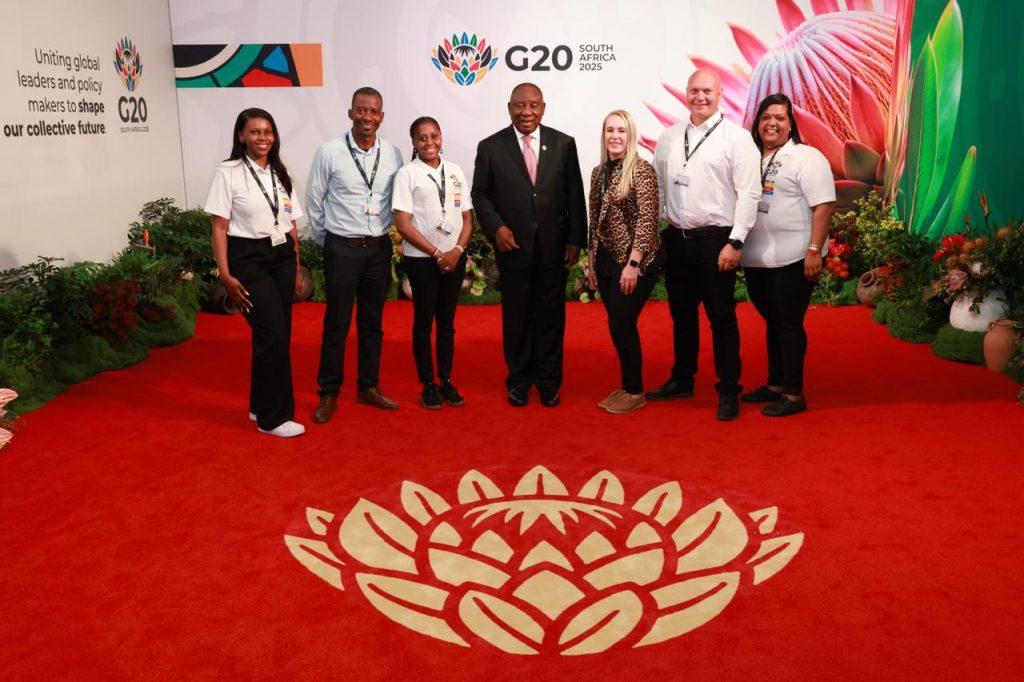
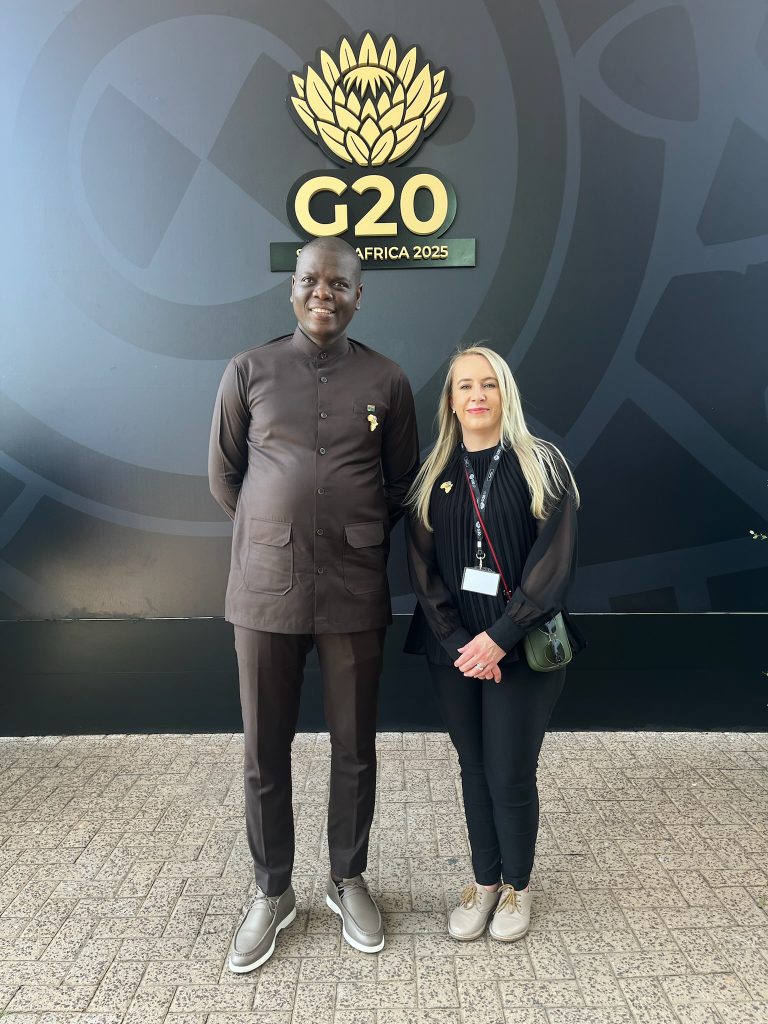
During 2025, Hartdegen played a pivotal leadership role as the Johannesburg Expo Centre hosted both the G20 Ministerial Summit and the G20 Heads of State Summit. The venue’s unique position as both host and full turnkey service provider placed her team at the epicentre of one of the most complex event projects in the country.
“The venue team is responsible for the full design, planning, and execution through an extensive network of partners. Managing multiple stakeholders across government departments, suppliers, and contractors was one of the most challenging aspects,” Hartdegen shared.
An uncompromising six-month planning process guided every detail, from aesthetics and functionality to budgeting and risk management. Leadership, she noted, came down to assembling the right team, assigning roles based on strengths, and contracting industry experts where needed.
“Leading the project meant remaining calm under pressure to keep the team focused. Being described as the ‘voice of calm in the storm’ was a proud moment, as it showed leadership by example,” Hartdegen reflected.
Positioning South Africa as a Global Business Events Destination
Hartdegen believes that high-profile international events are among South Africa’s strongest strategic tools for destination positioning.
“Projects such as the G20 offer first-hand experience of the country to global decision-makers. Delegates commented on the authenticity of our culture and hospitality, saying it felt genuine rather than rehearsed,” Hartdegen said.
She emphasised that these events should be leveraged as case studies to support future bids, demonstrating South Africa’s capability to host events of international significance while generating far-reaching economic returns.
Innovation, Technology, and the Future of MICE
While hybrid events have become synonymous with post-COVID innovation, Hartdegen believes the next wave of transformation lies deeper within operations.
“The real opportunity lies in improving operational software systems such as CRM, ERP, and AI-based design tools. These systems enhance customer service and efficiency, creating capacity to deliver and host more prominent events,” she explained.
For Hartdegen, technology is not just about experience, but about scalability, efficiency, and sustainability.
Navigating Leadership Challenges With Resilience
Reflecting on her career, Hartdegen identifies one recurring challenge.
“Having started in senior management at the age of 22, navigating perceptions about the capability of younger females in male-dominated industries has been significant,” Hartdegen shared.
Her response has been rooted in focus and self-belief.
“I’ve learnt to take emotion out of business and let results speak for themselves. Self-development and self-motivation are critical, and it’s important not to let external opinions distract you from your end goal,” she said.
Academic Insight Applied to Real Organisations
Hartdegen credits her Postgraduate Diploma with strengthening her approach to leadership and strategic decision-making.
“Using both entities as case studies throughout the programme allowed me to take an objective, critical perspective. The assessments now serve as blueprints for my teams to execute strategies that improve efficiency and ensure growth,” Hartdegen explained.
This integration of theory and practice has enabled immediate organisational impact across Dogan Exhibitions and the Johannesburg Expo Centre.
Looking Ahead: Growth, Legacy, and National Impact
Hartdegen is particularly excited about the evolving perception of the NASREC precinct, following the successful hosting of the G20.
“The Johannesburg Expo Centre remains the largest venue on the African continent and plays a critical role in economic stability and job creation for the Soweto precinct,” Hartdegen said.
She also highlighted the revival of The Rand Show as a legacy consumer brand, noting consistent year-on-year growth and renewed national relevance.
Looking ahead, Hartdegen is optimistic about the future of the MICE industry, particularly with renewed momentum within SA Tourism to secure more international events through strategic bidding.
A Vision Anchored in Purpose and Progress
Adele Hartdegen’s journey reflects the essence of DaVinci leadership: strategic thinking, evidence-based decision-making, and purposeful impact. Through her academic work, executive leadership, and unwavering focus on growth, she continues to shape not only organisations, but the broader economic landscape of South Africa’s MICE industry.
Her story stands as a powerful example of how learning, leadership, and lived experience can intersect to create lasting national value.
Earning a qualification while navigating the complexities of work, life, and personal aspirations is no small achievement. For Nazlee Van De Rhede, a recent Bachelor of Commerce in Business Management graduate at The DaVinci Institute, this journey became a profound chapter of self-development, resilience, and leadership growth. Her story reflects not only academic accomplishment but also the inner transformation that comes with perseverance and purpose.
A Passion for Business and a Drive to Lead
Van De Rhede’s inspiration to pursue her BCom in Business Management stemmed from a longstanding curiosity about how organisations operate, grow, and create value, especially within the dynamic world of financial services.
“I’ve always had a strong interest in understanding how businesses build efficiency and deliver value. I wanted a qualification that gave me both strategic insight and practical skills I could apply in real workplaces like Capitec,” she shared.
Her studies shaped her on multiple levels. Personally, she grew in discipline, resilience, and confidence. Professionally, the programme deepened her understanding of financial principles, leadership, decision-making, and operational excellence.
“Overall, the degree helped me become more capable, structured, and purpose-driven in how I approach work and leadership,” Van De Rhede added.
Exploring Internal Mobility at Capitec
Van De Rhede’s Work-Based Challenge, “Scaling internal mobility challenges to enhance workforce agility at Capitec Bank,” was inspired by her keen interest in people development and organisational agility.
Having observed the need for structured career pathways in high-performance environments, she wanted to understand why some employees struggle to transition into new roles and how organisations can support growth more effectively.
“I’ve seen how important internal opportunities are for both employees and the business. When mobility is well supported, it strengthens career development and builds a future-ready workforce,” Van De Rhede explained.
Her research uncovered key insights:
Employees often have the capability to move into new roles but face barriers such as low visibility of opportunities and inconsistent coaching.
Supportive leadership and clear development pathways significantly enhance internal movement.
Organisations benefit from transparent communication, structured upskilling, and tools that give employees access to internal roles.
“These findings show that mobility is not just about creating opportunities, but removing blockers and supporting people through transitions,” she said.
Balancing Pressure With Purpose
Like many working students, Van De Rhede faced the demanding task of balancing academic deadlines with professional responsibilities and personal life. Research required deep thinking, time management, and emotional endurance.
“There were moments where I questioned whether my findings were strong enough or if my approach was correct. Staying committed meant sacrificing weekends, seeking guidance from a life coach, and breaking my work into manageable tasks,” she recalls.
Her resilience, strong values, and commitment to growth carried her through.
Lessons That Shaped Her Future
Reflecting on her journey, several lessons stand out for Van De Rhede:
Discipline and consistency remain essential to managing pressure.
Critical thinking transformed how she approaches challenges and decisions.
Perseverance through difficult moments-built confidence and mental strength.
Business knowledge broadened her understanding of people, processes, and organisational development.
“These experiences shaped not just my academic success, but the professional I am becoming, disciplined, analytical, values-driven, and hungry to learn,” Van De Rhedesaid.
Support That Made the Journey Possible
Van De Rhede attributes her success to a strong support system: her family, who encouraged her through overwhelming periods, and DaVinci lecturers who guided her with constructive feedback. This combination of emotional and academic support kept her motivated and grounded.
A Future Built on Purpose and Impact
As she celebrates her achievement, Van De Rhede is excited about stepping into roles where she can meaningfully apply her knowledge. Her passion lies in leadership, business operations, and people development, spaces where she can grow, guide others, and contribute strategically.
“I’m entering the next chapter with purpose and confidence. I want to build a career that aligns with my values, develop people, and take on greater responsibility,” Van De Rhede said.
Advice to Students on Their Own Journey
Her message to other students is one of encouragement and truth:
“Growth happens in the moments that feel the toughest. You don’t need to be perfect; you just need to stay consistent. Break the work into smaller goals, lean on your support system, and believe in your potential. Challenges prepare you for future opportunities. Keep going, you are capable of far more than you think.”
A Journey Worth Celebrating
Nazlee Van De Rhede joins the growing community of DaVinci alumni who continue to rise in leadership, resilience, and purpose. Her journey embodies the spirit of determination and the transformative power of education. Through her commitment, insight, and unwavering values, she stands as an inspiring example of what it means to learn, grow, and lead.
On 30 October, Bridget Nembudani graduated with a Bachelor of Commerce in Business Leadership from The DaVinci Institute, marking a significant milestone in her journey as a professional committed to organisational development, leadership, and aviation safety.
Meet Bridget Nembudani: A Leader in the Making
A Work-Based Challenge With National Impact – Bridget Nembudani Story
Nembudani’s interest in leadership and organisational growth inspired her to pursue a degree that would strengthen her analytical skills and leadership capabilities. Her goal was clear: to become a meaningful contributor in fields such as aviation, where safety, resilience, and governance are critical.
“My decision to pursue a Bachelor of Commerce in Business Leadership stemmed from my fascination with organisational development and leadership roles that shape high-performance environments. I sought a course that would refine my analytical aptitude and build my capacity for purposeful leadership,” she shared.
A Work-Based Challenge with National Impact
Nembudani’s Work-Based Challenge, “A quantitative analysis of cybersecurity measures to strengthen South Africa’s aviation resilience,” explored a critical intersection of leadership, risk management, and national security. Motivated by the increasing reliance of the aviation sector on digital technologies and the corresponding rise in cyber threats such as ransomware and phishing attacks, she sought to develop solutions that could strengthen cybersecurity in South Africa’s aviation industry.
Her research uncovered key findings: ransomware, phishing attacks, and outdated systems pose the greatest threats, while partial adoption of cybersecurity policies remains a concern. Organisations implementing frameworks such as ISO/IEC 27001 and NIST, with strong leadership and regular training, showed significantly improved cyber resilience. Bridget’s study also recommended a national compliance audit, regularised cybersecurity training, and the creation of a cross-border SADC cybersecurity index for aviation. These insights provide regulators, aviation operators, and policymakers with actionable strategies to improve governance, safety, and resilience.
Overcoming Challenges with Resilience
Nembudani’s journey was not without challenges. Sensitive information on cybersecurity incidents required careful handling to ensure ethical compliance and trust, while mastering advanced statistical methods such as chi-square, ANOVA, and regression analysis demanded persistence and focus. Time management was a constant challenge, overcome through structured schedules, prioritisation, and seeking support when needed.
“These challenges taught me resilience, discipline, and adaptability, qualities essential for effective leadership,” she reflected.
Lessons Learned and Support Systems
Nembudani highlighted several lessons from her academic journey: the importance of data-driven decision-making, the value of ethical responsibility, and the confidence gained from investigating real-world problems. Support from family, friends, lecturers, peers, and industry professionals was instrumental in keeping her motivated and ensuring the credibility and depth of her research.
Stepping Into The Next Chapter
As Nembudani steps into the next chapter, she is excited to apply her skills to aviation safety, cybersecurity governance, and strategic leadership. Her ambitions include contributing to organisational resilience, shaping policy frameworks, and leading initiatives that drive positive change. She also plans to pursue postgraduate studies and grow into a reflective, ethical, and transformative leader in Africa’s aviation sector.
Advice to Fellow Students
For those navigating challenges or self-doubt, Nembudani offers empowering advice: “Begin, even if it is small. Ask for help; no one succeeds alone. Be organised and consistent, consistency is more powerful than intensity. Use challenges as opportunities for learning, and believe in your capability. Your persistence will carry you further than your perfection,” she shared.
With her degree in hand, Bridget Nembudani joins the growing community of DaVinci alumni demonstrating leadership, resilience, and purpose, setting an inspiring example for future students.
Why is holistic and sustainable leadership development such an essential building block in today’s organisations? For Dr Sharon King Gabrielides, this question became the foundation of a journey that continues to shape leaders, teams and organisational culture across South Africa and beyond.
When she began her doctoral studies at The DaVinci Institute, her goal was clear. She wanted to create value for her business, her clients and society at large. What drew her to DaVinci was its emphasis on applied learning, a philosophy that links academic insight with meaningful, practical impact.
“The reason I chose DaVinci was because of the applied nature of the learning. I wanted to be able to say, ‘This is the benefit to me, my business and my clients.’ Otherwise, I would not have invested the time and energy. It was never about the title; it was about creating something that truly adds value,” she explains.
Her research demanded depth and rigour. By the end of her studies, she had engaged two data analysts to process and triangulate extensive datasets, a commitment that added significant robustness to her findings. “It was demanding, but it was worth it,” she recalls.
From Learning to Practice
DaVinci’s doctoral programmes are built on the expectation that research should solve real organisational challenges. For Dr King Gabrielides, this principle has defined her professional path.
Soon after completing her studies, she was approached by a leading South African Bank to assist with the principles of holistic and sustainable development to support a company-wide culture transformation initiative. Her doctoral research was the perfect foundation.
“They knew my doctorate focused on holistic and sustainable development. I’d shared my framework, which was published in the International Journal of Management and Business by Rutgers University, deemed the gold standard in leadership, and they came back saying, ‘Can you workshop this with us?’”
The resulting engagement drew heavily on her DaVinci research and the holistic and sustainable development model she created. Seeing her work shift mindsets and practices in a large organisation affirmed exactly what Dr King Gabrielides had set out to achieve.
“It was so fulfilling to see how the research added such value and translated into real change. That is what I did my doctorate for. It is something I use every single day,” she says.
Living the DaVinci Philosophy
Dr King Gabrielides’ experience reflects DaVinci’s core educational philosophy: research should not remain on paper. It should transform systems, organisations and communities.
At DaVinci, the doctoral journey is designed to be personal, purposeful and practical, producing scholar-practitioners who apply knowledge meaningfully in their own contexts. Sharon believes a doctorate should be pursued not for prestige, but for its potential to drive systemic, sustainable change.
“It is disheartening when people see a doctorate as just another credential. I was attracted to DaVinci because the expectation is to resolve challenges systemically and holistically, to make a meaningful difference,” she reflects.
Co-Creating Sustainable Change
Today, Dr King Gabrielides continues to work passionately in the fields of leadership development, culture transformation and holistic growth strategy.
“I am excited because I love what I do. The doctorate gave me the tools to show the return on investment that our work at Key Steps provides for our clients and how we partner to tangibly make a difference. And that is what I plan to keep doing,” she adds.
Her journey stands as a powerful reminder of how DaVinci alumni transform research into living practice, creating sustainable value for individuals, organisations and society.
The DaVinci Institute proudly celebrates the academic achievement and leadership journey of Godfrey Mahlase, who recently announced on LinkedIn that he completed his Postgraduate Diploma in Business Leadership. His milestone reflects not only academic excellence but also a deep commitment to personal development, strategic thinking, and the continuous pursuit of meaningful leadership.
A Journey Marked by Gratitude and Collaboration
In his LinkedIn post, Mahlase expressed heartfelt appreciation for the individuals and institutions that supported his journey. He acknowledgedDr Mark Fullerfor his unwavering guidance on his research paper titled “Exploring the Effect of Financial Acumen in Decision-Making in Leadership,” and extended gratitude to Future Ngwenyafor their support throughout the research process.
His academic success was further enabled by generous funding from DSVET Career Wise, along with strong support from DSV Management, including Adrienne Youell, Jannes Janse van Rensburg, and Magdalena Neave, whose involvement enriched the practical insights within his dissertation.
Academic Excellence Recognised
Meet Godfrey Mahlase, DaVinci’s Postgraduate Diploma in Business Leadership graduate.
Mahlase’s work received strong academic endorsement from DaVinci Institute faculty members, Dr S February, Dr N Masindi, and Prof Paul Singh. During his oral presentation, they challenged his dissertation with rigorous academic scrutiny, insightful questioning, and critical engagement with his thematic framework, hypotheses, and conceptual models. Their feedback strengthened the validity and reliability of his research.
The outcome speaks volumes, as his dissertation has been recognised as the top research project in Leadership Development, highlighting both the quality of his work and the transformative nature of his academic journey.
Building Leadership Through Critical Thinking and Multidisciplinary Insight
Reflecting on his experience, Mahlase noted that the PGBL programme enabled him to integrate leadership theories with real-world application. Through multidisciplinary learning, critical thinking, and hypothesis-driven inquiry, he developed strong capabilities to analyse organisational challenges and craft evidence-based solutions.
Key programme pillars, such as reflective practice, ethical leadership, emotional intelligence, and strategic decision-making, played a significant role in shaping his professional identity. The blend of academic rigour with lived experience allowed him to approach leadership with greater empathy, agility, and resilience.
The collaborative environment at DaVinci, supported by action learning sets and research supervision, further enhanced his analytical depth and ability to navigate complex organisational behaviour.
A Family Pillar of Strength
Mahlase also expressed deep gratitude to his wife, Manape Matjekane, and their children, whose unwavering love and support provided the foundation he needed to pursue his studies. Their encouragement, he said, was instrumental in helping him reach this milestone.
A Future Shaped by Innovation and Purpose
Godfrey Mahlase’s academic journey continues. He will join the 2026 Master of Management in Technology and Innovation cohort, where he aims to deepen his expertise in transformative leadership and innovative organisational strategy.
He looks forward to leveraging the knowledge, frameworks, and tools gained at The DaVinci Institute to drive sustainable success in an evolving business landscape.
The DaVinci Institute proudly congratulates Titus Tembo on achieving Cum Laude honours in his Postgraduate Diploma in Business Leadership, an accomplishment that underscores his intellectual excellence, professional commitment, and dedication to advancing South Africa’s fintech landscape.
Tembo shared his reflections as part of DaVinci’s Graduate Spotlight Series, expressing gratitude for the opportunity to recount the journey that shaped both his leadership and personal growth.
For Tembo, pursuing the Postgraduate Diploma in Business Leadership was driven by a desire to enhance his strategic leadership capabilities in a rapidly evolving fintech environment. The qualification, he explains, broadened his understanding of organisational behaviour, improved his decision-making skills, and deepened his appreciation for aligning strategy with operational execution.
“Completing the programme was truly transformative,” he shared. “It strengthened my resilience, sharpened my professional capability, and helped me grow as a leader. Achieving the qualification Cum Laude was a moment of pride and a reflection of discipline, persistence, and commitment,” said Tembo.
Research That Advances Financial Inclusion
At the heart of Tembo’s academic journey was a research study focused on alternative credit scoring at Lime Loans South Africa. His work was driven by a meaningful purpose: addressing financial exclusion affecting individuals without formal credit histories.
His research demonstrated that incorporating behavioural, transactional, and digital data into credit assessment models leads to more accurate and responsible lending decisions. These insights have the potential to reduce barriers for underserved communities, increase operational efficiency, and support regulatory alignment within South Africa’s evolving financial landscape.
This work highlights the power of research-driven innovation and its capacity to create practical, socially relevant solutions.
Overcoming Challenges Through Resilience and Support
Tembo’s journey was not without difficulty. Balancing full-time leadership responsibilities with academic commitments, navigating data privacy constraints, and confronting moments of self-doubt were among the challenges he faced.
He credits his family, colleagues, and academic supervisor for providing invaluable support.
“The experience reinforced the importance of collaboration in leadership. You don’t achieve meaningful things alone. Having people who believe in you matters,” Tembo reflected.
Leading Innovation and Inspiring Others
With his qualification complete, Tembo is focused on shaping the future of fintech through innovative thinking, strategic leadership, and mentorship. He is passionate about guiding emerging leaders and committed to pursuing long-term growth through advanced studies and leadership development.
Looking back on his journey, he hopes to inspire other DaVinci students with a message of resilience and belief.
“I hope my journey encourages others to remain committed, ask for help when they need it, and believe in their ability to complete their studies,” Tembo concluded.
It is rare to meet someone who combines professional ambition with a deep commitment to personal growth.Thandeka Mfeka, a recent Master of Business Leadership graduate from The DaVinci Institute, exemplifies this balance. She has navigated the rigorous demands of her postgraduate studies while sharpening her leadership skills and expanding her professional impact.
Meet Thandeka Mfeka: DaVinci Graduate and Emerging Leader
Shortly after her graduation, Mfeka shared her reflections on the journey.
“I pursued this qualification because I reached a point in my life where I knew I needed to grow beyond my comfort zone. I wanted to understand leadership not just as a title, but as a responsibility to myself, my work, and the people I serve. The journey has reshaped how I see myself. Leadership begins with self-awareness, discipline, and courage. Today, I approach challenges with more confidence, knowing that I am capable, prepared, and still evolving,” she explained.
Exploring Entrepreneurial Intent
Mfeka’s dissertation explored entrepreneurial intent among postgraduate business students. She chose this topic out of curiosity about what drives individuals to step into entrepreneurship, particularly in environments where innovation is critical.
“Through this research, I learned that entrepreneurship is not just about resources; it is deeply connected to belief, belief in oneself, in one’s ideas, and in the possibility of creating something meaningful. Mentorship, exposure, and supportive faculty can turn hesitation into action. This insight has reshaped how I view potential, not just in others, but in myself,” Thandeka reflected.
Overcoming Challenges
Meet DaVinci’s MBL Graduate, Thandeka Mfeka.
Like any ambitious journey, her Master’s programme had its challenges. “There were moments when the workload felt overwhelming, and life outside academia demanded more than I had to give. Balancing everything felt impossible at times,” she admitted.
What helped her push through was resilience, routines, and small celebrations of progress. She also leaned on her support system, which included family, friends, mentors, colleagues, and her supervisor. “Their encouragement reminded me that even when I doubted myself, I was not walking in the dark; I had people who believed in me. Success is never a solo achievement; it is built through love, patience, and community,” she said.
Lessons Learned and Looking Ahead
Thandeka highlights that growth often hides in discomfort. The assignments that challenged her, the debates that stretched her thinking, and the feedback that forced refinement all contributed to her personal and professional development. She also emphasised the value of community, noting that her peers and mentors were a source of strength throughout the journey.
Looking ahead, Thandeka is most excited about possibility and purpose. “I am stepping into spaces that once intimidated me and turning fear into purpose. I want to lead with empathy, courage, and conviction, and I am eager to write the next chapter of my story with clarity and confidence,” she shared.
Future Goals and Advice for Students
Mfeka is focused on roles that challenge her to think bigger and lead boldly, while continuing to evolve personally. “I aim to grow into a leader who not only achieves, but inspires, builds others up, and creates meaningful, sustainable impact,” she said.
For students facing doubts or struggles, her advice is simple yet profound: “Be patient with yourself. Growth doesn’t always look like big leaps; sometimes it’s just the courage to take one small step. Ask for help, lean on your support system, and trust that your journey is preparing you in ways you may not yet understand. You belong here, your effort matters, and every difficult moment shapes you into someone stronger and wiser.”
Celebrating a Milestone
With her Master’s degree in hand, Thandeka Mfeka joins the growing community of DaVinci alumni who are excelling professionally while inspiring others through dedication, resilience, and purpose. Her journey is a testament to the power of perseverance, self-belief, and the transformative impact of education.
What does the identification of future technological operations in ICT and ISP look like? BCX’s Head: Field Operations and Logistics and The DaVinci Institute’s master’s alumnus, Frederik Raath’s study explored how organisations in the ICT and ISP sectors can identify the operational success criteria required to maintain a sustainable competitive advantage in an environment shaped by rapid technological evolution, shifting customer expectations, and increasing market competition. Using a qualitative research approach, the study focuses on understanding lived experiences, operational challenges, and cultural dynamics within organisations undergoing technological transformation.
The central research question investigated what kind of framework would ensure continuous operational success and customer value within ICT and ISP environments. Through extensive literature review and interviews with experienced industry leaders, the research concludes that culture forms the foundation of operational excellence. A strong, aligned organisational culture enables more effective change management, which in turn supports improved customer-centric operations.
Scope and Nature of the Study
The ICT and ISP sectors are characterised by high-speed technological innovation and escalating customer expectations. As customers become more informed and demand greater value at lower cost, organisations face increasing pressure to modernise their operations. Traditional models, designed for standardised services, struggle to keep pace with new, complex solutions such as IoT and customer-specific solutions (CSS).
Research Problem
The study identifies three primary operational challenges:
Execution and fulfilment barriers leading to customer dissatisfaction and unexpected costs.
Ineffective change management, with teams struggling to adapt outdated processes to new technologies.
Cultural misalignment, where employees resist change or lack the skills and mindset for future-oriented operations.
Aims and Objectives
The research aims to identify operational success criteria that enable organisations to continuously add value to existing and future customers. Objectives include:
Determining performance criteria for ongoing operational success.
Identifying organisational features that support effective change management.
Understanding the cultural elements required to sustain future operations.
Primary and Secondary Research Questions
The guiding question asks what framework ensures continuous operational success and customer value. Secondary questions explore performance criteria, change management characteristics, and cultural elements essential for organisational fit.
Theoretical Foundation and Literature Review
Current operational models used in ICT and ISP environments often rely on outdated, sequential business process frameworks that do not accommodate modern product diversity, such as IoT solutions. Traditional “cookie-cutter” execution approaches no longer work in environments where each customer may require a unique solution.
Key gaps identified include:
Lack of proactive customer visibility.
Insufficient operational readiness criteria.
Rigid opportunity-evaluation processes that slow down responsiveness.
Misalignment between market-leadership strategies and customer-experience expectations.
Change Management
Successful transformation requires seamless alignment between business functions, technical systems, and staff capabilities. The literature reveals that change-management failures often arise from siloed operations, limited staff buy-in, and inadequate support structures. Future change models must integrate mindset shifts, process redesign, and skills development.
Culture
Culture emerges as a dominant factor influencing both operational success and the ability to innovate. A winning culture requires clarity of purpose, psychological safety, accountability, and continuous learning. Organisations with stagnant or risk-averse cultures struggle to embrace new technologies or adapt to evolving customer needs.
Research Design and Methodology
A qualitative, phenomenological approach was used to capture leaders’ lived experiences in managing technological and operational transitions. Purposive sampling targeted experts such as CTOs and COOs with more than 15 years of industry experience. Semi-structured interviews provided rich insights into operational challenges, cultural barriers, and success factors.
Presentation of Findings
Theme A: Best Performance Criteria
Interview findings emphasise:
Clear customer visibility.
Flexible and responsive operations.
Defined operational readiness requirements.
Continuous review of fulfilment quality and cost structures.
Theme B: Effective Change Management
Key success criteria include:
Transparent communication across business units.
Clear ownership of processes.
Skills alignment for emerging technologies.
Metrics and tools to track change progress.
Theme C: Cultural Elements for Success
Participants identified the need for:
A culture of accountability.
Openness to learning and innovation.
Employee empowerment and ownership.
Breaking comfort-zone behaviours to adapt to new markets.
Recommendations and Action Plans
Culture
Building a winning culture is the foundation for operational transformation. Leadership must nurture psychological safety, support continuous learning, and create an environment where employees see themselves as contributors to future success.
Change Management
Change management should be an embedded, ongoing organisational function rather than a periodic project. Structures must support faster decision-making, skills development, and cross-functional collaboration.
Delighting Future Customers
Organisations must shift toward customer-centric delivery by:
Leveraging real-time data and predictive insights.
Redesigning business processes for agility.
Continuously redefining “customer value” in line with technology trends.
Further Research
Continuous research is needed into emerging customer-experience expectations and how technology innovations reshape operational success criteria.
I am an industry expert with two decades of experience spanning higher education, corporate sector and business consultancy. My professional purpose lies in bridging the gap between academia and industry, to transform insight into impact through strategy, innovation and knowledge-driven decision making. I led various projects across the telecommunications, higher education, and consulting sectors, implementing data-driven solutions that enabled business growth and digital transformation. Currently, I am a lecturer at Botswana’s leading School of Business. I deliver innovation and graduate employability-aligned programmes informed by market and national development priorities, focusing on curriculum renewal to create learning experience that is both relevant and transformative. I am a Lecturer for modules that include Implementing Strategy & Change, Creative Problem Solving, Entrepreneurship and Business Development.
In industry, I held a managerial role as Head of Marketing and Business Development, and spearheaded the setting up of the Marketing, Admissions and Corporate Training departments at the newly established Botho University campus in Maseru Campus with the primary focus in integrating technology, people, and systems. Managed commercial strategy implementation. B2C & B2B marketing: Business development across the university’s B2C and B2B portfolios and customer experience design with the goal of building partnerships and expanding reach within the country.
Previously, I served as Marketing and Communications Specialist at Mascom Wireless, leading the execution of 3rd-party campaigns, project management and market intelligence initiatives. Crafted short-term commercial strategies rooted in deep market insights and consumer behaviour analysis, delivered a 5-year Compound Annual Growth Revenue double digit growth with extensive use of marketing and operational excellence initiatives.
In a few words, how can you describe your journey to completing your qualification?
This journey was quite intensive and grueling. As a many-years research journey, it means the originality of the study was a key attribute and involved the invention of a problem to tackle, one that was partly solved or was never solved. In the context of my study, the problem related to a set of related KM challenges among the selected Mobile Network Operators in Botswana’s Telecommunications Sector. I credit The DaVinci Institute for much of the success thanks to the genuine care and mentorship from my supervisors, who introduced me to the richness of various theories and the rigorous methodologies that grounded my study and shaped the way I think. This demonstration of critical and creative skills has occurred – a deep knowledge of the knowledge management field, advanced methods of inquiry, and the ability to synthesize different sets of developments within the field.
What was your most significant challenge that you faced during your doctorate journey at The DaVinci Institute, and how did you overcome that?
The passing of my academic supervisor, Professor Joel Chigada, was quite painful. He passed on in February 2025, a few days before receiving feedback from external examinations. I remain so indebted to that man!
The DaVinci Institute has as part of its learner support system, assigned psychologists to every doctoral candidate for a quarterly ‘meet and chat’ and this helped a great deal. These interactions indeed provided what one could call the ‘DaVinci experience’ and here we are. I finally got my capping!
Can you share a moment or an experience during your doctoral studies that had a profound impact on your thinking or approach to your research?
I was invited to participate as a doctoral student presenter in one of the monthly colloquial sessions held at The DaVinci House. With many of the subject matter experts attending these colloquial sessions, they become a hub for forward-looking scholarly discussions and opportunity for eye opening conversations. Coming out of the colloquial session, I thought it strengthened my analytical and research capabilities that enabled this study to succeed, leading to the successful development of a tailored KM framework, conceptualised to be the solution for driving sustainable development and transformation of the selected MNOs in Botswana and the telecommunications sector at large, both locally and globally. As they say, colloquia is usually a space where research meets practice
Can you describe how you incorporated the DaVinci Institute’s TIPS™ Framework in your study, and the value it added to your research?
The DaVinci Institute’s TIPS™ Framework plays a significant role from a technology, innovation, people and systems perspective because organisations need to survive, grow and innovate. MNOs need to embrace the new change. The development of the conceptual KM framework for the selected MNOs in this study was founded on the interlocking tenets of interconnectedness and interrelationships across the functional areas of organisations. It looked beyond individual organisations’ boundaries to ensure the multiple stakeholders understand the bigger picture and consequently, to appreciate the other components of a system (the organisation) being interlinked.
The TIPS™ Business Framework espouses for the high-level co-creation of knowledge and collaboration, recognition of synergistic accomplishments and workplace integration that views the organisation as a system, determining patterns that may help an organisation to develop effective operational methods. With TIPS™ Business Framework emphasises for alignment of organisational processes and thus, the development of the KM framework, conceptualised in the context of 4IR, through embracing of the TIPS™ business framework, Botswana’s MNOs, and even the telecommunications sector regionally and globally, will be able to enhance their current processes, be it processes, financial models and even from a profitability perspective.
Dr Gabapelo Emmanuel Phillip, What impact would your research have on your organisation, your community or society at large?
A significant contribution for development of the conceptual framework to these MNOs is the promise for enhanced knowledge access to individuals. In essence, the knowledge acquired will serve as a compass to steer MNOs towards sound financial strategies due to reduced wastages, enhanced performance levels, the efficiency of telecommunications networks, providing invaluable insights into areas of resource allocation, risk assessment and strategic planning.
Further, without knowledge, society may not be aware of the many opportunities that the economy has to offer and, therefore, may be excluded from effectively participating in the knowledge economy. Equitable knowledge access, from the success of the conceptual KM framework will enable citizens to have facilitated access to the various services provided by the government using multiple telecommunication platforms. With the telecommunications sector considered the backbone of connectivity and driver for 4IR, these cutting-edge innovations and advanced technologies will significantly empower the industry and society, enhancing user experiences, improving reliability, and revolutionising the way people communicate.
What advice would you give to incoming doctoral students at The DaVinci Institute, considering your own experience and the insights that you have gained along your journey?
Embarking on a doctoral journey is a monumental task that requires dedication and a support system to guide you through the numerous challenges. To complete a doctorate can be daunting and a successful completion of the doctoral journey should be a recognised rite of passage to acknowledge one’s entrance into the community of scholars within their discipline. Inevitably, it matches the magnitude of the challenge that one would have met through their journey of study. This, therefore, underscores the importance of having an appropriate support system and ‘cheerleaders’ to keep you motivated, encouraging you to consistently show up at your best.