Traditional South African sorghum brewing was the focus of Dr Godfrey Mfanasibili Mtshali’s doctoral research at The DaVinci Institute. His study explored how a brewery could adopt the Internet of Things (IoT) to enhance operational efficiency and respond to changing customer needs.
For Dr Mtshali, completing the research was also a personal test of discipline, persistence, and openness to feedback. Over approximately three and a half years, he learned that moving forward sometimes meant revisiting work he believed was already complete.
Connecting research with a business challenge
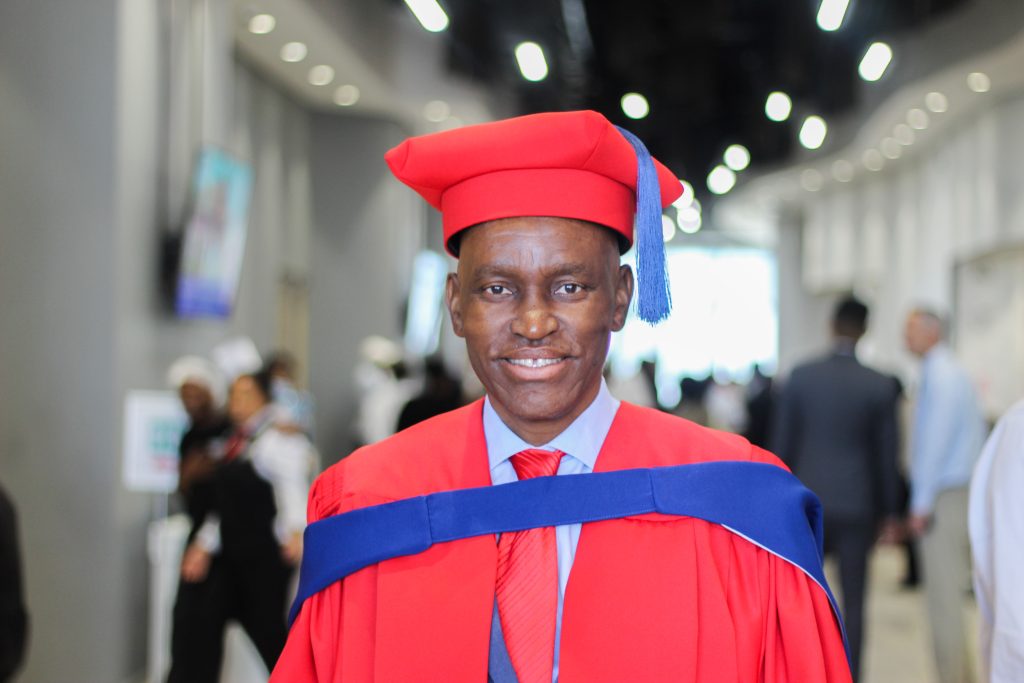
Mtshali’s thesis, A System-based IoT Framework for Enhancing Operational Efficiency in a Traditional South African Sorghum Brewery Company, addressed the growing interest in automation and digitalisation within traditional beverage businesses.
IoT involves connected devices and systems that collect and exchange data. His study examined the factors that a traditional sorghum brewery should consider when adopting and using these technologies.
He conducted in-depth interviews with employees of the brewery and analysed relevant academic literature. Drawing on these sources, he developed a system-based framework intended to guide management in adopting IoT to support operational efficiency.
The framework also considers the business’s need to respond to customers’ changing demands and preferences. Its contribution lies in providing a structured basis for considering technology adoption within the context of a traditional brewing operation.
Bringing experience across industries
Dr Mtshali began his career in 1998 after completing his first degree. An early position as a clerical officer at a major bank preceded his move into human resources in 2003.
His career has since taken him across manufacturing, gaming, hospitality and retail. Since 2025, he has worked as a senior human resources manager at a steel manufacturing company in Gauteng.
While his professional background centres on human resources, his doctoral research examined a broader organisational challenge: how a business can approach the adoption of technology to improve its operations.
The discipline behind the doctorate
After completing his master’s degree in 2015, Dr Mtshali decided to pursue a doctorate. He registered at The DaVinci Institute in March 2023 and completed his studies in September 2026.
He initially hoped to finish within three years. The process took approximately six months longer, requiring him to work through obstacles and maintain his commitment.
“The journey has been tough,” he says.
Allocating enough time to his studies was one of the greatest challenges. The programme demanded sustained attention and effort, alongside his professional responsibilities.
Equally demanding was learning to receive feedback from supervisors and examiners, especially when their assessments differed from what he had expected.
Turning feedback into progress
Dr Mtshali’s reflections reveal how important it became to approach criticism constructively. Feedback was not always easy to receive, but applying it helped him improve his research and progress towards completion.
That willingness to revise his work became part of the learning experience. It required him to remain open to guidance and continue working even when the next step involved returning to an earlier stage.
Looking back, he describes the journey as difficult but rewarding. The challenges did not disappear, but he found ways to work through them.
A practical message for future students
For those considering doctoral study, Dr Mtshali’s experience offers an honest account of the commitment involved. Setting a completion goal matters, but so does making time for the work, responding to feedback and adapting when progress takes longer than expected.
His doctorate brought those lessons together with a practical research contribution: a framework intended to support IoT adoption in a traditional South African sorghum brewery.
Through that work, he explored how an established industry could consider new technologies as it plans for its future.

Leave a Reply