How much one earns is dependent on several factors including experience, qualifications, your field of work, and even where you live.
A major factor in earning potential is linked to qualifications and experience. Experience coupled with advanced qualifications appears to be the biggest factor in earning more. Education in South Africa is a costly investment, but an investment, nonetheless. To determine whether a new qualification will positively impact on your earnings, one needs to investigate the Return on Investments (ROI).
An IOL article researched salary ranges and education and found the following:
“When it comes to the impact of education levels on salaries, SalaryExplorer says a study conducted in South Africa, comparing the salaries of professionals with different levels of college degrees who held similar positions in various industries, showed that:
Individuals with a certificate or diploma earned an average of 17% more than those who only completed high school
Those who obtained a Bachelor’s Degree earned 24% more than their counterparts with a certificate or diploma
Professionals with a Master’s Degree earned 29% more than those with a Bachelor’s Degree
Those who held a PhD earned an average of 23% more than those with a Master’s Degree while performing the same job
It further states that many individuals pursue advanced education as a means of transitioning to higher-paying positions, and the statistics indicate that this is an effective strategy. On average, individuals who change jobs after earning a higher degree receive a salary increase of about 10% more than the typical annual raise.”
So, if you are ready to level up your education to reap the rewards on your salary, view our accredited programmes here.
At The DaVinci Institute, we believe in co-creating transformative realities through visionary leadership. We proudly congratulate our Legal Representative, Satish Roopa, on his recent appointment as a Sol Plaatje University Council Member. With a wealth of experience spanning over 30 years across governance, legal consulting, and executive leadership, Satish’s remarkable career reflects his deep commitment to driving meaningful change in both the public and private sectors.
Satish holds multiple prestigious credentials, including a Bachelor of Law (B.IURIS) and a Master of Philosophy (MPhil) and specialised training in consumer protection and remuneration frameworks. His diverse experience includes leadership roles such as Chairperson of the Petroleum Agency of South Africa, a Commissioner for the Independent Commission for the Remuneration of Public Office Bearers, and advisory roles for numerous committees and organizations, including the Northern Cape Provincial Treasury and Zip Zap Circus.
Satish’s leadership journey is a testament to his dedication to mastering the art of transformation, much like the ethos we embrace at DaVinci. His commitment to ethical leadership, governance, and societal impact inspires us all. His role at Sol Plaatje University offers a unique opportunity to shape sustainable ecosystems of knowledge and innovation in higher education, furthering the co-creation of just and dynamic societies.
We celebrate this milestone and look forward to witnessing the remarkable contributions Satish will continue to make as he influences the next generation of leaders in South Africa. At DaVinci, we are proud to have leaders like him who embody our vision of harnessing creativity, leadership, and responsibility for the betterment of society.
Congratulations, Satish Roopa! Together, we continue to lead with purpose, integrity, and a commitment to sustainable transformation.
Higher education in South Africa is characterised by a diverse landscape, encompassing both public and private institutions. These institutions play a crucial role in shaping the academic and professional futures of students. Whilst both public and private higher education institutes (HEI) share the goal of providing quality education, they differ in several key aspects, ranging from funding sources to delivery mode.
All public and private higher education institutions are registered with the same governing bodies that allow for accredited programmes to be offered. DaVinci Business School is registered with the Department of Higher Education and Training (DHET), with the Council on Higher Education (CHE) and currently has seven accredited programmes registered with the South African Qualifications Authority (SAQA):
Higher Certificate in Management of Technology and Innovation (NQF 5) Bachelor of Commerce in Business Management (NQF 7)
Postgraduate Diploma in Business Leadership (NQF 8)
Master of Business Leadership (NQF 9)
Master of Management in Technology and Innovation (NQF 9)
Doctor of Business Leadership (NQF 10)
Doctor of Management in Technology and Innovation (NQF 10)
Let’s look at the key differences between public and private institutions:
Public institutions are funded by the government, which means that their fees may be lower than those of private institutions, where no government funding is available. As a result, public institutions appear to be more affordable, however, public institutions often have hidden costs.
Very high textbook fees that are not reflected in the primary costs of the qualification. Textbooks can be as much as 50% of the total costs of studies;
Outdated study material that has not been updated regularly and that is dependent on text-book lecturing;
High drop-out rates;
You can only enrol once or twice a year when it is convenient for the university system to accept you;
There is no flexibility in your work, learning pattern or the fact that you may have to earn an income in the process of studying.
Private institutions, such as DaVinci Business School, offer affordable programmes from higher certificate up to doctorate level. There are no additional textbook fees, as a prescribed reading list is uploaded to the Learning Management System per programme. DaVinci programmes are aligned with industry requirements and sessions are facilitated by experts currently working in the specific field. This means that you will learn from subject matter experts with many years of industry experience.
DaVinci Business School offers smaller classes, with remote facilitation and evening sessions, so you can really get to know your fellow students and your facilitator. A dedicated Programme Convener will be in contact with you regularly and will flag any concerns with the Student Support Team (SST). The SST will arrange a session with you to discuss any concerns and provide insights into how to overcome these, to ensure your success. So, whilst you may pay a bit more for a programme at DaVinci Business School, the possibility that you will graduate is significantly higher.
DaVinci Business School acknowledges that education is an investment and that many people are not able to study full-time. DaVinci Business School offers flexibility with fully remote evening facilitation sessions across our range of programmes. And with five intakes per year, you can start your next qualification at any time.
Now that you have greater insights into the benefits of studying at DaVinci Business School, click here to find out more about our accredited programmes
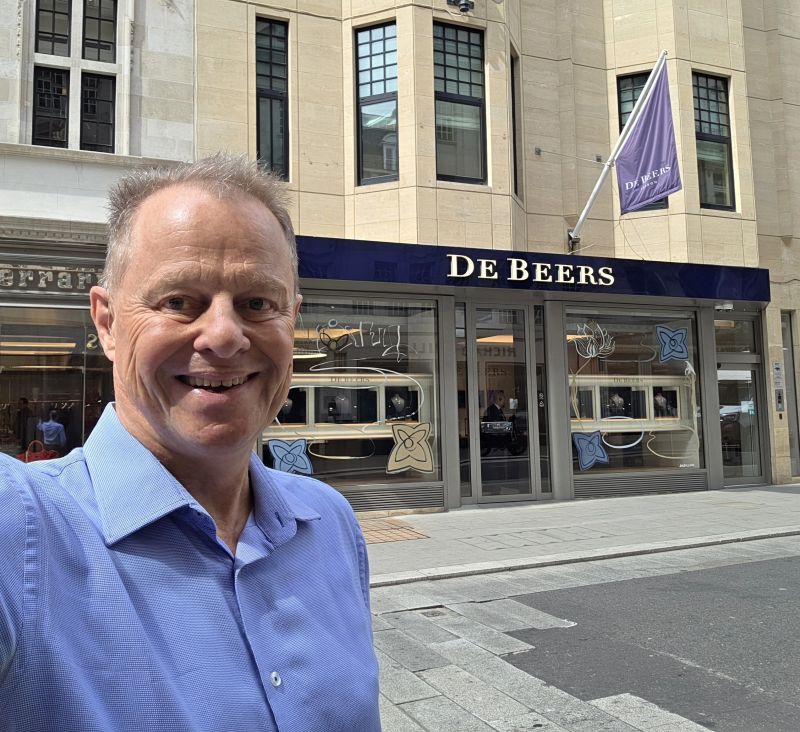
At The DaVinci Institute, we proudly celebrate visionary leaders like James AH Campbell, one of our esteemed doctoral candidates. His professional path, marked by transformation, leadership, and relentless learning, epitomises what it means to co-create sustainable, innovative futures. As a doctoral candidate at DaVinci, James is using his wealth of experience in the diamond industry to shape not only his career but the very future of African mining and entrepreneurship.
A Career Defined by Strategic Transformation
James’ journey is marked by two key turning points. The first came at De Beers, where after earning his MBA with distinction (a feat accomplished “on the quiet”), he transitioned from a technical career to a business and strategic management role, even becoming the first Personal Assistant to Nicky Oppenheimer, De Beers’ Executive Chairman.
This leap was pivotal, shaping his approach to leadership and decision-making. The second transformation came when James stepped out of the corporate world into entrepreneurship, running listed junior mining companies under the mentorship of serial entrepreneur Dr John Teeling.
James often reflects on how his time at De Beers gave him outstanding technical training, but it was his entrepreneurial ventures that truly taught him how to run businesses. His current role as Managing Director of Botswana Diamonds Plc reflects the agility and resilience that define his leadership. Now, as a doctoral candidate at DaVinci, James continues to push boundaries, driven by a passion to leave a lasting impact on the industry.
Lifelong Learning: From De Beers to DaVinci
For James, self-development has always been at the heart of his career. At De Beers, he participated in numerous management and technical training programs, and his MBA thesis on assessing risk in mining projects won top honours. Remarkably, he completed this while building a diamond mine in rural Botswana. Today, with the demands of running a junior mining company, James doesn’t have the luxury of frequent training programs. Instead, he stays relevant by publishing papers and presenting at major conferences. Recently, he has shared his insights at institutions like the University of the Witwatersrand and the University of KwaZulu-Natal.
James’ pursuit of further education through his doctoral studies at DaVinci is motivated by a desire to consolidate his decades of experience into a research project that will benefit future leaders in the mining industry. His passion for creating a legacy that stimulates much-needed activity in African mining aligns perfectly with DaVinci’s commitment to co-creating sustainable ecosystems. The school’s unique Mode 2 learning approach, which focuses on applied, real-world research, was a perfect fit for James’ vision.
Balancing Work, Life, and Doctoral Studies
Balancing the demands of his professional life with the rigours of doctoral research is no easy task, but James approaches it with the same strategic mindset that has defined his career. He specifically chose this time to pursue his doctorate as his workload has lightened, owing to a structural shift in the diamond industry, and his children have grown and left home. This allows him to dedicate the focus and energy required to make the most of his doctoral journey at DaVinci. His success in managing this balance underscores the kind of discipline, planning, and support system that DaVinci encourages in all its students.
A Vision for the Future: Shaping the African Mining Industry
James is not just pursuing a doctoral degree, he’s on a mission to leave a lasting legacy for future leaders in the African mining sector. His research at DaVinci is aimed at creating a practical framework that invigorates mining exploration in Africa, particularly fostering local ownership and meeting the African Union’s goals. His work has already attracted the interest of influential stakeholders, including the Minister of Mines of Botswana and the Minerals Council of South Africa.
Just as his MBA thesis on risk assessment provided value to the mining industry for years, James intends for his doctoral thesis to have both academic and practical significance. This commitment to producing work that makes a real-world impact is at the core of DaVinci’s educational philosophy, and we are honoured to have James among our doctoral students as he embarks on this important journey.
Advice from a DaVinci Doctoral Candidate: Own Your Growth
James’ advice to fellow executives and professionals considering further education is simple yet profound: “Take ownership of your own training, education, and development.” He believes that no one will care about your growth as much as you do, and learning is a lifelong journey that requires continuous commitment. As a doctoral student at DaVinci, James exemplifies this ethos, embracing learning not just as a means to advance his career but as a way to enrich his life and create meaningful change in his industry.
James AH Campbell’s journey as a doctoral candidate at The DaVinci Institute is one of transformation, resilience, and visionary leadership. We are proud to support leaders like James, who embody DaVinci’s mission to co-create realities that influence industries and societies. His story is a reflection of what makes DaVinci doctoral students stand out—they’re not just preparing for the future; they’re shaping it.
Twenty years ago, being a marketer often meant a lifelong career without ever thinking about the need to upskill. If you were an accountant, you were an accountant for life. You learned your trade, got better and better at it, got promoted, and enjoyed a growing salary and perks. But times are changing. As machine learning and artificial intelligence progress, the work we humans have done in some shape or form over the past century is morphing or disappearing.
So, you may be a marketer today, but five or 10 years from now, are you sure your job will be the same as it is today? Very few people can answer yes with great confidence.
It is a little scary, but it is also an amazing opportunity to have a nimble and varied career. One which should be low on mundane repetition and high on growth, fulfillment, and innovation.
At The DaVinci Institute, our view is that every person of employment age needs to develop a flexible mindset and a great career strategy. They need to realise that skilling and reskilling themselves is the very best way to remain someone who is an asset to the world of work. Here is a four-pronged strategy to help you remain an employable asset in the face of the Fifth Industrial Revolution.
Be Open-Minded
Every human on earth right now is being asked a lot. Suddenly, we’re required to be quite amenable to working with and talking to robots. It can be tempting to shut down and long for the ‘good old days’ when things were a lot simpler. However, remaining a highly valuable asset in the workplace will require you to be open-minded and able to accept fast-paced change. The sooner you realise that things are changing and embrace this change, the sooner you can figure out how you can fit yourself into the bold new world!
Be Curious
Stay curious about how the world and your industry are ‘pivoting’ due to technological advances. Be the expert on new trends, opportunities, and skills. This will allow you to: a) Add real value to your organisation with depth of knowledge b) Plan how you need to adapt to stay relevant c) Keep you fresh and interested in your role
Be Bold
Building on point two, being bold and courageous in your workplace will be a very powerful tool. This is about knowing how things are changing in the world around you – it is about boldly planning how you can bring those changes into your environment and how you can make a big impact. So put together that innovation strategy and march into the CEO’s office with it! Be that person, the one that helps fundamentally shift an organisation into the future – and helps keep it there.
Be Studious
Lifelong learning is perhaps the most critical part of your career strategy. It’s about regularly immersing yourself in study – whether through long or short courses, online or physical study – in order to constantly enhance your knowledge and skills. Today, we are more fortunate than ever before because online learning allows people to study in their own time and in their own homes. It is also delivered in fun, modern, easy-to digest bite sizes.
There are some excellent courses available to help people build the skills they need to stay adaptable, lead through change skilfully, and develop a mindset of growth, change, and success.
Leadership Rooted in Impact and Empowerment – Dr Kwanele Ngwenya
With over 25 years of experience in the banking sector, including leadership roles at Nedbank, FNB, and NBS Bank, Dr Kwanele Ngwenya continues to pave the way for innovation and empowerment. Under his leadership, NBS Bank’s Bank Pafupi agent networks have transformed access to financial services for marginalised communities, profoundly impacting Malawi’s socio-economic landscape.
Dr Ngwenya’s commitment to co-creating sustainable societies also extends to his academic journey. His doctoral research at DaVinci explored groundbreaking models for financial inclusion, offering strategies that continue to shape policy and practice in Africa.
So, you’re thinking of studying remotely, and although you know the advantages of studying online, you are concerned that learning online may be a little lonely. Here’s how to make friends – and keep them long after you graduate.
GET TO KNOW YOUR CLASSMATES
As you’re based offsite, you won’t see your classmates when attending a
facilitation session. Facilitators will encourage students to introduce themselves
via an online discussion forum, the comments in a notice board or via video.
Additionally, start your own discussion thread, introducing yourself to the other
students and asking them to do the same.
PARTICIPATE IN DISCUSSIONS
At DaVinci Business School, our Programme Conveners (PC) offer support digitally
via email, SMS, instant chat and discussion forums. You can also set up an
appointment for real-time interaction via telephonic or video. Through
webinars, your facilitator may provide you with an opportunity to interact with
other classmates who are facing similar issues with the coursework, helping you to engage fully with the material as well as connect with your peers on a social
level.
CONNECT ON SOCIAL MEDIA
The key to social interaction and friendship is connection. Even if your classroom
is digital, there are still many ways to connect with your classmates. As well as
discussion boards and webinars, consider connecting with classmates via social
media platforms or Zoom/ Skype sessions. Invite people for ‘virtual coffee’ to
really get to know each other.
ORGANISE MEET-UPS
Although cliché, it’s true that “there is strength in numbers” and “no man is an
island”. Once you’ve introduced yourself to your classmates and exchanged
contact details, try organising an in-person group study session. From there, you
can find common areas of interest and organise activities unrelated to your
studies.
DaVinci Business School offers online accredited programmes from higher
certificate to doctorate level. With electives aligned with industry needs and facilitation sessions presented by industry experts, DaVinci Business School’s programmes will give you the knowledge, insights and practical applicability to succeed in your career. Click here for the full list of our accredited programmes.
At The DaVinci Institute, we believe that the future is shaped by those who dare to think differently, innovate boldly, and lead with purpose. Our 2023 Research Report reflects this belief—a celebration of the remarkable research efforts driving real change in business, society, and leadership.
It’s more than just a collection of academic achievements; it’s a testament to our commitment to co-creating realities that foster sustainable, transformative societies.
Within this report, you’ll discover how our scholars are pushing boundaries, solving complex challenges, and crafting innovative solutions that resonate locally and globally. Whether tackling financial inclusion, reimagining infrastructure development, or contributing to the national transformation agenda, the work featured here embodies the visionary leadership and lifelong learning we champion at DaVinci.
Join us as we embark on a journey of discovery, mastery, and impact—one that dares to dream and delivers solutions that matter.
Transforming Knowledge into Impact
The research featured in this report reflects The DaVinci Institute’s strategic mission to grow agile, aligned, and engaged leaders. Through Mode 2 knowledge production, our scholars collaborate across disciplines, delivering actionable insights that drive social and economic impact. From enhancing financial inclusion to improving infrastructure project performance, the research outputs in this report address the critical issues facing businesses and communities today.
Building Sustainable and Inclusive Ecosystems
At the heart of DaVinci’s research is a focus on co-creating innovative ecosystems. Our ongoing work to establish the Societal Regenerative Research Centre (SRRC) is a testament to our commitment to addressing societal needs through evidence-based and transdisciplinary research.
This centre will be pivotal in fostering sustainable development, holistic education, and societal regeneration in South Africa and beyond.
Visionary Leadership for a Better Future
The DaVinci Institute’s research agenda is driven by the principles of visionary leadership, where scholars are empowered to tackle complex global challenges with creativity, ethical decision-making, and a holistic understanding of systems. Whether it’s developing new technologies, improving business leadership practices, or contributing to the national transformation agenda, the research in this report demonstrates our unwavering commitment to making a lasting impact.
Explore the 2023 Research Report
We invite you to explore The DaVinci Institute’s Research Report and discover the diverse and innovative research projects shaping the future of business, society, and leadership. Through these projects, we continue to nurture lifelong learning, foster transformational leadership, and empower our community to co-create sustainable realities.
Apply to Universities South Africa (USAf) for a matriculation exemption certificate if your school leaving results don’t meet the minimum entry requirements for our Higher Certificate or Bachelor of Commerce programmes.
For assistance with your USAF application, please fill out the MIE 30 form and certify your supporting documents with the Public Notary Law Office. The public notary office will certify your ID copy and matriculation certificate.
Applicants in the Johannesburg area can visit our campus in Modderfontein to
certify their application documents with the Registry office. USAF only accepts
certification by the Da Vinci Registry Office or Public Notary Office.
The Matriculation board charges a one-time application fee, which must
be submitted with the application documents to the USAF office. Payments can be made directly to the USAF account below:
USAF banking details:
Bank: ABSA
Account name: Matriculation Board
Account number: 4059036917
Branch: Sunnyside
Branch Code: 630345
Swift code: ABSA ZA JJ
Reference: Name and Surname
*Kindly note that this is an external process, and is not managed by DaVinci Business School, and as such DaVinci Business School cannot accept responsibility for any outcomes or recommendations.
There are two common features in the use of the term ideology. First, it usually designates a system of beliefs held by a group of people. Second, it typically implies that these beliefs should be assessed, especially by the practical effects or social interests they tend to promote.
The term ideology was first coined during the French Revolution by Destutt de Tracy. Ideology, therefore, is the name de Tracy gave to a method proposed as universally applicable, aimed at transforming the mundane into knowledge.
The first ideology I wish to highlight is conservatism. Proponents of conservatism have a tendency to use and enjoy what is available rather than seek out something else or something new.
Or, as Michael Oakeshott would say, “to delight in what is present rather than what may be.”
Now, I am interested in how being conservative could impact innovation or the development of an innovation management system.
Being conservative implies that you will find small changes more tolerable than large and sudden ones and that you will value continuity. In general, you will accommodate changes that do not offend expectations.
Though innovation assumes a certain loss and possible gain, as a conservative, you would consequently prefer small and limited innovations as opposed to large, open, and breakthrough innovations.
In Oakeshott’s understanding, the disposition to be conservative means being warm and positive in terms of enjoyment while being correspondingly critical with respect to innovation.
From a conservative ideology, there is no magic in co-creating or being lost and bewildered by the multiple prompts from reality. Rather, it involves adopting a disposition to enjoy rather than exploit.
The point I want to make is that we, as social actors within the innovation management system, need to acknowledge the unintended and, in some instances, intended consequences of our conservative ideological disposition.
In my next reflection, I look forward to pondering liberalism as a second ideology that could impact the development of our South African innovation management system.
The above reflections were adapted from a LinkedIn post by Professor Benjamin Anderson in September 2024. The views and opinions expressed in this opinion piece are those of the writer and are made in a personal capacity. These views do not necessarily reflect the views or positions of DaVinci Business School.