In a higher education landscape defined by complexity, rapid change, and rising societal expectations, the ability to conduct meaningful research is no longer optional but essential. In response, South African Private Higher Education (SAPHE) organised a second research capacity-building workshop, facilitated by The DaVinci Institute’s Executive Dean, Dr Gavin Isaacs, to strengthen the capabilities of its academic and professional community.
The workshop brought together participants from institutions such as Eduvos, Milpark Education, IMM Graduate School, TSIBA, and the Independent Institute of Education (IIE), among others, reflecting a diverse and growing ecosystem of postgraduate learning in South Africa.
From Qualification to Contribution
A central theme that emerged was the need to move beyond viewing postgraduate study as a qualification, and instead understand it as a platform for contribution. Participants reflected on their motivations for pursuing advanced study, ranging from career advancement and specialisation to personal growth and intellectual curiosity.
However, the workshop challenged a more fundamental question: What does it mean to produce research that matters?
Through facilitated engagements, SAPHE members explored how research must extend beyond compliance and completion. It must engage real-world problems, anticipate future relevance, and contribute to knowledge that can influence practice, policy, and society.
Developing the Research Mindset
A key focus of the workshop was the transition from being a student to becoming a researcher. This shift requires more than technical knowledge. It demands a disciplined approach to thinking, a commitment to precision, and the ability to interrogate assumptions.
Participants were encouraged to reframe their role, not as recipients of knowledge, but as active contributors. This included strengthening their ability to:
- Clearly define and articulate research problems
- Engage critically with existing literature
- Produce structured, coherent, and academically rigorous writing
- Reflect on the broader implications of their findings
Importantly, the workshop emphasised that research is not a linear process. It involves iteration, uncertainty, and continuous refinement. Learning to navigate this complexity is part of developing research maturity.
Collective Engagement
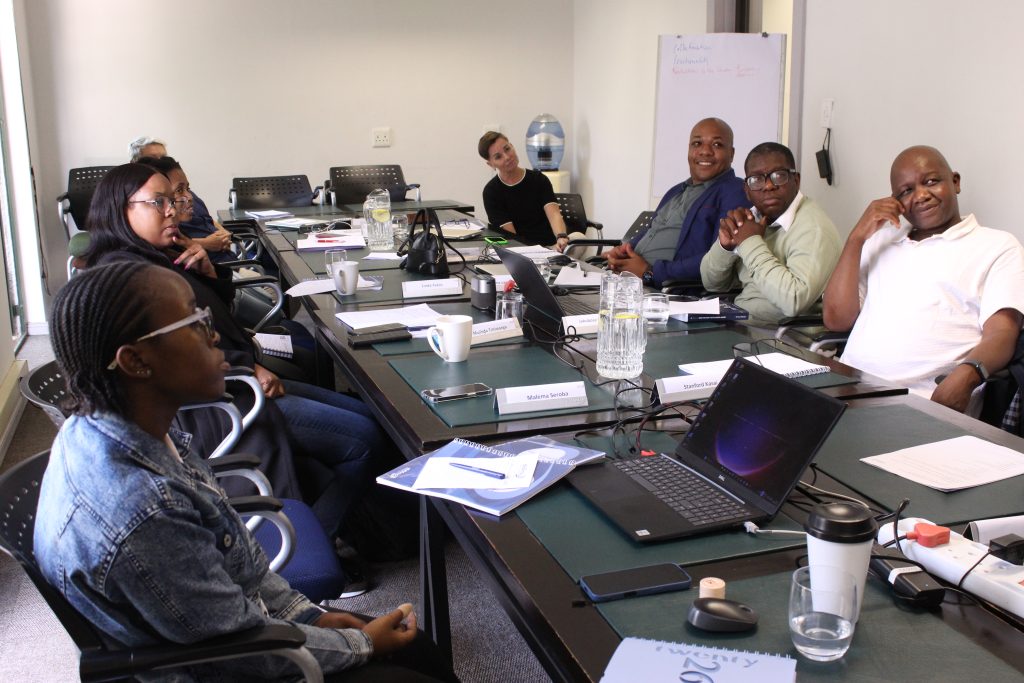
One of the distinguishing features of the session was its conversational format. SAPHE members were not passive participants; they actively shared experiences, challenges, and insights from their own academic journeys.
This collective engagement surfaced several important realities: many researchers experience imposter syndrome, particularly at advanced levels of study; the research process often takes longer and is more demanding than anticipated; and early engagement with peers, mentors, and industry experts can significantly strengthen outcomes.
By creating a space for open engagement, the workshop reinforced the idea that research development is not an isolated pursuit. It is strengthened through collaboration, reflection, and shared learning.
Aligning Method with Purpose
Another critical discussion point, centred on research methodology. Participants examined the tendency to favour familiar approaches, whether qualitative, quantitative, or mixed methods.
The workshop challenged this inclination, reinforcing a core principle: the research problem must determine the methodology, not the researcher’s preference.
For SAPHE members, this was a call to expand their methodological agility, ensuring that their research design is driven by relevance and rigour rather than comfort.
Strengthening the Role of Supervision
The workshop also highlighted the importance of effective supervision in shaping research outcomes. Supervisors play a pivotal role not only in guiding the technical aspects of research but also in supporting the intellectual and professional development of students.
Participants reflected on the value of:
- Clear and consistent feedback
- Accessibility and responsiveness
- Constructive challenge that strengthens thinking
At the same time, there was recognition that students themselves carry responsibility for driving their research forward, engaging proactively, and embracing the learning process.
Advancing the SAPHE Community
By bringing together members from across institutions, the workshop demonstrated the strength of the SAPHE network as a platform for capacity building. The diversity of perspectives enriched the conversation, enabling participants to learn from experiences beyond their immediate contexts.
For The DaVinci Institute, this initiative reflects a broader commitment to developing leaders who are not only academically qualified but also capable of navigating complexity, generating insight, and creating impact.
Towards Research That Matters
As higher education continues to evolve, the demand for relevant, high-quality research will only intensify. Workshops such as this play a critical role in preparing academics and professionals to meet that demand.
For SAPHE members who participated, the experience was more than a training session. It was a reminder that research is a journey of growth, discipline, and contribution.
The goal is not simply to complete a degree, but to produce work that matters, work that informs, influences, and ultimately contributes to the advancement of society.
Leave a Reply