Category: Opinion Piece

  • Understanding The True Role Of A PhD Supervisor

    Understanding The True Role Of A PhD Supervisor

    A common misconception among doctoral students is that supervisors exist to provide answers. In reality, they are not there to solve every problem or make decisions for you; they are there to guide you in developing the skills to find those answers yourself. Understanding this distinction is crucial for anyone navigating a doctoral journey.

    Supervisors Are Not Search Engines

    Firstly, supervisors are not search engines. While search engines can deliver millions of results in seconds, a supervisor’s response often requires deeper thinking and reflection. For example, if you email, “Which theory should I use?” your supervisor might reply, “That depends on how you frame your research question.” This response encourages you to do the intellectual heavy lifting yourself. If supervisors simply provided answers, you would miss the opportunity to learn and grow as a researcher.

    Supervisors Will Not Hold Your Hand

    Secondly, supervisors will not hold your hand. They are not project managers or personal assistants; they are mentors and challengers. Deadlines, weekly reports, and late submissions are your responsibility. This freedom can feel intimidating at first, but it teaches independence; the hidden curriculum of your doctoral study. Your doctorate is not school. No one chases you, and no one manages your progress. The point is to learn to drive your own research journey.

    Supervisors Train You to Handle Ambiguity

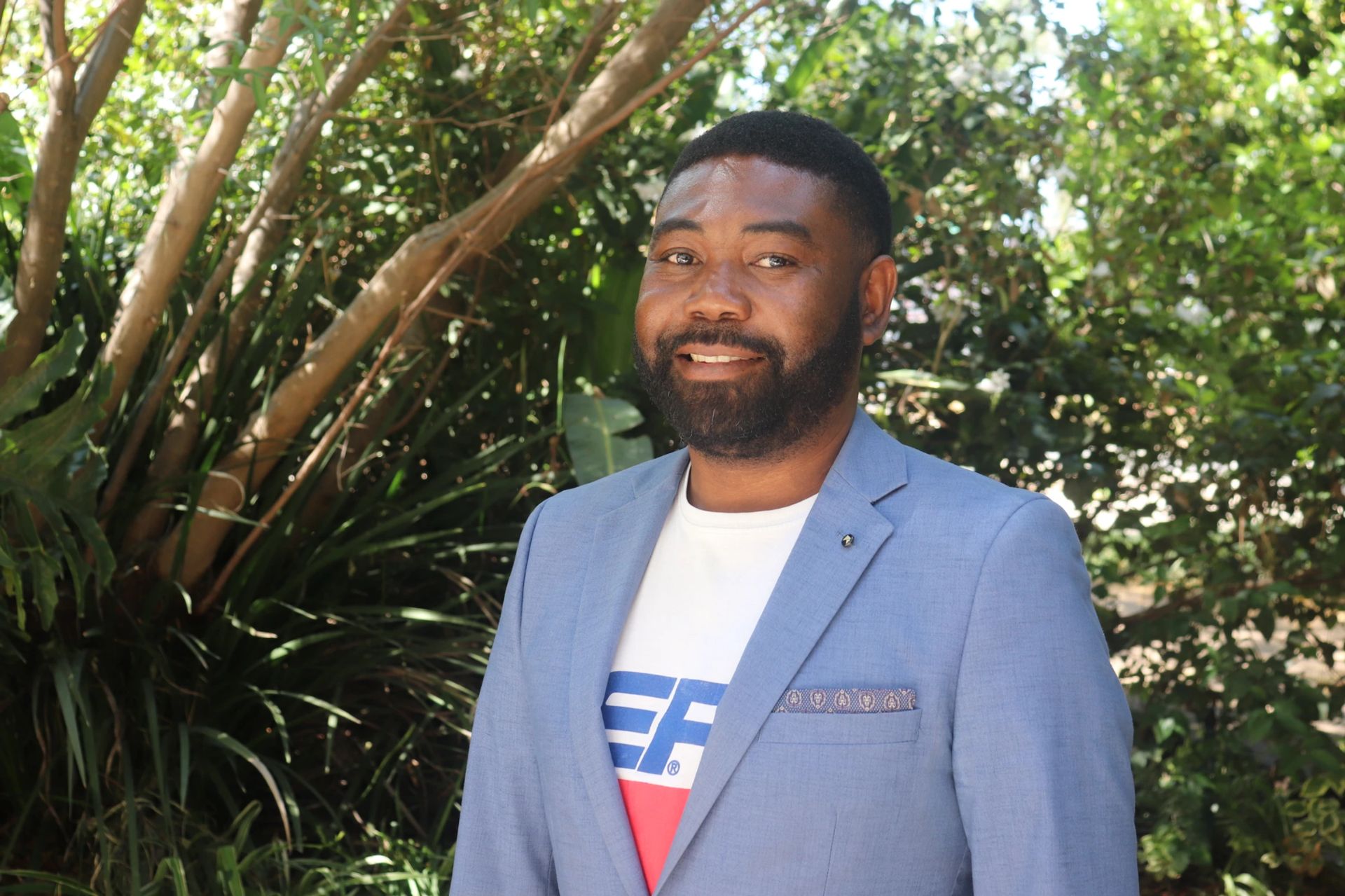
    Dr. Raymond Toga's Guide to Thriving in Your Doctoral Studies
    Dr. Raymond Toga’s Guide to Thriving in Your Doctoral Studies

    Thirdly, supervisors train you to handle ambiguity. The doctoral process often exists in grey areas, and conflicting advice is a normal part of research. Receiving feedback that does not always align forces you to sift through information, adapt, and make decisions independently. The ultimate goal is not to gain approval at every step but to develop the confidence to defend your own judgement; this is the transition from student to researcher.

    Supervisors Reward Initiative, Not Obedience

    Fourth, supervisors reward initiative, not obedience. They are not looking for students who follow instructions blindly but for those who engage critically with their research. For instance, submitting a lengthy draft without context may result in silence, whereas presenting your ideas and asking, “Which direction is stronger?” often yields meaningful feedback. Shifting your mindset from “What do you want me to do?” to “Here’s my direction; what do you think?” transforms your doctoral experience.

    Supervisors Are Not Therapists

    Finally, supervisors are not therapists. While academic support is part of their role, emotional challenges such as burnout, stress, or personal crises require other sources of support, such as peers, mentors, or professionals. Supervisors reflect your ideas back to you, refining them until they make sense. They are not there to solve personal problems, but to guide your academic growth.

    In conclusion, if you feel stuck, confused, or challenged by vague feedback, you are not failing; you are growing as a doctoral scholar. When you embrace the role of your supervisor as a collaborator rather than a source of direct answers, you can navigate the doctoral journey more effectively. This mindset transforms “supervisor confusion” into supervisor collaboration, bringing you closer to the day when someone calls you Doctor.

    This article was written by Dr Raymond Toga, an academic and Doctoral Learning Coordinator at The DaVinci Institute.

  • Knowledge Generation and Future Thinking

    Knowledge Generation and Future Thinking

    As institutions of higher learning, the world has consulted, taken counsel and entrusted the voices emerging from within, for thousands of years. I am not sure whether it was because of the knowledge generated from within or because of the futurist thinking inclinations of such institutions of higher learning. Or a blend of both.

    What I do sense is the emergence of a plethora of academic voices saying same, regurgitating what the “master’s” voice has declared to be truth and clearly not attempting to rock the boat. Regenerative, in its intent, but without substance or clear direction to follow suite.

    We are, however, living in a dynamic environment (not necessarily because of co-creative instincts and such related powers).  This necessitates a proactive and informed approach to understanding how knowledge is created and how individuals and organisations can anticipate and prepare for future possibilities – a la Bruno and his views on the world being a heliocentric reality.

    The ability to generate new knowledge and to think strategically about the future is becoming increasingly critical for navigating this landscape where more individuals are intentionally being drawn into becoming part of a network of knowledge workers who knows what knowledge is.  They may, however, not have similar influence on thinking about the unknown possibilities of the future.

    So, is knowledge generation still about creating new understanding or have we farmed this opportunity out to current day LLMs, who through AI models are able to analyse large amounts of data to find patterns and develop new insights – systems acting as skilled librarians, efficiently surfacing precise and relevant information needed by users from vast libraries of data.

    We are told that by automating the analysis of extensive information across diverse topics and domains, AI models learn to make connections between concepts and facts, ultimately transforming raw data into synthesised content such as summaries, explanations, and conversational responses – can you spot Gemini in this description?

    Over thousands of years, humans have also processed research results, experiments, and collaborations, turning experiences into formal knowledge.

    A human-centric perspective emphasises that individuals too, can generate knowledge through observation, research, and experimentation, leading to a better understanding of themselves and their environment. This process involves gaining hands-on skills and informal knowledge through collaboration, communication, and observation.

    Knowledge generation, therefore, can be viewed as a public good, continuously improvable and essential for addressing complex problems, contributing to the world’s ability to manage, maintain, and create knowledge, thereby providing a competitive advantage.

    Across these diverse perspectives, a common thread seems to emerge, knowledge generation involves the transformation of raw data or an existing understanding, into new, valuable insights.

    Whether through the computational power of AI, the experiential learning of humans, or the systematic inquiry of academic research, the fundamental aim is to expand the boundaries of what is known and understood.

    So where does this leave future thinking?

    Future thinking as a multi-faceted and creative process, assumes the exploration of potential future scenarios rather than attempting to predict a single, predetermined outcome.  It embraces divergent thinking, seeking multiple possible answers and acknowledging the inherent uncertainty of the future. This mindset contrasts with analytical thinking, which employs convergent thinking to find the right answer and reduce uncertainty.

    Future thinking also operates within the understanding that there are a range of possible futures, and that the future can be actively shaped by the decisions and actions taken in the present.

    Knowledge generation and future thinking therefore represents two fundamental constructs that are essential for navigating the complexities of our dynamic world.

    Knowledge generation encompasses the processes through which new understanding and insights are created, whether through human intellect, artificial intelligence, or systematic inquiry.

    Future thinking involves a creative and exploratory approach to anticipating and preparing for a range of potential futures. While distinct in their focus, these two concepts are deeply interconnected.

    In my view, cultivating both robust knowledge generation capabilities and strategic future thinking skills, is crucial for individuals and organisations seeking to thrive in an environment characterised by the emergence of an ever-increasing number of enlightened knowledge workers. Individuals who desire intentionally and pro-actively, to shape an informed and resilient future.

  • Equipping Future Leaders Through Business Process Simulation

    Equipping Future Leaders Through Business Process Simulation

    By Dr Sam A. F. February, Executive: Business Development and Strategic Support

    These were some of the students who took part in the Business Process Management Simulation class. Their energy, participation, and willingness to engage critically with the learning material made the programme a valuable and collaborative experience.

    Dr Sam February
    Dr Sam February- Executive : Business Development and Strategic Support

    In March 2024, I had the opportunity to engage with the 4th semester MBA students from ESB Business School at Reutlingen University, where I facilitated the Business Process Management Simulation (BPMS) module. This module formed part of ESB’s formal MBA curriculum and was delivered entirely online to a part-time cohort of professionals. These students brought with them industry experience from across various industries, creating a valuable environment for applied, work-integrated learning. The BPMS module aimed to strengthen students’ understanding of how business processes operate within complex organisations and how these processes can be strategically analysed, modelled, and improved.

    The learning experience was built around practical engagement. Across the week, students explored the fundamentals of business process design, simulation techniques, and performance measurement. Sessions addressed real-world concerns, such as how to identify bottlenecks in production, use automation to streamline workflows, and align processes with long-term sustainability goals. One of the core discussions throughout the module centred on how businesses can integrate environmental, social, and governance (ESG) considerations into operational thinking, particularly when aligning to sustainability targets and compliance standards. We also examined the role of artificial intelligence in optimising and informing process-based decisions, particularly in data-rich, resource-intensive industries.

    A major part of the module involved a group-based case simulation. Students were given a scenario focused on EcoTech Manufacturing, a fictional company facing operational inefficiencies and sustainability pressures. Each group was tasked with analysing the existing process framework, identifying improvement opportunities, and delivering a redesign that considered ESG alignment and the possible role of AI. Students were also required to present an implementation strategy with clear performance metrics and decision-making frameworks. The presentations showcased thoughtful, integrated problem-solving and reflected the diversity of thinking within the cohort.

    In addition to the group project, students submitted an individual assignment that allowed them to apply the principles of business process management to their own organisational contexts. They were asked to reflect on how AI tools, ESG imperatives, and sustainability considerations could inform the rethinking of business processes within their professional environments. This assignment reinforced the importance of connecting theory with real-world complexity, and many students demonstrated deep insight into how process transformation links directly to ethical leadership, operational performance, and long-term strategy.

    The part-time structure of the ESB MBA programme contributed significantly to the depth of engagement throughout the module. Students, who are simultaneously active in professional roles, brought current workplace challenges and live organisational insights into the learning environment. This created a continuous exchange between academic content and real-world application. As students explored frameworks and tools during the module, they were able to reflect on their immediate relevance, enhancing both individual and group learning. The contributions from across industries enriched the discussion and demonstrated a high level of professional awareness and collaborative learning throughout the sessions.

    The Business Process Management Simulation module not only provided students with technical understanding of process optimisation but also encouraged ethical and sustainable leadership. Through collaborative case work, structured feedback, and applied reflection, students developed practical capabilities in process governance, innovation integration, and technology alignment.

    The Da Vinci Institute values the opportunity to contribute to the ESB MBA programme and looks forward to further engagements that promote workplace-aligned learning and strategic thinking across borders.