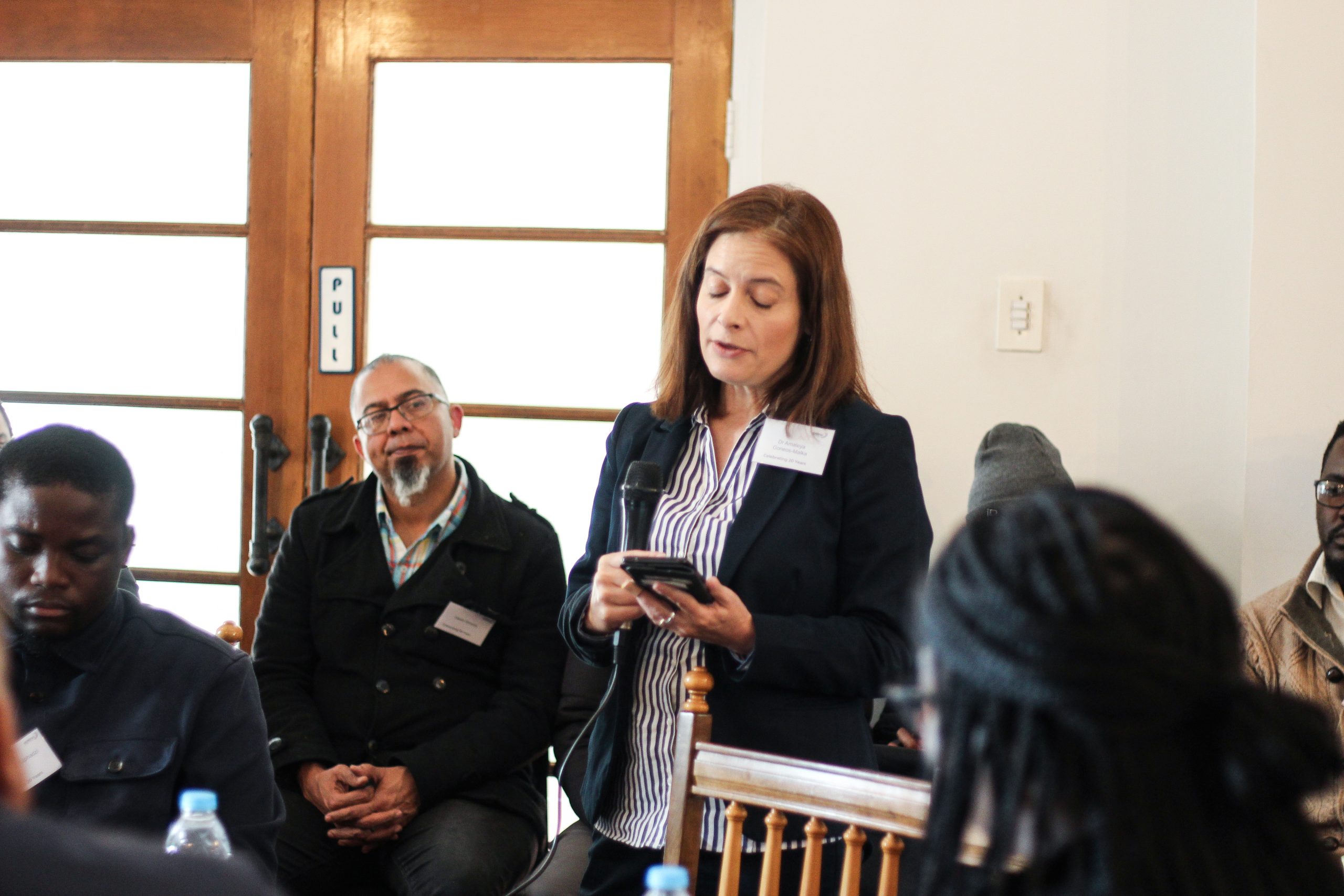
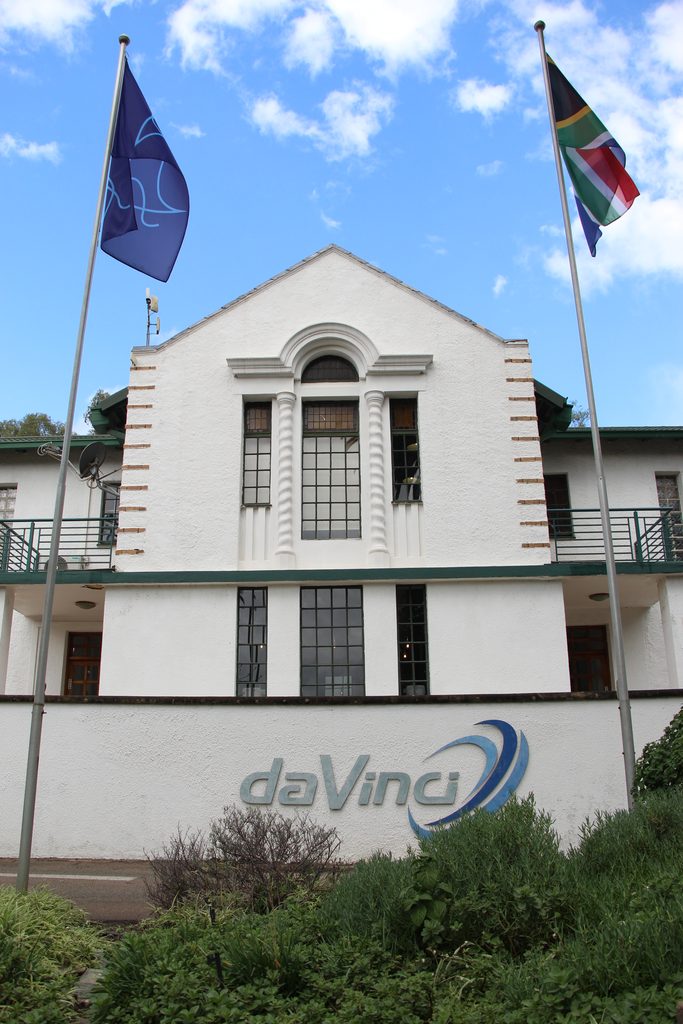
As The DaVinci Institute marks its twenty-first year, Chairperson of the Strategic Advisory Board, Dr Amaleya Goneos-Malka, reflects on what it means to come of age, not as a moment, but as a process of becoming.
Turning twenty-one is a significant milestone. It signals maturity, but also responsibility. Like the spiral, symbolising life’s unfolding, the journey circles back even as it moves forward, growing richer and more complex with each turn.
From this vantage point, DaVinci is not simply an institution. It is a living ecosystem, shaped across layers of experience, interaction, and influence.
The Microsystem
At its core lies the academic foundation, the microsystem that anchors the spiral. Here, faculty, researchers, and academic leaders sustain the integrity of knowledge while nurturing intellectual curiosity with practical intent. Students enter this space not as passive recipients but as active participants, challenging ideas, contributing perspectives, and shaping their own developmental journeys alongside the institution.
The Mesosystem
The mesosystem emerges in the dynamic relationship between students and lecturers. This is where education shifts from instruction to dialogue, and from dialogue to co-creation. Roles evolve, and the boundaries between teaching and learning become more fluid.
“Students increasingly contribute to the academic and industry corpus, their work reflecting not only learning, but authorship,” she notes. It is within this interplay that transformation becomes visible, where education is not simply delivered, but lived with purpose,” said Dr Amaleya Goneos-Malka.
The Exosystem
Beyond this, the exosystem reflects DaVinci’s growing engagement with industry, partners, and communities. The institution’s work, through research, projects, and innovation, extends beyond the campus, finding expression in practice. These outputs ripple outward, influencing sectors and shaping emerging futures.
The Macro Level
At the macro level, DaVinci exists within broader societal currents, including political, economic, cultural, and technological forces. Coming of age, in this context, is not an endpoint. It is a call to remain adaptive, relevant, and purposeful in the face of ongoing change.
The spiral continues. Each turn brings reflection. Each return invites renewal.
26 February 2026, Johannesburg: The DaVinci Institute notes that the 2026 Budget Speech delivered by Finance Minister Enoch Godongwana marks a clear shift in South Africa’s fiscal trajectory from crisis management toward stabilisation, structural reform and long-term growth. South Africa has spent recent years grappling with fiscal stress, energy instability, and high debt-to-GDP ratios. The 2026 Budget Speech emphasizes measures aimed at reducing fiscal deficits and containing public debt growth.
Gross Government Debt
The budget projects gross government debt stabilising at 78.9% of GDP in 2025/26 before gradually declining, while the consolidated budget deficit narrows to 4.5% of GDP and is expected to fall to 3.1% over the medium term. These indicators signal a clear transition from fiscal repair toward an execution phase focused on growth.
The Institute acknowledges the government’s commitment to stabilising debt, accelerating infrastructure investment, improving spending efficiency and strengthening state capability, which reflects a more disciplined and reform-oriented fiscal approach.
With more than R1 trillion in public infrastructure investment planned over the medium term, the Institute notes that South Africa’s growth outlook will depend heavily on execution capacity across national, provincial and municipal institutions.
South Africa’s Biggest Constraint
“The 2026 Budget confirms that South Africa’s biggest constraint is no longer policy design, but execution capacity. Developing leaders who can translate reform into delivery is now an economic priority.”
The Institute further notes that the budget reinforces the central role of education and skills development in enabling economic reform. In a constrained fiscal environment, the focus must shift from access alone to measurable outcomes. This requires stronger alignment between higher education, industry and the evolving demands of the economy, ensuring that graduates are equipped not only with knowledge, but with the capability to lead, innovate and deliver impact within complex organisational and societal contexts. Education must therefore be understood not as a social expenditure, but as a critical driver of economic productivity, institutional effectiveness and long-term growth. This places increased importance on applied, work-integrated learning approaches that translate knowledge into measurable value within organisations and society.
The Budget’s Total Spending
The budget’s total spending of R2.67 trillion, with the social wage accounting for more than 60% of non-interest expenditure and supporting approximately 26.5 million grant beneficiaries, reinforces the state’s redistributive role while highlighting the importance of institutional effectiveness.
At the same time, capability pressures remain significant. The budget notes that 63% of municipalities are in financial distress, alongside major infrastructure backlogs, such as the estimated R64 billion water investment gaps in Johannesburg. These realities show the need for leadership, governance reform and stronger operational capacity across the public sector.
The Skills Ecosystem
The Institute further notes that reforms to the skills ecosystem, digital infrastructure, payments modernisation and regional trade integration point to a future economy that will require leaders able to navigate the complexity we face ahead, work across sectors and implement large-scale change.
DaVinci commends the continued performance of the South African Revenue Service (SARS), whose revenue administration improvements remain central to fiscal sustainability and the state’s ability to fund development priorities.
The Institute believes the 2026 Budget reinforces three realities for South Africa:
Economic reform is inseparable from leadership and skills development.
Infrastructure investment requires innovation capability and systems thinking.
Fiscal sustainability depends on institutional effectiveness.
As South Africa enters a phase where implementation will determine economic and societal outcomes, collaboration between government, industry, higher education institutions and other key stakeholders is critical. As a higher education institution, The DaVinci Institute contributes through applied research, executive and leadership education, and industry partnerships that build leadership capability, strengthen innovation ecosystems and enable the translation of policy into measurable impact within organisations and society.
Furthermore, it is worrisome that there is high social spending against weak capital expenditure execution; this reduces future growth capacity and increases long-run fiscal risk.
“The speech then points to fiscal management as the mechanism to close the gap between budgets and outcomes. Municipal infrastructure grants are being reformed due to persistent underspending, misuse of funds and capacity constraints,” said Dr Tinaye Mahohoma, a Discipline Lead.
The 2026 Budget hints that the foundation for growth is being rebuilt. The defining question for South Africa is no longer whether reform is required, but whether we have the leadership capability to implement it at scale. Strengthening that capability will determine the country’s ability to translate policy into measurable economic and societal impact.
This appointment represents a significant professional milestone and affirms her differentiated leadership in information technology and digital transformation. With more than 25 years of experience across major financial services institutions and complex enterprise environments, Padayachee brings strategic foresight, governance depth, and a proven capacity to lead large-scale technology transformation initiatives.
Contribution to SAICA
Her responsibility for advancing SAICA’s technology strategy and digital transformation agenda reflects her ability to align innovation with institutional purpose and public interest. In an era where professional bodies must strengthen their digital foundations while remaining responsive to societal change, her leadership will play a critical role in shaping sustainable, future-ready systems at scale.
Academic Journey At DaVinci
As a doctoral candidate in Technology and Innovation at The DaVinci Institute, and an alumna of the Institute’s Master of Technology and Innovation programme, Padayachee exemplifies the integration of rigorous scholarship and executive practice. Her continued academic pursuit underscores a commitment not only to organisational excellence, but to advancing technology leadership in the service of broader societal impact.
The DaVinci Institute celebrates this achievement and wishes her continued success in this important national leadership role.
The DaVinci Institute wishes to congratulate the Class of 2025 on the release of their National Senior Certificate (NSC) results and commends every learner for this achievement. Completing matric is not only a personal achievement; it represents resilience, discipline and hope for South Africa’s future.
We acknowledge the parents, teachers, school leaders and communities whose commitment has supported these learners through an increasingly complex educational and social environment.
A Systemic Capacity Challenge in Higher Education
However, as we celebrate this moment, we must also confront a persistent structural challenge in South Africa’s higher education system: the growing mismatch between the number of qualified school leavers and the limited capacity of public higher education institutions. Each year, hundreds of thousands of capable young people meet the academic requirements for further study. Still, many are unable to secure places at universities and TVET colleges due to space, funding and infrastructure constraints.
This is not a failure of learners; it is a systemic capacity challenge.
A Shared National Responsibility
If South Africa is to realise its developmental ambitions, we must view post-school education as a shared national responsibility, requiring coordinated contribution from public institutions, private providers and industry.
Institutions such as The DaVinci Institute play a complementary and important role in this ecosystem.
The Role of The DaVinci Institute
As a private higher education institution focused on innovation, leadership, and applied knowledge, DaVinci can: · Expand access to quality, accredited higher education through flexible learning models. · Provide alternative entry pathways for students who may not follow traditional academic routes. · Offer programmes that are closely aligned to industry needs, entrepreneurship, and societal challenges. · Support lifelong learning and upskilling for young people and working professionals alike.
Private institutions do not replace the public system; they relieve pressure on it, extend its reach, and diversify the forms of learning available to South Africans.
A Message to Learners Still Seeking Placement
To the learners who did not secure a place at a public institution this year: your future has not been closed, it has simply taken a different route. There are credible, quality, and empowering pathways available and what matters most is not where you start, but how you grow, learn, and contribute.
Our Ongoing Commitment
The DaVinci Institute remains committed to being part of a higher education system that is inclusive, innovative, and responsive to the needs of our society and economy. We congratulate the Class of 2026 once again and look forward to walking alongside those who choose to continue their learning journey with us. Matriculants who meet the minimum requirements are invited to enrol for either aHigher Certificate in Management of Technology and Innovation or a Bachelor of Commerce in Business Management. To request more information, please complete this enquiry form.
Finishing matric is a milestone worth celebrating, but it also comes with major decisions about the future. Every year, thousands of learners qualify for university studies, yet available spaces fall far short. For example, in 2024, approximately 337,158 learners achieved a bachelor’s pass, but only around 202,000 university seats were open.
If you did not secure a spot at a public institution for 2026, or if you are looking for a more practical, entrepreneurial, and flexible study pathway, your journey is far from over. In fact, it may be just the beginning.
There are alternative routes that prepare you for real opportunities, and The DaVinci Institute is leading the way with accessible, high-quality programmes designed for the world you are stepping into.
Learning that fits your life
At DaVinci, education is more than passing modules or memorising theory. It is about building capabilities and skills that you can apply immediately, whether you want to start a business, grow an existing project, or open doors to further study.
Our programmes are:
Fully distance learning so that you can study from anywhere
Flexible, allowing you to learn at your own pace
Practical, grounded in real-world problem-solving
Future-focused, equipping you with relevant tools and mindsets
From Higher Certificates to Bachelor’s Degree, Advanced Diploma, and Postgraduate Diploma, each qualification is designed to empower you to think critically, innovate boldly, and work with confidence.
Real students, real impact
At DaVinci, success is measured by what students do with their learning. Two remarkable young people show what is possible when education meets opportunity.
After a workplace injury in the construction sector, Thekiso had to rethink his career path. But he did not give up; he adapted instead.
Through his Higher Certificate in the Management of Technology and Innovation, he discovered tools like the TIPS™ Framework and practical approaches to innovation. These helped him identify gaps in workplace safety and ultimately launch his own company, Generis Omnivision (Pty) Ltd.
What began as a setback became a stepping stone toward entrepreneurship and meaningful social impact.
As a fellow Higher Certificate student, Tshambo demonstrated the power of applied learning during a Work-Based Challenge at Axalta Plascon.
Tasked with auditing project management processes, he used DaVinci’s frameworks to identify improvement opportunities and propose actionable solutions. His work was not theoretical; it directly strengthened a real organisation’s operations.
These stories show what makes DaVinci different: students do not just earn qualifications, they transform themselves, build confidence, and apply their knowledge in meaningful ways.
Why private higher education is the right way
If a public institution is not an option, private institutions are not a “backup plan.” They are an essential part of South Africa’s education ecosystem, giving students access to personalised support, innovative teaching methods, and industry-aligned content.
At The DaVinci Institute, students benefit from:
Individual support through our learning coordinators and student support
Curricula aligned to real-world needs
The TIPS™ Framework, integrating Technology, Innovation, People, and Systems
Flexible payment options and funding pathways
Direct links between learning and work-based challenges
Private education is an investment that helps you grow your capabilities, build confidence, and prepare for the future you want to create.
Find your path
Every matriculant moves differently through life. You might be:
An exploratory shifter discovering new interests
A passion-driven shifter guided by what you love
A skill-based shifter building practical expertise
An opportunity-driven shifter responding to what’s possible
A trial-and-error shifter learning through experience
No matter your path, DaVinci’s approach meets you where you are and supports where you want to go.
Start co-creating your future with us
Your next chapter does not depend on a single institution’s acceptance letter. It depends on your willingness to explore, learn, innovate, and take ownership of your story. With flexible study options, supportive faculty, practical learning, and inspiring student role models, you can turn uncertainty into opportunity and shape a meaningful, future-ready career.
Pursuing higher education is an investment in your knowledge, career and future earning potential. However, it can also be a significant financial commitment, particularly if you plan to pay for your studies yourself.
Whether you are considering a Higher Certificate, degree or postgraduate qualification, a carefully constructed financial plan can help you manage the cost without placing unnecessary pressure on your monthly finances.
This guide explains how to fund your own studies in South Africa by setting realistic goals, understanding the full cost of studying, creating a budget and exploring available funding options.
What does self-funded higher education mean?
Self-funded higher education means paying for your studies primarily from your own income, savings or personal financing arrangements rather than relying entirely on a parent, employer, bursary or scholarship.
Your education may be funded through one or a combination of the following:
Monthly income
Personal savings
A student loan
Employer assistance
A bursary or scholarship
Additional part-time or freelance work
A structured institutional payment plan
The best approach will depend on your financial circumstances, the cost and duration of your chosen qualification, and how soon you intend to begin studying.
The financial benefits of studying part-time
One of the main financial advantages of studying part-time is that you can continue earning an income while completing your qualification.
Studying and working simultaneously requires discipline, careful time management and some personal sacrifice. However, it allows working professionals to develop their knowledge without necessarily placing their careers or income on hold.
The DaVinci Institute offers flexible online qualifications that allow students to study from different locations while continuing to meet their professional and personal responsibilities.
If you are planning to fund your own education, the following steps can help you construct a sustainable financial plan.
Step 1: Establish your education and financial goals
Begin by defining what you want to achieve and how much time you have to prepare financially.
Your immediate goals may include paying for:
Application and admission fees
Tuition fees
A laptop or computer
Internet access
Learning materials
Printing or stationery
Any additional academic support you may require
You should also consider your long-term financial responsibilities, such as maintaining an emergency fund, paying existing debt and saving for retirement.
Use the SMART framework to make your goals:
Specific
Measurable
Achievable
Relevant
Time-bound
Instead of saying, “I want to save money for my studies,” set a goal such as: “I will save R2,500 per month for the next 12 months towards my first year of tuition.”
A specific goal makes it easier to measure your progress and adjust your spending when necessary.
Step 2: Calculate the total cost of studying
Before applying, determine the total estimated cost of completing your chosen qualification.
Do not consider tuition fees in isolation. Depending on the institution and mode of delivery, you may also need to budget for:
Application and registration fees
Textbooks and learning materials
Examination or assessment fees
Technology and software
Internet data
Transport
Accommodation
Meals
Graduation costs
Possible annual fee increases
Online distance education can reduce some of the costs associated with travelling to and living near a campus. However, you will still require a reliable computer, a stable internet connection and a suitable environment in which to study.
Review the institution’s official fee information and ask whether the quoted amount includes all compulsory academic costs. DaVinci publishes information about its programmes, estimated annual fees and study duration on its qualifications page.
You should also confirm whether fees are payable upfront, annually, per module or through monthly instalments.
Step 3: Assess your current financial position
Once you understand the likely cost of studying, assess whether you can afford to pay upfront or whether you will require a monthly payment arrangement.
Start by listing your:
Monthly income
Essential expenses
Discretionary expenses
Savings
Assets
Existing debts and repayment obligations
Your monthly surplus is the amount left after subtracting all expenses and debt repayments from your net income.
For example:
Net monthly income – monthly expenses – debt repayments = available monthly surplus
Avoid committing your entire surplus to tuition fees. You should retain a financial buffer for unexpected expenses and changes in your circumstances.
If you plan to pay a lump sum, consider how using your savings will affect your emergency fund. Selling an asset or taking out a loan should only be considered after assessing the long-term financial implications.
Step 4: Create a realistic education budget
A budget is one of the most important tools for successfully self-funding your studies. It helps you track your money and ensures that education expenses are prioritised alongside your existing responsibilities.
Divide your budget into the following categories:
Essential expenses
These may include housing, food, transport, medical expenses, insurance, school fees and debt repayments.
Education expenses
Include tuition, registration fees, internet access, stationery, software and any equipment required for your studies.
Discretionary expenses
These include entertainment, dining out, subscriptions and non-essential purchases.
Savings and emergency funds
Continue contributing towards savings, even if the amount must temporarily be reduced while you study.
Review your budget carefully and identify expenses that can be reduced without compromising your basic needs. Remember that tuition fees and living expenses may increase annually, so leave room for future adjustments.
Step 5: Develop a savings plan for your studies
Consider opening a separate savings account specifically for your education. Keeping your study funds separate can reduce the temptation to use them for everyday expenses.
You can automate a monthly transfer into this account shortly after receiving your salary. Even a modest but consistent contribution can grow significantly over time.
Your savings strategy should be based on:
The cost of the qualification
The date on which you intend to begin
The amount you have already saved
Your affordable monthly contribution
The expected duration of your studies
Be cautious when considering investment products for money that you will need in the short term. Investments can fluctuate in value, and some products may charge fees or restrict access to your money.
If you are uncertain, consult a suitably qualified financial adviser and seek more than one opinion before committing to a financial product.
Step 6: Explore bursaries, scholarships and employer funding
Even if you intend to fund your studies yourself, you should still investigate bursaries, scholarships and employer assistance.
Some bursaries are awarded based on academic performance, financial need, professional background, demographic criteria or a particular field of study. Opportunities and eligibility requirements vary, so apply early and confirm the closing dates.
You can also speak to your employer about:
Full or partial tuition assistance
Study loans
Paid or unpaid study leave
Flexible working arrangements
Repayment agreements linked to continued employment
When approaching your employer, explain how the qualification will improve your performance, strengthen your professional capabilities and contribute to the organisation’s objectives.
Step 7: Consider additional income
If your current income and savings are insufficient, consider whether you can generate additional income without compromising your work, studies or wellbeing.
Possible options include:
Freelance or consulting work
Weekend or evening work
Tutoring
Selling products or services
Monetising an existing professional skill
Temporary or seasonal employment
Any additional income earned specifically for education should ideally be transferred directly into your study savings account or used to pay your fees.
Step 8: Understand student loans and manage debt responsibly
A student loan can help you begin studying sooner, but it creates a long-term repayment obligation.
Before accepting a loan, make sure you understand:
The interest rate
Whether the interest rate is fixed or variable
The total cost of borrowing
When repayments begin
The monthly repayment amount
Any administration fees
Whether security or a guarantor is required
The consequences of missed payments
Create a debt management plan before signing the loan agreement. Estimate whether you will be able to afford the repayments together with your other living expenses.
Do not assume that completing a qualification will immediately result in a higher salary. Career growth may take time, and your repayment plan should remain affordable even if your income does not increase immediately.
Step 9: Build and protect your emergency fund
Unexpected events such as illness, retrenchment, urgent home repairs or family responsibilities can interrupt your financial plan.
Ideally, work towards an emergency fund that can cover between three and six months of essential living expenses. If that is not immediately achievable, begin with a smaller target and build it gradually.
Avoid using your entire emergency fund to pay tuition fees. Without a financial safety net, one unexpected expense could force you to suspend your studies or take on expensive debt.
If you use credit or a loan to finance your studies, consider whether suitable credit protection or insurance may be appropriate. Review the terms, exclusions and costs carefully before purchasing any cover.
Step 10: Review your financial plan regularly
Financial planning is not a once-off exercise. Your income, expenses, tuition fees and personal responsibilities may change during your studies.
Review your plan:
Before each academic year
When fees change
After receiving a salary increase
When taking on new debt
If your household expenses change
After any major personal or professional event
A regular review will help you identify financial pressure early and adjust your study load, payment arrangement or savings c