With more than 22 years of experience leading people and organisations across South Africa, the United States and Australia, Dr Annie Padayachee has built a senior leadership career spanning service, operations, business process outsourcing and organisational transformation. Her career has included senior executive and general management roles, providing first-hand insight into the opportunities and challenges associated with leadership progression.
Her doctoral research at The DaVinci Institute examines women’s advancement into senior leadership within South Africa’s logistics sector, exploring how women establish credibility, gain recognition and navigate organisational expectations as they progress through leadership environments.
Her thesis, Transformative Learning for Inclusive Leadership: Advancing Women in the Logistics Sector in South Africa, brings these experiences into focus. Alongside her contribution to knowledge, Dr Padayachee reflects on a doctoral journey shaped by industry support, the challenges of conducting research across borders and academic scrutiny that ultimately strengthened and deepened her thinking.
A career spanning countries and leadership contexts
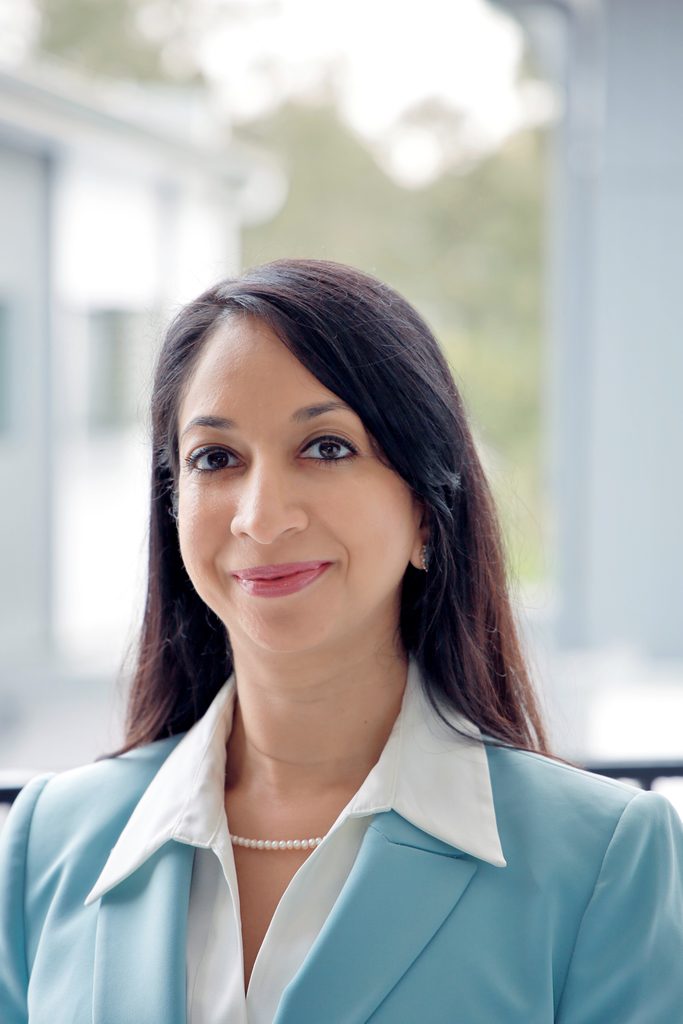
Dr Padayachee began her professional journey in Johannesburg and has since built a career spanning multiple industries and leadership contexts. Her career reflects extensive senior leadership experience across diverse industries and international markets, with her journey at DHL Express spanning South Africa, the United States and Australia.
As a Director at DHL Express, Annie provides strategic leadership for contact centre operations across Australia.
“Throughout my 22-year leadership journey, I have had the privilege of leading diverse teams across several countries,” said Dr Padayachee.
Her doctoral studies began in South Africa, although she completed a substantial portion of the journey while living overseas. Throughout this period, her research remained focused on understanding women’s leadership advancement within South Africa’s logistics sector.
She credits DHL Express, the South African Express Parcel Association and The DaVinci Institute with supporting and sponsoring her studies.
“I feel incredibly fortunate to have been supported and sponsored in my studies by all three organisations. I am also deeply grateful to my supervisor, Prof HB Klopper, whose guidance and encouragement have been invaluable throughout my doctoral journey”, she explained.
This support enabled her to pursue research addressing a real-world leadership challenge within the South African logistics sector while drawing on extensive professional experience in people leadership and organisational transformation.
Understanding how women gain recognition as leaders
Dr Padayachee’s study investigated how women advance into senior leadership within the logistics sector, drawing on the experiences and perspectives of senior leaders.
Using classical grounded theory, underpinned by symbolic interactionism, the research developed a theoretical explanation grounded in qualitative interview data. Symbolic interactionism provided an important foundation for examining how meaning, identity and perceptions of leadership are shaped and negotiated through social interaction.
This enabled her to explore how women interpret workplace experiences, construct leadership identities and navigate organisational expectations throughout their leadership journeys.
At the center of the findings is the concept of negotiating leadership legitimacy. This describes the ongoing process through which women establish credibility, secure recognition, gain visibility, access sponsorship and navigate gendered organisational structures and expectations.
From this perspective, leadership advancement is more complex than a sequence of promotions or individual career decisions. It is a socially negotiated process shaped through workplace relationships, interactions, opportunities and organisational conditions that influence both how women understand themselves as leaders and how others recognise their legitimacy as leaders.
The study brings together individual, relational and organisational influences within a theoretical framework grounded in participants’ experiences. It explains how recognition, developmental opportunities, sponsorship, identity work and organisational conditions interact to shape women’s leadership advancement.
For organisations seeking to develop more inclusive leadership environments, these findings draw attention to the conditions surrounding career progression: who receives visibility, whose contribution is recognised, who gains access to influential networks and sponsorship, and how organisational practices can enable or constrain advancement.
Securing access to senior industry voices
One of the most demanding aspects of Dr Padayachee’s doctoral journey was conducting the fieldwork.
“One of the most significant challenges was coordinating the fieldwork and securing time with senior industry participants, while balancing the demands of my professional role,” she recalled.
Her research required interviews with senior executives in logistics, some lasting up to an hour and a half. Securing time with these stakeholders required considerable coordination, particularly while balancing the demands of a senior leadership career and conducting research across geographical boundaries.
The support of The DaVinci Institute and the South African Express Parcel Association helped her gain access to participants whose experiences were fundamental to the study.
Her experience highlights a practical consideration for prospective doctoral students: doctoral research extends well beyond reading and writing. Access to participants, professional relationships, scheduling and the practical realities of engaging senior industry stakeholders can significantly shape the research process.
Living overseas introduced an additional layer of complexity. Dr Padayachee was unable to readily visit the Institute or meet with her supervisor in person. However, the geographical distance never became a barrier to support, with her supervisor and colleagues at the Institute remaining accessible virtually throughout her doctoral journey, helping her stay connected and maintain momentum.
An oral defence that reshaped her thinking
Dr Padayachee identified the doctoral examination process as one of the most rigorous and valuable aspects of her journey. The different stages challenged her to critically examine her work, clearly articulate the reasoning underpinning her methodological and theoretical choices, and further strengthen her research through rigorous academic engagement.
One of the most influential moments came during her oral defence.
Questions from the academic panel prompted her to reconsider aspects of the thesis, including the relevance of some of its content and decisions made earlier in the research process.
“That was a turning point in my academic journey,” said Dr Padayachee.
Rather than viewing this scrutiny purely as a challenge, she describes it as an important part of the development of the research. It required her to revisit assumptions, sharpen the theoretical focus of the study and more clearly articulate its contribution to knowledge.
“It was quite a rigorous one, but it also helped me really develop my thinking,” she reflected.
Her experience illustrates an important dimension of doctoral development: the willingness to revisit earlier decisions, respond thoughtfully to academic challenge and allow critical questioning to strengthen both the researcher’s thinking and the final contribution of the study.
Bringing research back to the workplace
Dr Padayachee’s doctoral contribution offers a deeper understanding of how women navigate advancement into senior leadership within South African logistics.
At its centre is negotiating leadership legitimacy, which provides a theoretical explanation of how women establish and sustain their legitimacy as leaders within organisational environments. The research shifts attention beyond individual ambition or capability alone and towards the interactions, relationships and organisational conditions that influence whether women are recognised and supported as legitimate leaders.
For organisations, this creates an opportunity to examine the everyday practices that shape leadership progression: how credibility is established, how visibility is created, how sponsorship and developmental opportunities become available, whose leadership potential is recognised and how organisational structures influence advancement.
Her own doctoral journey also demonstrates the importance of sustained support from employers, industry bodies and academic institutions. DHL Express, the South African Express Parcel Association and The DaVinci Institute each played a role in enabling her to navigate the practical and intellectual demands of doctoral study.
For prospective doctoral students, her experience offers encouragement grounded in the realities of research. The journey can involve demanding schedules, geographical distance, intellectual uncertainty and difficult academic questions. Yet these challenges can also provide opportunities to reconsider established assumptions, develop as a scholar-practitioner and produce knowledge that speaks directly to real organisational challenges.
For Dr Padayachee, that contribution centres on understanding not simply whether women advance into senior leadership, but how leadership legitimacy is negotiated throughout that advancement, and what organisations can learn from that process to create more inclusive pathways to leadership.

Leave a Reply