
Doctoral education plays a critical role in shaping knowledge production and societal advancement. However, growing concerns exist regarding the disconnect between academic research and real-world impact. There is a need for competencies required of effective supervisors, the systemic challenges within higher education, and the urgent need to reposition doctoral studies toward meaningful societal contribution. The Dean of Research and Head of the Institute for Postgraduate Studies at STADIO Higher Education in South Africa, Prof Flip Schutte, highlights the importance of human-centred supervision, post-graduation engagement, and a reorientation of academic culture toward community impact.
In the evolving landscape of higher education, the role of doctoral supervision extends beyond guiding students toward thesis completion. It involves nurturing individuals through a transformative journey, from student to scholar, while ensuring their research contributes meaningfully to society. Despite increasing doctoral outputs aligned with national development goals, questions remain regarding the relevance, application, and visibility of doctoral research beyond academic institutions.
The human-centred supervisor: beyond technical expertise
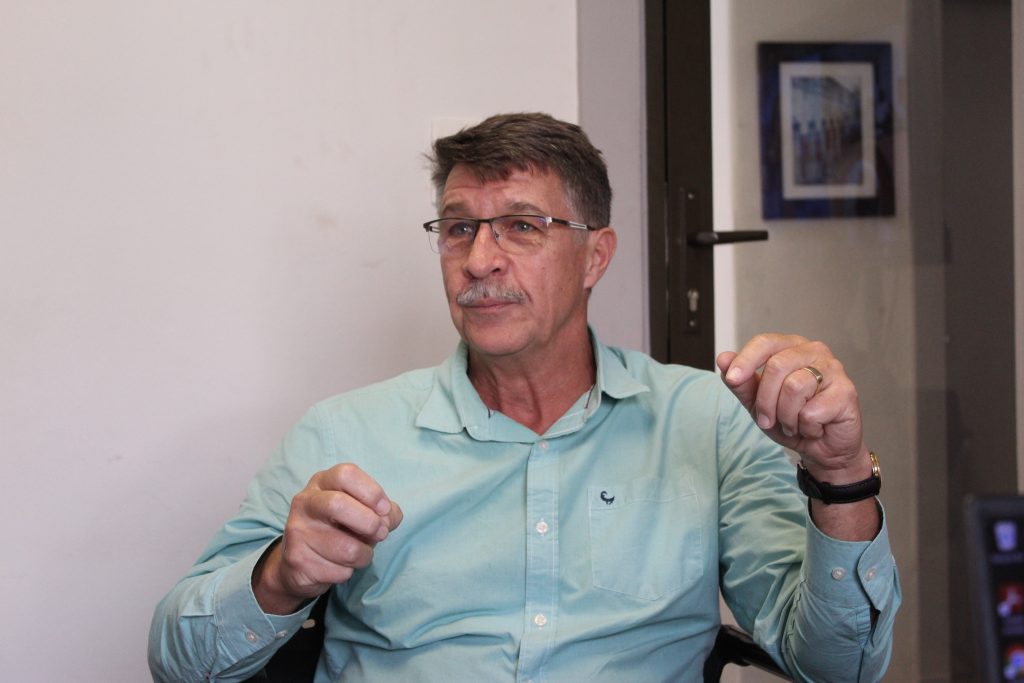
According to Prof Schutte, effective supervision is not primarily defined by technical expertise in research methodologies, but by human competencies. A supervisor must demonstrate empathy, compassion, and the ability to build meaningful relationships.
“Doctoral supervision is a deeply personal and transformative process, requiring supervisors to ‘walk alongside’ students as they evolve intellectually and professionally,” shared Prof Schutte.
He added that while methodological knowledge remains essential, it is the supervisor’s interpersonal skills that determine the success or failure of the supervisory relationship. Without emotional intelligence and a genuine concern for student development, even the most knowledgeable academic may fall short.
The academic paradox: knowledge production vs societal impact
A persistent challenge within academia is the emphasis on research output over societal relevance. Academic careers are often evaluated based on publications, conference presentations, and citations. This has fostered a culture in which scholars prioritise publishing papers, sometimes with little to no real-world application.
In many cases, research output remains confined to academic journals, with minimal engagement in industry, policy, or community contexts. This raises critical questions:
- What is the value of research that is never applied?
- How does it contribute to societal development?
A balanced approach is required, one that integrates rigorous research with practical implementation in sectors such as commerce, healthcare, technology, and public policy.
The missing voice: post-doctoral silence
A notable gap in doctoral education is the lack of visibility and impact of graduates after completion. Many doctoral candidates disappear into obscurity after graduation, with their research neither implemented nor disseminated widely.
“This reflects a limitation in current supervisory models, which often focus narrowly on thesis completion. Doctoral education should not end at graduation; rather, it should include post-graduation engagement, where supervisors support graduates in applying their research in real-world contexts,” shared Prof Schutte.
Continuous supervision or mentorship beyond graduation could enable the implementation of research frameworks and models, industry engagement and collaboration and societal contribution through practical solutions.
Rethinking doctoral admissions in the age of AI
The rise of artificial intelligence presents new challenges for maintaining academic integrity and quality. He urged institutions to adopt more rigorous selection criteria for doctoral candidates, focusing not only on academic capability but also on purpose and intent.
A critical question institutions should ask prospective candidates is:
“What contribution will your research make to society?”
Candidates who lack clarity on their intended impact may not yet be ready for doctoral study. Doctoral education should be purpose-driven, aligned with national priorities, and geared toward solving real-world problems.
From qualification to contribution: a national imperative
In the context of South Africa’s development agenda, increasing the number of doctoral graduates is not sufficient. The focus must shift from quantity to impact. Each doctoral study should contribute to societal advancement, whether through economic development, community upliftment, or organisational improvement.
Institutions must track and demonstrate the impact of their graduates by answering:
- Where are doctoral graduates applying their knowledge?
- What measurable contributions have they made?
Without such accountability, doctoral education risks becoming a costly exercise with limited return on investment.
Breaking academic ego and embracing community engagement
Two critical shifts are required within academia:
Academic environments often encourage competitiveness and intellectual elitism. This can create barriers to collaboration and meaningful engagement. Scholars must move beyond the need to “prove intellectual superiority” and instead focus on collective impact.
Prof Schutte said higher education must actively engage with communities, industries, and the broader society. This involves: listening to real-world challenges, conducting research informed by societal needs and integrating these insights into the curriculum and teaching.
“This approach reverses the traditional model of knowledge production, moving from community-informed research rather than theory-driven assumptions,” he added.
Preparing for future doctoral candidates: a holistic approach
He shared that the journey toward doctoral studies begins long before postgraduate education. Three foundational elements are critical: Strong reading, writing, and analytical skills developed at the school level are essential for academic success, participation in sports, hobbies, and teamwork builds resilience, discipline, and interpersonal skills, key attributes for research and leadership and engagement with current affairs through news and media enables individuals to identify real-world problems worth researching.
“Doctoral education must undergo a paradigm shift, from producing theses to producing impact. Supervisors must prioritise human-centred mentorship, institutions must emphasise societal contribution, and academics must actively engage beyond the confines of academia,” Prof Schutte.
The value of a doctorate lies not in the qualification itself, but in its ability to transform society. Without this focus, doctoral education risks becoming an insular exercise disconnected from the realities it seeks to address.


Leave a Reply