Category: Events

  • DaVinci Institute And JP Landman Chart 2025

    DaVinci Institute And JP Landman Chart 2025

    On 17 May 2025, the DaVinci Institute hosted a Networking and Business Meeting, focusing on “The Road to 2025”. This event brought together industry leaders and experts to engage in meaningful discussions about the future of innovation and transformation. Participants looked at the developmental trajectories of the United States, China, and South Africa’s National Development Plans (NDP), a collaborative environment aimed at shaping the future of global progress.

    The DaVinci Institute believes systemic thinking is imperative for understanding the intricate interconnectedness between technology, innovation, and people. With the adoption of an integrated approach, new opportunities can be opened to create a meaningful impact.

    Cooperative Framework
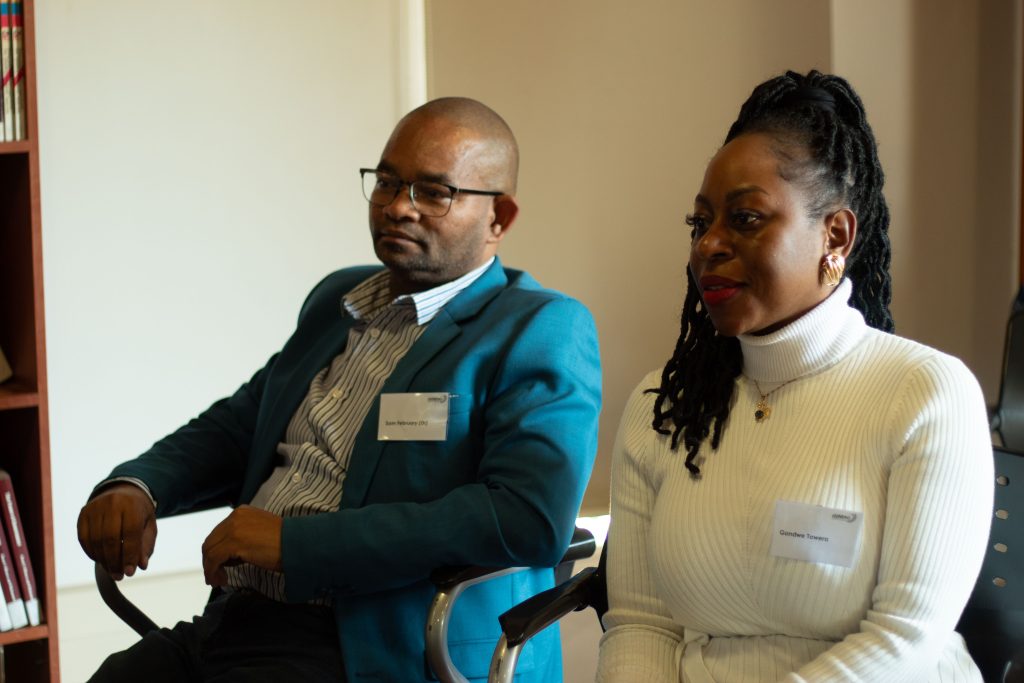
    Dr Sam February
    Dr Sam February and Towera Gondwe.

    Dr. Sam February, our Executive: Business Development, presented the Institute’s cooperative framework, which emphasises the significance of understanding how various components interact and influence one another. Through a direct approach, students are empowered to identify challenges within their organisations and devise practical solutions.

    “By applying principles of systemic thinking and design thinking, students can reframe challenges and manage innovative solutions that grant substantial impact. Our emphasis on people is crucial, as effective management of technology and innovation necessitates an understanding of the roles and functions of individuals within an organisation,” stated Dr. February.

    This event not only highlighted the importance of collaboration and innovation, but also strengthened the institute’s commitment to developing a new generation of leaders equipped to navigate the complexities of the modern business landscape.

    Moment of Curiosity
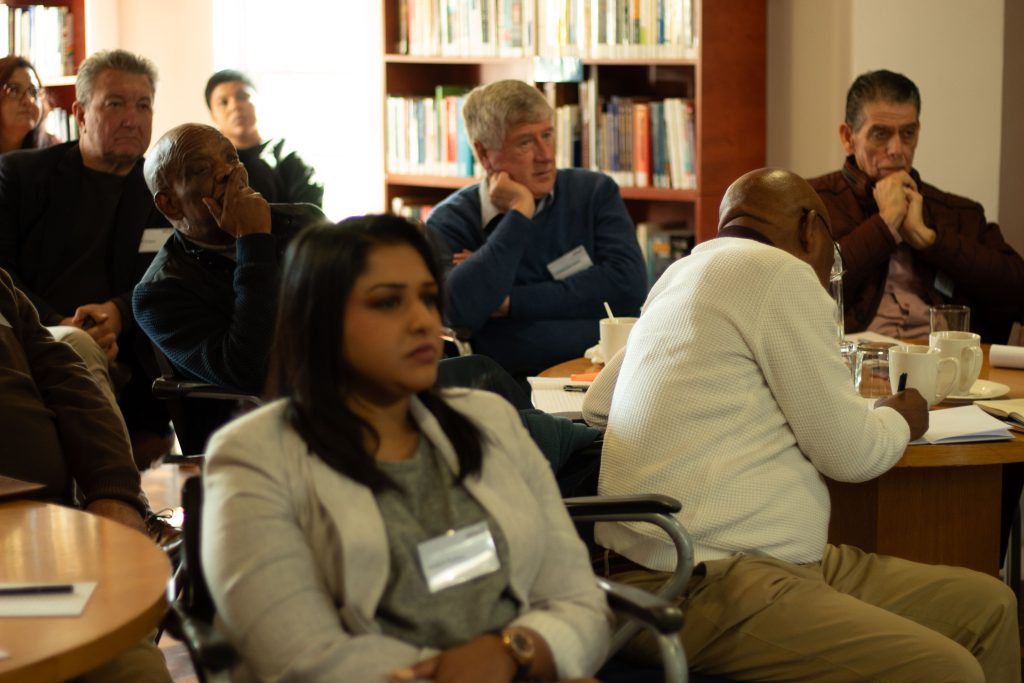
    DaVinci’s way of thinking sparked interest among the audience. The common question raised was how we can help everyone develop a learning approach that is work- and industry-ready.

    Insights from JP Landman
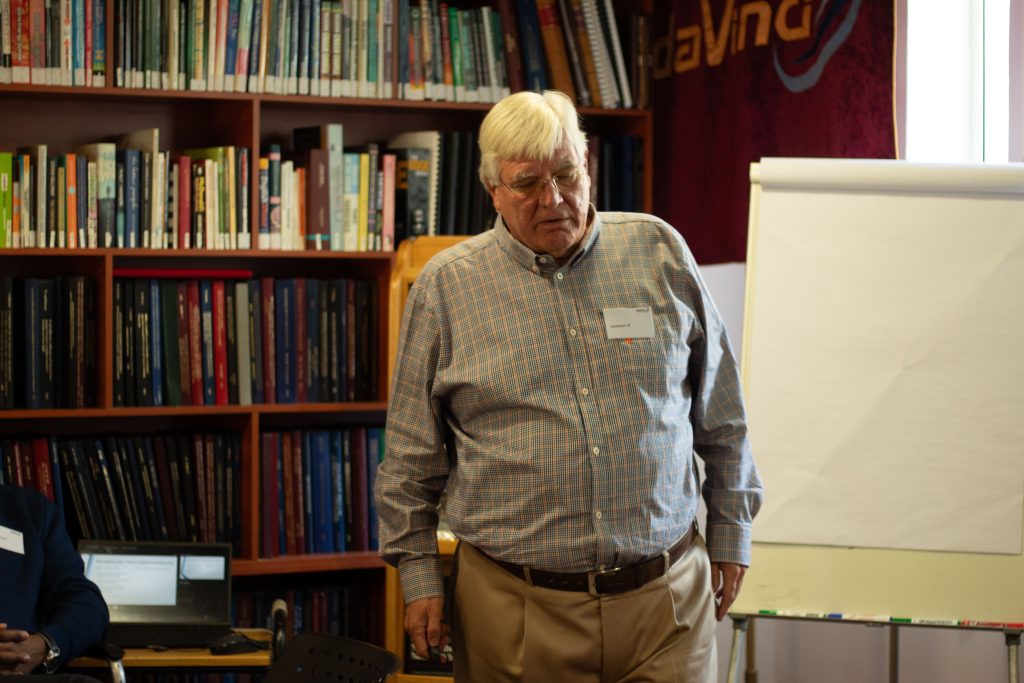
    In his presentation, guest speaker JP Landman took the audience through the critical developments that shaped South Africa’s trajectory toward 2025. He examined the current situation in South Africa and the factors influencing our position, drawing comparisons with the innovation and technology management strategies employed by the United States and China.

    The United States and China have emerged as global leaders in technology and innovation due to their exceptional skills and capabilities in managing these domains. Their success can be attributed to a strong focus on productivity and a cultural commitment to strategic planning.

    In contrast, South Africa faces significant challenges in harnessing technology and innovation, which hampers our progress toward achieving the goals outlined in the National Development Plan (NDP). The country’s productivity levels remain insufficient to support these ambitious objectives.

    Key Takeaways

    At the DaVinci Institute, we believe that both organisations and individuals have the potential to drive transformation and growth.

    –        Through understanding how people think and approach challenges, strategies can be developed to meet the unique needs of each entity.

    –        It is essential to grasp the complex interconnections between technology, innovation, and human dynamics.

    –        Approaching challenges from new perspectives can unveil innovative solutions and opportunities.

    –        Successfully managing human resources is crucial for promoting innovation and driving transformation.

    –        The DaVinci Institute’s work-based challenge approach empowers students to devise practical solutions to real-world issues.

    Pathway To Vision 2030

    Through enhancing our management of technology and innovation, South Africa can make significant strides toward realising the objectives of Vision 2030 and the NDP.

    The insights shared by JP Landman emphasise the importance of strategic thinking and effective management in navigating the complexities of our technological landscape. As we move forward, embracing these principles.

  • Celebrating DaVinci’s Doctoral Graduates Dinner

    Celebrating DaVinci’s Doctoral Graduates Dinner

    As the DaVinci Institute prepares for tomorrow’s graduation ceremony, we will introduce three exceptional doctoral graduates in Management in Technology and Innovation. But before they walk across the stage, we celebrate their groundbreaking achievements in a unique and prestigious even, The President’s Dinner, hosted tonight by Commissioner Edward Kieswetter, our business school’s president and the esteemed Commissioner of the South African Revenue Service (SARS).

    Prestigious President’s Dinner
    Prestigious President’s Dinner

    This exclusive gathering is a rare honour in the private higher education space, as very few institutions offer such a formal and distinguished introduction of their doctoral candidates to society. DaVinci is one of the few to uphold this tradition, and it is a testament to our commitment to co-creating realities and celebrating visionary leadership. With one of the largest doctoral cohorts in South Africa, both in terms of current candidates and alumni, DaVinci proudly showcases the impact and excellence of our doctoral community at this special event.

    The President’s Dinner is not just an occasion, it is a statement of our school’s values and our belief in the transformative power of knowledge. This intimate gathering allows our esteemed graduates to be introduced to society as leaders whose research holds the potential to change industries, communities, and the world. It is an acknowledgement of their journey as scholars and co-creators of innovative solutions that address the pressing challenges of our time. Tonight, we shine a spotlight on the visionary work of the following doctoral graduates:

    Jane Blanche Mackenzie

    Jane Blanche Mackenzie’s groundbreaking work at the Global Holistic Quantum Well-being Centre introduces the HELO framework, which integrates quantum physics, Taoist philosophy, and modern biology to revolutionize our understanding of well-being.

    Her research moves beyond reductionist approaches, providing a holistic, multidimensional perspective that holds great promise for health practitioners, business leaders, and broader society.

    Hester Catarina Welman

    Hester Welman’s research critically examines the Broad-Based Black Economic Empowerment Compliance Framework (B-BBEE-CF) and its effectiveness in driving ownership transformation in South Africa. By developing a conceptual framework that promotes meaningful and sustainable transformation, Hester’s work contributes to South Africa’s vision for a more inclusive and equitable economy.

    Isheunesu Amon Chaka

    Isheunesu Chaka’s doctoral research redefines higher education through the lens of decoloniality, pioneering the Communiversity model. His work challenges the traditional academic structures in Africa, integrating indigenous knowledge systems and advocating for social justice. As the Dean of Student Services at Manicaland State University of Applied Sciences, Isheunesu’s research fosters a new generation of graduates empowered to become transformative change agents.

    Hosted by Commissioner Edward Kieswetter, tonight’s President’s Dinner is a platform for these exceptional doctoral graduates to share their visionary research with industry leaders, academic luminaries, and distinguished guests. In the presence of peers and mentors, they will be formally introduced as doctoral graduates who are thought leaders in their fields and drivers of meaningful change in South Africa and beyond.

    This dinner symbolises DaVinci’s belief in honouring excellence and acknowledging impact, marking the beginning of these graduates’ journey as they step into society as innovators, disruptors, and co-creators of a more sustainable future.

    Jane Blanche Mackenzie, Hester Catarina Welman, and Isheunesu Amon Chaka
    Jane Blanche Mackenzie, Hester Catarina Welman, and Isheunesu Amon Chaka

    The President’s Dinner is a unique tradition that underscores DaVinci’s commitment to visionary leadership. Few private institutions provide such an esteemed platform for doctoral candidates, and even fewer can boast of the size and influence of DaVinci’s doctoral community. With one of the largest cohorts of doctoral candidates and alumni in South Africa, we are proud to continue fostering holistic, innovative leaders who co-create lasting impact.

    As we look forward to tomorrow’s graduation, tonight’s celebration reminds us why DaVinci stands at the forefront of higher education, committed to excellence, creativity, and transformation.

    Congratulations to Isheunesu Chaka, Jane Blanche Mackenzie, and Hester Catarina Welman. Your work embodies the spirit of remarkable leadership that the DaVinci Institute champions, and we are honoured to present you to society at this prestigious event. We are proud of the achievement of all our doctoral graduates.