Balancing executive leadership with academic rigour is no small feat. For Adele Hartdegen, CEO of Dogan Exhibitions and the Johannesburg Expo Centre, her Postgraduate Diploma journey at The DaVinci Institute became both a strategic lens and a catalyst for deeper impact. With more than a decade of experience in the MICE industry, her academic work reflects a commitment to growth, clarity, and national economic contribution.
Adele’s journey speaks to purposeful leadership, grounded research, and the ability to translate insight into action within one of South Africa’s most influential industries.
A Career Rooted in Strategy and Transformation
Hartdegen’s professional expertise lies in strategic development, with a strong focus on sales growth, brand enhancement, operational efficiency, and business turnaround. Leading two major entities at the heart of South Africa’s business events ecosystem, she has consistently leveraged sales, marketing, and operational best practices to drive measurable results and sustainable success.
Her decision to pursue further academic development was driven by a desire to sharpen her strategic thinking while applying theory directly to complex, real-world environments.
Unlocking the Economic Power of the MICE Industry
Hartdegen’s research, titled “The utilisation of the South African MICE industry as a catalyst for economic growth,” was inspired by a recurring realisation throughout her career.
“I have spent the last 12 years in the MICE industry, and I realised that the industry is still widely misunderstood, particularly its economic impact and potential,” Hartdegen explained.
She noted that while the MICE industry has a far-reaching global economic footprint, South Africa lacks standardised data collection and economic impact assessments, resulting in underrepresentation of the industry’s true contribution.
Her study revealed several critical insights:
- The MICE industry has a significant and far-reaching economic impact globally, with strong potential locally
- South Africa is well-positioned to capitalise on this potential if supported by credible, standardised data
- There is a pressing need for consistent economic impact assessments to quantify contribution
- Stronger alignment between public and private sector stakeholders is essential
- Multiple areas of structural improvement are required to unlock greater economic value
“These findings confirm that while the opportunity is substantial, strategic coordination and further focused research are needed to fully unlock the industry’s contribution,” Hartdegen explained.
Leading at the Centre of Global Events: The G20 Experience
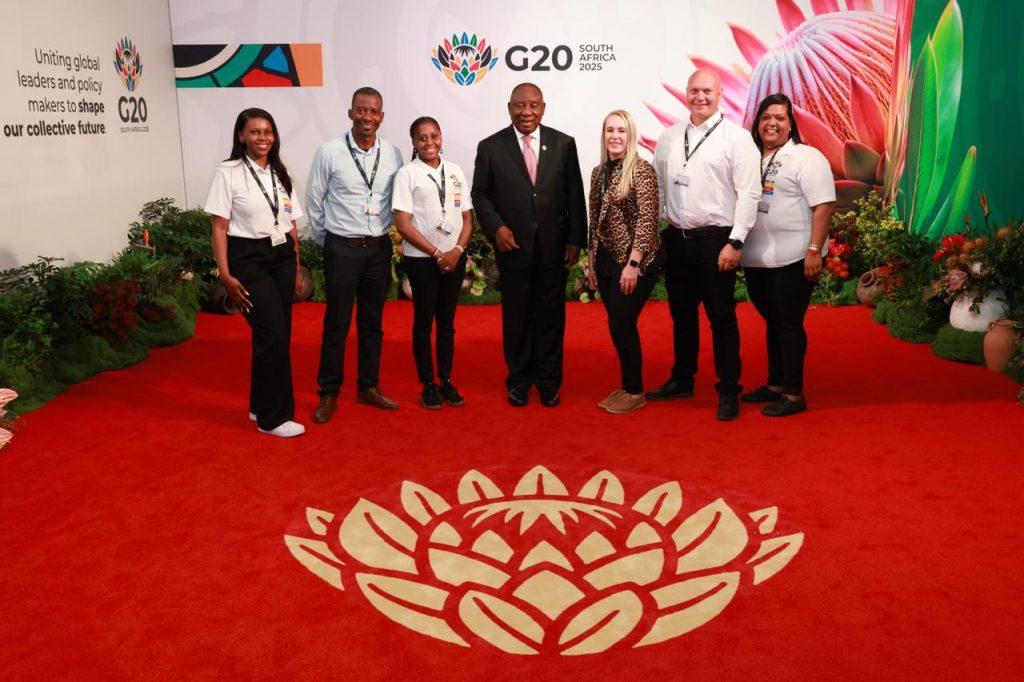
During 2025, Hartdegen played a pivotal leadership role as the Johannesburg Expo Centre hosted both the G20 Ministerial Summit and the G20 Heads of State Summit. The venue’s unique position as both host and full turnkey service provider placed her team at the epicentre of one of the most complex event projects in the country.
“The venue team is responsible for the full design, planning, and execution through an extensive network of partners. Managing multiple stakeholders across government departments, suppliers, and contractors was one of the most challenging aspects,” Hartdegen shared.
An uncompromising six-month planning process guided every detail, from aesthetics and functionality to budgeting and risk management. Leadership, she noted, came down to assembling the right team, assigning roles based on strengths, and contracting industry experts where needed.
“Leading the project meant remaining calm under pressure to keep the team focused. Being described as the ‘voice of calm in the storm’ was a proud moment, as it showed leadership by example,” Hartdegen reflected.
Positioning South Africa as a Global Business Events Destination
Hartdegen believes that high-profile international events are among South Africa’s strongest strategic tools for destination positioning.
“Projects such as the G20 offer first-hand experience of the country to global decision-makers. Delegates commented on the authenticity of our culture and hospitality, saying it felt genuine rather than rehearsed,” Hartdegen said.
She emphasised that these events should be leveraged as case studies to support future bids, demonstrating South Africa’s capability to host events of international significance while generating far-reaching economic returns.
Innovation, Technology, and the Future of MICE
While hybrid events have become synonymous with post-COVID innovation, Hartdegen believes the next wave of transformation lies deeper within operations.
“The real opportunity lies in improving operational software systems such as CRM, ERP, and AI-based design tools. These systems enhance customer service and efficiency, creating capacity to deliver and host more prominent events,” she explained.
For Hartdegen, technology is not just about experience, but about scalability, efficiency, and sustainability.
Navigating Leadership Challenges With Resilience
Reflecting on her career, Hartdegen identifies one recurring challenge.
“Having started in senior management at the age of 22, navigating perceptions about the capability of younger females in male-dominated industries has been significant,” Hartdegen shared.
Her response has been rooted in focus and self-belief.
“I’ve learnt to take emotion out of business and let results speak for themselves. Self-development and self-motivation are critical, and it’s important not to let external opinions distract you from your end goal,” she said.
Academic Insight Applied to Real Organisations
Hartdegen credits her Postgraduate Diploma with strengthening her approach to leadership and strategic decision-making.
“Using both entities as case studies throughout the programme allowed me to take an objective, critical perspective. The assessments now serve as blueprints for my teams to execute strategies that improve efficiency and ensure growth,” Hartdegen explained.
This integration of theory and practice has enabled immediate organisational impact across Dogan Exhibitions and the Johannesburg Expo Centre.
Looking Ahead: Growth, Legacy, and National Impact
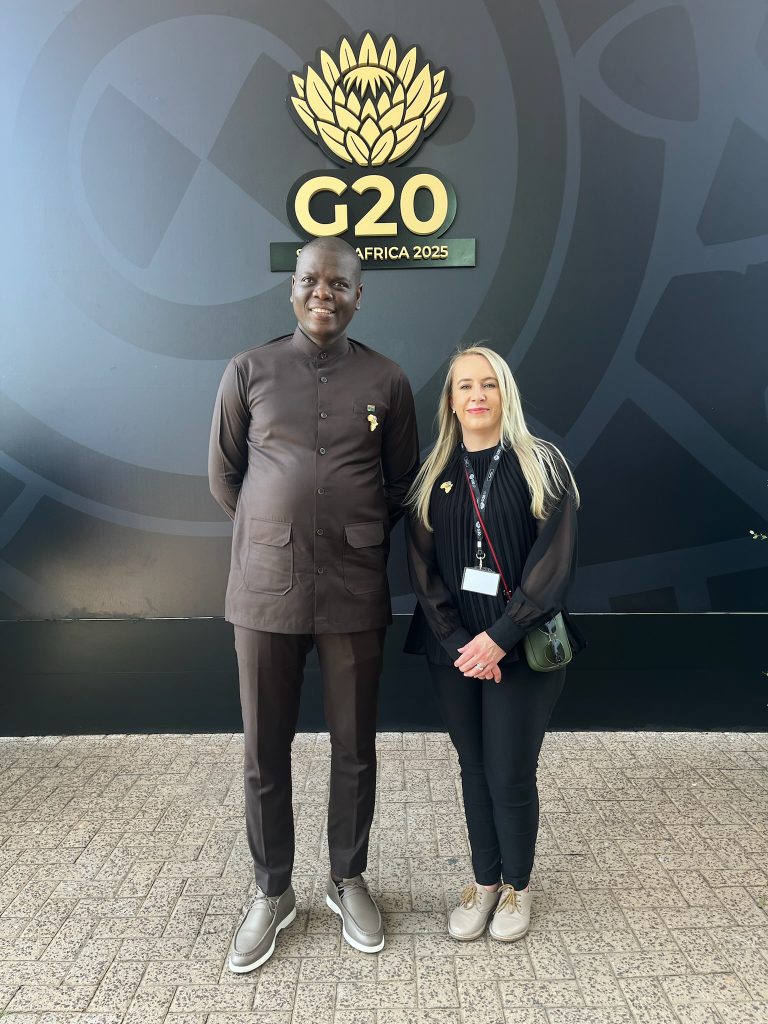
Hartdegen is particularly excited about the evolving perception of the NASREC precinct, following the successful hosting of the G20.
“The Johannesburg Expo Centre remains the largest venue on the African continent and plays a critical role in economic stability and job creation for the Soweto precinct,” Hartdegen said.
She also highlighted the revival of The Rand Show as a legacy consumer brand, noting consistent year-on-year growth and renewed national relevance.
Looking ahead, Hartdegen is optimistic about the future of the MICE industry, particularly with renewed momentum within SA Tourism to secure more international events through strategic bidding.
A Vision Anchored in Purpose and Progress
Adele Hartdegen’s journey reflects the essence of DaVinci leadership: strategic thinking, evidence-based decision-making, and purposeful impact. Through her academic work, executive leadership, and unwavering focus on growth, she continues to shape not only organisations, but the broader economic landscape of South Africa’s MICE industry.
Her story stands as a powerful example of how learning, leadership, and lived experience can intersect to create lasting national value.
Leave a Reply